
Add cozy, no-hassle heat to your White County home.
From Searcy to Beebe, Bald Knob to Judsonia, White County's mild winters make electric fireplaces an easy way to add warmth and ambiance to a living room, bedroom, or den—no chimney, no gas line, no permit headaches. Find the right unit and connect with a trusted local dealer.
Every Project Starts From One of These Five Situations
Mild winters, everyday convenience.
White County sits in climate zone 3A—the mixed-humid belt that covers most of central Arkansas. Winter lows average around 30 degrees, and the county has a mild, moderate winter heating season overall, a fraction of what a place like Duluth, Minnesota, or Fargo, North Dakota, sees in a single season. That means most White County homes—whether in Searcy, Beebe, Bald Knob, or the smaller communities of Judsonia, Kensett, Pangburn, and Rose Bud—rely on central HVAC for the bulk of their heating, with occasional cold snaps and ice events being the exception rather than the rule.
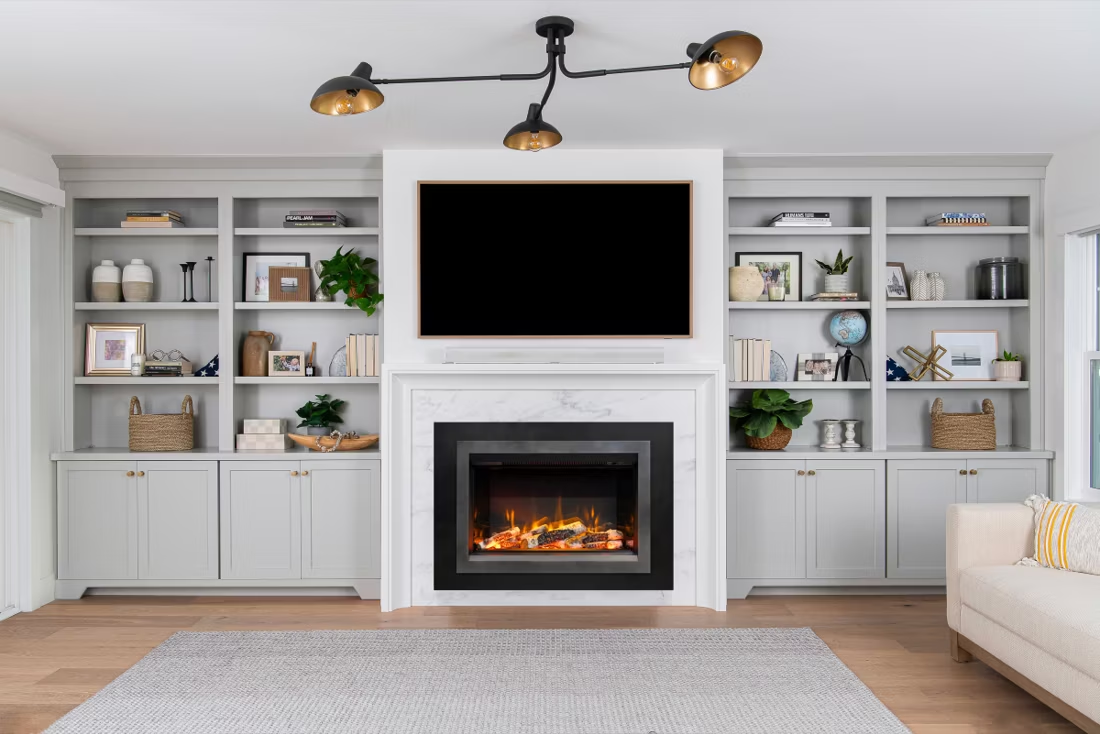
That's exactly the climate where electric fireplaces earn their keep. There's no chimney to build, no gas line to run, and no wood to split and stack—an electric insert or built-in unit plugs into a standard outlet or a simple dedicated circuit and adds real supplemental warmth plus flame ambiance to a living room, primary bedroom, or den. White County has no active air quality restrictions or burn bans, so wood and gas remain fully viable options here too—but for renters, older homes without existing fireplace infrastructure, or homeowners who just want heat and atmosphere without the upkeep, electric is often the simplest path to a working fireplace.
Three steps. No salesperson until you're ready.
Tell us about your project
Your zip code, your situation, and the fuel you're leaning toward—or let the answers point you to one.
See what's actually available
The brands dealers within 100 miles genuinely carry—real options, never a catalog mirage.
Get your dealer & Project Guide
A trusted local dealer, plus the free Project Guide & Parts List that names every component of the job.
Frequently Asked Questions
How much does it cost to install an electric fireplace in White County?
Electric fireplaces are the least expensive hearth option to install, and costs in White County generally fall between $300 and $1,500 depending on the unit. A plug-in electric insert that drops into an existing mantel or opening is on the low end and often requires no electrical work at all. A built-in wall unit or a larger electric fireplace that needs a dedicated 240-volt circuit runs higher once an electrician is involved. Either way, costs stay well below what a wood or gas installation requires, since there's no chimney, venting, or gas line to account for.
What size electric fireplace do I need for my room?
Sizing an electric fireplace is mostly about heater output and room layout, not chimney draw or venting like with wood. Most electric units are rated to heat 400 to 1,000 square feet as supplemental warmth—plenty for a single living room or bedroom in a typical White County home, whether it's a brick ranch in Searcy or a newer build out toward Beebe. Because winters here tend to be mild and moderate overall, an electric fireplace rarely needs to carry a whole house—it's usually paired with central heat and used to warm the room you're actually sitting in.
Do I need a permit to install an electric fireplace in White County?
In most cases, no. A plug-in electric fireplace insert or a freestanding unit that uses an existing outlet typically doesn't require a permit anywhere in White County. If you're having a built-in unit hardwired on a new dedicated circuit, an electrical permit is usually required—your installer or a licensed electrician will pull that through your local building department, whether that's the City of Searcy, the City of Beebe, or the White County building office for homes outside city limits. There's no chimney or venting inspection involved, which is one of the reasons electric installs move faster than wood or gas projects.
What's the difference between an electric insert, a wall-mount, and a built-in electric fireplace?
An electric insert is built to slide into an existing fireplace opening or mantel surround—a common upgrade for older White County homes that have a masonry fireplace they no longer want to burn wood in. A wall-mount unit hangs directly on a wall like a large TV and needs only a nearby outlet. A built-in electric fireplace is framed into new construction or a remodel, often with a custom surround, and is the closest electric equivalent to a traditional fireplace look. For most existing homes around Searcy and Beebe, an insert or wall-mount is the simpler, lower-cost route; new builds and larger remodels tend to go built-in.
Will an electric fireplace actually heat my room, or is it just for looks?
Most electric fireplaces sold today include a real heater—typically a 1,500-watt element that puts out around 5,000 BTUs, enough to noticeably warm a single room. Given White County's mild winter lows (averaging around 30 degrees) and moderate heating season, that's usually enough supplemental heat to take the edge off a chilly morning or offset the coldest days without leaning harder on central HVAC. It's not designed to replace your furnace during an ice storm, but for day-to-day comfort in a living room or bedroom, it does real work—not just visual effect.
Electric vs. gas vs. wood—which fireplace fits my White County home?
Wood remains a strong option here—White County has plenty of oak, hickory, and pine available locally, no air quality restrictions on burning, and wood provides heat during power outages, which matters during the ice storms and severe weather that pass through central Arkansas. Gas offers instant, consistent heat without the ash or wood handling. Electric is the easiest and cheapest to install, requires no venting or fuel storage, and is the safest option around kids and pets—but it depends entirely on grid power, so it won't help during an outage. For a lot of White County homeowners, the choice comes down to whether you want backup heat capability (wood or a battery-equipped gas unit) or maximum convenience and low upfront cost (electric).
How much does it cost to run an electric fireplace?
A typical electric fireplace heater draws about 1,500 watts on high, which costs a few cents per hour to run depending on your electric rate—generally less expensive per hour than running central heat to warm an entire house. Most White County homeowners use their electric fireplace as zone heating: running it in the room they're occupying and dialing back the thermostat elsewhere. Since White County's heating season is relatively short compared to colder parts of the country, seasonal running costs stay modest even with regular use.
How much maintenance does an electric fireplace need?
Very little. There's no chimney to sweep, no ash to remove, and no gas lines or pilot lights to service. Maintenance is mostly dusting the unit and, on some models, occasionally replacing an LED bulb or cleaning the flame-effect lens. This is one of the biggest draws for White County homeowners who want fireplace ambiance without the annual chimney inspection that a wood-burning unit requires or the yearly gas technician visit a gas fireplace needs.
Will my electric fireplace work during a power outage?
No—electric fireplaces run entirely on grid power, so they'll shut off along with everything else during an outage. That's worth considering in White County, where ice storms and severe spring weather occasionally knock out power for a day or more. If backup heat during outages is a priority, a wood stove or a gas fireplace with battery-backed ignition is a better primary choice, with an electric fireplace serving as your everyday, no-fuss option the rest of the time.
Do electric fireplaces actually produce heat?
Yes—most put out around 4,800–5,000 BTUs from a standard outlet, which comfortably warms a bedroom, office, or den as a comfort-zone heater. What they won't do is carry a whole house the way wood, gas, or pellet can. Think of electric as ambiance-first with honest supplemental heat: flames on with no heat in July, flames plus warmth in January.
Can I put a TV above my fireplace?
Yes—with an asterisk. Fireplaces are hot and TVs don't like heat. Either put a mantel between them to deflect rising warmth, or choose a fireplace with heat-management technology that creates a cool zone on the wall above—the wall stays around 125 degrees, barely warm, while the room still gets full heat. If you like clean lines and don't want a mantel, heat management is the answer.
Can I install a fireplace myself?
If you're putting a fire in your house on purpose, it's best to work with an expert. Unless you're genuinely experienced in framing, gas line, vent pipe, and the national code on clearances to combustibles, have a professional do it—and ideally the same company that sells you the fireplace, so warranty, service, and liability all live under one roof.
What is an in-home preview and do I need one?
It's a visit where a hearth professional measures your space, confirms the model you picked actually works in your home, and walks the specs—framing, gas line, venting, finish work—before anything is ordered. Some details you just can't know until you see the house. Never make a down payment without one; it's the single most-skipped step that burns buyers.
Stove and Fireplace Dealers in White County
Find your electric fireplace in White County.
Tell us a bit about your home and we'll match you with the right electric fireplace, insert, or built-in unit—plus a free Project Guide & Parts List and a trusted local dealer to install it.
Find Your Fireplace →