
Consistent, low-maintenance heat for Randolph County winters.
From Pocahontas to Reyno and the Black River bottoms, pellet stoves give Randolph County homes thermostat-controlled warmth without a wood pile to tend. Find the right unit and connect with a trusted local dealer.
Every Project Starts From One of These Five Situations
Reliable warmth without the wood pile.
Randolph County sits in the mixed-humid climate of northeast Arkansas—Climate Zone 3A—where winter lows average around 26°F and the county has a fairly mild winter heating season overall. That's a fraction of what a place like Duluth, MN or Fargo, ND sees, so most homes here don't need a wood-fired workhorse running around the clock. What they need is dependable supplemental heat for the stretch of January and February cold snaps that push past what a central furnace handles cheaply, and pellet stoves fill that role well for the roughly 9,100 residents spread across Pocahontas, Maynard, Biggers, Reyno, and the farms and timberland in between.
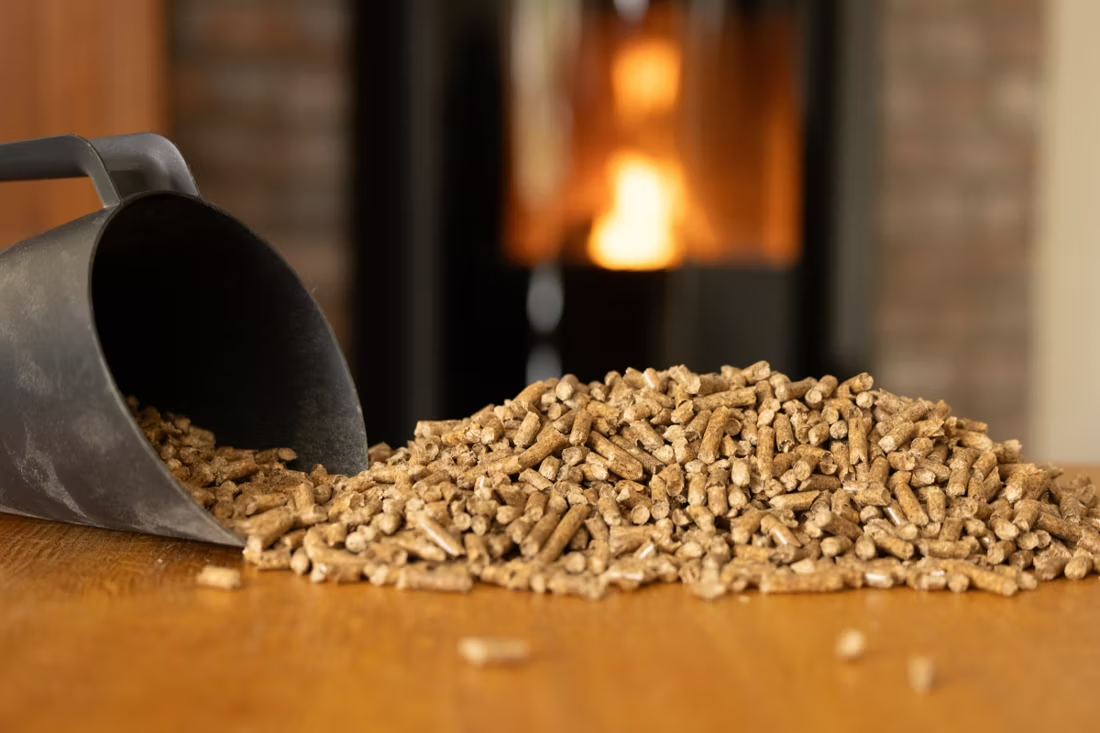
Oak, hickory, and pine are all common in the local timber mix, and plenty of Randolph County households already burn wood the traditional way. Pellet stoves appeal to a different set of priorities: load a hopper, set a thermostat, and walk away without splitting rounds or sweeping a chimney. Regional brands like Lignetics and Indeck Energy Services supply the bagged fuel sold through farm and hardware retailers in the area, and with no air-quality non-attainment issues or wood-smoke advisories on record for the county, there's no curtailment schedule to work around—you burn when it's cold, plain and simple.
Three steps. No salesperson until you're ready.
Tell us about your project
Your zip code, your situation, and the fuel you're leaning toward—or let the answers point you to one.
See what's actually available
The brands dealers within 100 miles genuinely carry—real options, never a catalog mirage.
Get your dealer & Project Guide
A trusted local dealer, plus the free Project Guide & Parts List that names every component of the job.
Frequently Asked Questions
How much does a pellet stove installation cost in Randolph County?
A freestanding pellet stove installation in Randolph County typically runs $3,500 to $6,500, depending on the stove size, whether you need a new hearth pad, and how far the exhaust vent has to run through an exterior wall. Pellet stoves vent horizontally through a simple PL-rated pipe rather than a full masonry chimney, which keeps installation labor and material costs lower than a comparable wood stove project. Converting an existing masonry fireplace to a pellet insert costs more—usually $4,000 to $7,000—because it involves running a liner and securing a dedicated 120V outlet for the hopper motor and blower. Get a firm quote from a local hearth dealer after an in-home look at your fireplace or planned install location.
What size pellet stove do I need for my home?
Because Randolph County's heating needs are modest compared to colder parts of the country, most homes here don't need a maxed-out unit. A mid-size pellet stove—roughly a 40 to 60 pound hopper and 40,000 to 50,000 BTU output—comfortably handles zone heating for a main living area or an open floor plan of 1,200 to 1,800 square feet. Larger, poorly insulated farmhouses or homes trying to offset propane or electric heat as a primary source may want to size up. A local dealer can walk your home and size the unit based on square footage, ceiling height, and insulation rather than square footage alone.
Do I need a permit to install a pellet stove in Randolph County?
Yes—a solid-fuel appliance installation typically requires a building permit, and in Randolph County that process runs through the county building permit office at the courthouse in Pocahontas. Most established hearth dealers handle the permit application and schedule the inspection as part of the installation, so you're not left coordinating it yourself. Unlike counties in wildfire-prone Western states, Randolph County has no wood-smoke non-attainment designation or seasonal burn curtailment to navigate—permitting here is about code compliance (clearances, venting, and hearth protection), not air-quality restrictions.
Where do I buy pellets in Randolph County, and how should I store them?
Lignetics and Indeck Energy Services are the two regional pellet brands most commonly stocked at farm-supply and hardware retailers serving Pocahontas and the surrounding towns. Pellets are sold in 40-pound bags, and a heating season for a supplemental-use stove in this climate usually runs one to two tons (50 to 100 bags). Buying a full pallet ahead of the first cold snap in November is the most economical approach, and pellets need to stay bone dry—a garage, shed, or basement works, but avoid anywhere pellets could pick up ground moisture, which causes them to swell and jam the auger.
How much maintenance does a pellet stove need?
Pellet stoves need more routine attention than a wood stove but far less than people expect. During regular winter use, plan to empty the ash pan and clean the burn pot every few days to keep the fire burning cleanly and prevent clinkers from building up. Once a season—typically at the end of burn season or before startup in the fall—the exhaust venting, hopper, and auger mechanism should get a full inspection and cleaning, either DIY with the right brushes or through a local service technician. Combustion blower and auger motors are the most common wear parts and are worth checking annually.
Will my pellet stove work during a power outage?
Not without a backup power source. Pellet stoves rely on electricity to run the auger that feeds fuel and the blowers that circulate combustion air and room heat—unlike a wood stove, they won't function if the power goes out. This is a real consideration in Randolph County, where winter ice storms occasionally knock out power for extended stretches. A small battery backup unit or portable generator (most pellet stoves draw well under 500 watts) will keep a stove running through an outage. If uninterrupted backup heat during storms is a top priority, some Randolph County homeowners choose a wood stove for that role and add a pellet stove for everyday convenience.
Pellet stove vs. wood stove—which makes more sense here?
With oak, hickory, and pine common across Randolph County's timberland, plenty of households already have access to cheap or free firewood, which keeps traditional wood heat appealing. Wood stoves also don't need electricity, a real advantage during ice-storm outages. Pellet stoves trade that self-sufficiency for convenience: no splitting or stacking, a thermostat that holds a steady temperature, far less ash, and a much simpler vent installation. For a homeowner without a reliable wood source, or one who wants set-it-and-forget-it heat in a den or living room, pellet is usually the easier fit. For someone already cutting their own firewood off family land, wood may still be the more economical choice.
What pellet stove brands are available through local dealers?
Hearth dealers serving Randolph County and the nearby Jonesboro market typically carry national pellet stove manufacturers such as Harman, Quadra-Fire, England's Stove Works, and US Stove Co.—England's Stove Works in particular is a common choice across the South given its Virginia manufacturing base and dealer support network in the region. On the fuel side, Lignetics and Indeck Energy Services are the two pellet brands most consistently stocked locally. A trusted dealer can tell you which stove models pair well with the fuel that's easiest to source near you, rather than recommending whatever happens to be on the showroom floor.
Are there tax credits or rebates available for a pellet stove in Arkansas?
The federal biomass stove tax credit (Section 25C) applies in Arkansas the same as anywhere else in the country: homeowners can claim 30% of the combined equipment and installation cost, up to $2,000 per year, for a pellet stove rated at 75% efficiency or higher (HHV basis). Keep your dealer's invoice and the manufacturer's efficiency certification when you file—most ENERGY STAR-qualified pellet stoves meet the threshold. There's no separate Randolph County or Arkansas state rebate program on record for pellet appliances, so the federal credit is the primary savings lever available to local homeowners right now.
Why is a fireplace insert so efficient?
An insert does two things: it seals the chimney completely, so you stop losing air you already paid to heat, and it radiates warmth into the room through the firebox and glass. Most add a heat-exchange fan that pulls cool room air underneath, wraps it around the hot firebox, and pushes it back out warm. Your home is more efficient before you've even lit the first fire.
What's the difference between an insert and a zero-clearance fireplace?
An insert is a fireplace that slides into a pre-existing wood-burning fireplace—if you don't have one, there's nothing to insert it into. A zero-clearance fireplace is built into a framed wall, which makes it the answer for remodels and new construction. Simple test: existing masonry fireplace means insert; blank or framed wall means zero-clearance.
Can I install a fireplace myself?
If you're putting a fire in your house on purpose, it's best to work with an expert. Unless you're genuinely experienced in framing, gas line, vent pipe, and the national code on clearances to combustibles, have a professional do it—and ideally the same company that sells you the fireplace, so warranty, service, and liability all live under one roof.
Can a fireplace actually lower my heating bill?
Yes—by creating a comfort zone. A furnace heats every square foot of the house just to warm the one room you're in; a gas fireplace on low burns roughly a sixth of the gas a typical furnace does. Set the furnace around 55–60 degrees as a baseline, then heat the rooms your family actually uses. Families who heat this way commonly save $20–$60 a month.
Pellet Brands Stocked Around Randolph County
Manufacturers will point you to the nearest stocking dealer.
Find your pellet stove in Randolph County.
Tell us about your home and heating goals, and we'll match you with the right pellet stove or insert—plus a free Project Guide & Parts List and a trusted local dealer to install it.
Find Your Fireplace →