
Fireplace warmth in Randolph County—no chimney, no venting, no wait.
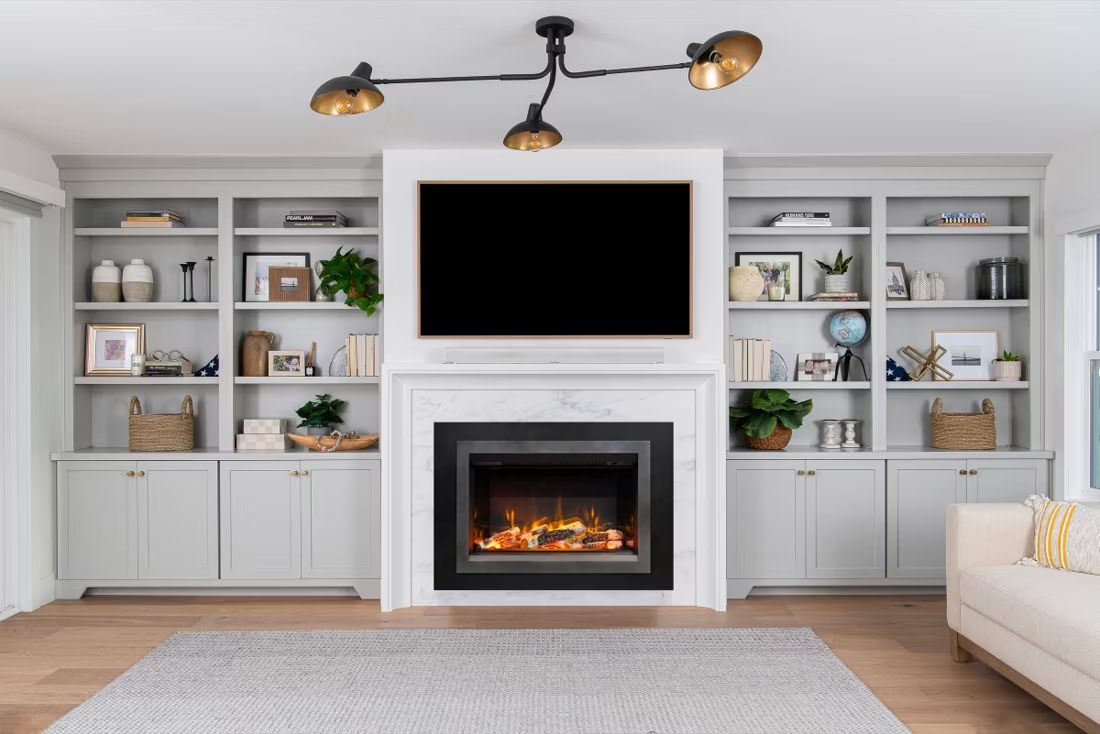
From Pocahontas to Maynard, Reyno, and the farms and manufactured homes along the Black River, electric fireplaces give Randolph County homeowners real ambiance and zone heat without a flue, a woodpile, or a big renovation. Find the right unit and connect with a trusted local dealer.
Every Project Starts From One of These Five Situations
The easiest fireplace upgrade for a mild Ozark-foothills winter.
Randolph County sits in climate zone 3A with a moderate heating season and average winter lows around 26°F—a mixed-humid climate with real but moderate winters, nothing like the sustained sub-zero stretches homeowners deal with in places like International Falls, Minnesota or Fargo, North Dakota. That matters for fuel choice: you don't need a 20-hour catalytic burn to get through a Randolph County January. Most homes here are heating a room, taking the edge off a cold morning, or adding a focal point to a living room—exactly what an electric fireplace is built for.
The county's housing stock is a mix of older site-built homes in and around Pocahontas and a significant number of manufactured and modular homes scattered through Maynard, Reyno, Biggers, and the rural stretches along the Black River. Electric units are often the simplest fit for both: many models are factory-rated for manufactured-home installation, plug-in freestanding units need no electrician or permit at all, and built-in inserts can go into an unused masonry fireplace without touching the chimney. For homes served by the local rural electric cooperative, electric heat also sidesteps the propane deliveries and tank rental that many outside the Pocahontas gas service area rely on for supplemental warmth.
Three steps. No salesperson until you're ready.
Tell us about your project
Your zip code, your situation, and the fuel you're leaning toward—or let the answers point you to one.
See what's actually available
The brands dealers within 100 miles genuinely carry—real options, never a catalog mirage.
Get your dealer & Project Guide
A trusted local dealer, plus the free Project Guide & Parts List that names every component of the job.
Frequently Asked Questions
How much does an electric fireplace installation cost in Randolph County?
Electric fireplace costs run in a wide range depending on the unit type, not the local climate—this is one of the few hearth projects where Randolph County's winters don't drive the price. A freestanding plug-in unit typically runs $200 to $800 for the unit itself, with no installation cost beyond plugging it into a standard 120V outlet. A built-in insert or wall-mount unit that recesses into a wall or existing masonry fireplace runs $1,000 to $3,000 installed, and if the unit requires a dedicated 240V circuit, add $500 to $1,500 for an electrician to run new wiring. For most Randolph County homes—including manufactured homes in Maynard or Reyno—the plug-in or basic 120V insert route is the more common and far less expensive path.
Do I need a permit to install an electric fireplace in Randolph County?
Generally, no—a freestanding, plug-in electric fireplace that uses a standard household outlet doesn't require a permit anywhere in Randolph County. If you're installing a built-in unit that requires a new dedicated circuit or panel work, that electrical work typically needs to be pulled through the county or, if you're inside city limits in Pocahontas, through the city building department. Most local dealers who sell hardwired units either handle the electrical permitting themselves or can point you to a licensed electrician who will.
Electric fireplace vs. wood stove—which makes sense in Randolph County?
Randolph County has no air quality restrictions on wood burning, and oak, hickory, and pine are all common locally, so wood heat is genuinely unrestricted here if that's what you want. But electric makes sense for a lot of homeowners for reasons that have nothing to do with regulation: no chimney to maintain, no ash, no wood to split and store, and it works in a rental or manufactured home where a wood stove installation isn't practical or allowed by the landlord or home warranty. If you want real BTU output as backup heat during a winter storm, wood still wins—an electric fireplace won't run without grid power. If you want a clean, low-maintenance focal point with supplemental warmth on a mild Ozark-foothills evening, electric is the simpler answer.
Will an electric fireplace actually heat my home, or is it just for looks?
Most electric fireplaces are built for zone heating—warming the room they're in, not the whole house—and that's a good match for Randolph County's climate, where average winter lows sit around 26°F and the coldest stretches are relatively short. A typical unit puts out 4,000 to 5,000 BTUs, enough to noticeably warm a living room or bedroom and take pressure off a central furnace on milder days. It's not a substitute for a whole-home heating system on the coldest nights of the year, but as supplemental heat for the rooms you actually live in, it earns its keep.
What size electric fireplace do I need?
Sizing an electric fireplace is mostly about the room, not the county's climate. A 30 to 40 inch unit suits a bedroom or small living room, while a 50 to 60 inch unit fits a larger great room or an open-concept living area common in newer Randolph County builds. If you're installing into an existing masonry fireplace opening—common in older homes around Pocahontas—the insert needs to match that opening's dimensions, so measure the firebox before you shop. A local dealer can confirm sizing and heat output for your specific room during a quick consultation.
What happens to my electric fireplace during a power outage?
It won't run—no exceptions. Electric fireplaces depend entirely on grid power, so during an ice storm or line outage, which does happen in this part of the Ozark foothills, an electric unit goes dark along with everything else in the house. If backup heat during outages matters to you, especially for a rural property outside Pocahontas where restoration times can run longer, that's a strong argument for keeping a wood stove or a battery-backed gas unit as a second heat source rather than relying on electric alone.
What's the best type of electric fireplace for a manufactured or mobile home?
Look specifically for units labeled as mobile-home or manufactured-home rated by the manufacturer—this matters because standard electric fireplace inserts aren't always certified for the wall and clearance construction used in manufactured housing, which makes up a meaningful share of the housing stock around Maynard, Reyno, and Biggers. Wall-mounted and recessed models from brands like Dimplex and Napoleon offer manufactured-home-rated options, and a plug-in freestanding unit avoids the certification question entirely since it doesn't involve any wall modification. A local dealer can tell you quickly which models are approved for your home type.
Electric fireplace vs. propane—which costs less to run in Randolph County?
It depends on usage and current propane prices, which swing more than electric rates. Propane heaters and stoves put out more raw heat per hour and are the standard backup fuel for homes outside the natural gas service area around Pocahontas, but propane requires a tank, deliveries, and prices that spike in cold months. An electric fireplace run through the local rural electric cooperative has a more predictable monthly cost and no delivery logistics, but it's strictly a supplemental heater, not a substitute for propane-fired central heat. Many Randolph County homeowners run propane for whole-home heat and add an electric fireplace for evening ambiance and light supplemental warmth in the main living space.
Where can I find a local dealer to install an electric fireplace in Randolph County?
A handful of hearth and electrical retailers serve Randolph County out of Pocahontas and nearby northeast Arkansas towns, and most will handle both the unit sale and any required electrical work in one visit. For a straightforward plug-in unit, any retailer carrying electric fireplace lines can get you set up with no installer needed at all. For a built-in or hardwired unit, ask specifically whether the dealer employs a licensed electrician or subcontracts that portion—it affects both your timeline and who stands behind the wiring work.
Do electric fireplaces actually produce heat?
Yes—most put out around 4,800–5,000 BTUs from a standard outlet, which comfortably warms a bedroom, office, or den as a comfort-zone heater. What they won't do is carry a whole house the way wood, gas, or pellet can. Think of electric as ambiance-first with honest supplemental heat: flames on with no heat in July, flames plus warmth in January.
Does an electric fireplace need a vent or chimney?
No—that's its superpower. An electric fireplace needs a wall and an outlet, period. No vent pipe, no gas line, no clearances to design around, which is why it works in bedrooms, offices, apartments, and walls where venting a gas or wood unit would be impractical or impossible. Installation is typically the simplest and least expensive of any fireplace type.
What is an in-home preview and do I need one?
It's a visit where a hearth professional measures your space, confirms the model you picked actually works in your home, and walks the specs—framing, gas line, venting, finish work—before anything is ordered. Some details you just can't know until you see the house. Never make a down payment without one; it's the single most-skipped step that burns buyers.
Does a fireplace add value to my home?
On average, a fireplace adds back to the home about the same amount you spent installing it. Add the monthly savings from heating the rooms you actually use instead of the whole house—often hundreds of dollars a year—and the value case is strong before you even count what a fire does for how your family uses the room.
Find your electric fireplace in Randolph County.
Tell us a bit about your home and we'll match you with the right electric fireplace or insert for Randolph County, plus a free Project Guide & Parts List—the exact parts (including any wiring your unit needs) and a recommended local dealer to install it.
Find Your Fireplace →