
Heating for every farmhouse and holler in Randolph County.
Wood, gas, pellet, and electric fireplace resources for Pocahontas, Maynard, Reyno, Biggers, and the rural stretches of the Black and Current River bottoms. Find the right unit and connect with a trusted local hearth retailer.
Every Project Starts From One of These Five Situations
Moderate winters, hardwood country, in Randolph County, Arkansas.
Randolph County sits in the Arkansas Ozark foothills along the Black and Current Rivers, in climate zone 3A with a winter heating season comparable to a mild Southern climate and average winter lows around 26°F. That's a much milder heating load than places like Duluth MN or Bismarck ND—but the cold snaps that do roll through, often single-digit overnight lows in January, are enough to make a dependable heat source matter, especially for the county's older farmhouses and homes on rural electric co-op service. Oak and hickory dominate the woodlots here, with pine mixed in on the sandier ground near the river bottoms—dense, long-burning firewood that's part of why wood heat has stayed common on this county's 9,100-person population base long after gas service reached town.
What you'll find on this hub: hearth retailers, service technicians, and fuel suppliers serving every community in the county—from the county seat of Pocahontas out to Maynard, Reyno, Biggers, O'Kean, and the unincorporated crossroads in between. Pick your fuel below to drill into specifics—local dealers, installation costs, recommended units, and the resources that match your project. Whether you're heating a river-bottom farmhouse or a home just off Highway 62, this is the starting point.
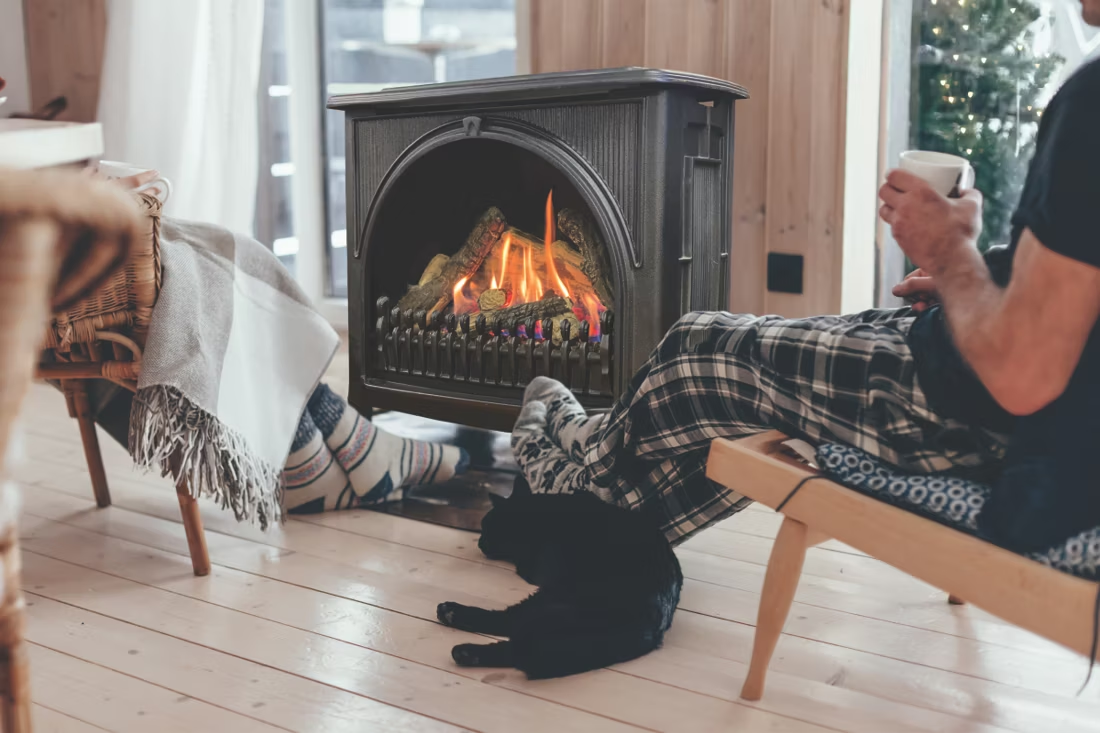
Four fuels. One honest answer for Randolph County.
Three steps. No salesperson until you're ready.
Tell us about your project
Your zip code, your situation, and the fuel you're leaning toward—or let the answers point you to one.
See what's actually available
The brands dealers within 100 miles genuinely carry—real options, never a catalog mirage.
Get your dealer & Project Guide
A trusted local dealer, plus the free Project Guide & Parts List that names every component of the job.
Frequently Asked Questions
Which fuel makes sense for a Randolph County home?
It depends on the house and the priorities of the people in it. Wood remains a strong choice here—oak and hickory from local woodlots burn long and hot, and a lot of rural Randolph County homes still lean on a wood stove or insert as either primary heat or a reliable backup when winter storms knock out rural electric co-op service. Gas is the low-maintenance option for homes with propane tanks or, in Pocahontas, natural gas service—instant heat with none of the splitting and stacking. Pellet stoves are a solid middle path, especially with regional supply from brands like Lignetics reaching this part of Arkansas, though they still need grid power to run the auger and blower. Electric fireplaces work well as supplemental heat in bedrooms or additions, but with average winter lows only in the mid-20s, most homes here don't need electric as a primary heat source. Many Randolph County households end up mixing fuels—wood or pellet for the main living space, electric or gas for the rooms that don't get a chimney run.
Do I need a permit to install a wood stove or fireplace in Randolph County?
Requirements vary by whether you're inside city limits or out in unincorporated county land. Within Pocahontas, building permits are typically required for new wood stove, insert, gas fireplace, and pellet stove installations, along with a separate gas permit for any propane or natural gas line work. Much of unincorporated Randolph County has lighter permitting oversight than an incorporated city, but insurance carriers still routinely require proof of a code-compliant installation—correct clearances to combustibles, a properly sized chimney or vent, and in many cases a Wood Energy Technology Transfer (WETT) or equivalent inspection—before they'll write or renew a homeowner's policy. A local hearth retailer who's installed dozens of units in the county can usually walk you through exactly what your specific address requires and pull any permits on your behalf.
Is wood smoke or air quality a concern when burning in Randolph County?
Not in the way it is in western basin or coastal non-attainment counties. Randolph County has no designated air quality non-attainment issues and no winter inversion pattern trapping smoke at ground level, so there are no local burn bans or curtailment periods tied to air quality. That said, a modern EPA-certified wood stove still burns cleaner and uses roughly a third less wood than an old pre-1988 stove, which matters given how much oak and hickory a full Ozark-foothills winter can go through. If you're replacing an older stove, ask your local dealer about current EPA 2020 NSPS-certified models—better efficiency, less creosote buildup, and less smoke drifting toward the neighbors even without a regulatory mandate pushing you there.
Can one hearth retailer in the county handle all four fuel types?
Coverage varies by dealer, and in a county this size—around 9,100 people—you're less likely to find a single big-box-style showroom carrying everything than in a larger metro. Some Pocahontas-area retailers carry wood, gas, and pellet units and treat electric fireplaces as a smaller side offering; others specialize more narrowly in wood stoves and inserts given how central hardwood heating is to the local market. If you're trying to compare fuels side by side, ask upfront which lines a dealer stocks and installs—a good local retailer will tell you plainly if a fuel type isn't their strength and point you to someone else in the county rather than talk you into the wrong unit.
How does fireplace or stove service work out in rural parts of the county?
Most chimney sweeps and gas techs serving Randolph County are based in or around Pocahontas and travel out to Maynard, Reyno, Biggers, O'Kean, and the river-bottom farms in between. Expect a modest trip fee for calls well outside town, and expect scheduling to tighten up fast once the first hard cold front comes through—booking your annual chimney sweep or gas inspection in September or October, before the rush, is the easiest way to avoid a multi-week wait in December. If you're heating with wood, plan on an annual sweep given how much creosote oak and hickory can leave behind in a season of steady burning.
What does fireplace installation typically cost across fuel types in Randolph County?
Costs run in line with rural Arkansas pricing rather than metro rates. Wood stove or insert installation: roughly $3,500–$7,500 for a typical job, more if new chimney chase construction is involved. Gas fireplace, insert, or stove: roughly $3,500–$8,500, with cost driven mainly by whether a propane line already runs to the install location or needs to be run new. Pellet stove or insert: roughly $3,500–$6,000 for most installs. Electric fireplace: $200–$2,500 for the unit itself, plus $300–$900 in labor unless it's a simple plug-and-play unit. Exact numbers depend on your home's chimney condition, venting path, and which local dealer you use—the county + fuel pages above break down retailer-specific pricing in more detail.
Wood, gas, pellet, or electric—how do I choose?
Match the fuel to your life, not the other way around. Wood: lowest fuel cost and total power-outage independence, but you're hauling and stacking. Gas: press a button, set a thermostat, no maintenance to speak of. Pellet: wood economics with automatic feeding, in exchange for weekly cleaning and a need for electricity. Electric: plugs in anywhere with honest supplemental heat. Nobody regrets the fuel that fits how they actually live.
Can a fireplace actually lower my heating bill?
Yes—by creating a comfort zone. A furnace heats every square foot of the house just to warm the one room you're in; a gas fireplace on low burns roughly a sixth of the gas a typical furnace does. Set the furnace around 55–60 degrees as a baseline, then heat the rooms your family actually uses. Families who heat this way commonly save $20–$60 a month.
What is an in-home preview and do I need one?
It's a visit where a hearth professional measures your space, confirms the model you picked actually works in your home, and walks the specs—framing, gas line, venting, finish work—before anything is ordered. Some details you just can't know until you see the house. Never make a down payment without one; it's the single most-skipped step that burns buyers.
Can I install a fireplace myself?
If you're putting a fire in your house on purpose, it's best to work with an expert. Unless you're genuinely experienced in framing, gas line, vent pipe, and the national code on clearances to combustibles, have a professional do it—and ideally the same company that sells you the fireplace, so warranty, service, and liability all live under one roof.
Stove and Fireplace Dealers in Randolph County
Listings include WhyFire partner dealers, dealers we have verified as authorized for the brands we recommend, and established local businesses that carry hearth products. Every listing shows which one it is. The ones marked Preferred run on WhyFire's software, so they can show you real pricing and book your appointment right here. No manufacturer pays for placement. How we verify dealers →
R & R Sales And Service
Richards Heating And Cooling
Acme Brick Company
Paragould Monument
Environments Pools & Spa
Find your fireplace in Randolph County.
Pick your fuel below and I'll match you with a trusted local dealer and send over a free Project Guide & Parts List—the exact parts, including the vent kit, and the recommended installer for your project.
Find Your Fireplace →