
Keep Your Family Warm and Safe—No Matter What
Mild Mississippi Delta winters mean wood heat here is mostly about supplemental warmth and the feel of a real fire—from Helena-West Helena to Marvell and Elaine. Find the right stove or insert, and connect with a trusted local dealer.
Every Project Starts From One of These Five Situations
Supplemental heat, real ambiance, low-key winters.
Phillips County sits along the Mississippi River in the Arkansas Delta, with average winter lows around 32 degrees and a mild winter heating load—just a fraction of what a place like Fargo, ND sees. That puts the county in Climate Zone 3A, a mild, humid heating zone where central heat handles most of the load and a wood stove functions as a supplement, a backup during ice storms, or simply a fireplace people actually enjoy using on the handful of genuinely cold nights each winter.
Oak, hickory, and pine are all locally abundant across the bottomland hardwood forests and pine stands surrounding Helena-West Helena, Marvell, and Elaine, and hickory in particular burns hot and long—a plus on the rare nights when temperatures drop into the teens. With no air quality restrictions in the county, homeowners here don't face the burn bans or non-attainment rules that complicate wood heat in some parts of the country. That means the choice comes down to what you want: a modest secondary heat source, reliable warmth if an ice storm knocks out power, or a fireplace insert that finally makes an old, drafty masonry hearth worth using again.
Three steps. No salesperson until you're ready.
Tell us about your project
Your zip code, your situation, and the fuel you're leaning toward—or let the answers point you to one.
See what's actually available
The brands dealers within 100 miles genuinely carry—real options, never a catalog mirage.
Get your dealer & Project Guide
A trusted local dealer, plus the free Project Guide & Parts List that names every component of the job.
Frequently Asked Questions
How much does a wood stove installation cost in Phillips County?
Costs for wood stove and insert installations in Phillips County typically track national averages, generally landing in the $2,500 to $6,500 range depending on the unit, whether an existing masonry fireplace can be reused for venting, and whether new Class A chimney pipe is needed for a freestanding stove in a home without an existing flue. Because Phillips County's mild Delta winters mean most installs are for supplemental or backup heat rather than a whole-home primary system, homeowners often choose a mid-sized stove rather than the larger, heavier-duty units common in colder climates—which can keep costs toward the lower end. A local dealer can give you a firm number after seeing your home and chimney situation.
Do I even need a wood stove if my winters are this mild?
Plenty of Phillips County homeowners install one anyway, and for good reason. With winter lows averaging around 32 degrees and a fairly light winter heating load overall, a wood stove here isn't doing the heavy lifting central heat does in a place like Duluth, MN—but it earns its keep during the occasional Delta ice storm, when power lines go down and a wood stove keeps a room livable without electricity. It also gets used simply because people like having a real fire on a cold, damp January evening. If your goal is pure heating efficiency, central heat already covers that. If you want backup warmth and ambiance, a stove or insert is worth it.
What size wood stove do I need for my home?
Because Phillips County's heating load is light compared to colder parts of the country, most homes here do well with a small to medium stove rated for 1,000 to 1,800 square feet, even in larger houses—since the stove is supplementing existing central heat rather than carrying the whole house through winter. An older farmhouse near Marvell or a historic home in Helena-West Helena with drafty windows might benefit from sizing up slightly, but oversizing a stove for this climate usually just means more smoldering, low, inefficient fires rather than better heat. A local dealer can walk your space and recommend the right size.
What's the difference between a wood stove and a wood insert?
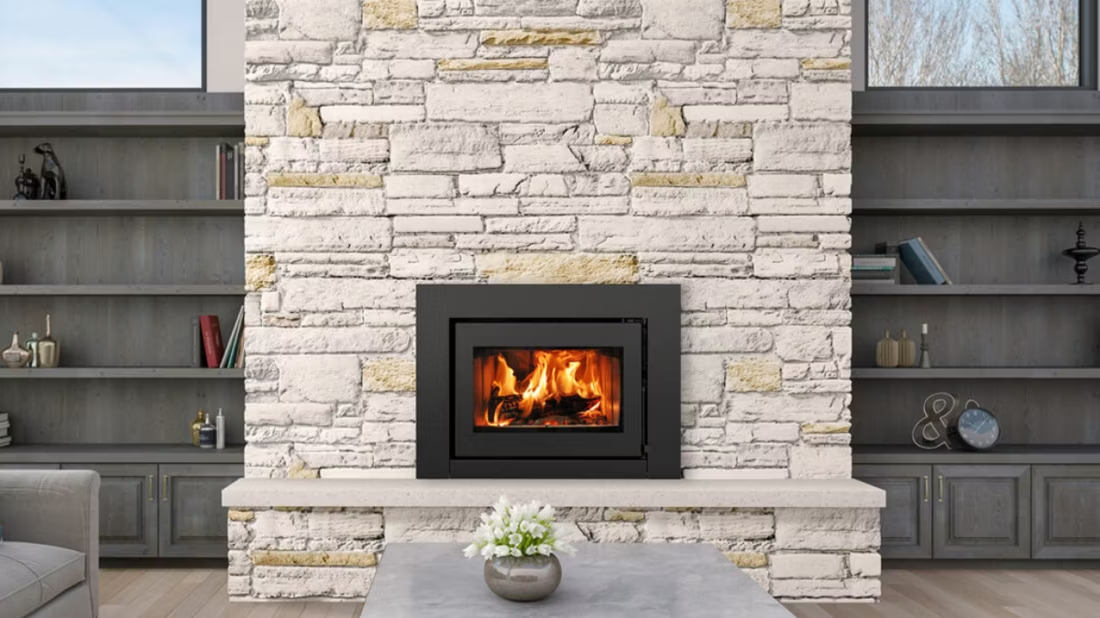
A wood stove is a freestanding unit installed on a hearth pad with its own chimney system—it can go almost anywhere in a room with the right clearances. A wood insert is built to slide into an existing masonry fireplace opening, turning an old, inefficient open fireplace into a sealed, much more effective heat source using the chimney you already have. Given how many homes in Helena-West Helena and the surrounding county have older masonry fireplaces original to the house, an insert is often the simpler, lower-cost path since it reuses existing venting. Homes without an existing fireplace typically go with a freestanding stove instead.
Do I need a permit to install a wood stove in Phillips County?
Most wood stove and insert installations require a building permit, and any new unit should meet current EPA emissions standards. Permitting in Phillips County generally runs through the local building authority covering Helena-West Helena and the unincorporated county, and most established hearth dealers handle the permit paperwork as part of the installation rather than leaving it to the homeowner. Since Phillips County has no air quality non-attainment designation or winter burn restrictions, there's no added layer of local burning rules to navigate beyond the standard permit and code inspection.
What's the best wood stove for Phillips County's climate?
Because the Delta's mild winters mean most stoves here run as supplemental or backup heat rather than 24/7 primary heat, a mid-sized non-catalytic stove from a brand like Pacific Energy or Lopi is usually plenty—easy to start, quick to heat a room, and less finicky than the long-burn catalytic models built for sub-zero climates. Since oak and hickory are both readily available locally and burn dense and long, a stove that handles hardwood well is a good fit. If backup power-outage heat is the priority, ask your dealer about models that don't rely on a blower fan to push out usable heat, since those will still function fine without electricity.
How often should my chimney be inspected and cleaned?
The CSIA recommends an annual inspection for any wood-burning appliance, and that holds even in a mild climate like Phillips County's—light, infrequent use can actually allow creosote to build up in ways that surprise homeowners who assume low usage means low risk. Plan on a sweep and inspection each late summer or early fall before the first cold front rolls through, especially if the stove sat mostly unused the prior winter. A certified sweep can also flag any issues with an older masonry chimney common in Helena-West Helena's historic housing stock.
Where can I buy or source firewood in Phillips County?
Oak, hickory, and pine are all common locally, with hickory especially prized for its long, hot burn on the coldest nights of the year. Given the county's agricultural and timber land, many homeowners in and around Marvell and Elaine source firewood directly from local landowners or small-scale sellers rather than large commercial suppliers, and seasoned hardwood typically runs cheaper here than in regions where firewood demand is higher year-round. If you're new to the area, ask your hearth dealer for a referral—most keep a list of reliable local firewood sources.
Wood stove vs. pellet stove—which is right for me?
Wood stoves burn cordwood, work with no electricity at all (a real advantage during a Delta ice storm outage), and pair naturally with the locally abundant oak and hickory. Pellet stoves burn compressed wood pellets from brands like Lignetics, are simpler to load and run, and produce less mess—but they need electricity to run the auger and blower, so they go dark exactly when an outage makes backup heat matter most. For a Phillips County home mainly looking for occasional ambiance and ice-storm backup, wood usually wins. For a household that wants a low-maintenance secondary heat source and doesn't worry much about outages, pellet can be the easier day-to-day choice.
Why is a fireplace insert so efficient?
An insert does two things: it seals the chimney completely, so you stop losing air you already paid to heat, and it radiates warmth into the room through the firebox and glass. Most add a heat-exchange fan that pulls cool room air underneath, wraps it around the hot firebox, and pushes it back out warm. Your home is more efficient before you've even lit the first fire.
Why won't my new wood stove get going like my old one?
New wood stoves are 70%+ efficient, so far less heat goes up the flue—which also means less draft to get a fire established. The rule: build a genuinely hot fire for about 45 minutes before you choke it down. Skip that and you get smoke in the room, creosote in the chimney, and a fire that never takes off. Most performance complaints trace straight back to this.
What is an in-home preview and do I need one?
It's a visit where a hearth professional measures your space, confirms the model you picked actually works in your home, and walks the specs—framing, gas line, venting, finish work—before anything is ordered. Some details you just can't know until you see the house. Never make a down payment without one; it's the single most-skipped step that burns buyers.
Can I install a fireplace myself?
If you're putting a fire in your house on purpose, it's best to work with an expert. Unless you're genuinely experienced in framing, gas line, vent pipe, and the national code on clearances to combustibles, have a professional do it—and ideally the same company that sells you the fireplace, so warranty, service, and liability all live under one roof.
Get your free Project Guide & Parts List for wood heat in Phillips County.
Tell us a bit about your home and we'll match you with a trusted local dealer and put together a free Project Guide & Parts List—the exact parts, including the vent kit, for your wood stove or insert project.
Find Your Fireplace →