
Electric heat that fits Phillips County's mild winters.
No chimney, no gas line, no venting—just plug-in warmth for the Delta's short heating season. Find the right electric fireplace or insert and get matched with a trusted local dealer serving Helena-West Helena and the rest of Phillips County.
Every Project Starts From One of These Five Situations
Convenience heat for a mild Delta climate.
Phillips County sits in the Mississippi Delta lowlands of eastern Arkansas, along the river bottoms east of Helena-West Helena. Climate zone 3A means winters here are short and mild by national standards—the average winter low is 32°F, and the county's overall winter heating load is roughly a third of what a place like Fargo, ND sees in the same period. Oak, hickory, and pine grow throughout the county and have fueled generations of wood stoves in older farmhouses, but the actual heating load most homes carry today is modest, and much of the housing stock in and around Helena-West Helena includes historic shotgun houses, bungalows, and older masonry homes that were never built with central heat in mind.
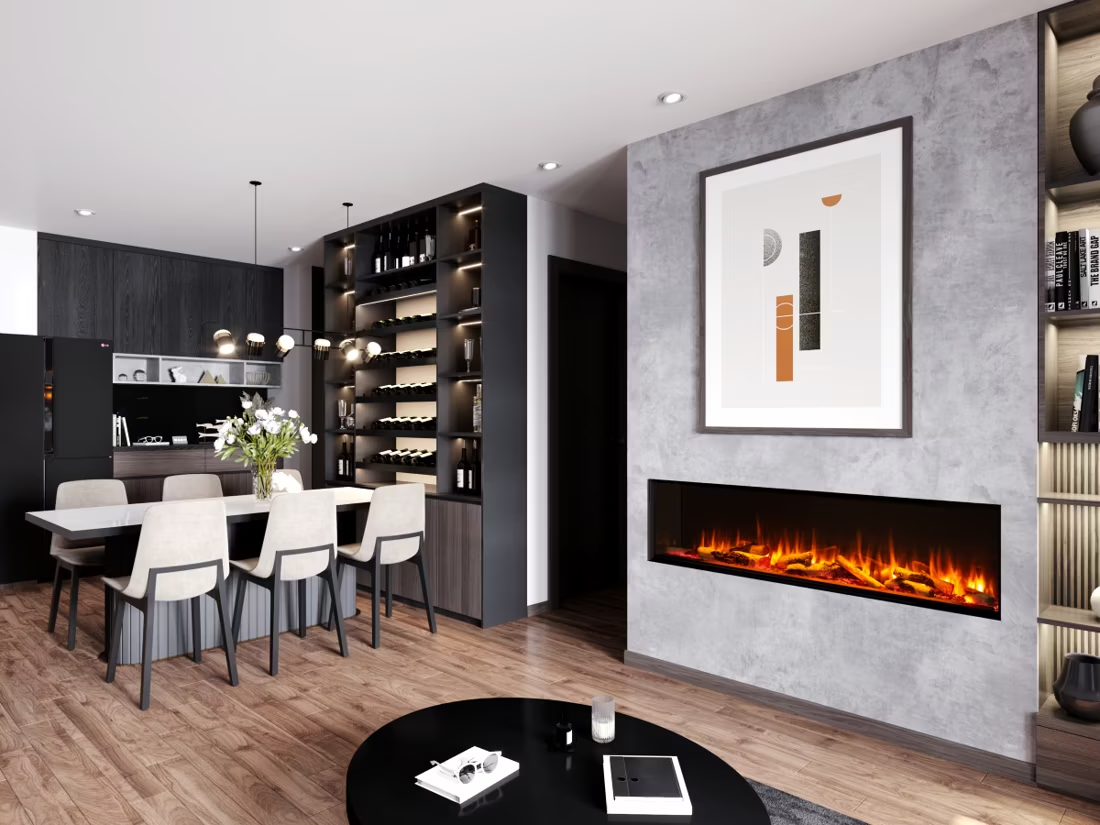
That combination—mild winters, a lot of older housing stock, and a lot of renters and fixed-income households—is exactly where electric fireplaces earn their keep. There's no chimney to maintain, no gas line to run, and no combustion byproducts to vent, which matters in older homes where an existing masonry opening may not be safe or cost-effective to bring up to code for wood or gas. An electric insert or wall-mount unit runs off standard household wiring (sometimes a dedicated circuit), draws power through Entergy Arkansas, and delivers zone heat to the room you're actually using—which is often all a Phillips County home needs for the handful of genuinely cold nights each winter.
Three steps. No salesperson until you're ready.
Tell us about your project
Your zip code, your situation, and the fuel you're leaning toward—or let the answers point you to one.
See what's actually available
The brands dealers within 100 miles genuinely carry—real options, never a catalog mirage.
Get your dealer & Project Guide
A trusted local dealer, plus the free Project Guide & Parts List that names every component of the job.
Frequently Asked Questions
How much does an electric fireplace installation cost in Phillips County?
Costs vary widely by unit type. A plug-in freestanding or wall-mount electric fireplace can run as little as $300 to $800 installed, since there's no venting or gas work involved—often just a licensed electrician confirming the outlet or adding a dedicated circuit. A built-in electric insert set into an existing masonry fireplace opening, complete with a custom surround or mantel, typically runs $1,000 to $3,000 depending on the unit and finish work. Because there's no chimney liner, no gas line, and no Class A venting to install, electric projects in Phillips County are almost always the least expensive fireplace option—local dealers will confirm exact pricing after seeing your space.
Will an electric fireplace actually heat my room, or is it just for looks?
Most electric fireplaces include a built-in heater rated around 1,500 watts, which is enough to comfortably heat 400 to 1,000 square feet depending on ceiling height and insulation. Given Phillips County's mild winter lows—averaging 32°F rather than the deep-negative temperatures seen further north—an electric unit can realistically serve as the primary heat source for a den, sunroom, or bedroom during most of the heating season, with central heat or a space heater picking up the coldest stretches. It's genuine supplemental heat, not just ambiance, though it won't replace whole-home HVAC in a larger house.
Electric insert vs. wall-mount vs. freestanding—which fits my home?
If you have an existing masonry fireplace opening—common in Helena-West Helena's older bungalows and shotgun houses—an electric insert is usually the cleanest retrofit, sliding into the opening without disturbing the chimney or requiring any venting work. Wall-mount units suit newer construction or rooms with no existing fireplace, mounting flush to the wall like a piece of art. Freestanding electric stoves work well for renters or anyone who might move, since they simply plug in and sit on the floor with no permanent installation at all. A local dealer can walk your space and tell you which format actually fits.
Do I need a permit or an electrician to install an electric fireplace in Phillips County?
Plug-in units generally don't require a permit—they use a standard household outlet just like any other appliance. Built-in units or anything requiring a dedicated 20-amp circuit should be wired by a licensed electrician, and larger built-in installations may need an electrical permit through your local building department. Unlike wood or gas installs, there's no chimney inspection, no gas-fitter, and no combustion venting to coordinate—which is part of why electric projects move faster and cost less in Phillips County than a comparable wood or gas installation.
What does it cost to run an electric fireplace with Entergy Arkansas rates?
A typical electric fireplace heater draws about 1,500 watts on its highest heat setting, which costs a few cents per hour more than running the flame-only ambiance mode. At typical Entergy Arkansas residential rates, running the heater for a few hours on a cold evening costs a small fraction of what heating an entire house with central electric resistance heat would cost—which is the whole appeal of zone heating in a mild climate like Phillips County's. Most owners run the unit on flame-only for ambiance and only kick on the heater when they're actually in the room and it's genuinely cold outside.
Electric vs. wood vs. gas—which makes the most sense in Phillips County?
Wood still has a real place here—oak and hickory are abundant locally, and a wood stove works without electricity, which matters if storms knock out power. Gas requires either a natural gas hookup or a propane tank and gas line, plus venting, which adds cost and complexity. Electric skips all of that: no fuel to store, no chimney to sweep, no gas line to run, and no emissions to worry about—a real advantage for renters, historic homes with an opening that isn't safe to reline, or anyone who wants supplemental heat without taking on a combustion appliance. Given Phillips County's mild heating load, electric covers most of what a typical home needs; wood remains the better choice for anyone prioritizing off-grid backup heat.
Are electric fireplaces safer than wood or gas for older Delta homes?
In most respects, yes. There's no open flame, no embers, no carbon monoxide risk, and no creosote buildup to worry about, which matters in older Phillips County housing stock where an existing chimney may not have been inspected or relined in decades. Electric units also don't heat up to the same surface temperatures as wood stoves, which some households—especially those with young kids or renters not wanting to modify a property—prefer. That said, any built-in unit still needs correct electrical work; an undersized circuit or improper wiring is the main risk, which is why using a licensed electrician for anything beyond a simple plug-in model matters.
Can I put an electric fireplace into my existing fireplace opening?
Yes—this is one of the most common projects for older Delta homes. An electric insert slides into an existing masonry fireplace opening without needing the chimney to be relined or even functional, since there's no combustion or venting involved. It's a popular option in Helena-West Helena's older shotgun houses and bungalows where the original chimney may be structurally sound but not worth the cost of a full wood or gas retrofit. The insert simply plugs in, and many models include a surround kit to finish the look of the existing mantel and opening.
Will my electric fireplace still work if the power goes out?
No—electric fireplaces require power to run both the heater and the flame effect, so they won't provide heat during an outage. For Phillips County homes that want backup heat during Delta storms or ice events, a wood stove using locally available oak or hickory is the more reliable option, since it burns without any electrical input. Many households end up with an electric unit for everyday convenience and ambiance in one room, and keep a wood stove or fireplace elsewhere in the house as a genuine outage backup—your local dealer can help plan both if that's the goal.
Can I put a TV above my fireplace?
Yes—with an asterisk. Fireplaces are hot and TVs don't like heat. Either put a mantel between them to deflect rising warmth, or choose a fireplace with heat-management technology that creates a cool zone on the wall above—the wall stays around 125 degrees, barely warm, while the room still gets full heat. If you like clean lines and don't want a mantel, heat management is the answer.
Does an electric fireplace need a vent or chimney?
No—that's its superpower. An electric fireplace needs a wall and an outlet, period. No vent pipe, no gas line, no clearances to design around, which is why it works in bedrooms, offices, apartments, and walls where venting a gas or wood unit would be impractical or impossible. Installation is typically the simplest and least expensive of any fireplace type.
Can I install a fireplace myself?
If you're putting a fire in your house on purpose, it's best to work with an expert. Unless you're genuinely experienced in framing, gas line, vent pipe, and the national code on clearances to combustibles, have a professional do it—and ideally the same company that sells you the fireplace, so warranty, service, and liability all live under one roof.
Does a fireplace add value to my home?
On average, a fireplace adds back to the home about the same amount you spent installing it. Add the monthly savings from heating the rooms you actually use instead of the whole house—often hundreds of dollars a year—and the value case is strong before you even count what a fire does for how your family uses the room.
Find your electric fireplace in Phillips County.
Tell us a bit about your home and we'll put together your free Project Guide & Parts List—the right electric fireplace or insert for your space, plus a match with a trusted local dealer in Phillips County who can install it correctly.
Find Your Fireplace →