
Efficient pellet heat for Phillips County's Delta winters.
From Helena-West Helena to the farmland around Marvell and Elaine, pellet stoves deliver clean, thermostat-controlled heat for a mild but humid Delta winter. Find the right unit and connect with a trusted local dealer.
Every Project Starts From One of These Five Situations
Consistent warmth for a mild Delta climate.
Phillips County sits in the Arkansas Delta along the Mississippi River, with a modest winter heating season and winter lows that average around 32 degrees—a Zone 3A climate where hard freezes happen but rarely last long. That's a very different heating problem than a place like Duluth, MN or Fargo, ND. Most of the county's 11,257 residents don't need a furnace-sized appliance running around the clock; they need something that can knock the chill off a farmhouse near Marvell or a shotgun house in Helena-West Helena during a January cold snap, then sit idle for the rest of a mild spring.
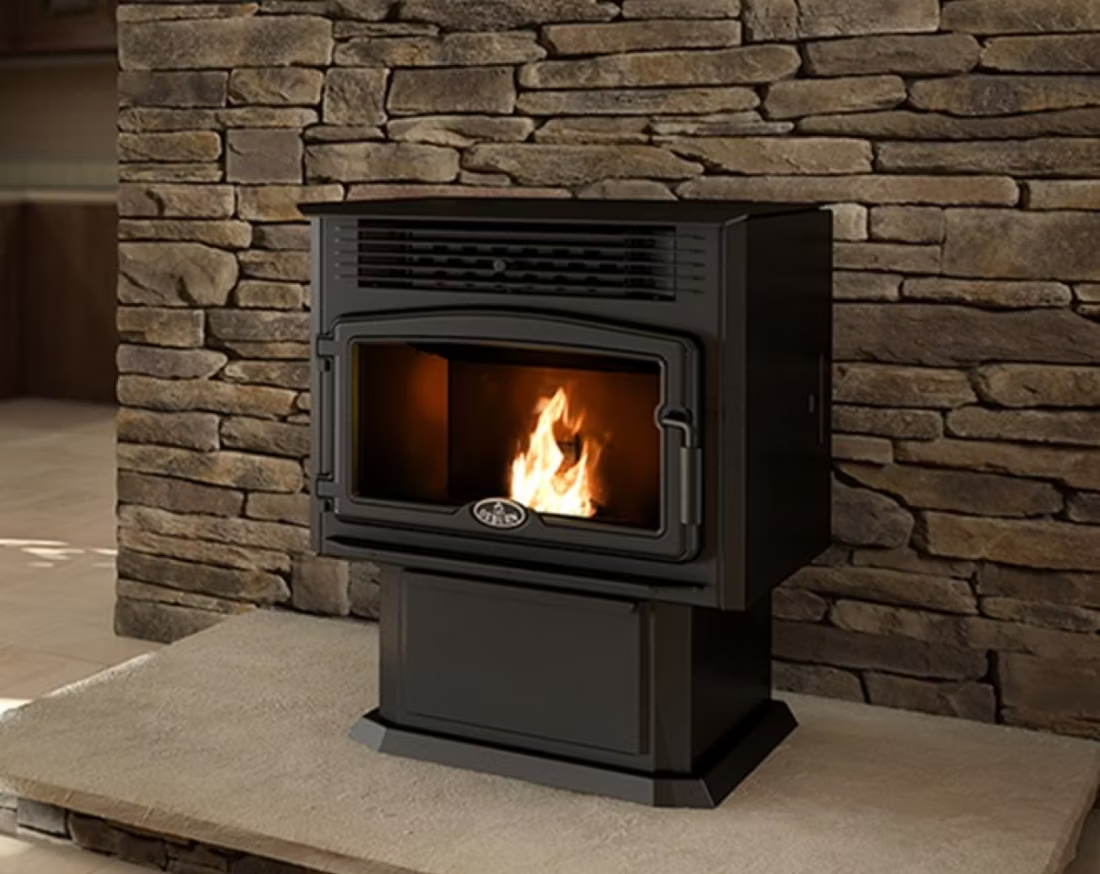
That's exactly the gap a pellet stove fills. There's no non-attainment designation or wood-smoke curtailment ordinance on the books here, so permitting is straightforward compared to counties dealing with winter inversion rules. Pellet supply in the region comes through brands like Lignetics and Indeck Energy Services, both of which draw on the same oak, hickory, and pine timber that has long supported Delta sawmills. A pellet stove gives you thermostat-level control, a hopper that only needs loading every day or two, and a small-diameter PL vent that goes through an exterior wall—no masonry chimney required, which matters in a county where a lot of housing stock is older and wasn't built with one.
Three steps. No salesperson until you're ready.
Tell us about your project
Your zip code, your situation, and the fuel you're leaning toward—or let the answers point you to one.
See what's actually available
The brands dealers within 100 miles genuinely carry—real options, never a catalog mirage.
Get your dealer & Project Guide
A trusted local dealer, plus the free Project Guide & Parts List that names every component of the job.
Frequently Asked Questions
How much does a pellet stove installation cost in Phillips County?
Pellet stove installations typically run in the $3,000 to $6,000 range, with the spread driven mainly by the stove model, whether a hearth pad is needed for clearance, and how far the vent run has to travel through an exterior wall. Because pellet stoves vent through a simple PL-rated pipe rather than a full masonry chimney, installs in Phillips County are usually simpler and less expensive than a comparable wood stove project—especially in older Delta homes around Helena-West Helena that don't already have a chimney. A local dealer will give you a firm number once they've seen the room and the wall you're venting through.
What size pellet stove do I need for my Phillips County home?
With a fairly light winter heating season and winter lows that average in the low 30s, most Phillips County homes don't need a large-capacity unit. A small to medium stove—generally in the 40,000 to 50,000 BTU range—is enough to heat a main living area or a single-story farmhouse near Marvell or Lexa during the coldest stretches of December and January. Larger stoves make sense mainly for older, leakier homes or for anyone planning to run the stove as their primary heat source rather than a supplement to central electric or propane heat. A local dealer will size the unit to your actual square footage and insulation rather than a rule of thumb.
Where can I find pellet stove dealers near me in Phillips County?
Dealer coverage in a county this size is thinner than in a metro area, so most homeowners in Helena-West Helena, Marvell, and Elaine end up working with the same handful of retailers who cover the eastern Arkansas Delta. That's really the value of getting matched rather than cold-calling: a trusted local dealer who already knows Phillips County's older housing stock, handles the permit paperwork, and sizes the vent run correctly the first time—instead of a big-box install that guesses.
What's the difference between a pellet stove and a pellet insert?
A pellet stove is a freestanding appliance that sits on a hearth pad and vents through a wall or existing chimney chase—it can go into almost any room with the right clearances. A pellet insert is built to slide into an existing masonry fireplace opening, which is a common upgrade in older Phillips County homes that already have a fireplace but rarely use it. The insert reuses the existing masonry as a shell while sealing off the open flue, which both improves heat output and cuts down on the draft an open fireplace pulls out of the room. If you've got an existing fireplace, the insert route is usually the more efficient and better-looking option.
Do I need a permit to install a pellet stove in Phillips County?
Yes, a building permit is generally required for any new fuel-burning appliance installation, even a simple pellet unit with wall venting. Phillips County has no wood-smoke non-attainment designation and no seasonal curtailment ordinance, so there's nothing comparable to the burn-ban rules you'd find in a place like the Klamath Basin—the permitting here is mostly about verifying clearances and vent termination, not air quality compliance. Most local dealers pull the permit as part of the installation, so it's rarely something the homeowner has to handle directly.
What's the best pellet stove for Phillips County's climate?
Because winters here are mild compared to the northern half of the country, you don't need a stove built for round-the-clock, sub-zero output. A mid-size unit with a good thermostat and a reliable auger—models from Harman or Englander are common in this price range—will comfortably handle a Delta cold snap without running full-tilt all season. What matters more locally is fuel access: since regional supply runs through Lignetics and Indeck Energy Services, it's worth confirming with your dealer which bagged pellets are easiest to source near Helena-West Helena before committing to a stove that's picky about pellet quality.
How often should my pellet stove be serviced?
Plan on a full cleaning and inspection once a year, ideally before the first cold stretch in late fall. That includes clearing the burn pot and ash traps, checking the auger and exhaust fan, and inspecting the vent termination on the exterior wall. Given how mild Phillips County winters run, most homeowners here use their stove far fewer hours per season than someone in a colder climate zone, so a single annual service is usually enough—heavier users running the stove as primary heat may want to check the burn pot mid-season as well.
Where can I buy pellets locally in Phillips County?
Regional supply in eastern Arkansas runs primarily through Lignetics and Indeck Energy Services, both of which produce pellets from the same oak, hickory, and pine timber that supports Delta sawmills. Farm and feed supply stores in and around Helena-West Helena typically stock bagged pellets seasonally, with pricing that tracks close to the regional average for the Mid-South. Buying a season's supply early in the fall, before demand picks up during the first real cold snap, is the most reliable way to avoid running short mid-winter.
Pellet stove vs. wood stove—which makes more sense in Phillips County?
Wood is genuinely abundant here—oak, hickory, and pine are all common in the county's timber, and there's no air-quality restriction limiting wood burning the way there is in some non-attainment areas out west. That makes wood a viable, low-cost option if you have access to cut or delivered firewood. Pellet stoves trade that low fuel cost for convenience: a hopper that runs for a day or more without reloading, thermostat control, and easier venting through a simple wall pipe instead of a full chimney. For a Phillips County homeowner who wants supplemental heat without tending a fire or stacking cordwood, pellet is usually the more practical fit; for anyone with cheap or free access to local hardwood, wood can still make financial sense.
What's the difference between an insert and a zero-clearance fireplace?
An insert is a fireplace that slides into a pre-existing wood-burning fireplace—if you don't have one, there's nothing to insert it into. A zero-clearance fireplace is built into a framed wall, which makes it the answer for remodels and new construction. Simple test: existing masonry fireplace means insert; blank or framed wall means zero-clearance.
Why is my open fireplace making my house colder?
Open fireplaces suck—literally. As the fire burns, it consumes air your furnace already paid to heat and pulls it out through the chimney, so the house is actually colder after the fire goes out than before you lit it. An insert fixes this: it seals the chimney, puts fixed glass across the front, and turns that hole in your house into a real heat source.
Can I install a fireplace myself?
If you're putting a fire in your house on purpose, it's best to work with an expert. Unless you're genuinely experienced in framing, gas line, vent pipe, and the national code on clearances to combustibles, have a professional do it—and ideally the same company that sells you the fireplace, so warranty, service, and liability all live under one roof.
How much should I budget for a fireplace?
For an average home—covering the fireplace, the vent pipe, and basic installation—a budget between $3,900 and $5,500 gives you a lot of options across wood, gas, and pellet. By the time you add finish work, gas line, and electrical, the average complete installation lands between $5,000 and $12,000 all-in. In a remodel or new build, a good rule is to put about 2.5% of the total project cost toward the fireplace.
Pellet Brands Stocked Around Phillips County
Manufacturers will point you to the nearest stocking dealer.
Find your pellet stove in Phillips County.
Tell us a bit about your home and we'll match you with a trusted local dealer and send over a free Project Guide & Parts List—the exact parts, including the vent kit, for your pellet stove project in Phillips County.
Find Your Fireplace →