
Find a pellet stove built for Arkansas County's mild Delta winters.
Steady, thermostat-controlled heat for the flat Delta farmland around DeWitt and Stuttgart—no woodpile, no chimney sweep, just a hopper of pellets and a clean burn. Find the right unit and connect with a trusted local dealer.
Every Project Starts From One of These Five Situations
Clean-burning heat without the woodpile.
Arkansas County sits in the heart of the Arkansas Delta—flat rice and soybean country stretching from DeWitt down through Stuttgart, the self-proclaimed Rice and Duck Capital of the World. Climate zone 3A here means a mixed-humid winter that's mild by national standards: average winter lows hover around 32°F and the county logs roughly 3,230 heating degree days a season, a fraction of what a place like Duluth, MN sees. That mildness is exactly why pellet stoves fit so well—homeowners here mostly want dependable supplemental heat for cool mornings and the occasional cold snap, not a furnace-replacement system built for sub-zero nights.
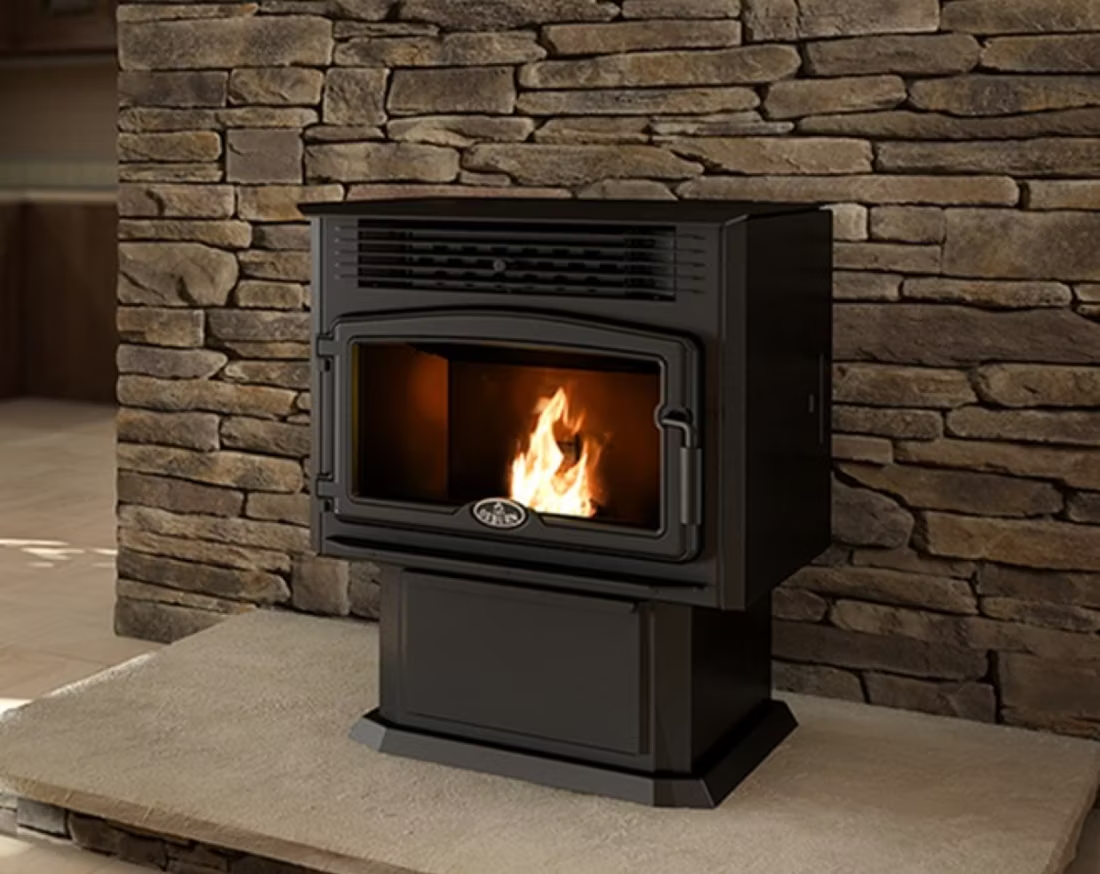
The county's bottomland hardwood forests along the White River produce plenty of oak, hickory, and pine, and many longtime residents already burn wood. But for homes without an existing chimney, for folks who don't want to split and stack cordwood, or for a second heat source in a farmhouse outbuilding, a pellet stove offers thermostat-set convenience with a fraction of the mess. Regional suppliers like Lignetics and Indeck Energy Services keep bagged pellets reasonably accessible in this part of Arkansas, and a direct-vent pellet insert or freestanding stove can go into a room that never had a fireplace to begin with—a real advantage in a county full of older Delta farmhouses built without one.
Three steps. No salesperson until you're ready.
Tell us about your project
Your zip code, your situation, and the fuel you're leaning toward—or let the answers point you to one.
See what's actually available
The brands dealers within 100 miles genuinely carry—real options, never a catalog mirage.
Get your dealer & Project Guide
A trusted local dealer, plus the free Project Guide & Parts List that names every component of the job.
Frequently Asked Questions
How much does a pellet stove installation cost in Arkansas County?
Most pellet stove installations in Arkansas County run in the $2,800 to $5,500 range for a freestanding unit with wall-thimble direct venting, and pellet inserts into an existing masonry fireplace typically land between $3,500 and $6,500 depending on the liner length and hearth work needed. Because the county's winters are mild—average lows around 32°F—most homeowners here are sizing for supplemental heat in a living room or den rather than whole-house replacement, which keeps most jobs toward the lower end of that range. Homes on the rural edges of the county, out toward Gillett or Almyra, may see a modest travel charge added by installers based in Stuttgart or DeWitt.
What size pellet stove do I need for a home in Arkansas County?
With roughly 3,230 heating degree days a year, Arkansas County doesn't demand the oversized, cold-climate units you'd spec for a place like Bismarck, ND or Fargo, ND. A small to mid-size pellet stove (rated for 1,000-1,800 square feet) is enough to comfortably heat a main living area or den in most Delta farmhouses, and it's common here for a pellet stove to serve as zone heat for the rooms people actually live in rather than a whole-house solution. If you're heating an older, less-insulated farmhouse with high ceilings, size up slightly—a local dealer can walk your space and give you an accurate BTU recommendation.
Do I need a permit to install a pellet stove in Arkansas County?
Yes—a building permit is typically required for a new pellet stove or insert installation, covering the through-wall vent termination and hearth clearances, and this is handled through the local building permit office serving your jurisdiction, whether that's DeWitt, Stuttgart, or unincorporated Arkansas County. Most established hearth dealers pull this permit as part of the installation and schedule the required inspection, so homeowners rarely have to navigate it directly. Because pellet stoves vent through a small wall thimble rather than a full masonry chimney, permitting and inspection here tends to be simpler and faster than for a wood-burning appliance.
Where does pellet fuel come from and what does it cost locally?
Bagged hardwood and softwood pellets are available through regional suppliers, including brands like Lignetics that distribute across the mid-South, with Indeck Energy Services also serving as a regional source. Expect to pay roughly $230 to $300 per ton depending on brand and how far it has to travel to reach Arkansas County retailers—buying a season's supply (typically 1 to 3 tons for supplemental heat in a mild-winter home like this) in late summer or early fall, before demand picks up, is the best way to lock in the lower end of that range. Pellets should be stored dry, off a concrete floor if possible, since Delta humidity can degrade bags left in a damp garage or shed.
Will my pellet stove work if the power goes out?
Not without a backup power source—this is the one real tradeoff of pellet heat compared to wood. A pellet stove's auger, igniter, and combustion blower all run on electricity, so a standard unit goes dark in an outage. That matters in Arkansas County, where winter ice storms occasionally knock out power across the Delta for a day or more. Many homeowners here pair a pellet stove with a small battery backup unit or a generator sized to keep the stove's low draw running, which solves the problem for a modest additional cost. If backup heat during outages is your top priority, ask your local dealer about battery-backup-compatible models or consider a wood-burning option as your primary unit instead.
Pellet stove or wood stove—which makes more sense in Arkansas County?
Given how much oak, hickory, and pine grows in the White River bottomlands here, plenty of Arkansas County households already have access to affordable or free firewood, which makes wood stoves a strong option for anyone willing to split, stack, and season cordwood. Pellet stoves trade that self-sufficiency for convenience—load the hopper, set the thermostat, and walk away, with a cleaner burn and far less ash. Since winters here are mild (a 32°F average low and around 3,230 heating degree days), neither fuel needs to carry the extreme, round-the-clock demands you'd see in a colder climate, so the choice often comes down to lifestyle: pellet for hands-off convenience in a den or living room, wood for households already set up to process their own fuel.
Do I need an existing fireplace or chimney to install a pellet stove?
No—this is one of the biggest advantages of pellet heat for Arkansas County's housing stock, which includes a lot of older farmhouses built without a masonry fireplace at all. A freestanding pellet stove vents through a small horizontal pipe straight out a wall, so it can go into almost any room with an exterior wall, no chimney required. For homes that do have an existing fireplace, a pellet insert can slide into that opening and vent the same simple way. This flexibility is a major reason pellet stoves have become a popular retrofit option in the county's rural housing.
How much maintenance does a pellet stove need?
Pellet stoves need more routine attention than a gas unit but far less than a wood stove's chimney sweeping. Plan on emptying the ash pan every few days during regular use, wiping the glass weekly, and doing a deeper clean of the burn pot and exhaust passages monthly during the heating season. An annual professional service—checking the auger motor, combustion blower, and gaskets—is recommended before each burning season starts, similar to servicing a furnace. Given the Delta's humid summers, it's also worth checking that any stored pellets stayed dry and haven't clumped before the season kicks off.
Are there rebates or incentives for installing a pellet stove in Arkansas?
Certain high-efficiency pellet stoves qualify for the federal biomass stove tax credit (25C), which allows a percentage of the equipment and installation cost to be claimed if the unit meets the minimum efficiency threshold—ask your local dealer whether the specific model you're considering qualifies, since not every stove on the market does. Arkansas doesn't currently run a statewide pellet stove rebate program, so the federal credit is typically the main incentive available to Arkansas County homeowners. A local dealer can point you to the manufacturer paperwork you'll need to claim it at tax time.
Why is a fireplace insert so efficient?
An insert does two things: it seals the chimney completely, so you stop losing air you already paid to heat, and it radiates warmth into the room through the firebox and glass. Most add a heat-exchange fan that pulls cool room air underneath, wraps it around the hot firebox, and pushes it back out warm. Your home is more efficient before you've even lit the first fire.
What's the difference between an insert and a zero-clearance fireplace?
An insert is a fireplace that slides into a pre-existing wood-burning fireplace—if you don't have one, there's nothing to insert it into. A zero-clearance fireplace is built into a framed wall, which makes it the answer for remodels and new construction. Simple test: existing masonry fireplace means insert; blank or framed wall means zero-clearance.
Does a fireplace add value to my home?
On average, a fireplace adds back to the home about the same amount you spent installing it. Add the monthly savings from heating the rooms you actually use instead of the whole house—often hundreds of dollars a year—and the value case is strong before you even count what a fire does for how your family uses the room.
What is an in-home preview and do I need one?
It's a visit where a hearth professional measures your space, confirms the model you picked actually works in your home, and walks the specs—framing, gas line, venting, finish work—before anything is ordered. Some details you just can't know until you see the house. Never make a down payment without one; it's the single most-skipped step that burns buyers.
Pellet Brands Stocked Around Arkansas County
Manufacturers will point you to the nearest stocking dealer.
Find your pellet stove in Arkansas County.
Tell us a bit about your home and we'll match you with the right pellet stove or insert—plus a free Project Guide & Parts List and a trusted local dealer to install it.
Find Your Fireplace →