
Find the right fireplace for your Arkansas County home.
Wood, gas, pellet, and electric fireplace resources for every city and rural community in Arkansas County—from Stuttgart to DeWitt. Find the right unit and connect with a trusted local hearth retailer.
Every Project Starts From One of These Five Situations
Mild-winter heating in the heart of the Grand Prairie.
Arkansas County sits in the Grand Prairie region of the Arkansas Delta, flat rice-and-soybean country where winters are short and mild compared to the northern half of the country. With a climate-zone 3A designation, an average winter low near 32°F, and roughly 3,230 heating degree days, this is nothing like the deep-cold heating loads of a place like Duluth or Fargo—most homes here need supplemental warmth for a few cold snaps rather than a season-long primary heat source. Oak and hickory from the bottomland hardwoods, along with pine, are the wood species most commonly burned locally, whether self-cut, purchased by the cord, or run through a wood stove or fireplace insert on the coldest nights.
What you'll find on this hub: hearth retailers, service technicians, and fuel suppliers serving every community in the county—from Stuttgart and DeWitt to the smaller river and farm towns along Highway 165 and Highway 1. Pick your fuel below to drill into specifics—local dealers, installation costs, recommended units, and the resources that match your project. Whether you're warming a farmhouse near the White River or a hunting camp in the Delta, this is the starting point.
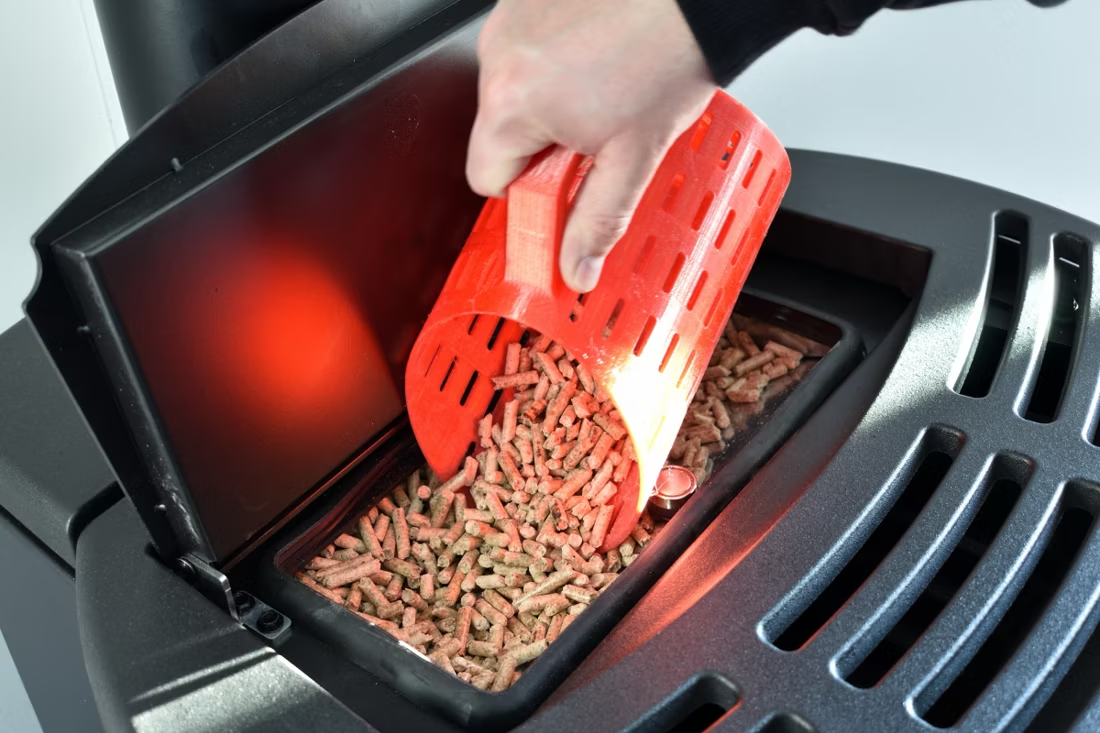
Four fuels. One honest answer for Arkansas County.
Three steps. No salesperson until you're ready.
Tell us about your project
Your zip code, your situation, and the fuel you're leaning toward—or let the answers point you to one.
See what's actually available
The brands dealers within 100 miles genuinely carry—real options, never a catalog mirage.
Get your dealer & Project Guide
A trusted local dealer, plus the free Project Guide & Parts List that names every component of the job.
Frequently Asked Questions
Which fuel works best in Arkansas County?
With only about 3,230 heating degree days and winter lows averaging around 32°F, most Arkansas County homes don't need a heavy-duty primary heat source the way a place like Bozeman or International Falls would—this is supplemental and occasional-use territory more than deep-cold survival heating. Wood remains popular for its cost, ambiance, and backup value during ice storms that occasionally knock out power on the Grand Prairie; oak and hickory from local bottomland hardwoods burn long and hot. Gas fireplaces and inserts are a strong fit for homeowners who want instant, no-mess warmth without stacking wood. Pellet stoves are a solid middle ground, though regional supply here runs through brands like Lignetics and Indeck Energy Services rather than a dense local network of pellet retailers. Electric fireplaces are increasingly common for supplemental heat and ambiance in living rooms and bedrooms, especially in newer construction around Stuttgart and DeWitt. Most households end up choosing based on how often they actually want heat versus a few weeks a year of occasional chill.
Do I need a permit to install a fireplace in Arkansas County?
In most cases, yes, though requirements vary by fuel and by whether you're inside city limits. Within Stuttgart or DeWitt, building permits are typically required for new wood stoves, wood-burning inserts, gas fireplaces, gas inserts, and pellet stoves—gas work also requires a licensed gas-fitter for the line connection. In unincorporated parts of Arkansas County, permitting is handled through the county building office. Electric fireplaces generally don't require a permit unless you're doing a built-in installation with new wiring or a dedicated circuit. Local hearth retailers who install regularly in the county are usually the fastest way to sort out exactly what's needed for your specific address and structure.
Are there air quality restrictions on wood burning in Arkansas County?
No—Arkansas County has no designated air quality non-attainment status or winter burn advisories, unlike basin or mountain-valley communities that trap smoke during temperature inversions. The flat Grand Prairie terrain and generally good regional air quality mean wood burning here isn't subject to the curtailment periods or voluntary no-burn days you'd see in a place like the Klamath Basin. That said, any new wood stove installation should still meet current EPA emissions standards, and it's good practice to burn seasoned oak or hickory rather than green wood to keep smoke output low for your neighbors' sake.
Can one local hearth retailer handle all four fuel types?
It depends on the dealer, and in a county with a population under 13,000, the retailer footprint is naturally smaller than in a bigger metro area. Some hearth retailers serving Stuttgart and DeWitt carry a broad mix—wood stoves, gas fireplaces, and electric units—while pellet stove availability tends to be more limited given the county's reliance on regional pellet brands like Lignetics rather than a dense pellet-specific dealer network. If you're comparing fuel types side by side, ask a dealer directly which lines they stock and install; in a county this size, a single well-connected retailer can often source what they don't keep on the showroom floor.
How does service work in rural areas of Arkansas County?
Most technicians serving Arkansas County are based in or near Stuttgart and DeWitt and travel out to the smaller farm and river communities along Highway 1 and Highway 165. Expect a modest travel fee for calls further out into the county, and know that scheduling ahead of the first cold snap in late fall tends to be easier than trying to book an emergency chimney sweep or gas inspection once winter weather actually arrives. Because the county's heating season is short, many homeowners here schedule wood stove and chimney service in early fall, right before the first real cold front rolls through the Delta.
What's the typical cost range for fireplace installation across all fuel types in Arkansas County?
Costs vary by fuel and scope of work. Wood stove or insert installation typically runs $3,500–$8,000 depending on chimney and hearth work. Gas fireplace, insert, or stove installation runs roughly $4,000–$10,000, with gas line work being the biggest cost variable—lower on the range if a gas connection already exists. Pellet stove or insert installs generally fall between $4,000–$7,000. Electric fireplaces run $200–$3,000 for the unit itself, plus $300–$1,000 in labor for anything beyond a plug-and-play placement, such as a built-in or wall-mounted install. For county-specific pricing detail, see the fuel-specific pages linked above.
Can I install a fireplace myself?
If you're putting a fire in your house on purpose, it's best to work with an expert. Unless you're genuinely experienced in framing, gas line, vent pipe, and the national code on clearances to combustibles, have a professional do it—and ideally the same company that sells you the fireplace, so warranty, service, and liability all live under one roof.
Does a fireplace add value to my home?
On average, a fireplace adds back to the home about the same amount you spent installing it. Add the monthly savings from heating the rooms you actually use instead of the whole house—often hundreds of dollars a year—and the value case is strong before you even count what a fire does for how your family uses the room.
What is an in-home preview and do I need one?
It's a visit where a hearth professional measures your space, confirms the model you picked actually works in your home, and walks the specs—framing, gas line, venting, finish work—before anything is ordered. Some details you just can't know until you see the house. Never make a down payment without one; it's the single most-skipped step that burns buyers.
Should the dealer who sells my fireplace also install it?
Ideally, yes. A fireplace project involves vent pipe, gas line, electrical, and often tile or stone. Hire three or four separate trades and you own the liability and the game of telephone between them. One company selling and installing means one accountable party, start to finish—ask about factory training, on-time completion records, and what happens if an inspection fails.
Stove and Fireplace Dealers in Arkansas County
Listings include WhyFire partner dealers, dealers we have verified as authorized for the brands we recommend, and established local businesses that carry hearth products. Every listing shows which one it is. The ones marked Preferred run on WhyFire's software, so they can show you real pricing and book your appointment right here. No manufacturer pays for placement. How we verify dealers →
Dale's Camping Center
Sayle Oil Company Inc.
Synergy Gas
Abc Block And Brick
G&s Insulating And Fireplace
Royal Overhead Door Co Inc
Perkins Farm Supply
Get matched with a local Arkansas County dealer.
Tell us about your project and we'll match you with a trusted local hearth retailer and send a free Project Guide & Parts List—the exact parts, vent kit included, and the dealer we recommend for your home.
Find Your Fireplace →