
Gas heat that fits Arkansas County's mild but real winters.
From Stuttgart to DeWitt and out across the rice fields, Arkansas County doesn't need a furnace running all winter—but it does need real heat on the cold nights that show up between the mild ones. Find the right gas unit and connect with a trusted local dealer.
Every Project Starts From One of These Five Situations
Instant warmth without splitting a single log.
Arkansas County sits in the Delta lowlands along the Arkansas and White Rivers, with two county seats—Stuttgart and DeWitt—anchoring a rural, agricultural population of roughly 12,387 spread across farmland, rice fields, and small towns like Almyra and Gillett. At climate zone 3A and 3,230 heating degree days, winters here are a fraction of what a place like Duluth, Minnesota racks up in a single season—the average winter low hovers around 32°F. That mild profile means most homes don't run heat around the clock, but old farmhouses and long ranch-style homes common in the Delta still get genuinely cold on the handful of nights each winter when a front blows through.
Because Arkansas County is spread thin across a large, rural footprint, gas service looks different depending on where you live. Natural gas mains generally reach the incorporated towns—Stuttgart, DeWitt, and the smaller municipalities—while farmsteads and outlying properties typically rely on propane delivered by regional suppliers rather than a city gas main. Either way, a gas fireplace or insert gives you heat at the flip of a switch on the cold nights, without tending a fire or stacking wood on a working farm where time matters.
Three steps. No salesperson until you're ready.
Tell us about your project
Your zip code, your situation, and the fuel you're leaning toward—or let the answers point you to one.
See what's actually available
The brands dealers within 100 miles genuinely carry—real options, never a catalog mirage.
Get your dealer & Project Guide
A trusted local dealer, plus the free Project Guide & Parts List that names every component of the job.
Frequently Asked Questions
How much does a gas fireplace installation cost in Arkansas County?
Costs vary more here than in a lot of places because of the natural gas vs. propane split across the county. A direct-vent gas insert into an existing fireplace, with gas already run to the house, tends to land toward the lower end of a typical $3,500–$8,500 range. A new built-in gas fireplace in a remodel—with framing, venting, and a fresh gas line—sits in the middle to upper end of that range. If you're on propane and need a new tank set, that adds to the total. Homes within Stuttgart or DeWitt city limits with an existing natural gas hookup are usually the most straightforward and least expensive to convert.
Can I convert my existing wood fireplace to gas?
Yes, and it's a common project for the older farmhouses and brick ranch homes found throughout Arkansas County. A gas insert typically slides into your existing masonry fireplace, using a stainless liner run through your existing chimney as the vent path. If your home already has a natural gas line (common in Stuttgart and DeWitt) the conversion is simpler; if you're out on a rural property, your installer will usually pair the insert with a propane tank instead. Either way, you keep the look of your existing fireplace while gaining consistent, on-demand heat instead of tending a wood fire.
Do I need natural gas, or is propane the right fit for my home?
It depends on where in the county you're located. Homes inside Stuttgart or DeWitt are more likely to have access to a natural gas main, which makes adding a fireplace straightforward if you already have gas appliances. Out on the county's farmland and rural roads—which is most of Arkansas County by land area—propane is the standard option, either from an existing tank or a new one set by a regional propane supplier. Most gas fireplace models can be configured for either fuel; your installer sets up the correct orifice and regulator for whichever you have.
Will my gas fireplace work during a power outage?
Most modern gas fireplaces will, which matters in a county that sees its share of severe spring storms and occasional ice in winter. Units with IPI (intermittent pilot ignition) run on a battery backup—typically AA batteries inside the unit—that kicks in automatically if the power drops, so the fireplace still lights on demand. Valor fireplaces take a different approach: their pilot system generates its own electricity through the thermocouple, so there's no battery to remember at all. For rural Arkansas County homes where storm-related outages can take longer to restore than in town, that's a real advantage worth asking your local dealer about.
What's the difference between a gas fireplace, gas insert, and gas stove?
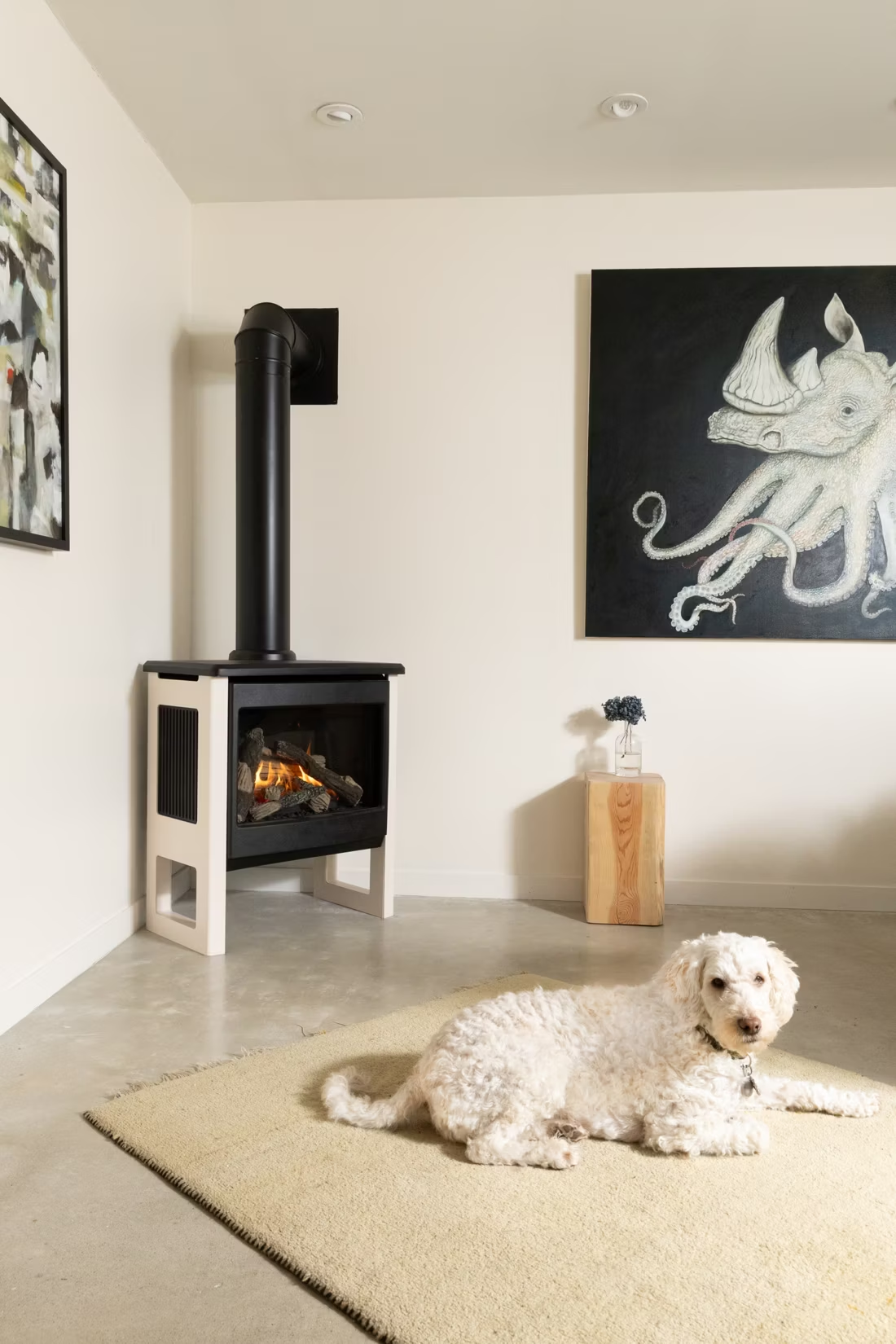
A gas fireplace is a fully built-in unit, framed into a wall—the right choice for new construction or a major remodel. A gas insert drops into an existing masonry fireplace and uses the chimney you already have, which fits a lot of the older homes scattered around Stuttgart, DeWitt, and the surrounding farm communities. A gas stove is a freestanding unit that sits on the floor like a wood stove but burns gas—a good option if you don't have an existing fireplace and don't want to frame one in. For most Arkansas County homeowners with an old fireplace they want off wood, an insert is the simplest upgrade.
Do I need a permit to install a gas fireplace in Arkansas County?
Generally yes—a building permit and gas line permit are required for new gas fireplace installations. If your home is within Stuttgart, DeWitt, or another incorporated town, that permit runs through the city's building department; outside city limits, it's handled through Arkansas County. The gas line work itself needs a licensed gas-fitter regardless of jurisdiction, which is one of the reasons it's worth using a hearth dealer who coordinates the venting, gas line, and inspection together rather than juggling separate trades yourself.
What's the difference between vented and vent-free gas fireplaces?
Vented (direct-vent) gas fireplaces draw combustion air from outside and exhaust the byproducts back outside through a sealed vent—the cleanest and most universally code-compliant option. Vent-free units burn directly into the room without external venting; they're legal in Arkansas and common in the region, but they still require correct room sizing and an oxygen depletion sensor to run safely. In a mild climate like Arkansas County's, where you're not running a fireplace around the clock all winter, vent-free units are a reasonable option for supplemental heat in a single room—but a direct-vent unit is still the better choice for a primary heat source or a room where you want real heat output without any air quality tradeoff.
How often should my gas fireplace be serviced?
Once a year is the standard recommendation for any gas appliance, including direct-vent fireplaces and inserts. A technician checks the burner, pilot assembly, gas connections, and venting, and cleans the glass and interior—a much smaller job than a wood chimney sweep, but not one to skip. Given the mild Arkansas County winters, a lot of homeowners schedule this service in late summer or early fall, right before the first cold front rolls through the Delta.
Gas vs. wood—which is right for my home?
With no air quality restrictions in Arkansas County and plenty of oak, hickory, and pine growing in the bottomland forests along the Arkansas and White Rivers, wood heat is a viable and often cheap option here, especially if you or a neighbor already have access to timber. But with only 3,230 heating degree days and winter lows that average around 32°F, most Arkansas County homes don't need wood as a primary heat source the way a colder climate would—gas gives you the convenience of instant, no-maintenance heat for the handful of genuinely cold weeks each winter, without stacking or tending a fire on a working farm. A lot of homeowners here end up with gas in the main living space and keep wood as a backup or for the occasional cold snap.
What's the difference between an insert and a zero-clearance fireplace?
An insert is a fireplace that slides into a pre-existing wood-burning fireplace—if you don't have one, there's nothing to insert it into. A zero-clearance fireplace is built into a framed wall, which makes it the answer for remodels and new construction. Simple test: existing masonry fireplace means insert; blank or framed wall means zero-clearance.
Why is my open fireplace making my house colder?
Open fireplaces suck—literally. As the fire burns, it consumes air your furnace already paid to heat and pulls it out through the chimney, so the house is actually colder after the fire goes out than before you lit it. An insert fixes this: it seals the chimney, puts fixed glass across the front, and turns that hole in your house into a real heat source.
How much should I budget for a fireplace?
For an average home—covering the fireplace, the vent pipe, and basic installation—a budget between $3,900 and $5,500 gives you a lot of options across wood, gas, and pellet. By the time you add finish work, gas line, and electrical, the average complete installation lands between $5,000 and $12,000 all-in. In a remodel or new build, a good rule is to put about 2.5% of the total project cost toward the fireplace.
Does a fireplace add value to my home?
On average, a fireplace adds back to the home about the same amount you spent installing it. Add the monthly savings from heating the rooms you actually use instead of the whole house—often hundreds of dollars a year—and the value case is strong before you even count what a fire does for how your family uses the room.
Find your gas fireplace in Arkansas County.
Tell us a bit about your home and we'll match you with a trusted local dealer and send over your free Project Guide & Parts List—the exact parts, including the vent kit, for your gas fireplace project in Arkansas County.
Find Your Fireplace →