
Keep Your Family Warm and Safe—No Matter What
From the Verde Valley floor to the ponderosa pine forests around Prescott, Yavapai County's wood heat needs shift with elevation. Find the right stove or insert for your property, and connect with a trusted local dealer.
Every Project Starts From One of These Five Situations
Your elevation decides your wood-heat needs.
Yavapai County stretches from the high desert floor of the Verde Valley—Camp Verde, Cottonwood, and Clarkdale sit around 3,300 to 3,900 feet—up through Prescott's ponderosa pine forests at roughly 5,300 feet, and into mountain communities around Groom Creek, Walker, and Mingus Mountain that top 7,000 feet. That nearly 4,000-foot elevation spread means the county's official winter low average of 24°F tells only part of the story: Verde Valley towns rarely see hard freezes overnight, while Prescott-area and mountain homes regularly wake up well below that. With an overall heating load roughly half what a place like Burlington, Vermont sees each winter, wood heat here leans toward supplemental warmth and ambiance down in the valley, and toward genuine primary heat once you climb into the pines.
The county is ringed by national forest—Prescott National Forest wraps around Prescott and the Bradshaw Mountains, Coconino National Forest borders the county's eastern edge near the Mogollon Rim, and Kaibab National Forest reaches into the northern county near Williams. All three issue personal-use cutting permits from May through October, typically $5 to $20 per cord, targeting ponderosa pine, pinyon, and juniper—including a fair amount of standing dead ponderosa from bark beetle activity. Because wildfire smoke, not winter inversion, is the county's dominant air quality concern, fire restrictions during peak danger months can suspend cutting activity even within that May-October window, so it's worth checking with the ranger district before you head out. A well-chosen stove or insert still earns its keep here—cutting heating bills in the pines, providing backup warmth during mountain power outages, and adding real ambiance to Verde Valley homes where hard freezes are rare but welcome on the coldest nights.
Firewood Cutting Permits Near Yavapai County
Three steps. No salesperson until you're ready.
Tell us about your project
Your zip code, your situation, and the fuel you're leaning toward—or let the answers point you to one.
See what's actually available
The brands dealers within 100 miles genuinely carry—real options, never a catalog mirage.
Get your dealer & Project Guide
A trusted local dealer, plus the free Project Guide & Parts List that names every component of the job.
Frequently Asked Questions
How much does a wood stove installation cost in Yavapai County?
Across Yavapai County, a typical wood stove or insert installation runs in the $3,500 to $8,500 range, depending on whether you're installing a freestanding stove with new Class A chimney pipe or an insert into an existing masonry fireplace. Homes in wildland-urban interface communities—Groom Creek, Walker, Skull Valley, parts of Williamson Valley—sometimes need a spark-arrestor cap or additional clearance work to satisfy local fire-code requirements, which can add a few hundred dollars to the job. Get a firm quote from a local installer after an in-home visit; travel time to outlying communities like Seligman or Ash Fork can also factor into the estimate.
What size wood stove do I need for my home?
Sizing in Yavapai County depends heavily on where you sit on the elevation map. A home in Cottonwood or Camp Verde, down in the Verde Valley under 4,000 feet, usually just needs a small to medium stove for supplemental heat and ambiance—nights rarely get brutal down there. Move up to Prescott, Prescott Valley, or the mountain communities around Groom Creek and Walker above 5,000 feet, and you're looking at a medium to large stove sized to handle real overnight cold, especially in older cabins with minimal insulation. As a rough guide: small stoves (up to 1,000 sq ft) suit valley casitas and guest homes, medium stoves (1,000-2,000 sq ft) cover most Prescott-area living areas, and large stoves (2,000+ sq ft) are for bigger mountain homes that lean on wood as a primary heat source. A local dealer will size this properly during a free in-home consultation.
Where can I find certified wood stove installers near me?
Look for NFI-certified or CSIA-credentialed installers, which most established hearth retailers serving Prescott, Prescott Valley, and Cottonwood employ. For homes in more remote parts of the county—Yarnell, Skull Valley, Seligman, Ash Fork—expect a modest travel charge added to the install quote. Stick with a certified installer rather than a general contractor for wood-burning appliances; clearance and venting mistakes are the most common cause of chimney fires, and that risk matters even more in a county where wildfire awareness already runs high.
What's the difference between a wood stove and a wood insert?
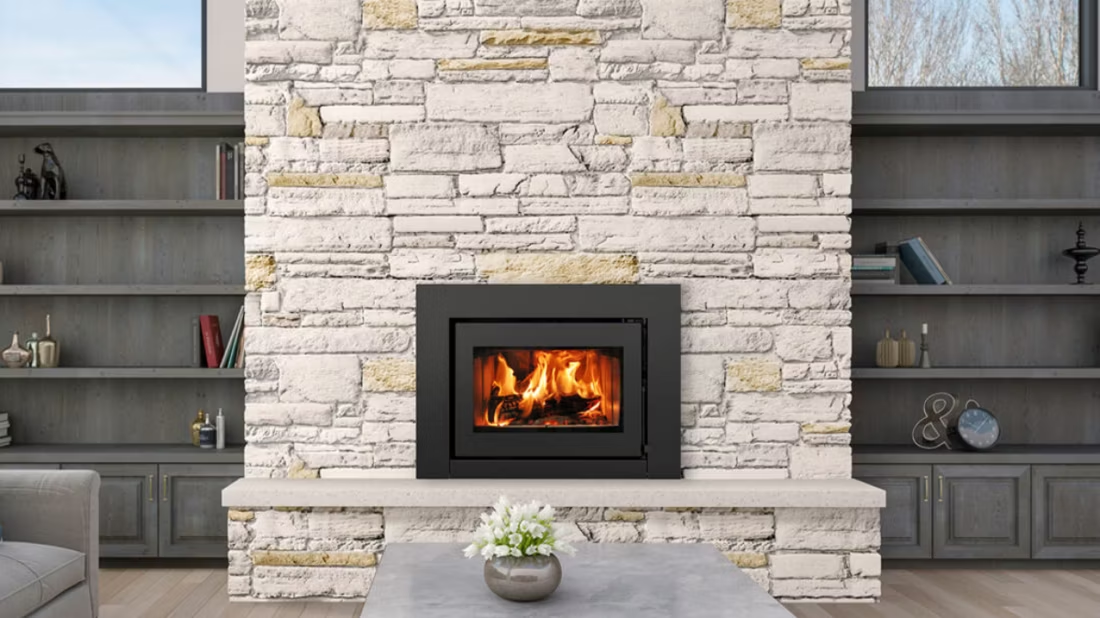
A wood stove is a freestanding unit on a hearth pad that vents through a chimney and can be installed almost anywhere with proper clearances. A wood insert is built to slide into an existing masonry fireplace, converting a drafty open hearth into a much more efficient heat source using the chimney you already have. For older Prescott-area homes with existing masonry fireplaces, an insert is often the better fit. Newer Verde Valley construction without an existing fireplace usually calls for a freestanding stove instead.
Do I need a permit to install a wood stove in Yavapai County?
Building permit requirements depend on jurisdiction—inside Prescott, Prescott Valley, or Cottonwood city limits, you'll go through the city building department; in unincorporated Yavapai County, it's the county building department. Either way, new installations need to meet current EPA 2020 NSPS emissions standards, and most local installers handle the permit paperwork as part of the job. One thing that trips people up: seasonal fire-danger burning restrictions the county issues typically apply to outdoor burning and campfires, not indoor wood stove use—but it's worth confirming with the county fire marshal if your property sits in a high-risk wildland-urban interface area during an active red flag warning.
What's the best wood stove for Yavapai County's climate?
Given Yavapai County's moderate overall heating load and an average winter low around 24°F, mid-size, non-catalytic stoves from brands like Lopi or Pacific Energy handle most Verde Valley and Prescott-area homes well. Higher up, near Groom Creek, Walker, or the slopes of Mingus Mountain, where overnight cold snaps hit harder, a catalytic stove from Blaze King can hold a fire 15 to 20+ hours, which matters if you're relying on wood as primary heat through a mountain winter. Ponderosa pine, the most common local species, burns hot and relatively fast, so a stove with a strong secondary burn or catalytic combustor gets more mileage out of each load.
How often should my chimney be inspected and cleaned?
The CSIA recommends an annual inspection for any wood-burning stove or insert, and that holds true in Yavapai County regardless of elevation. Plan for a sweep and inspection in late summer, before fall burning season starts and before fire-restriction season peaks. Ponderosa pine and juniper, the most common local firewood, burn cleaner than many species when properly seasoned, but pinyon's higher resin content can build creosote faster if it isn't fully dried—one more reason not to skip the annual sweep.
Where can I get firewood or cutting permits in Yavapai County?
Personal-use firewood permits are available through Prescott National Forest, Kaibab National Forest, and Coconino National Forest, all of which touch Yavapai County, for $5 to $20 per cord depending on the ranger district. The cutting season runs May through October—permits close for the winter, so most residents cut, split, and season wood well ahead of the cold months rather than trying to source it in December. Ponderosa pine (including a fair amount of standing dead timber from bark beetle kill), pinyon, and juniper are the common permit targets. If you'd rather not cut your own, several local suppliers deliver seasoned firewood by the cord throughout the county, with delivery surcharges typical for outlying areas like Seligman or Yarnell.
Wood stove vs. pellet stove—which is right for me?
Wood stoves work without electricity, which matters in a county with real mountain terrain and occasional winter outages around Groom Creek, Walker, and other elevated communities. Pellet stoves—regional brands like Forest Energy and Lignetics are both sold locally—are easier to operate and burn cleaner, but need power to run the auger and blower, so they won't help during an outage. For Verde Valley homes in town with reliable grid power, pellet stoves offer real convenience for supplemental heat. For mountain and rural properties where self-sufficiency and backup heat matter more, wood remains the more practical choice. Either fuel is available through local retailers who can help you decide based on your specific property.
What's the difference between an insert and a zero-clearance fireplace?
An insert is a fireplace that slides into a pre-existing wood-burning fireplace—if you don't have one, there's nothing to insert it into. A zero-clearance fireplace is built into a framed wall, which makes it the answer for remodels and new construction. Simple test: existing masonry fireplace means insert; blank or framed wall means zero-clearance.
Why is my open fireplace making my house colder?
Open fireplaces suck—literally. As the fire burns, it consumes air your furnace already paid to heat and pulls it out through the chimney, so the house is actually colder after the fire goes out than before you lit it. An insert fixes this: it seals the chimney, puts fixed glass across the front, and turns that hole in your house into a real heat source.
Can a fireplace actually lower my heating bill?
Yes—by creating a comfort zone. A furnace heats every square foot of the house just to warm the one room you're in; a gas fireplace on low burns roughly a sixth of the gas a typical furnace does. Set the furnace around 55–60 degrees as a baseline, then heat the rooms your family actually uses. Families who heat this way commonly save $20–$60 a month.
Does a fireplace add value to my home?
On average, a fireplace adds back to the home about the same amount you spent installing it. Add the monthly savings from heating the rooms you actually use instead of the whole house—often hundreds of dollars a year—and the value case is strong before you even count what a fire does for how your family uses the room.
Stove and Fireplace Dealers in Yavapai County
Aaron's Chimney Sweeping
Find your wood fireplace in Yavapai County.
Tell us about your home's elevation and heating needs, and we'll match you with a trusted local dealer and send over your free Project Guide & Parts List—the exact stove, venting, and parts recommended for your Yavapai County property.
Find Your Fireplace →