
Find the right pellet stove for Yavapai County's high-desert winters.
From Prescott's ponderosa forests to the red rock edges near Sedona, Yavapai County gets cold enough at elevation for real heat—without the smoke and hauling of cordwood. Get matched with a trusted local dealer who knows what actually installs well here.
Every Project Starts From One of These Five Situations
Efficient, low-smoke heat for a county that spans 3,000 feet of elevation.
Yavapai County stretches from the high desert around Cottonwood at roughly 3,300 feet up to Prescott and the Bradshaw Mountains above 5,300 feet, with winter lows averaging around 24°F and a winter heating load about like a milder stretch of what places like Madison, WI experience county-wide. That's a meaningfully colder climate than most of Arizona—closer to a mild version of what places like Madison, WI experience, though far shorter and drier. Homes in Prescott, Chino Valley, and the mountain communities need real supplemental or primary heat several months a year, and pellet stoves have become a popular answer because they deliver consistent, thermostatically controlled warmth without the ash volume or creosote buildup of a wood-burning setup.
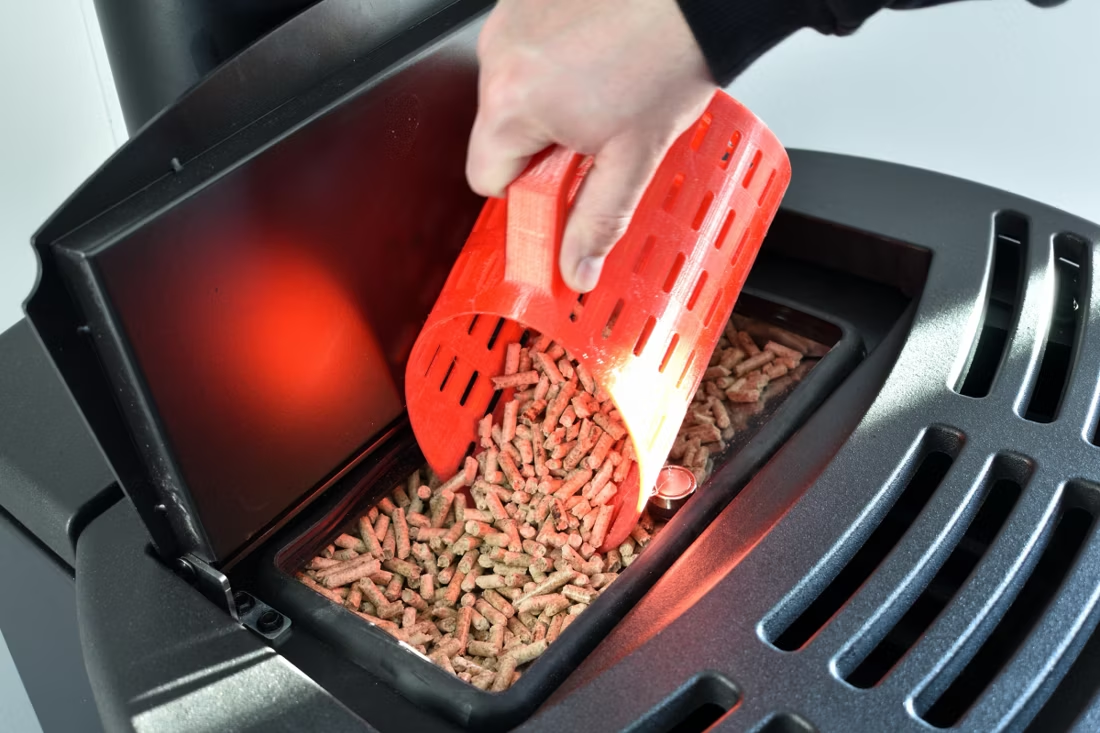
Wildfire smoke is a recognized air quality concern across the county during summer months, and pellet appliances burn markedly cleaner than open wood fires or older wood stoves—a real consideration for households near Prescott National Forest, Coconino National Forest, or the Kaibab boundary who are already breathing seasonal smoke. Regional pellet brands like Forest Energy and Lignetics are readily available throughout the county, and a properly sized pellet stove or insert gives Yavapai County homeowners hands-off heat that runs for a full hopper load without constant tending—well suited to second homes and part-time residents common in areas like Prescott Valley.
Three steps. No salesperson until you're ready.
Tell us about your project
Your zip code, your situation, and the fuel you're leaning toward—or let the answers point you to one.
See what's actually available
The brands dealers within 100 miles genuinely carry—real options, never a catalog mirage.
Get your dealer & Project Guide
A trusted local dealer, plus the free Project Guide & Parts List that names every component of the job.
Frequently Asked Questions
How much does a pellet stove installation cost in Yavapai County?
Most pellet stove and insert installations in Yavapai County land in the $4,000 to $7,500 range, depending on whether you're installing a freestanding stove, converting an existing wood-burning fireplace to a pellet insert, or running new venting through an exterior wall. Homes in Prescott or Cottonwood with an existing masonry fireplace typically fall on the lower end since the chimney chase can sometimes be adapted. New construction or homes without an existing hearth opening—common in newer Prescott Valley developments—run higher once wall penetration and electrical work for the hopper motor and blower are factored in. A local dealer will give you a firm number after seeing your space.
Do pellet stoves work well in Yavapai County's climate?
Yes, and often better than people expect for Arizona. At Prescott's elevation and above, winter lows regularly dip into the 20s and occasionally lower in the Bradshaw and Mingus Mountain areas, which is enough cold to justify real heating appliances rather than purely decorative ones. Pellet stoves hold a steady, thermostat-controlled temperature over long hopper loads—typically 24 to 40 hours depending on the model and setting—which suits the day-to-night temperature swings common in the high desert. Lower-elevation communities like Camp Verde and the Verde Valley see milder winters, so pellet units there often serve more as efficient supplemental heat for shoulder-season mornings and evenings.
What size pellet stove do I need for my Yavapai County home?
Sizing depends on square footage, insulation, ceiling height, and elevation. As a general guide: smaller units (up to 1,000 sq ft) suit a single large room or a cabin-style home, mid-size units (1,000-2,000 sq ft) cover most main living areas, and larger units (2,000+ sq ft) can serve as primary heat for a well-insulated home. Homes at Prescott's higher elevation or in the Bradshaw foothills generally need more heating capacity than a comparably sized home down in Cottonwood or Camp Verde. An oversized stove will short-cycle and waste pellets; an undersized one won't keep up on the coldest nights. A local retailer will size your home properly during an in-home visit—that's a service worth using rather than guessing.
Where can I buy pellets in Yavapai County?
Regional brands like Forest Energy and Lignetics are widely stocked at hearth retailers and hardware stores throughout the county, including Prescott, Prescott Valley, and Cottonwood. Pellets are sold by the 40-lb bag or by the ton (a ton is roughly 50 bags), and buying by the ton in late summer before demand picks up is typically the more economical route. Softwood pellets made from ponderosa pine and other regional species burn cleanly in most modern stoves; your dealer can point you toward the blend that runs best in your specific model, since burn quality varies more by pellet brand than most first-time buyers expect.
Do I need a permit to install a pellet stove in Yavapai County?
In most cases, yes—a building permit is typically required for a new pellet stove installation, particularly when it involves cutting a new vent penetration through an exterior wall or roof. Requirements are handled at the local jurisdiction level (city of Prescott, city of Prescott Valley, or Yavapai County directly for unincorporated areas), so the exact process depends on where in the county you're located. Most established local installers handle the permitting as part of the install, which is one of the practical advantages of working with a dealer rather than a big-box purchase and DIY setup.
What's the difference between a pellet stove and a pellet insert?
A pellet stove is a freestanding unit that sits on its own hearth pad and vents through a wall or existing chimney chase—it can go almost anywhere with the right clearances. A pellet insert is built to slide into an existing masonry fireplace opening, turning an old wood-burning fireplace into an efficient, thermostat-controlled heat source while reusing the existing chimney as a chase for the new vent pipe. For Yavapai County homes with an existing fireplace—common in older Prescott neighborhoods—an insert is often the simpler retrofit. Homes without an existing fireplace opening are usually better suited to a freestanding stove.
How much maintenance does a pellet stove need?
Pellet stoves need more frequent light maintenance than wood stoves but far less heavy cleaning. Plan on emptying the ash pan every few days to weekly depending on use, and a full burn-pot and heat-exchanger cleaning every one to two weeks during regular heating season use. An annual professional service—checking the auger, blower motors, gaskets, and venting—is recommended before the season starts, similar in spirit to a chimney sweep for a wood appliance but generally quicker and less costly. Local dealers throughout the county typically offer this service, and it's worth scheduling before the first cold snap rather than after.
Will my pellet stove work during a power outage?
No, not without a backup power source—this is the main tradeoff against wood heat. Pellet stoves rely on an electric auger to feed fuel and a blower to distribute heat, so a power outage stops the stove entirely. Some Yavapai County homeowners pair a pellet stove with a battery backup or small generator specifically for this reason, particularly in more rural areas around Yarnell or the Verde Valley where outages during winter storms can last longer than in town. If reliable off-grid backup heat is a priority for your household, that's worth discussing with a local dealer—some homeowners choose a wood stove for backup heat and a pellet unit for daily convenience.
Pellet vs. wood—which is right for my Yavapai County home?
Wood stoves work without electricity, pair well with inexpensive Forest Service cutting permits through Prescott National Forest or Coconino National Forest (typically $5 to $20 per cord during the May-to-October season), and deliver the traditional fire experience many longtime Prescott-area residents grew up with. Pellet stoves are more hands-off—load the hopper, set the thermostat, and let it run—and burn markedly cleaner, which matters on days when wildfire smoke is already affecting county air quality. For full-time residents with wood-cutting access on nearby national forest land, wood remains a strong value option. For part-time residents, those without a truck and chainsaw setup, or anyone prioritizing convenience and cleaner burns, pellet is usually the better fit. A local dealer carries both and can walk through the tradeoffs for your specific property.
Why is my open fireplace making my house colder?
Open fireplaces suck—literally. As the fire burns, it consumes air your furnace already paid to heat and pulls it out through the chimney, so the house is actually colder after the fire goes out than before you lit it. An insert fixes this: it seals the chimney, puts fixed glass across the front, and turns that hole in your house into a real heat source.
What's the difference between an insert and a zero-clearance fireplace?
An insert is a fireplace that slides into a pre-existing wood-burning fireplace—if you don't have one, there's nothing to insert it into. A zero-clearance fireplace is built into a framed wall, which makes it the answer for remodels and new construction. Simple test: existing masonry fireplace means insert; blank or framed wall means zero-clearance.
How much should I budget for a fireplace?
For an average home—covering the fireplace, the vent pipe, and basic installation—a budget between $3,900 and $5,500 gives you a lot of options across wood, gas, and pellet. By the time you add finish work, gas line, and electrical, the average complete installation lands between $5,000 and $12,000 all-in. In a remodel or new build, a good rule is to put about 2.5% of the total project cost toward the fireplace.
Does a fireplace add value to my home?
On average, a fireplace adds back to the home about the same amount you spent installing it. Add the monthly savings from heating the rooms you actually use instead of the whole house—often hundreds of dollars a year—and the value case is strong before you even count what a fire does for how your family uses the room.
Stove and Fireplace Dealers in Yavapai County
Aaron's Chimney Sweeping
Pellet Brands Stocked Around Yavapai County
Manufacturers will point you to the nearest stocking dealer.
Get your free Yavapai County pellet stove Project Guide & Parts List.
Tell us about your home and we'll match you with a trusted local dealer, plus a free Project Guide & Parts List—the exact equipment, vent kit, and recommended installer for your pellet project in Yavapai County.
Find Your Fireplace →