
Heating solutions built for Yavapai County's elevation swings.
Wood, gas, pellet, and electric fireplace resources for every city and rural community in Yavapai County—from Prescott's ponderosa forests down to the high desert around Cottonwood. Find the right unit and connect with a trusted local hearth retailer.
Every Project Starts From One of These Five Situations
Mile-high winters across Yavapai County, Arizona.
Yavapai County spans a huge elevation range—from around 3,300 feet near the Verde Valley up past 7,000 feet around Prescott and the Bradshaw Mountains. That range matters for heating: with a heating season on par with places like Flagstaff-adjacent high country, winters here are noticeably colder than the low desert to the south, with average lows around 24°F and occasional hard freezes. It's nowhere near Fargo ND or Bismarck ND territory, but it's real heating season, not decorative ambiance. Ponderosa pine, pinyon, and juniper are the common local firewood species, and Forest Service permits through Prescott National Forest, Kaibab National Forest, and Coconino National Forest keep self-cut wood a viable, low-cost fuel option for a lot of county residents.
What you'll find on this hub: hearth retailers, service technicians, and fuel suppliers serving every community in the county—from Prescott and Prescott Valley through the Verde Valley towns of Cottonwood, Clarkdale, and Camp Verde, up to Sedona and out to Chino Valley and Paulden. Pick your fuel below to drill into specifics—local dealers, installation costs, recommended units, and the resources that match your project. Whether you're heating a Prescott National Forest cabin or a Verde Valley ranch home, this is the starting point.
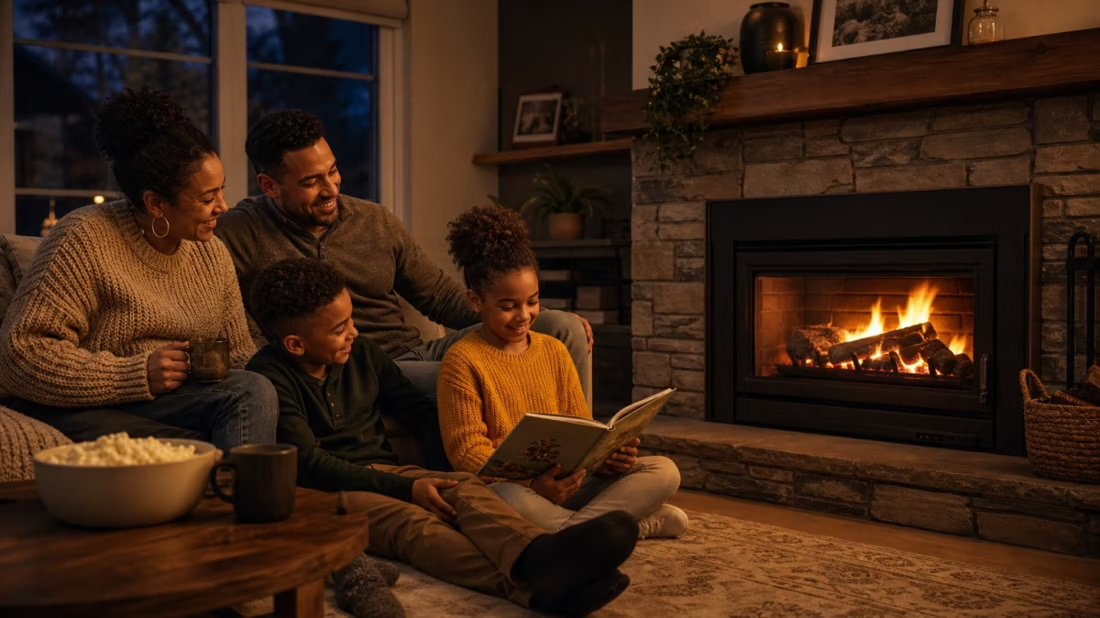
Four fuels. One honest answer for Yavapai County.
Three steps. No salesperson until you're ready.
Tell us about your project
Your zip code, your situation, and the fuel you're leaning toward—or let the answers point you to one.
See what's actually available
The brands dealers within 100 miles genuinely carry—real options, never a catalog mirage.
Get your dealer & Project Guide
A trusted local dealer, plus the free Project Guide & Parts List that names every component of the job.
Frequently Asked Questions
Which fuel works best in Yavapai County?
It really depends on where in the county you sit and how you use your home. Wood is a strong fit at higher elevations around Prescott and the Bradshaws—ponderosa pine and pinyon are locally abundant, Forest Service cutting permits through Prescott National Forest keep fuel costs down, and a good stove handles the colder mile-high nights without relying on the grid. Gas is popular in Prescott Valley and the Verde Valley towns where propane delivery is well established—instant heat with no wood handling. Pellet stoves are a solid middle option countywide, with Forest Energy and Lignetics pellets generally available through regional suppliers, though you'll want to confirm which local dealers stock them before committing. Electric fireplaces work well as supplemental heat almost anywhere in the county—bedrooms, sunrooms, lower-elevation homes near Cottonwood where winters run milder—but they're not typically the primary heat source at Prescott-area elevations. Many households here end up pairing wood or pellet as primary heat with gas or electric for secondary rooms.
Do I need a permit to install a fireplace in Yavapai County?
In most cases, yes. New wood stoves, wood inserts, gas fireplaces, gas inserts, gas stoves, and pellet stoves typically require a building permit, and gas installations also need a separate gas line permit handled by a licensed gas-fitter. Within incorporated cities like Prescott, Prescott Valley, Cottonwood, and Sedona, permits are issued through the city building department; in unincorporated parts of the county—including many communities near Prescott National Forest and Coconino National Forest boundaries—permits go through the Yavapai County building division. Electric fireplaces generally don't need a permit unless the installation involves new wiring or a dedicated circuit. Most established local hearth retailers fold the permitting step into the installation quote, so you're usually not chasing paperwork on your own.
Are there air quality restrictions on wood burning in Yavapai County?
Yavapai County doesn't have the winter inversion-driven burn bans you'll see in basin communities, but wildfire smoke is a real seasonal concern given the amount of forested land bordering Prescott National Forest, Kaibab National Forest, and Coconino National Forest. During active wildfire seasons, air quality advisories can affect visibility and outdoor burning more than they affect indoor wood stove use, but it's worth checking current advisories before doing any yard debris burning tied to firewood prep. New wood stove installations should meet current EPA emissions standards regardless of local restrictions—it's both the safer choice and the one most local retailers will steer you toward for efficiency and reduced smoke output.
Can one local hearth retailer handle all four fuel types?
Many of the larger hearth retailers based in Prescott and the Verde Valley carry three or four fuel types under one roof, which makes cross-shopping easier if you're not sure yet whether wood, gas, pellet, or electric fits your home best. Smaller shops and fuel suppliers may specialize—some focus mainly on wood and pellet, others lean into gas and electric display models. If you're comparing options, ask directly which fuels a retailer stocks and services before you drive out, since coverage varies by location across a county this spread out geographically.
How does service work in rural areas of Yavapai County?
Most service technicians are based around Prescott or the Verde Valley and travel out to more remote communities—areas near Paulden, Mayer, and the outlying stretches toward Ash Fork. Expect a modest trip fee for service calls well outside the main population centers, and know that scheduling ahead of the fall heating season (September–October) tends to be easier than trying to book a technician mid-winter during a cold snap. If you're in a more remote part of the county, it's worth having a backup heat source—pairing a wood stove with gas or electric supplemental heat covers you if one system needs service during a busy scheduling window.
What's the typical cost range for fireplace installation across all fuel types in Yavapai County?
Ranges vary by fuel and by how much existing infrastructure a home already has. Wood stove or insert installation: roughly $4,000–$8,500 for typical installs, higher for new chimney construction. Gas fireplace, insert, or stove: roughly $4,000–$10,000 depending on whether propane line work is needed, lower if gas service already reaches the install location. Pellet stove or insert: roughly $4,000–$7,000 for typical installs. Electric fireplace: $200–$3,000 for the unit itself, with $400–$1,200 in labor for anything beyond a simple plug-in install. For more precise numbers tied to local retailer pricing, see the county + fuel pages above.
Can I install a fireplace myself?
If you're putting a fire in your house on purpose, it's best to work with an expert. Unless you're genuinely experienced in framing, gas line, vent pipe, and the national code on clearances to combustibles, have a professional do it—and ideally the same company that sells you the fireplace, so warranty, service, and liability all live under one roof.
What are the biggest mistakes people make buying a fireplace?
Five come up constantly: budgeting for the unit but not the full job (vent, gas line, electrical, finish work); drowning in options instead of starting from style and fuel; buying without an in-home preview; handing installation to a handyman instead of a pro; and giving up out of sheer indecision. Every one is avoidable with a clear plan—step one, step two, step three.
Can a fireplace actually lower my heating bill?
Yes—by creating a comfort zone. A furnace heats every square foot of the house just to warm the one room you're in; a gas fireplace on low burns roughly a sixth of the gas a typical furnace does. Set the furnace around 55–60 degrees as a baseline, then heat the rooms your family actually uses. Families who heat this way commonly save $20–$60 a month.
Wood, gas, pellet, or electric—how do I choose?
Match the fuel to your life, not the other way around. Wood: lowest fuel cost and total power-outage independence, but you're hauling and stacking. Gas: press a button, set a thermostat, no maintenance to speak of. Pellet: wood economics with automatic feeding, in exchange for weekly cleaning and a need for electricity. Electric: plugs in anywhere with honest supplemental heat. Nobody regrets the fuel that fits how they actually live.
Stove and Fireplace Dealers in Yavapai County
Listings include WhyFire partner dealers, dealers we have verified as authorized for the brands we recommend, and established local businesses that carry hearth products. Every listing shows which one it is. The ones marked Preferred run on WhyFire's software, so they can show you real pricing and book your appointment right here. No manufacturer pays for placement. How we verify dealers →
The Chimney Sweep Guy
Boulders Wholesale LLC
Banker Insulation
Aaron's Chimney Sweeping
Red Rock Fireplace & Bbq
Banker Insulation
Find your fireplace in Yavapai County.
Pick your fuel below to get matched with a trusted local dealer and receive a free Project Guide & Parts List—the exact parts, vent kit included, and the local pro who can install it right.
Find Your Fireplace →