
Ambiance and Warmth, Built for the Foothills.
Desert evenings in the Foothills cool off fast even when the days stay warm. Find the right gas fireplace or insert for your home, and connect with a trusted local dealer.
Every Project Starts From One of These Five Situations
A fireplace built for high-desert evenings, not brutal winters.
Catalina Foothills sits at roughly 2,800 feet at the base of the Santa Catalina Mountains, where winter lows average a mild 37°F and the area has a very short, mild heating season—a fraction of what a place like Duluth, MN racks up in a single cold snap. That climate math is exactly why wood stoves and pellet stoves barely register here: there simply aren't enough sustained cold days to justify a full wood-heating setup, and Pima County's non-attainment air quality status makes wood smoke an unwelcome guest during winter inversions.
Gas fills that gap well. Catalina Foothills is unincorporated Pima County, and many of its custom homes are built around large great rooms, view walls, and indoor-outdoor living spaces that get genuinely chilly on winter and even spring evenings. A direct-vent gas fireplace or linear insert delivers instant, clean heat for those hours without running central HVAC for the whole house, and because piped natural gas isn't universal on larger foothill lots, propane tanks are a common and perfectly workable alternative. Either way, a properly sized and vented gas unit gives you real flame and real heat on demand—no ash, no smoke, no burn-day restrictions to track.
Three steps. No salesperson until you're ready.
Tell us about your project
Your zip code, your situation, and the fuel you're leaning toward—or let the answers point you to one.
See what's actually available
The brands dealers within 100 miles genuinely carry—real options, never a catalog mirage.
Get your dealer & Project Guide
A trusted local dealer, plus the free Project Guide & Parts List that names every component of the job.
Frequently Asked Questions
How much does a gas fireplace installation cost in Catalina Foothills?
Most gas fireplace and insert installations in the Foothills run between roughly $4,000 and $10,000, with the spread driven mainly by venting complexity and fuel source. A direct-vent insert going into an existing masonry fireplace with gas already run to the house sits at the lower end. A new linear or built-in gas fireplace for a great-room remodel—especially one that requires a fresh propane line or tank setup on a larger foothill lot—lands toward the higher end. A local dealer will give you a firm number after seeing your home and existing gas or propane infrastructure.
Do I need natural gas, or is propane more common here?
Both are used in Catalina Foothills, but propane is especially common because piped natural gas service isn't guaranteed on every lot in this unincorporated, larger-parcel part of Pima County. If your home already runs on propane for a range, water heater, or pool heater, adding a fireplace on the same tank is usually the simplest path. Homes closer to the urban grid with existing gas service can often tie in directly. Either fuel works with the vast majority of gas fireplace and insert models—your installer sets the orifice and regulator for whichever you have.
Do I need a permit to install a gas fireplace in Catalina Foothills?
Yes. Because Catalina Foothills is unincorporated, permitting runs through Pima County Development Services rather than a city building department, and a new gas fireplace typically needs both a building permit and a gas-line permit if any new gas or propane piping is involved. Most established local hearth dealers handle this paperwork as part of the install, coordinating the licensed gas-fitter and inspection scheduling so you aren't juggling separate trades yourself.
Will my gas fireplace still work if the power goes out?
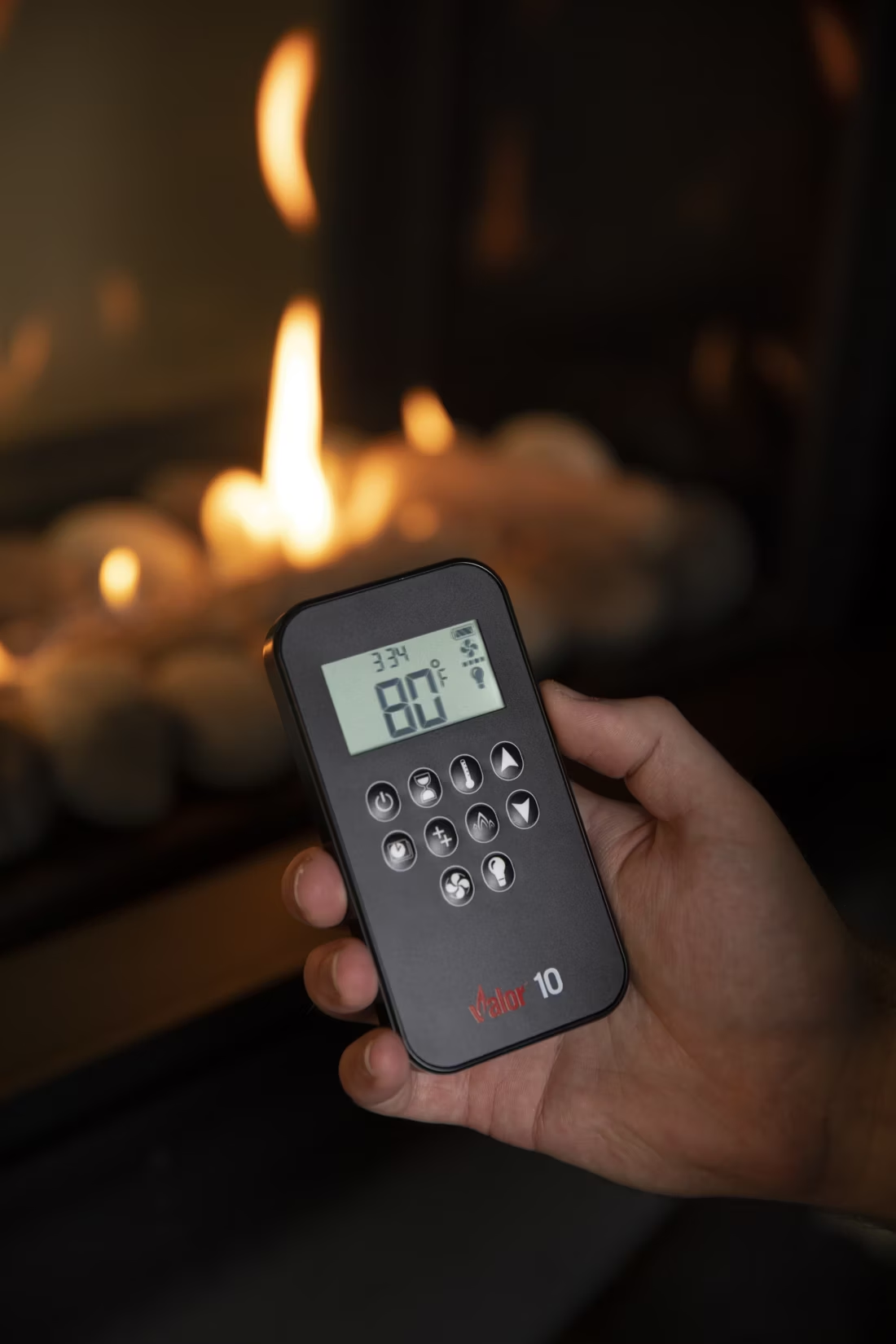
For most units, yes. Gas fireplaces with intermittent pilot ignition (IPI) include a battery backup that keeps them lighting even when the grid is down—relevant here given how monsoon storms in July and August can knock out Tucson Electric Power service for hours at a time. Valor fireplaces take a different approach: their pilot assembly generates its own electricity through the thermocouple, so there are no batteries to remember at all. Ask your local dealer which ignition system a given model uses if outage reliability matters to you.
What's the difference between a gas fireplace, insert, and stove for a Foothills home?
A built-in gas fireplace is framed into a wall—the common choice for new construction or a great-room remodel with a view-oriented layout. A gas insert drops into an existing masonry firebox and uses the existing chimney as its vent path, which suits older Foothills homes with a traditional fireplace that rarely gets used for wood. A freestanding gas stove sits on the floor and works well in a smaller den, casita, or secondary living space where a full built-in doesn't make sense. Most Foothills projects we see are either a great-room built-in or an insert retrofit into an existing hearth.
Should I get a vented or vent-free gas fireplace?
Vented (direct-vent) units draw combustion air from outside and exhaust it back outside through sealed venting—they're the standard recommendation almost everywhere, including Catalina Foothills, because they don't affect indoor air quality. Vent-free gas fireplaces are legal in Arizona and sometimes used in casitas or add-on rooms where running venting is impractical, but they require strict room-sizing rules and an oxygen depletion sensor, and they release some combustion byproducts into the room. For a primary living space, direct-vent is the safer, more universally recommended choice—ask your dealer to walk through both if space constraints have you considering vent-free.
How often does a gas fireplace need to be serviced in Catalina Foothills?
Plan on an annual inspection, ideally before the cooler months set in. A technician checks the burner, pilot assembly, gas connections, and venting, and cleans the glass and interior. In this part of Pima County, that annual check also catches something specific to the area: dust from monsoon-season haboobs and general Sonoran Desert grit can work into vent terminations and screens over a year of use, and a clogged vent is a safety issue as well as a performance one. Most local service providers charge around $150 to $250 for a standard annual visit.
Does wood heat make sense at all in Catalina Foothills?
For most homes here, not really—and it's worth being straightforward about that. With winter lows averaging 37°F and only a short, mild heating season each year, there's rarely a sustained cold stretch that a wood stove would meaningfully offset, and Pima County's air quality non-attainment status makes wood smoke a real neighborhood concern during winter inversions. Locally available species like mesquite, pinyon, and juniper are more commonly cut under Coronado National Forest permits (roughly $5–$20 per cord, May through October) for grilling and campfires than for home heating. A small number of Foothills homeowners do install a wood-burning fireplace purely for occasional ambiance, but gas is the far more practical choice for anyone who wants real, on-demand heat.
Gas vs. electric—which fireplace fits my Foothills home better?
Gas gives you a real flame and meaningful heat output for those chilly Foothills evenings—useful if you actually want to warm a great room or offset an evening chill, and it isn't tied to your electric bill from Tucson Electric Power (running around $0.15–$0.16 per kWh). Electric fireplaces and inserts, by contrast, need no gas line or venting at all, install almost anywhere with a standard outlet, and work well for ambiance in a casita, bedroom, or secondary space where running gas isn't worth the cost. Given how mild and short the local heating season is, plenty of homeowners choose electric purely for the visual effect and use gas where they want the space to actually feel warmer. A local dealer can help you match the right one to each room's purpose.
What's the difference between an insert and a zero-clearance fireplace?
An insert is a fireplace that slides into a pre-existing wood-burning fireplace—if you don't have one, there's nothing to insert it into. A zero-clearance fireplace is built into a framed wall, which makes it the answer for remodels and new construction. Simple test: existing masonry fireplace means insert; blank or framed wall means zero-clearance.
Are new gas fireplaces really better than old ones?
Two ways, and they're both big. Looks: modern gas fireplaces are realistic enough that it's hard to believe they aren't burning wood. Cost: old units burn a standing pilot year-round (roughly $200 a year), while new ones use pilot-on-demand ignition and modern burners. Add remote controls and thermostat operation, and the day-to-day experience isn't close.
Does a fireplace add value to my home?
On average, a fireplace adds back to the home about the same amount you spent installing it. Add the monthly savings from heating the rooms you actually use instead of the whole house—often hundreds of dollars a year—and the value case is strong before you even count what a fire does for how your family uses the room.
Can I install a fireplace myself?
If you're putting a fire in your house on purpose, it's best to work with an expert. Unless you're genuinely experienced in framing, gas line, vent pipe, and the national code on clearances to combustibles, have a professional do it—and ideally the same company that sells you the fireplace, so warranty, service, and liability all live under one roof.
Nearby Dealers
Hearth shops serving Catalina Foothills and the surrounding area. Every listing shows whether it is a WhyFire partner, a dealer we have verified as authorized for the brands we recommend, or a local business carrying hearth products. No manufacturer pays for placement. How we verify dealers →
Earth Energy's Hearth & Patio
Find your gas fireplace in Catalina Foothills.
Tell us about your home and we'll put together a free Project Guide & Parts List for your gas fireplace project—the right unit, the vent kit it needs, and a trusted local dealer to install it.
Find Your Fireplace →