
Keep Your Family Warm and Safe—No Matter What
Most Sheridan homes heat with natural gas or electric service from Montana-Dakota Utilities, but a real minority—ranches, cabins near the Bighorns, backup-heat households—still burn wood. We'll connect you with a local dealer who knows the difference.
Every Project Starts From One of These Five Situations
In Sheridan, Gas and Electric Do Most of the Heavy Lifting.
Sheridan sits at 3,755 feet at the foot of the Bighorn Mountains, and the numbers back up how cold it gets: 8,140 heating degree days a year and an average winter low of 11°F. That's a climate zone 6B reality on par with places like Bismarck or Fargo—plenty cold enough to justify a serious heating appliance. But unlike a lot of mountain towns with that kind of HDD count, most Sheridan households aren't leaning on wood as their answer. Montana-Dakota Utilities (MDU) supplies both electricity and natural gas across most of the city, and that combination covers the bulk of home heating here without anyone splitting kindling.
That's why wood shows up on this page as a genuine but smaller slice of the market—mostly properties outside MDU's gas lines, cabins and ranch houses closer to the Bighorn National Forest, and homeowners who want a wood stove specifically as backup heat for when a winter storm takes the power grid down. If that's you, the fundamentals are still solid: Bighorn National Forest sells cutting permits for $5 to $20 per cord from May through October, and lodgepole pine, aspen, and ponderosa pine are all common and burn well once seasoned. Just keep an eye on wildfire smoke advisories—they occasionally affect burning conditions and air quality here, same as much of the interior West.
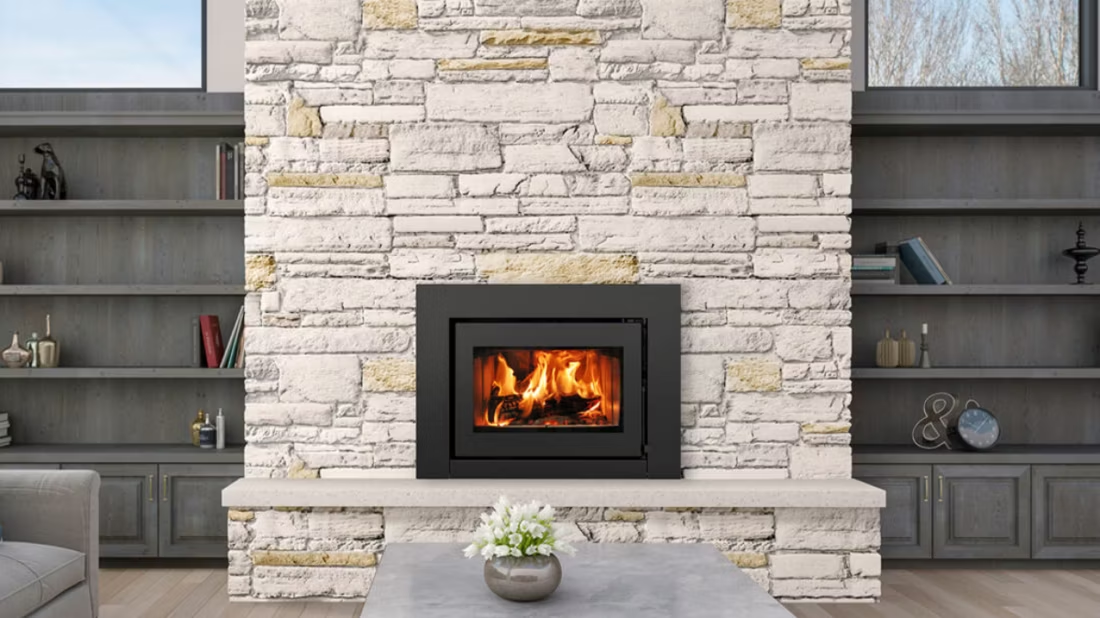
Firewood Cutting Permits Near Sheridan
Three steps. No salesperson until you're ready.
Tell us about your project
Your zip code, your situation, and the fuel you're leaning toward—or let the answers point you to one.
See what's actually available
The brands dealers within 100 miles genuinely carry—real options, never a catalog mirage.
Get your dealer & Project Guide
A trusted local dealer, plus the free Project Guide & Parts List that names every component of the job.
Frequently Asked Questions
Does it make sense to install a wood stove in Sheridan, or should I just go with gas?
For most in-town Sheridan homes already served by MDU's natural gas lines, a gas insert or freestanding gas stove is the more common and lower-friction choice—no firewood, no chimney sweeping, and MDU's residential rates make it affordable to run. Wood earns its place in specific situations: properties outside the gas service footprint, cabins or ranch houses near the Bighorn National Forest where firewood is cheap and close, and any household that wants a heat source that still works when the power's out. If you're weighing both, tell a local dealer your address and situation—they'll be straight with you about which fuel actually fits.
How much does a wood stove installation cost in Sheridan?
Because wood stoves are a smaller share of the hearth market here compared to gas and electric, pricing tends to be more project-specific than a flat number. Across the Mountain West, a typical wood stove or insert installation runs roughly $3,000 to $9,000, with the low end covering a straightforward insert into an existing masonry chimney and the high end covering a freestanding stove that needs new Class A chimney pipe run through a roof. Homes without an existing chimney or hearth pad will land toward the higher end. A local installer can give you a firm number after seeing your home.
What size wood stove do I need for Sheridan's climate?
At 8,140 heating degree days and winter lows that regularly sit around 11°F, undersizing is the bigger risk here—a stove that's too small will run flat out on the coldest nights and still lose the race. For a well-insulated ranch house in the 1,500 to 2,500 square foot range, a medium to large stove is typically appropriate; smaller cabins or single-room setups near the Bighorns can usually get by with a small to medium unit. Since most wood installs in this area are supplemental or backup rather than whole-home primary heat, a local dealer will factor in whether you're also running gas or electric heat alongside it.
Should I get a wood insert or a freestanding wood stove?
If you already have a working masonry fireplace and chimney, an insert is usually the more efficient upgrade—it seals up the open hearth and uses the existing flue, often with a stainless liner. If you're heating a cabin, shop, or a home without an existing chimney—common for the rural properties around Sheridan where wood heat actually gets used—a freestanding stove venting through new Class A pipe is typically the simpler path. Either way, plan for a hearth pad that meets clearance requirements for whichever unit you choose.
Do I need a permit to install a wood stove in Sheridan?
Yes—new solid-fuel appliance installations require a building permit through your local building department, and the stove itself needs to meet current EPA emissions standards. Most hearth dealers who handle the sale also handle the permit paperwork and schedule the inspection, so it's not something you typically manage on your own. If your property sits outside city limits, check with Sheridan County directly, since jurisdiction can differ from in-town addresses.
What's the best wood stove for Sheridan's cold snaps?
For the properties around Sheridan where wood is doing real winter work—cabins, ranch houses, backup-heat setups—a catalytic stove from a brand like Blaze King is worth a look because it can hold a burn 15-20+ hours, which matters when overnight lows drop well below the 11°F average. For lighter or supplemental use, a mid-size non-catalytic stove from Pacific Energy or Lopi burns cleaner with less day-to-day maintenance. A local dealer can match burn time and output to how you actually plan to use the stove.
How often should a wood stove chimney be inspected in Sheridan?
The Chimney Safety Institute of America recommends an annual inspection for any wood-burning appliance, and that holds regardless of how lightly the stove gets used. If your stove is genuinely backup or occasional-use heat, you might burn less than a full cord a season and still build up creosote unevenly, so don't skip the yearly check just because the stove doesn't run constantly. Homes using wood as a more regular heat source through the coldest months should plan on a sweep every fall before burning season.
Where can I get firewood near Sheridan?
Bighorn National Forest sells personal-use cutting permits for $5 to $20 per cord during the May-through-October season, and lodgepole pine, aspen, and ponderosa pine are the species you'll most commonly find and cut locally. Lodgepole and ponderosa pine season relatively quickly and burn hot; aspen is easy to split but burns faster, so it's often mixed with pine for longer burns. A handful of local suppliers also sell split, seasoned cordwood if cutting your own isn't practical—worth asking your hearth dealer for a referral since they usually know who's reliable.
Wood, gas, or electric—what's actually right for a Sheridan home?
For most homes inside Sheridan's MDU natural gas footprint, gas is the practical default—instant heat, no fuel handling, and rates that make daily use affordable. Electric heat, also through MDU at roughly $0.117 per kWh, works well for supplemental zone heating or homes without gas access, though it depends entirely on grid power staying up. Wood is the outlier that still makes sense for specific cases: properties outside the gas lines, cabins near the Bighorns where Forest Service firewood is cheap, and anyone who wants heat that keeps working through a winter power outage. It's rarely the first fuel homeowners here choose, but for the right property it's still the right answer.
Why won't my new wood stove get going like my old one?
New wood stoves are 70%+ efficient, so far less heat goes up the flue—which also means less draft to get a fire established. The rule: build a genuinely hot fire for about 45 minutes before you choke it down. Skip that and you get smoke in the room, creosote in the chimney, and a fire that never takes off. Most performance complaints trace straight back to this.
Why is my open fireplace making my house colder?
Open fireplaces suck—literally. As the fire burns, it consumes air your furnace already paid to heat and pulls it out through the chimney, so the house is actually colder after the fire goes out than before you lit it. An insert fixes this: it seals the chimney, puts fixed glass across the front, and turns that hole in your house into a real heat source.
What is an in-home preview and do I need one?
It's a visit where a hearth professional measures your space, confirms the model you picked actually works in your home, and walks the specs—framing, gas line, venting, finish work—before anything is ordered. Some details you just can't know until you see the house. Never make a down payment without one; it's the single most-skipped step that burns buyers.
Does a fireplace add value to my home?
On average, a fireplace adds back to the home about the same amount you spent installing it. Add the monthly savings from heating the rooms you actually use instead of the whole house—often hundreds of dollars a year—and the value case is strong before you even count what a fire does for how your family uses the room.
Nearby Dealers
Hearth shops serving Sheridan and the surrounding area. Every listing shows whether it is a WhyFire partner, a dealer we have verified as authorized for the brands we recommend, or a local business carrying hearth products. No manufacturer pays for placement. How we verify dealers →
Ecommerce World LLC
Total Comfort Heating & Cooling
Alpine Climate Control
Find Your Wood Stove in Sheridan.
Tell us about your home and how you plan to use wood heat, and we'll match you with a trusted local dealer plus a free Project Guide & Parts List—the stove, venting, and hearth pad specs your Sheridan installation actually needs.
Find Your Fireplace →