
Zone heat built for Bighorn Basin winters.
No flue, no gas line, no cordwood—just plug-in warmth for Sheridan homes at the foot of the Bighorns. Find the right unit and connect with a trusted local dealer.
Every Project Starts From One of These Five Situations
Reliable warmth without a flue, a woodpile, or a wildfire-smoke debate.
Sheridan sits at 3,755 feet at the base of the Bighorn Mountains, with a long, demanding heating season and average winter lows around 11°F—a climate closer to Helena, Montana than to anywhere on the coast. Winters here are long, and homes range from century-old brick storefronts downtown to newer ranch-style builds and manufactured housing on the outskirts. Electric fireplaces and inserts have become a standard fixture in that mix, especially for additions, basements, bedrooms, and homes where running new gas line or a chimney isn't practical.
Montana-Dakota Utilities serves Sheridan's electric grid at a residential rate of about $0.1172 per kWh—on the affordable end nationally, which keeps a 1,500-watt electric insert cheap to run for zone heat. Bighorn National Forest issues firewood cutting permits from May through October for $5 to $20 per cord, and plenty of Sheridan households still burn wood for camp stoves or backup heat. But between periodic wildfire-smoke advisories in late summer and the appeal of a no-maintenance heat source in a house that already has plenty of chores, a growing number of homeowners here are choosing electric for the rooms where they just want reliable warmth without tending anything.
Three steps. No salesperson until you're ready.
Tell us about your project
Your zip code, your situation, and the fuel you're leaning toward—or let the answers point you to one.
See what's actually available
The brands dealers within 100 miles genuinely carry—real options, never a catalog mirage.
Get your dealer & Project Guide
A trusted local dealer, plus the free Project Guide & Parts List that names every component of the job.
Frequently Asked Questions
How much does an electric fireplace installation cost in Sheridan?
Most electric fireplace and insert installs in Sheridan run $500 to $2,500—well below wood or gas because there's no venting, chimney, or gas line involved. A plug-in insert dropped into an existing masonry fireplace opening sits at the low end. A built-in wall unit that requires framing, a dedicated 20-amp circuit, and finish trim work runs higher, and a large linear built-in for a great room can push toward $4,000-$5,000 installed. Local dealers can size the job accurately once they see the space and your electrical panel capacity.
Will an electric fireplace actually keep a room warm when it's 11 below outside?
An electric fireplace will comfortably supplement a single room, but it isn't sized to be primary heat in a climate with such a long, demanding heating season. Most units are rated around 4,600-5,000 BTU (roughly equivalent to 1,500 watts) and are designed to zone-heat a bedroom, home office, or den—not to replace your furnace on a January night when Sheridan's lows sit near 11°F. For homes leaning on electric heat more seriously, larger built-in units or multiple zone units paired with good insulation get you further, but plan on electric as supplemental heat alongside your existing furnace or boiler, not a replacement for it.
Do I need a permit to install an electric fireplace in Sheridan?
Most plug-in electric inserts need no permit at all—they run off a standard household outlet. If you're installing a built-in unit that requires a new dedicated circuit, an electrician will typically pull an electrical permit through the City of Sheridan or Sheridan County building department depending on your address. There's no gas line, no combustion venting, and no chimney inspection to coordinate—which is part of why electric installs move faster and cheaper than wood or gas projects. Ask your installer to confirm whether your specific unit's amperage draw requires new wiring.
Electric vs. gas fireplace—which makes more sense for a Sheridan home?
Gas fireplaces put out real, whole-room heat (10,000-30,000+ BTU) and can run during a power outage if equipped with a battery-backed ignition system—a genuine advantage during a Bighorn winter storm. Electric fireplaces top out around 5,000 BTU, so they're better suited to supplemental zone heat, ambiance, or spaces where running gas line isn't practical, like a converted garage, an upstairs bonus room, or an older downtown building. If you're heating a main living space and want it to carry real heat load, gas is usually the better fit. If you want low-cost, low-maintenance warmth in a secondary room, electric is hard to beat.
What will an electric fireplace cost to run on my Montana-Dakota Utilities bill?
At Sheridan's residential rate of about $0.1172 per kWh through Montana-Dakota Utilities, a typical 1,500-watt electric insert running on high costs roughly 18 cents an hour. Used a few hours a day through a Sheridan winter, that adds up to a fairly modest line on your bill—often $15-$30 a month depending on how often you run it—which is one reason electric units have become a popular low-commitment option for rooms that don't need full-time heat.
What type of electric fireplace fits my Sheridan home?
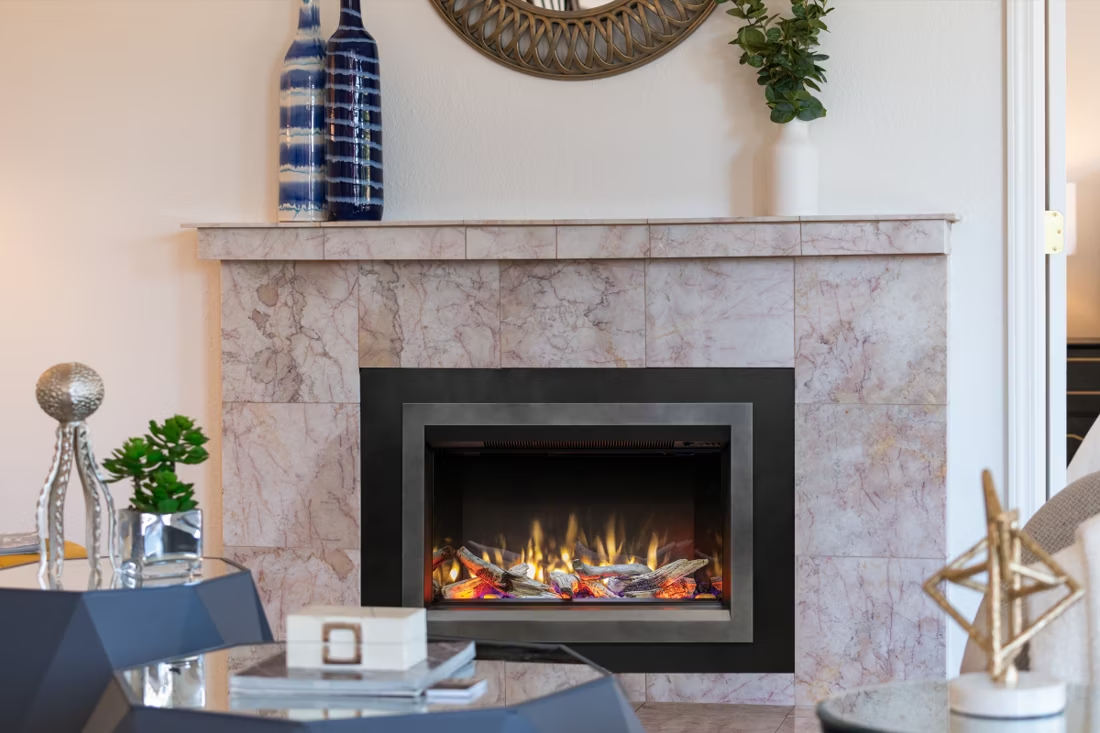
For older brick and frame houses downtown with an existing masonry fireplace opening, a plug-in electric insert is the simplest retrofit—it slides into the firebox and uses the mantel you already have. For newer ranch-style or manufactured homes without an existing fireplace, a wall-mount or built-in linear unit is more common, especially in a great room or primary bedroom. Freestanding electric stoves also work well in cabins and outbuildings around Sheridan County where you want portable, low-cost heat without any wiring or venting work at all. A local dealer can walk your space and tell you which format actually fits your wall and framing.
How much maintenance does an electric fireplace need?
Very little. There's no chimney to sweep, no creosote, and no annual gas-line inspection. Maintenance is mostly dusting the unit, occasionally cleaning the glass front, and replacing the LED light strips every several years once they dim—a task most homeowners handle themselves. This low-maintenance profile is a big part of why electric units are popular for secondary rooms in Sheridan homes where nobody wants another appliance to service every fall before burning season.
Will my electric fireplace still work if the power goes out?
No—electric fireplaces need grid power to run, so they go dark in an outage, unlike a gas unit with battery-backed ignition or a wood stove that keeps working regardless. Winter storms in the Bighorn Basin can knock out power for hours at a time, so if you're relying on an electric fireplace as your only backup heat source in a room, it's worth pairing it with another option—a wood stove, a propane heater, or at minimum a generator plan—rather than treating it as storm-ready heat.
Given the wood permits through Bighorn National Forest, why would someone choose electric instead?
Bighorn National Forest issues firewood cutting permits from May through October for $5 to $20 per cord, and plenty of Sheridan residents still cut their own wood for camp stoves, outbuildings, or backup heat. But wood burning means chimney maintenance, ash cleanup, and attention to seasonal wildfire-smoke advisories that occasionally affect air quality in the basin. Electric sidesteps all of that—no smoke, no permit, no wood storage, and a bill that's easy to predict at Sheridan's MDU rate. For a spare bedroom, den, or rental property where you want reliable ambiance and modest heat without the upkeep, electric is often the simpler choice, even in a place with easy access to cheap firewood.
Can I put a TV above my fireplace?
Yes—with an asterisk. Fireplaces are hot and TVs don't like heat. Either put a mantel between them to deflect rising warmth, or choose a fireplace with heat-management technology that creates a cool zone on the wall above—the wall stays around 125 degrees, barely warm, while the room still gets full heat. If you like clean lines and don't want a mantel, heat management is the answer.
Do electric fireplaces actually produce heat?
Yes—most put out around 4,800–5,000 BTUs from a standard outlet, which comfortably warms a bedroom, office, or den as a comfort-zone heater. What they won't do is carry a whole house the way wood, gas, or pellet can. Think of electric as ambiance-first with honest supplemental heat: flames on with no heat in July, flames plus warmth in January.
Can a fireplace actually lower my heating bill?
Yes—by creating a comfort zone. A furnace heats every square foot of the house just to warm the one room you're in; a gas fireplace on low burns roughly a sixth of the gas a typical furnace does. Set the furnace around 55–60 degrees as a baseline, then heat the rooms your family actually uses. Families who heat this way commonly save $20–$60 a month.
Does a fireplace add value to my home?
On average, a fireplace adds back to the home about the same amount you spent installing it. Add the monthly savings from heating the rooms you actually use instead of the whole house—often hundreds of dollars a year—and the value case is strong before you even count what a fire does for how your family uses the room.
Nearby Dealers
Hearth shops serving Sheridan and the surrounding area. Every listing shows whether it is a WhyFire partner, a dealer we have verified as authorized for the brands we recommend, or a local business carrying hearth products. No manufacturer pays for placement. How we verify dealers →
Ecommerce World LLC
Total Comfort Heating & Cooling
Alpine Climate Control
Electric Service in Sheridan
An electric fireplace's heater draws about 1,500 watts—pennies per hour at local rates.
Montana-Dakota Utilities Co
Find your electric fireplace in Sheridan.
Tell us a bit about your home and we'll match you with the right electric fireplace or insert—and connect you with a trusted local dealer who'll hand you a free Project Guide & Parts List for your space.
Find Your Fireplace →