
Keep Your Family Warm and Safe—No Matter What
With a long, deeply cold winter and lows near 11°F, Johnson County homes need real wood heat, not decoration. Find the right stove or insert and get matched with a trusted local dealer near Buffalo or Kaycee.
Every Project Starts From One of These Five Situations
At the base of the Bighorns, wood heat is a working tool.
Johnson County sits at the eastern edge of the Bighorn Mountains, where elevation and exposure push heating demand well past most of the country—a long, deeply cold winter puts it in the same range as Fargo, ND or Bismarck, ND for sustained cold. Winter lows average 11°F, but ranch country outside Buffalo and Kaycee regularly sees stretches well below that, especially when wind comes off the Bighorns. That kind of cold is exactly what a well-sized wood stove is built to answer, particularly on properties where the power lines run a long way and outages aren't rare.
Bighorn National Forest borders much of the county, and cutting permits run just $5 to $20 per cord during the May-through-October season—a real driver of why wood heat stays practical here rather than nostalgic. Lodgepole pine, aspen, and ponderosa pine are the local staples, and most rural households already have a chainsaw and a truck for hauling. Wildfire smoke is the one air quality issue worth watching, mostly in late summer before the season's first heating fires start, but it has little bearing on winter burning.
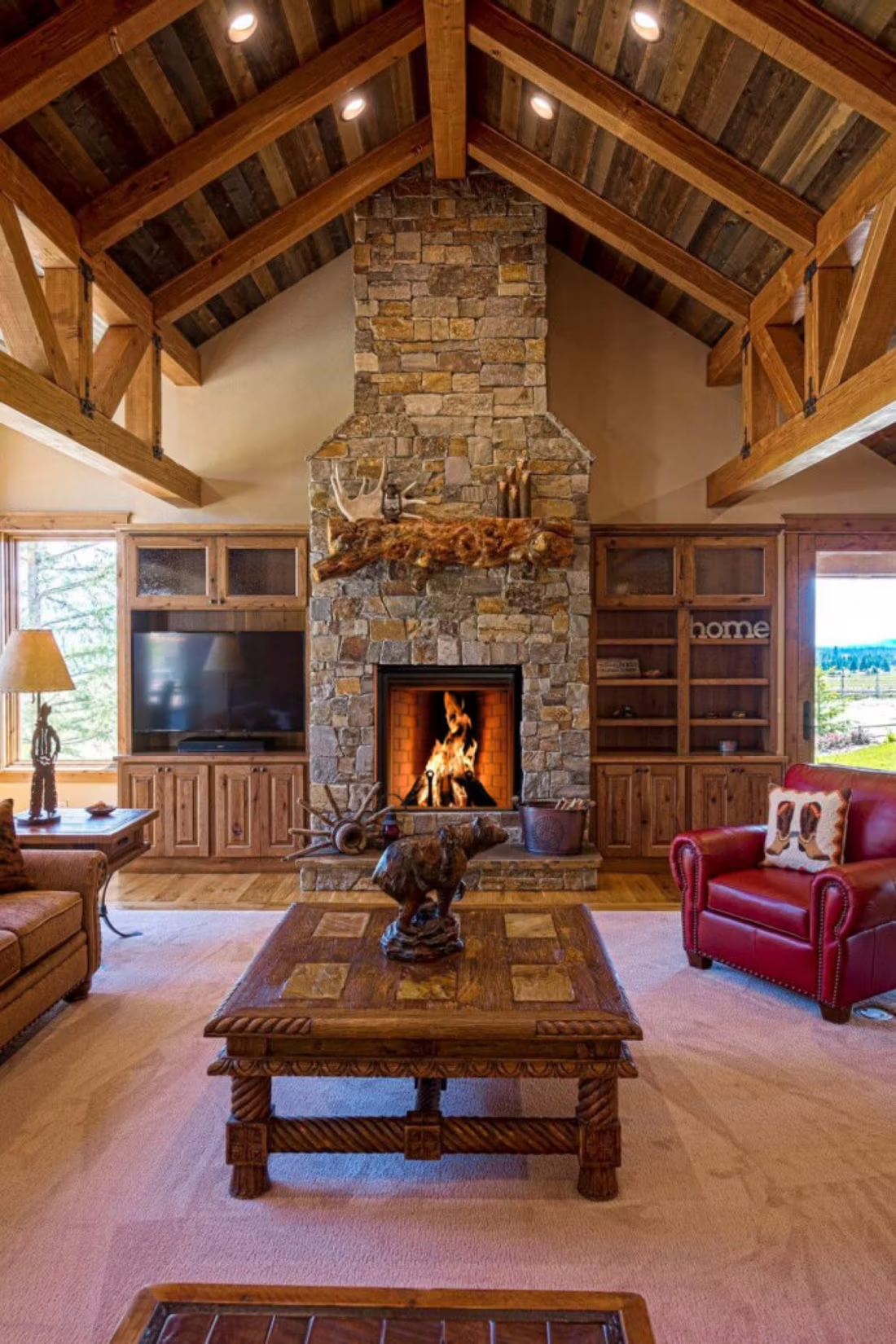
Firewood Cutting Permits Near Johnson County
Three steps. No salesperson until you're ready.
Tell us about your project
Your zip code, your situation, and the fuel you're leaning toward—or let the answers point you to one.
See what's actually available
The brands dealers within 100 miles genuinely carry—real options, never a catalog mirage.
Get your dealer & Project Guide
A trusted local dealer, plus the free Project Guide & Parts List that names every component of the job.
Frequently Asked Questions
How much does a wood stove installation cost in Johnson County?
Wood stove and insert installations in Johnson County typically run in line with other rural Rocky Mountain counties—expect $4,500 to $9,500 for a straightforward install into an existing chimney or hearth, and more if new Class A chimney pipe or a full hearth rebuild is needed. Homes out toward Kaycee or up into the foothills sometimes see a modest travel charge added by installers covering the distance from Buffalo. Because winters here are long and severe, most local installers push toward stoves rated for sustained, heavy use rather than occasional-fire units—that spec difference affects price more than brand does.
What size wood stove do I need for a Johnson County home?
With one of the coldest, longest winters around, Johnson County sits at the high end of the heating-load spectrum—closer to Duluth, MN or International Falls, MN than to most of the Mountain West. A small stove rated for 1,000 square feet may struggle here if the goal is primary heat rather than backup warmth; many local homeowners size up a step from the manufacturer's mild-climate recommendation. Ranch houses and older homes with limited insulation, common throughout the county, also lean toward a larger stove than square footage alone would suggest. A local dealer can walk your home and size it against actual wind exposure and elevation, not just square feet on paper.
Where can I find a wood stove installer near Buffalo or Kaycee?
Look for installers with NFI or CSIA certification, which signals real training in venting and clearance work rather than a general contractor treating a wood stove like any other appliance. Given the small population spread across a large county, expect fewer dealers than in a metro area, and plan for some drive time if you're out past Kaycee or up toward the forest boundary. The advantage of working with a certified local installer here is that they already understand wind-loading on chimney caps and the cold-start challenges of an unheated cabin—details that matter more in Johnson County than in milder climates.
What's the difference between a wood stove and a wood insert for my home?
A freestanding wood stove sits on a hearth pad and vents up through a chimney, and it can go almost anywhere clearances allow—a common choice in Johnson County outbuildings, shops, and cabins without an existing fireplace. A wood insert slides into an existing masonry fireplace and uses that chimney, turning a drafty older hearth into a much more efficient heat source. Many older ranch homes around Buffalo have an original masonry fireplace that loses more heat than it produces; an insert is usually the more efficient upgrade there, while new construction or outbuildings are better matched to a freestanding stove.
Do I need a permit to install a wood stove in Johnson County?
New wood stove installations generally require a building permit, and the unit itself needs to meet current EPA emissions standards. Most local installers handle the permitting paperwork as part of the job, so it's rarely something homeowners manage on their own. Separately, cutting your own firewood requires a permit from Bighorn National Forest—those run $5 to $20 per cord and are valid May through October, which is also the window most locals use to get a winter's supply of lodgepole pine or ponderosa cut, split, and seasoned before the cold sets in.
What's the best wood stove for Johnson County's climate?
For a climate with such a long, harsh winter, a catalytic stove capable of a long, steady overnight burn is usually the better fit than a smaller, decorative unit—brands like Blaze King are built around exactly that kind of extended burn time, which matters when overnight temperatures fall well below the 11°F average low. Homes using wood as primary heat, particularly out on exposed ranch land, tend to do better with a larger-capacity stove than the square footage alone would suggest, since wind exposure pulls heat out of a structure faster than still-air conditions. A local dealer can match stove size to your specific site and elevation.
How often should my chimney be inspected in Johnson County?
An annual inspection before burning season starts, typically in late summer or early fall, is the standard recommendation from the CSIA—and it's especially worth keeping to in Johnson County, where a long heating season means more total burn hours and more creosote buildup than in milder climates. Households using wood as a primary heat source and burning several cords a winter should consider a mid-season check as well. With emergency response times longer in rural parts of the county, skipping an inspection carries more risk here than it would closer to town.
Where can I get firewood or cut my own in Johnson County?
Bighorn National Forest issues cutting permits for $5 to $20 per cord, valid May through October, and it's the primary source many Johnson County households rely on for lodgepole pine, aspen, and ponderosa pine. Cutting your own during that window and letting the wood season through summer is the standard local approach, timed so the supply is dry and ready before the first hard cold arrives. For households that prefer delivered firewood, availability is more limited than in larger towns, so it's worth asking a local hearth dealer or checking community boards in Buffalo for seasonal sellers.
Wood stove vs. pellet stove—which is right for a Johnson County home?
Wood stoves burn cordwood, work with zero electricity, and pair naturally with the low-cost Bighorn National Forest cutting permits many local households already use—a real advantage given how often rural power lines here can go down in a winter storm. Pellet stoves, sold locally through brands like Bear Mountain, Lignetics, and Forest Energy, are more convenient to load and burn cleaner, but they need electricity to run the auger and blower, which means they stop working exactly when a wood stove would keep going. For most primary-heat households in Johnson County, especially those on exposed rural property, wood tends to be the more resilient choice; pellet stoves fit better as a low-maintenance supplemental option in town where power is more reliable.
Why is a fireplace insert so efficient?
An insert does two things: it seals the chimney completely, so you stop losing air you already paid to heat, and it radiates warmth into the room through the firebox and glass. Most add a heat-exchange fan that pulls cool room air underneath, wraps it around the hot firebox, and pushes it back out warm. Your home is more efficient before you've even lit the first fire.
Why won't my new wood stove get going like my old one?
New wood stoves are 70%+ efficient, so far less heat goes up the flue—which also means less draft to get a fire established. The rule: build a genuinely hot fire for about 45 minutes before you choke it down. Skip that and you get smoke in the room, creosote in the chimney, and a fire that never takes off. Most performance complaints trace straight back to this.
Does a fireplace add value to my home?
On average, a fireplace adds back to the home about the same amount you spent installing it. Add the monthly savings from heating the rooms you actually use instead of the whole house—often hundreds of dollars a year—and the value case is strong before you even count what a fire does for how your family uses the room.
How much should I budget for a fireplace?
For an average home—covering the fireplace, the vent pipe, and basic installation—a budget between $3,900 and $5,500 gives you a lot of options across wood, gas, and pellet. By the time you add finish work, gas line, and electrical, the average complete installation lands between $5,000 and $12,000 all-in. In a remodel or new build, a good rule is to put about 2.5% of the total project cost toward the fireplace.
Stove and Fireplace Dealers in Johnson County
Listings include WhyFire partner dealers, dealers we have verified as authorized for the brands we recommend, and established local businesses that carry hearth products. Every listing shows which one it is. The ones marked Preferred run on WhyFire's software, so they can show you real pricing and book your appointment right here. No manufacturer pays for placement. How we verify dealers →
Bloedorn Lumber
Fireside Services
Ramsey Enterprises
Great Divide Fabrication LLC
Find your wood stove in Johnson County.
Tell us about your home near Buffalo or Kaycee and we'll match you with a trusted local dealer, plus a free Project Guide & Parts List covering the exact stove, vent kit, and install plan for your property.
Find Your Fireplace →