
Instant heat, zero venting, anywhere in the house.
From Buffalo to Kaycee and the ranches tucked against the Bighorns, electric fireplaces give Johnson County homes clean zone heat and real ambiance without a chimney or gas line. Find the right unit and connect with a trusted local dealer.
Every Project Starts From One of These Five Situations
Electric heat earns its place as backup and zone heat, not sole heat.
Johnson County runs from Buffalo, at roughly 4,645 feet, up into the Bighorn National Forest above 9,000 feet—country with a long, hard winter heating season and an average 11°F winter low, closer to Bozeman, Montana than to the rest of the Mountain West in terms of sheer cold. With a population under 5,000 spread across a lot of open ranch land, most homes here are heated with propane furnaces or wood stoves burning local lodgepole pine, aspen, and ponderosa pine, and electric fireplaces fill a specific gap: a clean, switch-on heat source for a living room, primary bedroom, or finished basement that doesn't need a flue, a gas line, or a woodpile.
Electric service in Johnson County runs through Powder River Energy Corporation, a member-owned rural cooperative, and while PRECorp keeps the lights on reliably most of the year, high-plains blizzards do knock out power in this part of Wyoming—which is exactly why an electric fireplace works best as supplemental zone heat rather than a home's only heat source. Pair it with the propane furnace or wood stove that already carries your house through the coldest stretches, and the electric unit becomes the thing you actually use every evening: instant warmth in the room where you live, without running the furnace harder than it needs to.
Three steps. No salesperson until you're ready.
Tell us about your project
Your zip code, your situation, and the fuel you're leaning toward—or let the answers point you to one.
See what's actually available
The brands dealers within 100 miles genuinely carry—real options, never a catalog mirage.
Get your dealer & Project Guide
A trusted local dealer, plus the free Project Guide & Parts List that names every component of the job.
Frequently Asked Questions
How much does an electric fireplace installation cost in Johnson County?
Most installations in Johnson County run between $500 and $2,500. A plug-in freestanding electric stove or a wall-mount unit that uses an existing outlet sits at the low end—no electrician required beyond what's already there. A recessed, built-in electric fireplace or an insert going into an old masonry firebox costs more, mainly because it usually needs a dedicated 20-amp circuit run by a licensed electrician, which is where most of the added cost comes from in a county this rural rather than the unit itself. Homes outside Buffalo, out toward Kaycee or up into the foothills, may see a small trip charge added for the electrician's drive time.
Will my electric fireplace still work if the power goes out?
No—and this matters more in Johnson County than in most places. An electric fireplace draws power the same way any other appliance does, and Powder River Energy Corporation's lines, like any rural cooperative's, can go down during the high-plains blizzards that roll off the Bighorns. With one of the longest, coldest winter heating seasons in the region and winter lows that regularly sit well below the 11°F average, a power outage in January is not a minor inconvenience. If an electric fireplace is your only heat source in a room, plan on a propane heater, wood stove, or generator as backup for the nights the grid actually fails.
Electric vs. wood vs. pellet—what actually makes sense in Johnson County?
Wood is still the backbone of supplemental heat for a lot of Johnson County homes—lodgepole pine, aspen, and ponderosa pine are the common local species, and a Bighorn National Forest personal-use permit runs $5 to $20 per cord during the May-through-October cutting season, which makes self-cut firewood cheap if you're willing to do the work. Pellet stoves, running Bear Mountain, Lignetics, or Forest Energy pellets, are a lower-mess alternative but still need electricity for the auger and blower—so they share the same outage vulnerability as an electric fireplace. Electric wins on convenience and zero maintenance: no wood to split, no ash, no chimney to sweep, just heat at the flip of a switch for a room where you don't want the hassle. For most homes here, the honest answer is wood or propane as primary heat, with electric handling the room you actually spend your evenings in.
Do I need a permit to install an electric fireplace in Johnson County?
A plug-in freestanding or wall-mount unit typically doesn't require a permit since it uses an existing outlet. If your installation needs a new dedicated circuit—common for recessed built-ins or inserts going into an old masonry fireplace—the electrical work generally needs to be pulled through the county building department and performed by a licensed electrician. Most local dealers coordinate this as part of the installation, so you're not left tracking down the paperwork yourself.
What size electric fireplace do I need for my room?
Most electric fireplaces and inserts top out around 1,500 watts, which is enough to comfortably heat 400 to 1,000 square feet depending on ceiling height and how well the room is sealed. Older ranch homes around Johnson County with single-pane windows and less insulation will heat a smaller effective area than a newer, tighter build—an electric unit will feel great sitting next to you on a cold Buffalo evening but won't carry the whole house the way it might in a well-insulated newer home. Local dealers can walk through your specific room and insulation situation before you buy.
What's the best type of electric fireplace for a Johnson County home?
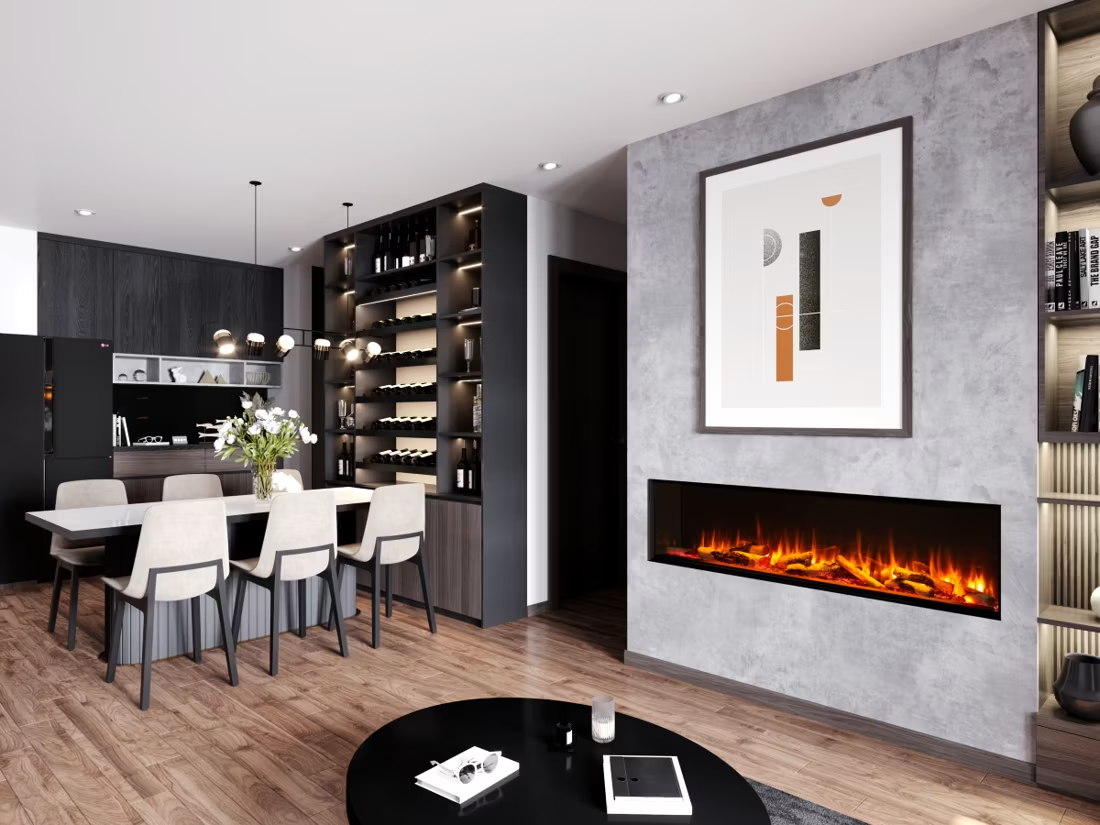
For zone heating in a cold climate like this, a recessed wall unit or a built-in linear electric fireplace from a brand like Dimplex, Amantii, or Napoleon tends to hold up well and gives you real, usable heat rather than just a flame effect. For homes with an existing but no-longer-code-compliant masonry fireplace, an electric insert is a popular option—it drops into the existing opening, needs no venting or chimney work, and turns an unused firebox into a working heat source again. Given the wildfire smoke concerns Johnson County sees most summers, some homeowners also like that an electric unit adds zero smoke to the local airshed, unlike a wood-burning alternative.
Can I put an electric insert into my existing fireplace instead of replacing it?
Yes, and it's one of the more straightforward projects a local dealer handles. An electric insert slides into an existing masonry or prefab firebox opening, plugs into a standard or dedicated outlet depending on the model, and needs no chimney liner or venting at all—which also means no creosote and no wood smoke contributing to summer wildfire smoke concerns that already affect this part of Wyoming. It's a good option for an old fireplace that's not being used because it's inefficient or out of code, without the cost of a full gas or wood conversion.
Is electric heat expensive to run in a climate this cold?
Running an electric fireplace as your whole-home heat source in a county with one of the longest, coldest winter heating seasons in the region would get expensive fast—that's not what these units are built for. Used as zone heat in the room you're actually sitting in, while your propane furnace or wood stove handles the rest of the house, the cost through Powder River Energy Corporation is reasonable and predictable, since you're only heating one space instead of running electric resistance heat against a full Wyoming winter.
Electric vs. propane—which should I choose for a new fireplace?
Propane is the standard fuel for whole-home heating in most of rural Johnson County, since there's no natural gas infrastructure out here, and a propane fireplace or insert can genuinely carry a room through a hard freeze even during a power outage—as long as it's a model with a battery-backed ignition rather than one needing household electricity to run. Electric skips the tank, the delivery truck, and the gas line entirely, which makes it simpler and cheaper to install, but it goes dark exactly when PRECorp's lines go down. Most homeowners here end up choosing propane for backup-capable heat and electric for the low-maintenance, install-anywhere room they want warmed on a normal night.
Do electric fireplaces actually produce heat?
Yes—most put out around 4,800–5,000 BTUs from a standard outlet, which comfortably warms a bedroom, office, or den as a comfort-zone heater. What they won't do is carry a whole house the way wood, gas, or pellet can. Think of electric as ambiance-first with honest supplemental heat: flames on with no heat in July, flames plus warmth in January.
Can I put a TV above my fireplace?
Yes—with an asterisk. Fireplaces are hot and TVs don't like heat. Either put a mantel between them to deflect rising warmth, or choose a fireplace with heat-management technology that creates a cool zone on the wall above—the wall stays around 125 degrees, barely warm, while the room still gets full heat. If you like clean lines and don't want a mantel, heat management is the answer.
How much should I budget for a fireplace?
For an average home—covering the fireplace, the vent pipe, and basic installation—a budget between $3,900 and $5,500 gives you a lot of options across wood, gas, and pellet. By the time you add finish work, gas line, and electrical, the average complete installation lands between $5,000 and $12,000 all-in. In a remodel or new build, a good rule is to put about 2.5% of the total project cost toward the fireplace.
Does a fireplace add value to my home?
On average, a fireplace adds back to the home about the same amount you spent installing it. Add the monthly savings from heating the rooms you actually use instead of the whole house—often hundreds of dollars a year—and the value case is strong before you even count what a fire does for how your family uses the room.
Stove and Fireplace Dealers in Johnson County
Listings include WhyFire partner dealers, dealers we have verified as authorized for the brands we recommend, and established local businesses that carry hearth products. Every listing shows which one it is. The ones marked Preferred run on WhyFire's software, so they can show you real pricing and book your appointment right here. No manufacturer pays for placement. How we verify dealers →
Bloedorn Lumber
Fireside Services
Ramsey Enterprises
Great Divide Fabrication LLC
Find your electric fireplace in Johnson County.
Tell us about your home and we'll put together a free Project Guide & Parts List—the right electric fireplace or insert for your space, the parts it takes, and a trusted local dealer in Johnson County to install it.
Find Your Fireplace →