
Warm Up a Room in Buffalo the Moment You Flip the Switch.
No chimney, no gas line, no venting through 4,709 feet of Bighorn Mountain foothill construction—just a room that warms up fast. Find the right electric unit and a local dealer who can wire it in correctly.
Every Project Starts From One of These Five Situations
Instant, No-Vent Heat for a High-Elevation Town.
Buffalo sits at 4,709 feet at the eastern edge of the Bighorn Mountains, where Johnson County racks up roughly 8,140 Heating Degree Days a year—in the same range as Bismarck, North Dakota—and average winter lows sit around 11°F, with Bighorn cold snaps dropping well below zero. That's a serious heating load, and it's also a climate where wood stoves have become less common in town: wildfire smoke season and modern, tighter home construction have pushed many Buffalo households toward propane forced air for whole-home heat, with electric units filling in for zone heat where it makes sense.
Powder River Energy Corp serves electric accounts here at a residential rate of about $0.1173 per kWh, which keeps the cost of running a supplemental electric fireplace reasonable for a finished basement, a bedroom addition, or a sunroom that the propane furnace doesn't quite reach. Because electric units need no chimney, no venting, and no fuel deliveries up Highway 16, they're often the simplest retrofit for a small-town home where getting venting materials or a propane line extension done can mean waiting on a contractor's schedule. The tradeoff is honest: electric resistance heat won't replace a furnace at Buffalo's HDD load, but it's a reliable, low-maintenance way to add real warmth to one room at a time.
Three steps. No salesperson until you're ready.
Tell us about your project
Your zip code, your situation, and the fuel you're leaning toward—or let the answers point you to one.
See what's actually available
The brands dealers within 100 miles genuinely carry—real options, never a catalog mirage.
Get your dealer & Project Guide
A trusted local dealer, plus the free Project Guide & Parts List that names every component of the job.
Frequently Asked Questions
How much does it cost to install an electric fireplace in Buffalo?
Electric fireplaces are the least expensive hearth product to install because there's no chimney, gas line, or exterior venting involved. A plug-in insert or wall-mount unit that uses a standard outlet can run as little as $300–$800 installed. A built-in linear electric fireplace that needs a dedicated 20-amp circuit run by a licensed electrician typically lands between $1,000 and $2,500 in Buffalo, depending on how far the circuit has to travel from your panel and whether framing or drywall work is needed. Because electric units skip the venting and gas-line labor that drive up wood and gas installs, this is usually the fastest project a local electrician or hearth dealer can turn around.
Will an electric fireplace heat my whole house through a Johnson County winter?
No, and it shouldn't be asked to. At 8,140 Heating Degree Days and winter lows around 11°F, Buffalo's heating load is on par with a place like Bismarck, North Dakota—electric resistance heat isn't efficient or cost-effective as a whole-home solution at that scale. Most Buffalo homes rely on a propane or forced-air furnace for primary heat, and an electric fireplace does its best work as zone heat: warming a finished basement, a primary bedroom, or a sunroom addition without running ductwork or a gas line to that space. Think of it as a supplement to your furnace, not a replacement.
What size electric fireplace do I need for my home?
Most electric fireplaces put out between 4,600 and 9,000 BTUs (roughly 1,350–2,600 watts), which is enough to comfortably heat a single room of 300–450 square feet in a reasonably insulated Buffalo home—less if the room has high ceilings, older single-pane windows, or sits on an exterior wall facing the Bighorns. If you're trying to take the edge off a larger open floor plan, you'll want either a larger linear unit near the top of that wattage range or a plan that treats the fireplace as ambiance while your furnace carries the heating load. A local dealer can walk your space and tell you honestly whether electric will get the job done or whether you need a different fuel for that room.
Will my electric fireplace still work if the power goes out?
No—and this matters more in Buffalo than in milder climates. Unlike gas fireplaces with battery-backup ignition, an electric fireplace is entirely dependent on Powder River Energy Corp's grid. If a winter storm off the Bighorns takes down power lines, the unit goes dark along with everything else. If you're installing electric heat as your only backup for a room during outages, pair it with a generator or keep a propane space heater on hand for genuine emergency use—electric fireplaces are best understood as everyday convenience heat, not storm-day insurance.
What's the difference between an electric fireplace, insert, and stove?
An electric fireplace is typically a built-in or wall-mount unit designed to look like a framed hearth, often with a linear or widescreen flame display. An electric insert is sized to slide into an existing masonry or wood-burning fireplace opening, letting you convert an old wood-burning firebox into clean electric heat without touching the chimney. An electric stove is a freestanding cabinet-style unit that mimics a wood stove's footprint and can sit against nearly any wall since it doesn't need clearance for venting. For older Buffalo homes with an existing but unused masonry fireplace, an insert is usually the simplest upgrade; for new rooms or additions, a built-in or freestanding unit gives more placement flexibility.
Do I need a permit to install an electric fireplace in Buffalo?
A simple plug-in electric fireplace that uses an existing outlet generally doesn't require a permit. If your installation calls for a new dedicated circuit, an electrical permit is typically required and pulled by the licensed electrician doing the work—check with the City of Buffalo or Johnson County building department depending on whether the property is inside or outside city limits. This is one of the simpler permitting paths among hearth products precisely because there's no venting or gas-line inspection involved, just standard electrical code compliance.
How much does it cost to run an electric fireplace in Buffalo?
At Powder River Energy Corp's residential rate of roughly $0.1173 per kWh, a typical 1,500-watt electric fireplace costs about $0.18 an hour to run on its heat setting, or a little over $4 for a full 24 hours of continuous use. Most owners aren't running one around the clock—used a few hours an evening in a bedroom or den, it adds only a few dollars a month to the electric bill, which is one of the reasons electric units are popular as supplemental heat in Buffalo rather than an expense homeowners worry about.
Electric vs. gas fireplace—which is right for my Buffalo home?
Gas fireplaces (typically propane in this part of Johnson County, since natural gas mains don't reach every neighborhood) put out real, substantial heat and can be sized to actually help carry a room's heating load through an 8,140-HDD winter—some models even run on battery backup during an outage. Electric fireplaces cost less to install, need no fuel tank or gas line, and are simpler to place anywhere with an outlet, but they're realistically a supplemental or ambiance choice rather than a serious heat source at Buffalo's elevation and cold. Wood stoves, once common on ranch properties around town, have become less practical for many in-town homes given wildfire smoke season, though Bighorn National Forest permits ($5–$20 per cord, May through October) still support rural households that burn wood. For most in-town Buffalo homeowners choosing between electric and gas, the deciding factor is usually whether the room needs to be a real heat source or just a warm, low-maintenance focal point.
What electric fireplace brands or styles work well for a Wyoming mountain-town home?
Linear built-in units from brands like Dimplex, Napoleon, and Amantii are popular choices for Buffalo homes because their realistic flame technology holds up as a genuine focal point even when the heater isn't running—useful since many owners use them for ambiance more often than for heat given the local climate. For older homes with an existing masonry fireplace opening, an electric insert from the same manufacturers slides in without touching the chimney. Because shipping venting components and gas lines out to a small Johnson County town can add time and cost to a project, electric's plug-and-play simplicity is often the path of least resistance for homeowners who want something installed quickly.
Can I put a TV above my fireplace?
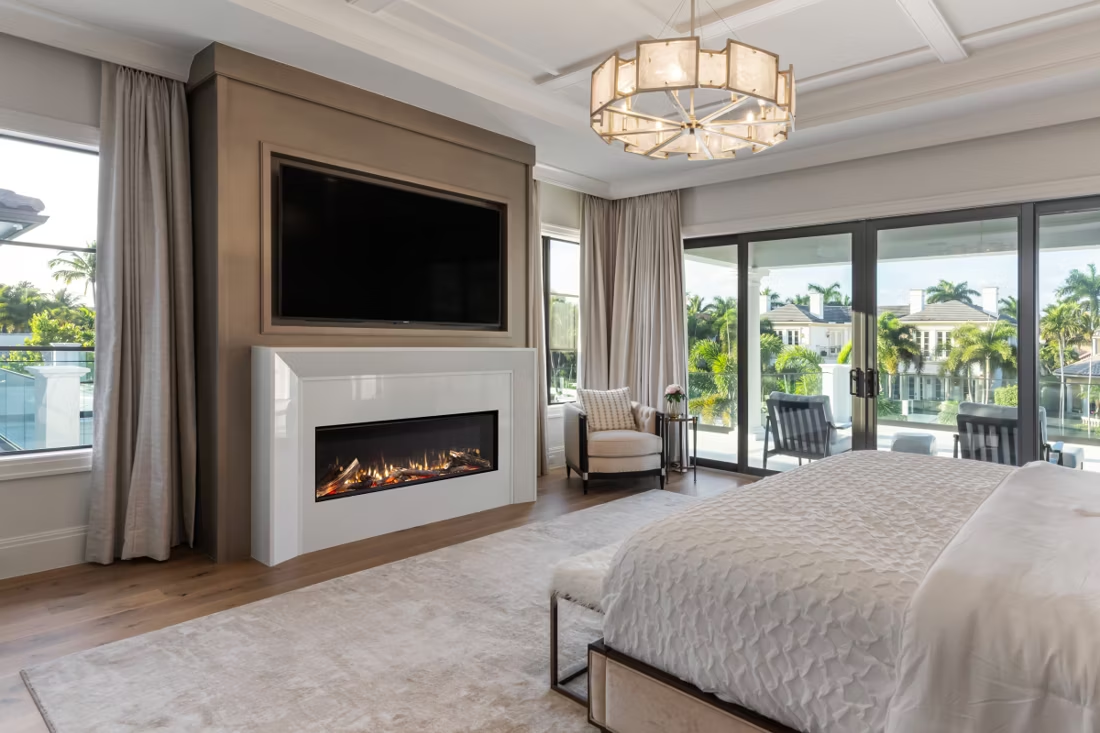
Yes—with an asterisk. Fireplaces are hot and TVs don't like heat. Either put a mantel between them to deflect rising warmth, or choose a fireplace with heat-management technology that creates a cool zone on the wall above—the wall stays around 125 degrees, barely warm, while the room still gets full heat. If you like clean lines and don't want a mantel, heat management is the answer.
Do electric fireplaces actually produce heat?
Yes—most put out around 4,800–5,000 BTUs from a standard outlet, which comfortably warms a bedroom, office, or den as a comfort-zone heater. What they won't do is carry a whole house the way wood, gas, or pellet can. Think of electric as ambiance-first with honest supplemental heat: flames on with no heat in July, flames plus warmth in January.
Does a fireplace add value to my home?
On average, a fireplace adds back to the home about the same amount you spent installing it. Add the monthly savings from heating the rooms you actually use instead of the whole house—often hundreds of dollars a year—and the value case is strong before you even count what a fire does for how your family uses the room.
How much should I budget for a fireplace?
For an average home—covering the fireplace, the vent pipe, and basic installation—a budget between $3,900 and $5,500 gives you a lot of options across wood, gas, and pellet. By the time you add finish work, gas line, and electrical, the average complete installation lands between $5,000 and $12,000 all-in. In a remodel or new build, a good rule is to put about 2.5% of the total project cost toward the fireplace.
Nearby Dealers
Hearth shops serving Buffalo and the surrounding area. Every listing shows whether it is a WhyFire partner, a dealer we have verified as authorized for the brands we recommend, or a local business carrying hearth products. No manufacturer pays for placement. How we verify dealers →
Bloedorn Lumber
Fireside Services
Ramsey Enterprises
Great Divide Fabrication LLC
Electric Service in Buffalo
An electric fireplace's heater draws about 1,500 watts—pennies per hour at local rates.
Powder River Energy Corp
Find your electric fireplace in Buffalo.
Tell us about your room and your home, and we'll match you with a local Buffalo dealer or electrician and send over a free Project Guide & Parts List—the exact unit, circuit requirements, and installer recommended for your space.
Find Your Fireplace →