
Dependable heat for Bighorn Basin winters in Buffalo.
At 4,709 feet with 8,140 heating degree days a year—a season closer to International Falls, Minnesota than to most of Wyoming—Buffalo homeowners want a fireplace that lights instantly and keeps running through a Powder River Energy Corp outage. I'll match you with a trusted local dealer who knows propane setups, altitude derating, and correct venting for this elevation.
Every Project Starts From One of These Five Situations
Warmth that doesn't depend on a woodpile.
Buffalo sits at 4,709 feet where the plains meet the Bighorn Mountains, and the climate numbers here are severe even by Wyoming standards: an average winter low of 11°F and 8,140 heating degree days a year, putting Johnson County's heating season closer to International Falls, Minnesota than to Cheyenne or Casper. The Bighorn National Forest west of town issues cutting permits for lodgepole pine, aspen, and ponderosa pine at $5 to $20 a cord, but with wildfire smoke a recurring summer and fall concern and most residents working full days that leave little time to split and haul wood through an eight-month heating season, wood has become the exception here rather than the rule. Gas has taken over as the default choice for both new builds and fireplace upgrades in town.
There's no natural gas utility mapped to the 82834 zip code, so gas fireplaces in Buffalo run almost entirely on propane, delivered and stored in a tank rather than fed from a street main—a normal setup across rural Johnson County. That's not a drawback for performance: a properly sized propane fireplace with an IPI (intermittent pilot) or standing-pilot ignition system lights instantly and can keep a living room warm through a Powder River Energy Corp outage during a Bighorn windstorm, when electric baseboard and forced-air backup won't. At 4,709 feet, altitude also changes the math slightly—gas appliances need to be derated for elevation, which is one more reason to have a local installer size the unit rather than ordering something off the shelf.
Three steps. No salesperson until you're ready.
Tell us about your project
Your zip code, your situation, and the fuel you're leaning toward—or let the answers point you to one.
See what's actually available
The brands dealers within 100 miles genuinely carry—real options, never a catalog mirage.
Get your dealer & Project Guide
A trusted local dealer, plus the free Project Guide & Parts List that names every component of the job.
Frequently Asked Questions
How much does a gas fireplace installation cost in Buffalo?
Most propane fireplace and insert installations in Buffalo run roughly $4,000 to $9,500. An insert dropped into an existing masonry firebox—common in the older homes near downtown that were originally built around a wood-burning fireplace—lands toward the lower end since the chimney chase is already there. A new direct-vent fireplace for a remodel or addition costs more once you add framing, venting through an exterior wall, and running propane line from the tank. Because Buffalo runs on propane rather than piped natural gas, tank placement and line distance from the house can also move the number, so a firm quote really depends on a local dealer walking your property.
Do I need natural gas service, or does everyone use propane in Buffalo?
Propane is standard. There's no natural gas utility serving the 82834 zip code, so essentially every gas fireplace, range, and furnace in town and the surrounding ranches runs on a propane tank rather than a street gas main. If you already have a propane tank for your furnace or water heater, tying in a fireplace is usually straightforward. If you don't, your installer or a local propane supplier can spec tank size based on your total household load, including the new fireplace.
Can I convert an old wood-burning fireplace to gas?
Yes, and it's one of the more common upgrades we see inquiries about from Buffalo's older housing stock, where many homes were originally built with a masonry fireplace meant for lodgepole pine or ponderosa pine cut under a Bighorn National Forest permit. A propane insert with a stainless liner typically drops into that existing firebox, so you keep the chimney chase and skip most of the structural work. Given how few Buffalo households still rely on wood as a daily heat source, converting to propane is usually about trading the hauling and splitting for instant, thermostat-controlled heat rather than saving money on fuel.
Will my gas fireplace still work if the power goes out?
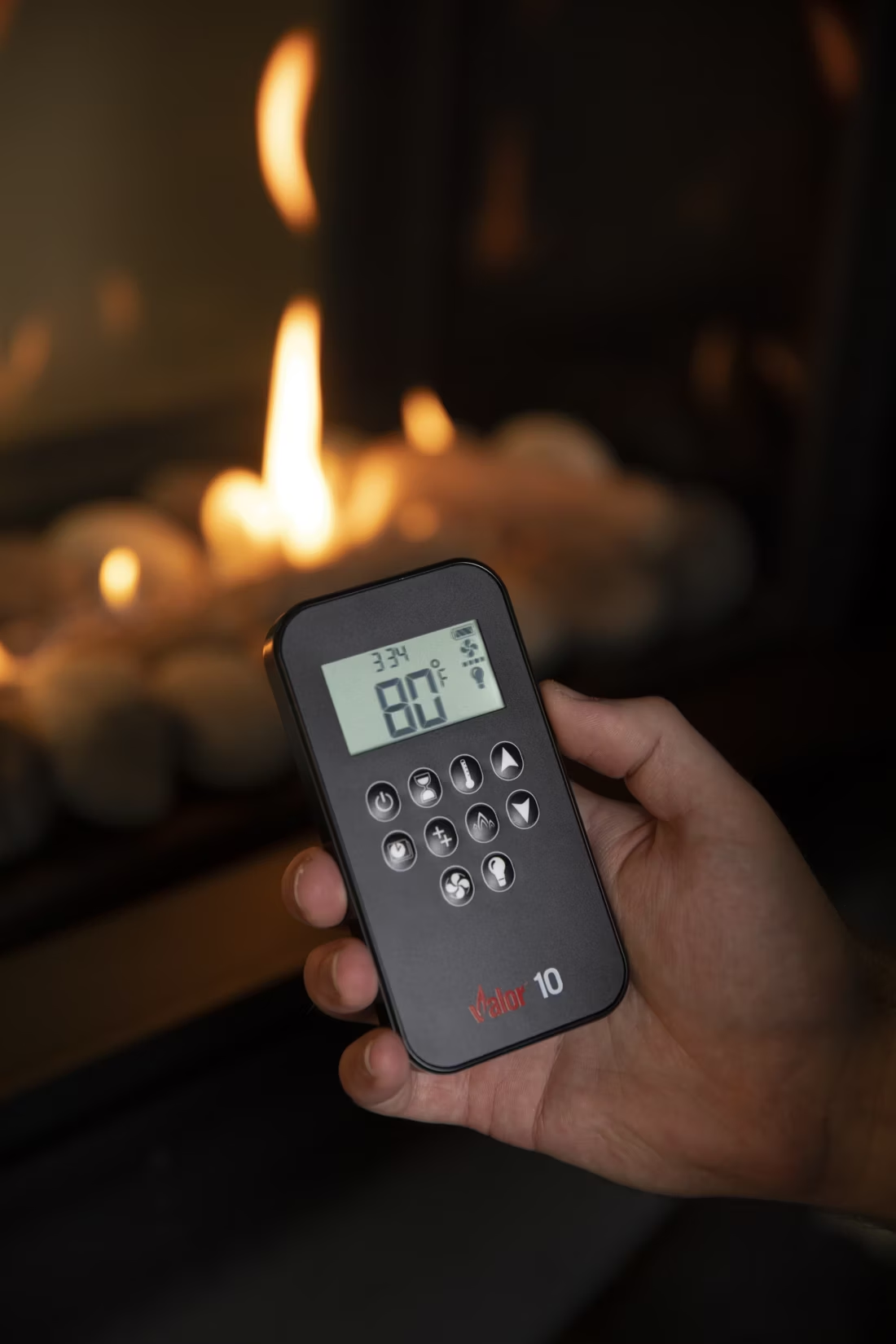
It can, and that matters in Johnson County—Powder River Energy Corp lines running out to rural properties and through the Bighorn foothills are exposed to wind and heavy snow loads, and outages do happen during winter storms. Fireplaces with IPI (intermittent pilot ignition) run on AA battery backup that kicks in the moment power drops. Standing-pilot units skip the electronics almost entirely and will run through an extended outage without any battery at all. If backup heat during a multi-day outage is a priority, tell your local dealer up front so they steer you toward the right ignition system.
What's the difference between a gas fireplace, insert, and stove?
A gas fireplace is a built-in unit framed into a wall, typical for new construction or a full remodel. A gas insert fits into an existing masonry firebox, which is the more common retrofit in Buffalo's older homes that started out as wood-burning fireplaces. A gas stove is a freestanding unit on its own hearth pad, similar in footprint to a wood stove but running on propane instead of cordwood—a good option for a cabin or outbuilding that doesn't have an existing chimney. For most in-town homes with a fireplace already in place, an insert is the simplest and cheapest path.
Do I need a permit to install a gas fireplace in Buffalo?
Yes. You'll need a building permit through the Johnson County Planning and Building Department, along with a gas/propane line permit since that work has to be done by a licensed gas fitter. Most established hearth dealers who work in and around Buffalo handle the permit filing and coordinate the final inspection as part of the installation, which saves you from managing two separate approvals yourself.
Does elevation affect how a gas fireplace performs in Buffalo?
It can. At 4,709 feet, gas appliances burn slightly richer than they would at sea level, and manufacturers generally call for a BTU derate at this altitude to keep combustion efficient and the unit operating safely. Most modern fireplaces ship with an altitude-specific orifice kit or adjustable regulator to handle this, but it has to be set correctly at install—this is exactly the kind of detail a big-box retailer's generic instructions won't cover, and where a local installer who's worked at Bighorn Basin elevations earns their fee.
How often should a propane fireplace be serviced?
Plan on an annual inspection, ideally in late summer before the first hard freeze. A technician checks the burner, pilot or ignition assembly, propane line connections, and venting, and cleans the glass. Given Buffalo's long heating season—over 8,000 heating degree days means the fireplace may run daily for the better part of eight months—skipping the yearly check is how a household ends up with an ignition failure during a January cold snap instead of catching a worn part in September.
Gas vs. electric—which makes more sense for a Buffalo home?
Propane gas wins for real heat output and for keeping a room warm during a Powder River Energy Corp outage, which is a genuine consideration through Bighorn winter storms. Electric fireplaces and log inserts, running on Powder River Energy Corp's residential rate of about 11.7 cents per kWh, are cheaper to install—often under $1,500 versus several thousand for a vented propane unit—and work well as supplemental ambiance or zone heat in a bedroom or den, but they stop working the moment the grid does and can't carry a whole living space through a hard Wyoming cold snap the way a propane fireplace can. Many Buffalo homeowners use electric for secondary rooms and rely on propane for the primary living area.
Is my gas fireplace wasting gas?
If it was installed more than 15 years ago, probably. Older gas fireplaces keep a standing pilot light burning all the time, and that little flame can cost a couple hundred dollars a year. Newer models use pilot-on-demand ignition—the pilot lights only when you use the fireplace and goes out when you turn it off.
Are new gas fireplaces really better than old ones?
Two ways, and they're both big. Looks: modern gas fireplaces are realistic enough that it's hard to believe they aren't burning wood. Cost: old units burn a standing pilot year-round (roughly $200 a year), while new ones use pilot-on-demand ignition and modern burners. Add remote controls and thermostat operation, and the day-to-day experience isn't close.
Can a fireplace actually lower my heating bill?
Yes—by creating a comfort zone. A furnace heats every square foot of the house just to warm the one room you're in; a gas fireplace on low burns roughly a sixth of the gas a typical furnace does. Set the furnace around 55–60 degrees as a baseline, then heat the rooms your family actually uses. Families who heat this way commonly save $20–$60 a month.
How much should I budget for a fireplace?
For an average home—covering the fireplace, the vent pipe, and basic installation—a budget between $3,900 and $5,500 gives you a lot of options across wood, gas, and pellet. By the time you add finish work, gas line, and electrical, the average complete installation lands between $5,000 and $12,000 all-in. In a remodel or new build, a good rule is to put about 2.5% of the total project cost toward the fireplace.
Nearby Dealers
Hearth shops serving Buffalo and the surrounding area. Every listing shows whether it is a WhyFire partner, a dealer we have verified as authorized for the brands we recommend, or a local business carrying hearth products. No manufacturer pays for placement. How we verify dealers →
Bloedorn Lumber
Fireside Services
Ramsey Enterprises
Great Divide Fabrication LLC
Get your free Project Guide & Parts List for a gas fireplace in Buffalo.
Tell me about your home, your propane setup, and your elevation, and I'll match you with a trusted local dealer and send a free Project Guide & Parts List—sized and derated correctly for the Bighorn Basin, with the vent kit and parts specified.
Find Your Fireplace →