
A cleaner-burning heat source built for Milwaukee County winters.
With winters as long and cold as Madison's, West Allis homes need reliable supplemental heat. See what a local dealer can actually install, and get matched with the right pellet stove or insert.
Every Project Starts From One of These Five Situations
Consistent, low-maintenance heat for a long Wisconsin winter.
West Allis sits just west of downtown Milwaukee at under 800 feet of elevation, but that flat lake-effect exposure still delivers a real winter: average lows near 15°F and a heating season on par with what a household in Madison or Fargo deals with. That's a long, cold heating season where a lot of homeowners want something more hands-off than tending a wood stove every few hours but still want real, radiant heat rather than just electric baseboard.
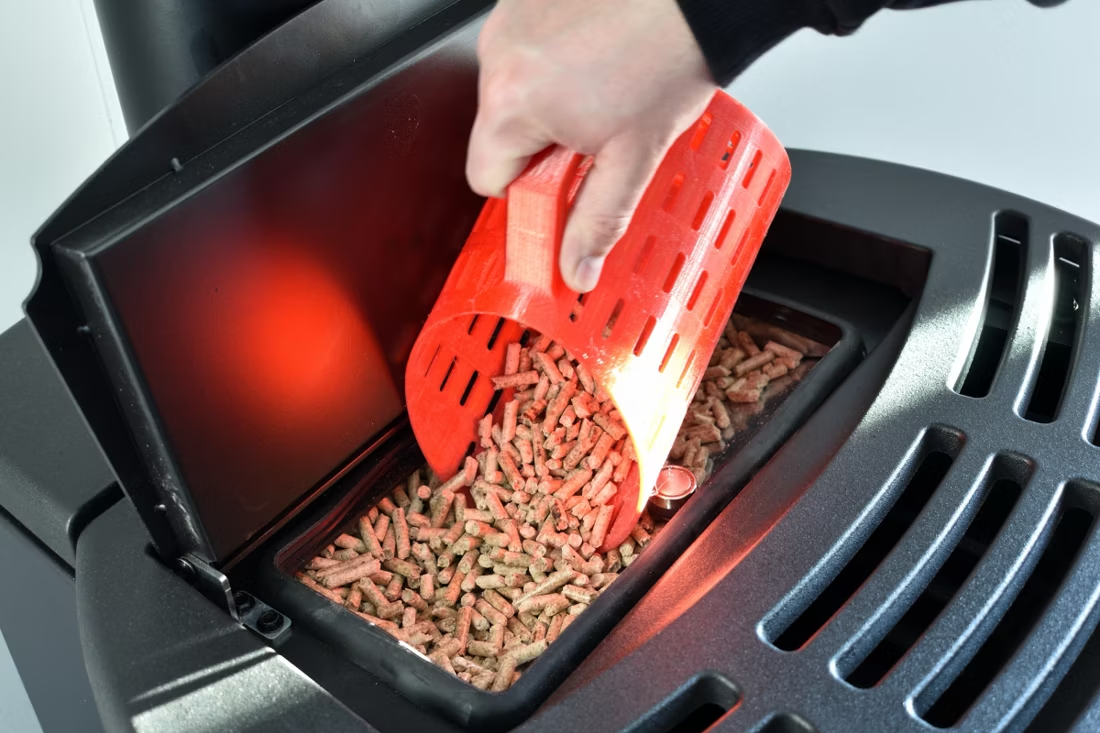
Pellet stoves fit that gap well. Load the hopper, set the thermostat, and the auger feeds pellets automatically for hours at a time—no splitting, stacking, or overnight reloads like cordwood heat requires. Wisconsin's pellet supply chain is solid, too: regional producers like Indeck Energy Services, Lignetics, and Somerset Pellet Fuel keep hardwood pellets in stock at feed stores and hearth shops across the Milwaukee area, so you're not depending on a single supplier or long shipping routes.
Three steps. No salesperson until you're ready.
Tell us about your project
Your zip code, your situation, and the fuel you're leaning toward—or let the answers point you to one.
See what's actually available
The brands dealers within 100 miles genuinely carry—real options, never a catalog mirage.
Get your dealer & Project Guide
A trusted local dealer, plus the free Project Guide & Parts List that names every component of the job.
Frequently Asked Questions
How much does a pellet stove installation cost in West Allis?
Most pellet stove and insert installations in the Milwaukee area run $4,500 to $7,500, depending on whether the unit is a freestanding stove venting through an exterior wall or an insert going into an existing masonry fireplace. Inserts using an existing fireplace opening tend to land on the lower end since the framing and hearth work are already in place. New construction or installs requiring a fresh hearth pad and wall penetration run toward the higher end. A local dealer will give you a firm number after seeing your space.
Where can I buy pellets in West Allis?
Hardwood pellets from regional producers like Lignetics and Somerset Pellet Fuel are stocked at hearth shops and farm/feed stores throughout the Milwaukee area, and Indeck Energy Services supplies pellet fuel across Wisconsin as well. Expect to pay roughly the going Midwest rate per ton, with pricing usually best if you buy a full winter's supply—typically 2 to 3 tons for an average West Allis home—in late summer or early fall before demand picks up. Buying local hardwood pellets rather than shipped-in softwood blends also tends to mean less ash and more consistent burn quality.
Do I need a permit to install a pellet stove in West Allis?
Yes. West Allis requires a building permit for new pellet stove and insert installations, since the work involves a wall or roof penetration for venting and sometimes electrical work for the stove's auger and blower. Most established hearth dealers in the Milwaukee area handle the permit application and inspection scheduling as part of the installation, so you're not the one filing paperwork with the city.
Will my pellet stove work during a power outage?
Not without backup power. Unlike a wood stove, a pellet stove depends on electricity to run the auger that feeds fuel and the blower that distributes heat—if Wisconsin Electric Power Co service drops during an ice storm, the stove stops working. Some homeowners pair a pellet stove with a small battery backup or generator specifically for this reason, especially given how common winter ice storms are in southeastern Wisconsin. If uninterrupted heat during outages is your top priority, a wood stove is worth comparing against pellet.
What's the difference between a pellet stove and a pellet insert?
A pellet stove is a freestanding unit that sits on its own hearth pad and vents through an exterior wall or existing chimney—it can go almost anywhere in a room with the right clearances. A pellet insert is built to slide into an existing masonry fireplace opening, using a liner run up the existing chimney for venting. For West Allis homes with an older brick fireplace that's rarely used, an insert is often the more efficient upgrade since it repurposes an opening you already have. Homes without an existing fireplace usually go with a freestanding stove instead.
How much pellet fuel will I need for a Wisconsin winter?
For a typical West Allis home using a pellet stove as supplemental heat in the main living area, expect to burn somewhere around 2 to 3 tons of pellets across a full heating season, given how long and cold the local winters run. Homes using pellet heat as a primary source, or larger open floor plans, can run higher. Local dealers can help estimate your seasonal usage based on square footage and how much of the home you're heating with the stove versus your furnace.
How often does a pellet stove need to be cleaned and serviced?
Plan on cleaning the burn pot and ash pan every few days during regular winter use, a deeper glass and hopper cleaning weekly, and a full annual service before the season starts—checking the auger motor, blower, gaskets, and venting. Pellet stoves produce far less creosote than wood stoves, so there's no chimney sweep required in the traditional sense, but the mechanical components (auger, igniter, blowers) do need periodic attention since they're doing more of the work than a simple wood-burning firebox.
What size pellet stove do I need for my West Allis home?
Sizing depends on square footage, ceiling height, and how open your floor plan is. As a rough guide for this climate: smaller units (rated around 40,000-50,000 BTU) suit a single large room or a well-insulated smaller home, while larger units can handle 1,500-2,000+ square feet as supplemental heat. Given West Allis's cold, long heating season, it's worth erring toward a dealer's in-home assessment rather than guessing—an undersized stove will run constantly on high and still not keep up on the coldest nights near 15°F.
Pellet vs. wood stove—which is right for my home?
Wood stoves burn local hardwoods like oak, maple, birch, and aspen that are widely available around Milwaukee County, work without electricity, and offer the lowest fuel cost if you can source or split your own wood. Pellet stoves trade that self-sufficiency for convenience—automatic feed, a thermostat, and less daily tending—but they need continuous power to run the auger and blower. For West Allis homes without a reliable backup power plan, wood is the safer bet for outage resilience. For homeowners who want consistent, hands-off heat and don't want to deal with splitting and stacking cordwood, pellet is usually the better fit. A local dealer who carries both can walk you through the tradeoff for your specific setup.
Why is a fireplace insert so efficient?
An insert does two things: it seals the chimney completely, so you stop losing air you already paid to heat, and it radiates warmth into the room through the firebox and glass. Most add a heat-exchange fan that pulls cool room air underneath, wraps it around the hot firebox, and pushes it back out warm. Your home is more efficient before you've even lit the first fire.
How often does a pellet stove need cleaning?
A clean pellet stove is a happy pellet stove. Plan on cleaning the burn pot about once a week when you're burning regularly—ash and clinkers gum up the air holes just like a pellet barbecue. Most pellet stove problems trace back to skipped cleaning that nobody explained up front. Some designs make it easy with a trapdoor burn pot: pull a lever and the gunk drops into the ash pan.
How much should I budget for a fireplace?
For an average home—covering the fireplace, the vent pipe, and basic installation—a budget between $3,900 and $5,500 gives you a lot of options across wood, gas, and pellet. By the time you add finish work, gas line, and electrical, the average complete installation lands between $5,000 and $12,000 all-in. In a remodel or new build, a good rule is to put about 2.5% of the total project cost toward the fireplace.
Does a fireplace add value to my home?
On average, a fireplace adds back to the home about the same amount you spent installing it. Add the monthly savings from heating the rooms you actually use instead of the whole house—often hundreds of dollars a year—and the value case is strong before you even count what a fire does for how your family uses the room.
Nearby Dealers
Hearth shops serving West Allis and the surrounding area.
Pellet Brands Stocked Around West Allis
Manufacturers will point you to the nearest stocking dealer.
Find your pellet stove in West Allis.
Tell us a bit about your home and we'll match you with a trusted local dealer and send over your free Project Guide & Parts List—the exact parts, vent kit included, for your West Allis pellet project.
Find Your Fireplace →