
Real heat, zero venting, right here in West Allis.
No chimney, no gas line, no permit hassle for most units—just plug-in or hardwired warmth for West Allis bungalows, duplexes, and condos. Find the right unit and connect with a trusted local dealer.
Every Project Starts From One of These Five Situations
Heat where you need it, without touching the chimney.
West Allis sits in climate zone 6A with roughly 6,585 heating degree days a year and winter lows averaging 15°F—a season that stacks up with Minneapolis rather than anywhere mild. A lot of the city's housing stock, especially in the 53219 and 53214 zip codes, is made up of prewar and midcentury bungalows, two-flats, and duplexes, many of which either never had a masonry fireplace or have an old brick chimney that hasn't been inspected or lined in decades. That makes rebuilding a wood-burning hearth or running new gas line an expensive proposition for a room that just needs supplemental warmth.
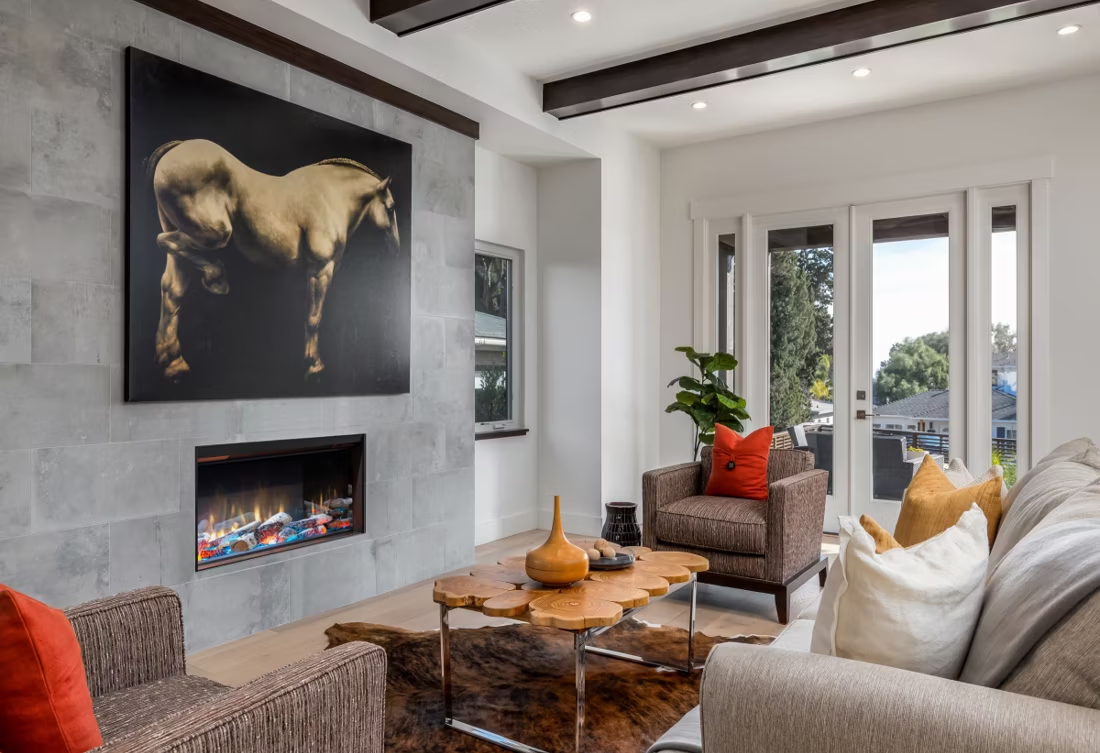
An electric fireplace sidesteps all of that. Wisconsin Electric Power Co. (We Energies) serves West Allis at a residential rate around $0.1923 per kWh, and most electric fireplace heaters draw about 1,500 watts on high—roughly 29 cents an hour to run. For renters in the apartment buildings around West Allis, for finished basements, and for homeowners who want a fireplace look in a room with no existing chimney, an electric insert or wall unit delivers ambiance and zone heat without an electrician's crew tearing into the wall—unless you're going with a larger built-in that needs a dedicated circuit.
Three steps. No salesperson until you're ready.
Tell us about your project
Your zip code, your situation, and the fuel you're leaning toward—or let the answers point you to one.
See what's actually available
The brands dealers within 100 miles genuinely carry—real options, never a catalog mirage.
Get your dealer & Project Guide
A trusted local dealer, plus the free Project Guide & Parts List that names every component of the job.
Frequently Asked Questions
How much does it cost to install an electric fireplace in West Allis?
A plug-in insert or mantel package that fits into an existing wall opening or stands on its own typically runs $150 to $600 installed, since it just plugs into a standard outlet. A built-in wall unit or a larger insert that requires a dedicated 20-amp circuit run by a licensed electrician usually lands between $1,200 and $3,000, depending on how far the wiring has to travel and whether drywall or trim work is needed to finish the opening. Local dealers can tell you which category your project falls into after seeing your wall and outlet situation.
What does it cost to actually run an electric fireplace here?
At We Energies' residential rate of about $0.1923 per kWh, a standard 1,500-watt electric fireplace running on high costs roughly 29 cents an hour. Most units let you run the flame effect without the heater engaged, which draws only a few watts and costs pennies a day—useful if you want the look on a mild West Allis afternoon without adding heat to the room. Compared to running a furnace to warm a single room, zone-heating with an electric unit in a den or finished basement is usually the cheaper option for that space.
Do I need a permit to install an electric fireplace in West Allis?
If you're installing a plug-in insert or freestanding unit that uses an existing outlet, no permit is typically required—it's treated like any other appliance. If your project involves running a new dedicated circuit or adding a wall receptacle for a built-in unit, that electrical work generally needs a permit through the City of West Allis Building Inspection Division and has to be done by a licensed electrician. Most local dealers who handle built-in installs coordinate that permit as part of the job.
Will an electric fireplace actually heat a room during a West Allis winter?
It will comfortably heat a single room as supplemental warmth, but it isn't built to replace your furnace on a night when the temperature drops toward the 15°F average winter low. Most residential units are rated for around 400 to 1,000 square feet depending on ceiling height and insulation, which covers a den, bedroom, or basement family room well. For whole-home heat in a Milwaukee County winter, an electric fireplace is best thought of as a way to warm the room you're actually in while turning the thermostat down elsewhere.
Can I put an electric fireplace insert into my old West Allis home's existing fireplace?
Yes, and it's one of the more common projects for the city's older bungalows and two-flats. An electric insert slides into an existing masonry firebox opening without needing the chimney to be relined or even functional—it just needs a nearby outlet or a new circuit if the insert is larger. This is a popular fix for homes where the original chimney has deteriorated or was capped years ago, since it restores the look of a working fireplace without the cost of chimney repair or the ongoing work of burning oak or maple firewood, both common species in this part of Milwaukee County.
Electric vs. gas vs. wood—which fits my West Allis home?
Wood offers real fire and works during a power outage, and oak, maple, birch, and aspen are all commonly available regionally, but it requires a sound chimney and ongoing wood handling that many of the city's older or chimney-less homes can't easily support. Gas gives instant, higher-output heat and can run during outages with the right ignition system, but it needs a gas line and venting work that adds cost in a home without one. Electric skips both the chimney and the gas line entirely—it's the simplest retrofit for renters, condos, and homes where running new venting isn't practical, though it depends on the power grid and won't function in an outage.
What size or wattage electric fireplace do I need?
Most residential electric fireplaces are fixed at 1,500 watts of heat output regardless of the unit's visual size, since that's the practical ceiling for a standard 120-volt circuit. What changes between models is the physical size, the flame display quality, and whether the unit is rated for a larger space through a secondary blower. For a West Allis living room or finished basement in the 800 to 1,000 square foot range, a 1,500-watt insert or built-in is usually sufficient as supplemental heat; smaller bedrooms need less.
Where can I actually install an electric fireplace in a West Allis apartment or condo?
Plug-in electric fireplaces are one of the few hearth options that work in a rental without landlord approval for venting or gas work, since there's nothing to vent and no fuel line involved. Wall-mounted or freestanding models can go against nearly any interior wall with an outlet nearby, and many condo buildings near State Fair Park allow tenants to install them without HOA sign-off, unlike wood or gas units that would require exterior venting changes. Always check your lease or condo bylaws, but electric is generally the path of least resistance for renters.
How long do electric fireplaces last, and do they need maintenance?
A quality electric fireplace typically lasts 10 to 15 years with minimal upkeep—there's no chimney to sweep and no gas line to inspect annually. The main components that wear out are the LED flame bulbs or light strips, which are usually user-replaceable, and the heater fan, which can accumulate dust over time and benefits from an occasional vacuum of the vents. Compared to the annual chimney sweep a wood-burning setup needs or the yearly gas technician visit for a gas unit, electric fireplaces are the lowest-maintenance option available to West Allis homeowners.
Can I put a TV above my fireplace?
Yes—with an asterisk. Fireplaces are hot and TVs don't like heat. Either put a mantel between them to deflect rising warmth, or choose a fireplace with heat-management technology that creates a cool zone on the wall above—the wall stays around 125 degrees, barely warm, while the room still gets full heat. If you like clean lines and don't want a mantel, heat management is the answer.
Do electric fireplaces actually produce heat?
Yes—most put out around 4,800–5,000 BTUs from a standard outlet, which comfortably warms a bedroom, office, or den as a comfort-zone heater. What they won't do is carry a whole house the way wood, gas, or pellet can. Think of electric as ambiance-first with honest supplemental heat: flames on with no heat in July, flames plus warmth in January.
Can a fireplace actually lower my heating bill?
Yes—by creating a comfort zone. A furnace heats every square foot of the house just to warm the one room you're in; a gas fireplace on low burns roughly a sixth of the gas a typical furnace does. Set the furnace around 55–60 degrees as a baseline, then heat the rooms your family actually uses. Families who heat this way commonly save $20–$60 a month.
What is an in-home preview and do I need one?
It's a visit where a hearth professional measures your space, confirms the model you picked actually works in your home, and walks the specs—framing, gas line, venting, finish work—before anything is ordered. Some details you just can't know until you see the house. Never make a down payment without one; it's the single most-skipped step that burns buyers.
Nearby Dealers
Hearth shops serving West Allis and the surrounding area.
Electric Service in West Allis
An electric fireplace's heater draws about 1,500 watts—pennies per hour at local rates.
Wisconsin Electric Power Co
Find your electric fireplace in West Allis.
Tell us about your room and your home's wiring, and we'll match you with a trusted local dealer and send over a free Project Guide & Parts List—the exact unit, parts, and electrical requirements for your West Allis project.
Find Your Fireplace →