
Add real warmth to your Milwaukee County home—no chimney required.
With winters comparable to Minneapolis in severity and average winter lows near 14°F, Milwaukee County homes need real supplemental heat—and electric units deliver it without venting, gas lines, or masonry work. Find the right fireplace or insert and connect with a trusted local dealer.
Every Project Starts From One of These Five Situations
Zone heat that fits Milwaukee County's housing stock—no venting, no gas line.
Milwaukee County packs 1.65 million people into roughly 241 square miles across 19 municipalities—the City of Milwaukee, Wauwatosa, West Allis, Shorewood, Whitefish Bay, Fox Point, Bayside, Glendale, Cudahy, South Milwaukee, St. Francis, Franklin, Oak Creek, Greenfield, Hales Corners, and Brown Deer among them. Winters here rank alongside Minneapolis for cold and duration—winters comparable to Minneapolis in severity, average lows around 14°F, and a heating season that stretches from October into April. Much of the county's housing stock is older: Cream City brick duplexes, turn-of-the-century bungalows in Bay View and Riverwest, and high-rise condos along the lakefront and East Side. None of that housing type is well-suited to adding a masonry chimney or running new gas line.
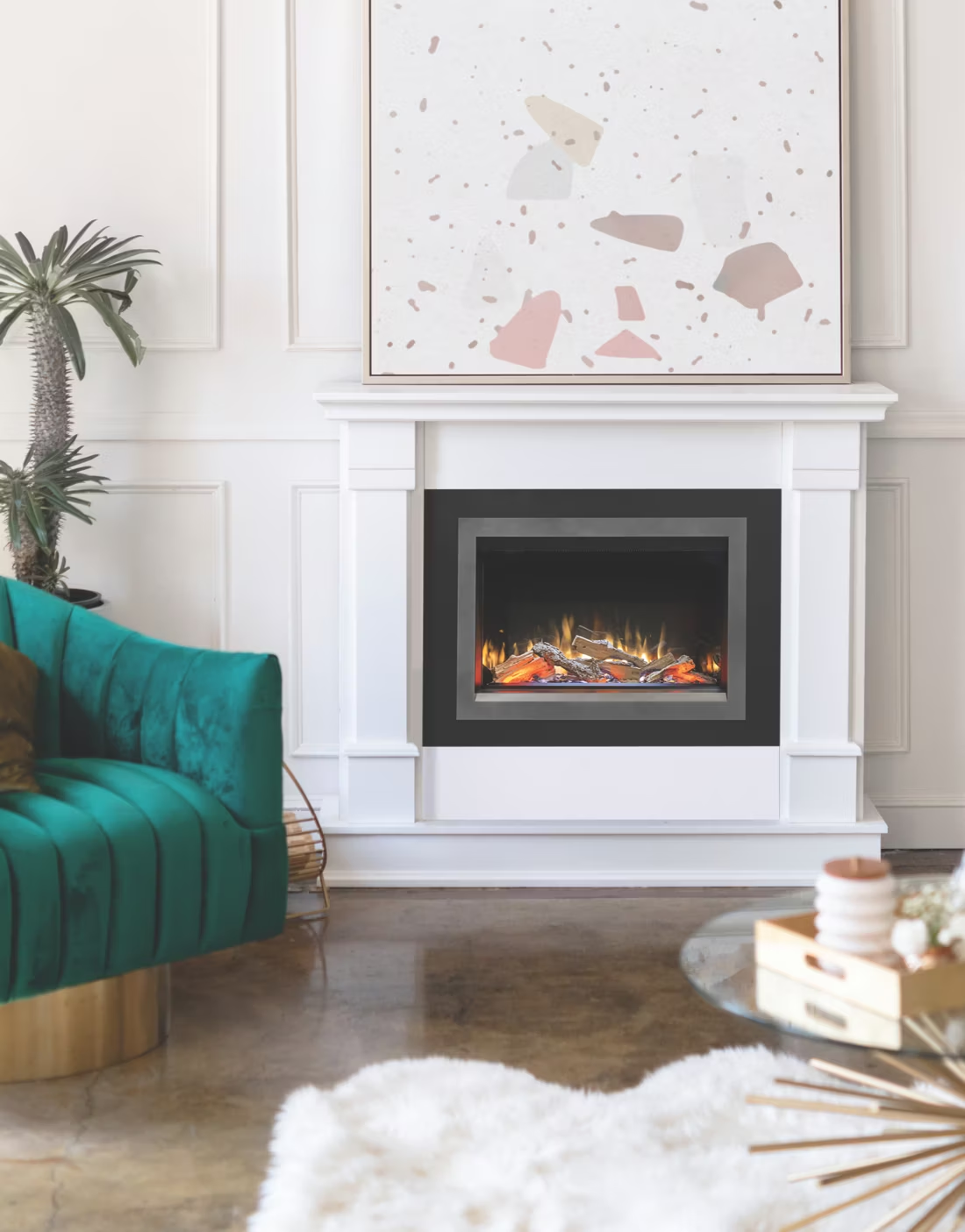
That's where electric fireplaces earn their place. A plug-in insert or wall unit runs on a standard 120V outlet in most cases, and larger built-in linear models need only a dedicated circuit—no flue, no combustion air intake, no clearance-to-combustible headaches. We Energies serves electric accounts throughout the county, and an electric fireplace draws modestly compared to central heat, making it a practical way to add zone warmth to a single room, a converted attic bedroom, or a condo unit where venting simply isn't an option. It's also the most straightforward way to retrofit an existing decorative wood firebox in an older bungalow into working supplemental heat without touching the chimney at all.
Three steps. No salesperson until you're ready.
Tell us about your project
Your zip code, your situation, and the fuel you're leaning toward—or let the answers point you to one.
See what's actually available
The brands dealers within 100 miles genuinely carry—real options, never a catalog mirage.
Get your dealer & Project Guide
A trusted local dealer, plus the free Project Guide & Parts List that names every component of the job.
Frequently Asked Questions
How much does an electric fireplace installation cost in Milwaukee County?
Most electric fireplace projects in Milwaukee County run between $300 and $2,500. A plug-in insert or freestanding stove that drops into an existing firebox or sits against a wall is on the low end—no electrician needed if it uses a standard outlet. A built-in linear unit set into new framing, or one that requires a dedicated 240V circuit run by a licensed electrician, lands in the middle to upper range. Custom surrounds, mantels, or tile work push costs higher. Local dealers will size the unit and confirm your electrical capacity during an in-home or virtual consultation.
Do I need a permit to install an electric fireplace in Milwaukee County?
It depends on the unit. A plug-in electric insert or stove that uses an existing standard outlet typically doesn't require a permit anywhere in the county. If your installer needs to run new wiring or add a dedicated circuit for a larger built-in unit, that electrical work requires a permit—through the City of Milwaukee's Department of Neighborhood Services if you're within city limits, or through your local municipal building department in Wauwatosa, West Allis, Shorewood, or elsewhere in the county. Most installers pull the electrical permit as part of the job, so you're rarely dealing with it directly.
Will an electric fireplace actually heat my home during a Milwaukee County winter?
Not on its own. With winters comparable to Minneapolis in severity and winter lows averaging around 14°F, Milwaukee County needs a real primary heating system—furnace, boiler, or heat pump—to carry the load. A typical electric fireplace puts out around 5,000 BTU (1,500 watts), which is enough to noticeably warm a single room but won't replace central heat on a January night. Think of it as zone heat: a way to warm the room you're actually using without running the furnace harder, or supplemental comfort in a converted space like a sunroom or finished basement that your ductwork doesn't reach well.
Electric vs. gas fireplace—which is right for my Milwaukee County home?
Gas is the more common choice for homes with natural gas service already run by We Energies—it puts out more heat, and a direct-vent gas insert can meaningfully offset furnace use in a main living space. Electric wins where gas isn't practical or worth the cost: condos and apartments where venting isn't allowed, rental units, upper floors of older duplexes without an existing flue, or any room where you want real flame appearance and modest heat without construction. A lot of Milwaukee County homeowners end up with gas in the primary living area and electric in a bedroom, basement, or home office.
Can I install an electric fireplace in a condo or apartment in Milwaukee County?
Yes, and it's one of the most common electric fireplace installs in the county—particularly in the high-rise and mid-rise condo buildings along the lakefront, East Side, and Third Ward. Because electric units need no venting or gas line, they're often the only fireplace option permitted by a condo association or landlord. Check your building's electrical panel capacity if you're considering a larger built-in unit that needs a dedicated circuit, and confirm any HOA rules on wall-mounted or recessed installations before your dealer finalizes the plan.
What size electric fireplace do I need for my room?
Sizing an electric fireplace is mostly about matching wattage and BTU output to square footage, since nearly every unit tops out around 1,500 watts regardless of physical size—a 30-inch and a 60-inch unit often produce the same heat, with the larger size buying you more flame visual and mantel space rather than more warmth. For a typical Milwaukee County bedroom or den (150-300 sq ft), a standard 1,500-watt insert or wall unit is plenty. Larger open-concept living rooms, common in newer Oak Creek or Franklin builds, may need two zone units or should lean on the fireplace for ambiance while central heat carries the room.
Can I put an electric insert into my home's existing wood-burning fireplace?
Yes—this is a common project in Milwaukee County's older Cream City brick and bungalow-style homes, many of which have a decorative or rarely-used wood firebox. An electric insert slides into that existing opening, often using a simple surround kit to fill any gap, and plugs into a nearby outlet or a new outlet added inside the firebox by an electrician. You keep the existing mantel and masonry look, gain instant on-off heat and flame effect, and eliminate any chimney maintenance, since the flue can simply be capped or left alone.
How much does it cost to run an electric fireplace with We Energies rates?
A standard 1,500-watt electric fireplace running at We Energies' typical residential electric rate costs somewhere in the range of 20 to 25 cents per hour on the heat setting, and only a fraction of a cent per hour if you're running flame effect alone with the heater off. Most owners in Milwaukee County use the heat function selectively—a few hours in the evening in the room they're occupying—rather than running it all day, which keeps the added cost to a few dollars a month even through a full winter.
What electric fireplace brands and features should I look for?
Look for brands with realistic flame technology and honest heat ratings—Dimplex, Napoleon, and Amantii are widely available through Milwaukee County dealers and hold up well over years of daily use. Features worth prioritizing: a heater that can be run independently of the flame effect (so you get ambiance in summer without heat), a thermostat rather than a simple high/low switch, and—for built-in linear units—confirmation of the exact clearance and framing depth needed before your installer opens up a wall. A local dealer can walk you through which models fit your room and your electrical setup.
Can I put a TV above my fireplace?
Yes—with an asterisk. Fireplaces are hot and TVs don't like heat. Either put a mantel between them to deflect rising warmth, or choose a fireplace with heat-management technology that creates a cool zone on the wall above—the wall stays around 125 degrees, barely warm, while the room still gets full heat. If you like clean lines and don't want a mantel, heat management is the answer.
Do electric fireplaces actually produce heat?
Yes—most put out around 4,800–5,000 BTUs from a standard outlet, which comfortably warms a bedroom, office, or den as a comfort-zone heater. What they won't do is carry a whole house the way wood, gas, or pellet can. Think of electric as ambiance-first with honest supplemental heat: flames on with no heat in July, flames plus warmth in January.
How much should I budget for a fireplace?
For an average home—covering the fireplace, the vent pipe, and basic installation—a budget between $3,900 and $5,500 gives you a lot of options across wood, gas, and pellet. By the time you add finish work, gas line, and electrical, the average complete installation lands between $5,000 and $12,000 all-in. In a remodel or new build, a good rule is to put about 2.5% of the total project cost toward the fireplace.
Can a fireplace actually lower my heating bill?
Yes—by creating a comfort zone. A furnace heats every square foot of the house just to warm the one room you're in; a gas fireplace on low burns roughly a sixth of the gas a typical furnace does. Set the furnace around 55–60 degrees as a baseline, then heat the rooms your family actually uses. Families who heat this way commonly save $20–$60 a month.
Stove and Fireplace Dealers in Milwaukee County
Listings include WhyFire partner dealers, dealers we have verified as authorized for the brands we recommend, and established local businesses that carry hearth products. Every listing shows which one it is. The ones marked Preferred run on WhyFire's software, so they can show you real pricing and book your appointment right here. No manufacturer pays for placement. How we verify dealers →
Stonecraft Studios
Chimney Doctors
David J. Frank Landscape Contracting, Inc.
Bbq Grills Of Wisconsin
Alaskan Fireplace Co
The Fire Factory
Find your electric fireplace in Milwaukee County.
Tell us about your home and room, and we'll match you with a trusted local Milwaukee County dealer and send over a free Project Guide & Parts List—the exact unit, mounting or insert kit, and electrical requirements for your project.
Find Your Fireplace →