
A Realistic Look at Pellet Heat in Waukesha.
Waukesha winters are genuinely cold—7,246 heating degree days and lows around 12°F—but most homes here already run on natural gas through We Energies. Pellet stoves are a smaller, specific-use category. Here's where they actually fit.
Every Project Starts From One of These Five Situations
Natural gas dominates—pellet stoves are the exception.
Waukesha sits at 878 feet in the Milwaukee metro, with a climate zone 6A profile and roughly the same heating load as Minneapolis—cold enough that heating isn't optional from November through March. But unlike a rural, off-grid part of the state, most Waukesha housing stock was built with natural gas furnace and fireplace hookups already in place, and Wisconsin Electric Power Co. (We Energies) has served the city's gas and electric grid for decades. That infrastructure is why pellet stoves see limited install demand inside city limits—the default appliance choice here is a gas furnace or direct-vent gas fireplace, not a hopper-fed pellet unit.
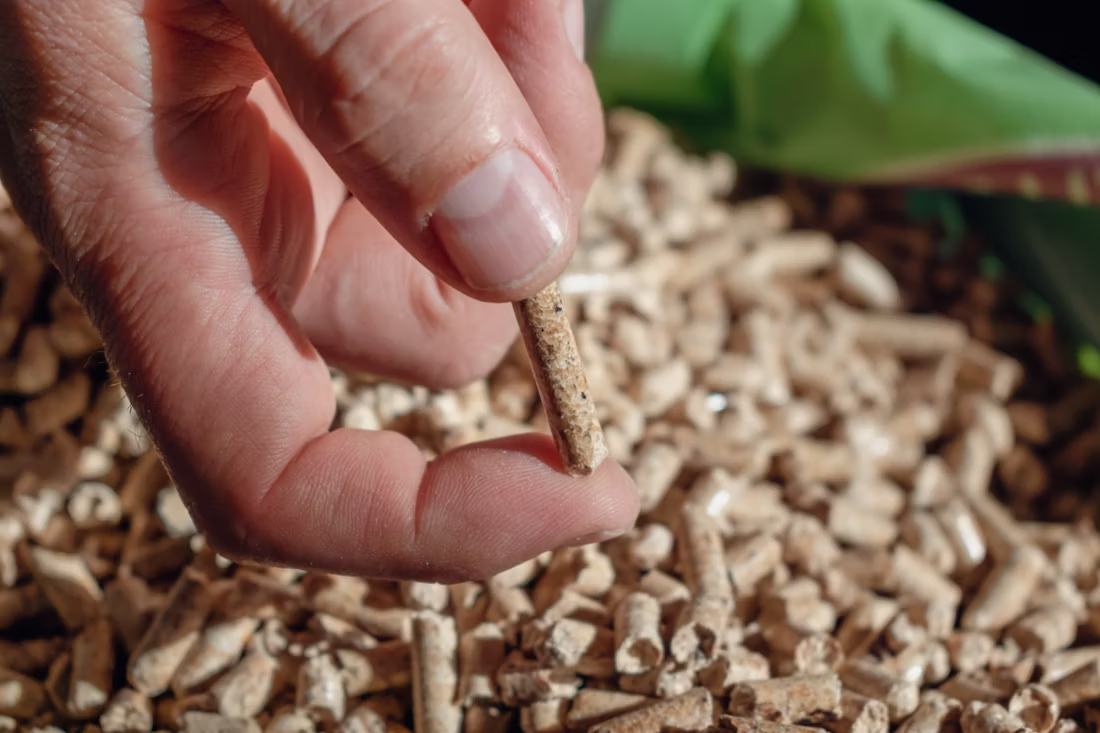
That doesn't mean pellets are irrelevant to the region—quite the opposite. Wisconsin's oak, maple, birch, and aspen forests feed real pellet manufacturing right here in-state, including Indeck Energy Services, Lignetics, and Somerset Pellet Fuel. The fuel supply chain runs through Wisconsin even when the installs concentrate elsewhere. In Waukesha itself, pellet stoves tend to show up in specific situations: detached garages and workshops without gas lines, older farmhouses on the county's rural edges, backup heat setups, or homeowners who want the low-mess, thermostat-controlled convenience of pellets without wood-hauling. If that's your situation, a trusted local dealer can tell you honestly whether it's the right fit for your house.
Three steps. No salesperson until you're ready.
Tell us about your project
Your zip code, your situation, and the fuel you're leaning toward—or let the answers point you to one.
See what's actually available
The brands dealers within 100 miles genuinely carry—real options, never a catalog mirage.
Get your dealer & Project Guide
A trusted local dealer, plus the free Project Guide & Parts List that names every component of the job.
Frequently Asked Questions
How much does a pellet stove installation cost in Waukesha?
Because pellet installs are less common in Waukesha than gas furnace or direct-vent gas fireplace work, there isn't a deep local benchmark the way there is for gas. Nationally, pellet stove installs (unit, hearth pad, and PL venting through an exterior wall) typically run $3,000 to $6,500, with the low end covering a straightforward exterior-wall vent job and the high end covering longer venting runs, electrical work for the hopper and blower circuit, or a more elaborate hearth surround. Given how thin the local install market is, getting an in-home quote from a dealer who actually stocks pellet units—rather than a gas-focused contractor bidding it as a side job—matters more here than in a pellet-heavy market.
Why aren't pellet stoves more common in Waukesha if winters are this cold?
It's not a climate problem—Waukesha's 7,246 heating degree days and 12°F average winter low would support pellet heat just fine. It's an infrastructure and habit problem. Most homes in the city and inner suburbs were built or retrofitted with natural gas service already run to them, and We Energies' gas network covers the bulk of the metro. When a furnace or fireplace already has a gas line sitting behind the wall, homeowners default to gas rather than adding a pellet appliance and its hopper, auger, and venting. Pellet stoves remain a real option—just a minority one, more common on the rural fringes of Waukesha County than inside the city itself.
Pellet vs. gas fireplace—which makes more sense for a Waukesha home?
For most Waukesha homes already connected to We Energies gas service, a direct-vent gas fireplace or insert is the simpler, cheaper-to-install, and more common choice—no fuel storage, no hopper to refill, no ash to empty. Pellet stoves make more sense when gas isn't available or convenient to run (a detached garage, a workshop, an older rural property on the county's edge), or when a homeowner specifically wants the visual of a real flame with more automation than a wood stove offers. If your home already has a gas line nearby, gas is almost always the path of least resistance here; pellet is the choice for the exception cases.
Where do pellets sold in the Waukesha area come from?
Wisconsin has a legitimate pellet manufacturing base, and several regional brands supply the greater Milwaukee area, including Indeck Energy Services, Lignetics, and Somerset Pellet Fuel—all of which source hardwood residuals from the oak, maple, birch, and aspen that dominate Wisconsin's forests. Pricing runs in the general Midwest ballpark of $220 to $280 per ton depending on brand, bag vs. bulk purchase, and time of year (buying in late summer before the fall rush is usually cheaper than mid-winter). Because pellet demand is lower in Waukesha specifically, availability at big-box stores can be thinner in a hard cold snap—a local dealer can usually tell you which suppliers keep steady stock.
Do I need a permit to install a pellet stove in Waukesha?
Yes—a new solid-fuel appliance installation, including a pellet stove, requires a building permit through the City of Waukesha Building Inspections Department, or through Waukesha County's permitting office for homes outside city limits. Because pellet installs are less routine here than gas work, it's worth confirming your installer has actually pulled pellet-stove permits before and knows the inspector's expectations for PL vent clearances and hearth pad specs—that experience isn't guaranteed just because a contractor is licensed for gas or HVAC work.
Will a pellet stove keep my house warm during a power outage?
Not without backup power. Pellet stoves rely on an electric auger to feed fuel and a blower to circulate heat, so a standard unit shuts down the moment the power does—a real consideration in Waukesha, where winter storms off Lake Michigan can knock out We Energies service for hours at a time. Some homeowners pair a pellet stove with a small battery backup or generator specifically for this reason. If outage-proof heat without any electrical dependency is the priority, a vented gas fireplace with a standing pilot is generally the more reliable choice in this climate.
How does pellet stove venting work compared to a wood stove or gas fireplace?
Pellet stoves vent through a smaller-diameter PL (pellet-listed) pipe, usually run horizontally through an exterior wall rather than up through a full masonry chimney—which keeps installation simpler and cheaper than a wood stove chimney in most Waukesha homes. It's still mechanical venting that needs to be sized and sealed correctly per the manufacturer's listing, so it should go through a certified installer rather than a DIY wall penetration. This is different from a direct-vent gas fireplace's coaxial venting, though the wall-penetration concept is similar.
What size pellet stove do I need for a Waukesha home?
Sizing depends on square footage, insulation, and whether the stove is primary or supplemental heat, but Waukesha's cold-climate load (7,246 HDD) means undersizing shows up fast on the coldest nights. As a rough guide: units in the 40,000–50,000 BTU range handle a single large room or open-concept main floor, while larger 60,000+ BTU units can supplement heat for a full ranch-style home if insulation is decent. Because full-home pellet heating is uncommon here, most Waukesha installs are supplemental—a workshop, a finished basement, or a family room—which usually points toward a smaller unit than you'd need in a market where pellet is the primary heat source.
Is a pellet stove a good investment given how few installers work with them in Waukesha?
It depends on your use case. If you have gas service available and want a fireplace for a main living space, gas will almost always be the more supported, easier-to-service choice in this market—more installers, more parts availability, more technicians who see the unit regularly. If your situation is genuinely off the gas grid, or you specifically want a hopper-fed, thermostat-controlled unit for a detached space, a pellet stove still makes sense—you'll just want to work with a dealer who actively stocks and services pellet units, rather than someone who installs one occasionally. That's exactly the kind of local match we're built to make.
Why is a fireplace insert so efficient?
An insert does two things: it seals the chimney completely, so you stop losing air you already paid to heat, and it radiates warmth into the room through the firebox and glass. Most add a heat-exchange fan that pulls cool room air underneath, wraps it around the hot firebox, and pushes it back out warm. Your home is more efficient before you've even lit the first fire.
How often does a pellet stove need cleaning?
A clean pellet stove is a happy pellet stove. Plan on cleaning the burn pot about once a week when you're burning regularly—ash and clinkers gum up the air holes just like a pellet barbecue. Most pellet stove problems trace back to skipped cleaning that nobody explained up front. Some designs make it easy with a trapdoor burn pot: pull a lever and the gunk drops into the ash pan.
Can a fireplace actually lower my heating bill?
Yes—by creating a comfort zone. A furnace heats every square foot of the house just to warm the one room you're in; a gas fireplace on low burns roughly a sixth of the gas a typical furnace does. Set the furnace around 55–60 degrees as a baseline, then heat the rooms your family actually uses. Families who heat this way commonly save $20–$60 a month.
Should the dealer who sells my fireplace also install it?
Ideally, yes. A fireplace project involves vent pipe, gas line, electrical, and often tile or stone. Hire three or four separate trades and you own the liability and the game of telephone between them. One company selling and installing means one accountable party, start to finish—ask about factory training, on-time completion records, and what happens if an inspection fails.
Nearby Dealers
Hearth shops serving Waukesha and the surrounding area.
Pellet Brands Stocked Around Waukesha
Manufacturers will point you to the nearest stocking dealer.
Find your pellet stove in Waukesha.
Tell us about your home and how you'd use a pellet stove, and we'll match you with a local dealer who actually stocks and services them—plus a free Project Guide & Parts List with the exact vent kit and parts your install needs.
Find Your Fireplace →