
Find your electric fireplace in Waukesha, without the guesswork.
No venting, no gas line, no chimney—just real ambiance and supplemental heat that works in almost any Waukesha home. Find the right unit and connect with a trusted local dealer.
Every Project Starts From One of These Five Situations
Heat and ambiance without touching the exterior wall.
Waukesha sits in climate zone 6A with roughly 7,246 heating degree days a year—a cold-winter profile in the same league as Madison, about 75 miles west. Average winter lows near 12°F mean most homes here lean hard on a furnace for real heat, which is exactly where electric fireplaces earn their place: as zone heat for a den, a finished basement, or a condo where running a flue or gas line simply isn't an option.
Wood and pellet appliances see little demand in Waukesha's subdivisions and multi-family buildings—there's no local cutting-permit culture or wood-supply infrastructure the way there is farther north, and most newer construction and condo association rules don't accommodate a chimney or pellet vent anyway. Electric fills that gap cleanly: no combustion byproducts, no annual chimney sweep, and a plug-in or hardwired unit that a licensed electrician can usually have running in an afternoon. With We Energies (Wisconsin Electric Power Co.) delivering residential power at roughly $0.1923 per kWh, running one is inexpensive compared to space heaters or letting the furnace carry the whole load.
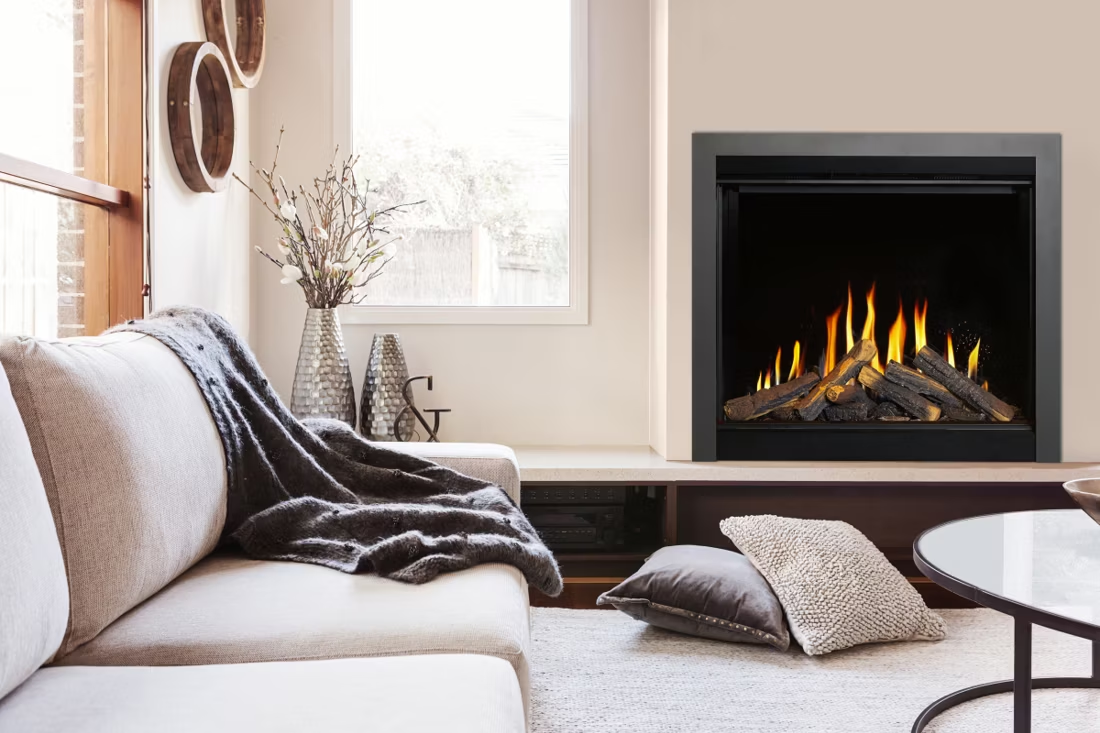
Three steps. No salesperson until you're ready.
Tell us about your project
Your zip code, your situation, and the fuel you're leaning toward—or let the answers point you to one.
See what's actually available
The brands dealers within 100 miles genuinely carry—real options, never a catalog mirage.
Get your dealer & Project Guide
A trusted local dealer, plus the free Project Guide & Parts List that names every component of the job.
Frequently Asked Questions
How much does an electric fireplace installation cost in Waukesha?
Plug-in electric inserts and freestanding stoves that use a standard 120V outlet typically run $250 to $900 installed, since there's no wiring work involved beyond mounting the unit. Built-in wall units or larger inserts that need a dedicated 120V or 240V circuit run higher—usually $1,500 to $4,000 once you factor in a licensed electrician to run new wiring, plus any framing or trim work for a flush, built-in look. Recessed linear units popular in newer Waukesha builds tend to land in the middle of that range. A local dealer will confirm exact pricing once they've seen the wall, the framing, and whether new circuit work is needed.
Do electric fireplaces actually put out real heat, or are they just for looks?
Most electric fireplaces include a built-in heater rated around 4,700 to 5,200 BTU, enough to noticeably warm a single room of 200-400 square feet—comparable to a good space heater, but quieter and safer to leave running. In a Waukesha winter with lows averaging 12°F, that's realistic as supplemental heat for a den, bedroom, or finished basement, not as a replacement for your furnace. Nearly every model also lets you run the flame effect with the heater switched off, which is common in shoulder-season months when you want ambiance without extra warmth.
Electric vs. gas fireplace—which makes more sense for my Waukesha home?
Gas is the better choice if you want a fireplace that can seriously offset furnace load during a real Wisconsin cold snap—a direct-vent gas insert puts out 20,000+ BTU and can run during a power outage on some models. Electric is the better choice when venting is the obstacle: condos, interior walls, finished basements without a flue path, or homes where you don't want to cut into siding for venting. Electric also wins on install simplicity and running cost for occasional, ambiance-first use. Plenty of Waukesha homeowners end up with gas in the main living area and electric in a bedroom or basement where running gas line isn't practical.
Do I need a permit to install an electric fireplace in Waukesha?
A simple plug-in unit that uses an existing outlet generally doesn't require a permit. If your installation needs a new dedicated circuit—common for larger built-in or linear units—the electrical work itself typically requires a permit through the City of Waukesha (or your local municipal building department if you're in one of the surrounding Waukesha County townships), and it needs to be pulled by a licensed electrician. Most dealers who sell and install built-in electric units will coordinate this as part of the job, so it's rarely something you have to manage yourself.
What will an electric fireplace cost me to run each month?
At We Energies' residential rate of about $0.1923 per kWh, a typical 1,500-watt electric fireplace heater costs roughly 29 cents per hour to run on the heat setting. Used for 4-5 hours an evening through a Waukesha winter, that's somewhere around $35 to $45 a month in electricity—noticeably cheaper than most portable space heaters of similar output, and far less than heating an equivalent square footage with your furnace alone. Running just the flame effect with the heater off draws only a few watts, essentially negligible on your bill.
What's the difference between an electric insert, a built-in wall unit, and a mantel package?
An electric insert is sized to slide into an existing fireplace opening—the most common upgrade for Waukesha homes with an old wood-burning fireplace nobody uses anymore. A built-in wall unit is designed to be framed into new construction or a remodel, often as a linear, low-profile unit set flush into drywall. A mantel package pairs an electric firebox with a surrounding mantel and is the easiest no-construction option, since many are designed to simply sit against a wall or be recessed into a shallow opening. For homes with an unused masonry fireplace, the insert route is usually the fastest and least invasive.
I live in a condo or townhome in Waukesha—can I still install one?
Yes, and this is one of the strongest use cases for electric. Because there's no combustion, no venting, and no chimney requirement, electric fireplaces are generally allowed under HOA and condo association rules that prohibit wood or gas appliances due to fire code or shared-wall venting restrictions. Most units mount directly to an interior wall or drop into a cabinet or entertainment center with just a standard outlet. It's worth double-checking your specific association's rules on wall modifications before a built-in installation, but a plug-in unit typically requires no approval at all.
Is wood or pellet heat an option in Waukesha, or is electric really the practical choice?
Wood and pellet appliances are uncommon in Waukesha's residential neighborhoods—there's little local cutting-permit infrastructure, no significant firewood supply culture the way there is in more rural or forested parts of the state, and most subdivisions and multi-family construction aren't set up for a chimney or pellet vent. A handful of homeowners with larger rural-adjacent lots in Waukesha County still burn oak, maple, or birch, but for the vast majority of the city, electric or gas is the realistic path. If you specifically want a wood-burning setup, a local dealer can tell you honestly whether your lot and structure support it.
How long does an electric fireplace typically last, and what maintenance does it need?
Most quality electric fireplaces last 10-15 years with minimal upkeep—there's no chimney to sweep and no gas lines to inspect. The main components that eventually wear out are the LED flame bulbs (many are now LED arrays rated for tens of thousands of hours) and the heater fan blower, which can get dusty and benefits from an occasional vacuum with the unit unplugged. Because there's no combustion, there's no annual safety inspection requirement the way there is with wood or gas appliances—just basic dusting and keeping the vents unobstructed.
Can I put a TV above my fireplace?
Yes—with an asterisk. Fireplaces are hot and TVs don't like heat. Either put a mantel between them to deflect rising warmth, or choose a fireplace with heat-management technology that creates a cool zone on the wall above—the wall stays around 125 degrees, barely warm, while the room still gets full heat. If you like clean lines and don't want a mantel, heat management is the answer.
Does an electric fireplace need a vent or chimney?
No—that's its superpower. An electric fireplace needs a wall and an outlet, period. No vent pipe, no gas line, no clearances to design around, which is why it works in bedrooms, offices, apartments, and walls where venting a gas or wood unit would be impractical or impossible. Installation is typically the simplest and least expensive of any fireplace type.
Can a fireplace actually lower my heating bill?
Yes—by creating a comfort zone. A furnace heats every square foot of the house just to warm the one room you're in; a gas fireplace on low burns roughly a sixth of the gas a typical furnace does. Set the furnace around 55–60 degrees as a baseline, then heat the rooms your family actually uses. Families who heat this way commonly save $20–$60 a month.
Does a fireplace add value to my home?
On average, a fireplace adds back to the home about the same amount you spent installing it. Add the monthly savings from heating the rooms you actually use instead of the whole house—often hundreds of dollars a year—and the value case is strong before you even count what a fire does for how your family uses the room.
Nearby Dealers
Hearth shops serving Waukesha and the surrounding area.
Electric Service in Waukesha
An electric fireplace's heater draws about 1,500 watts—pennies per hour at local rates.
Wisconsin Electric Power Co
Find your electric fireplace in Waukesha.
Tell us a bit about your home and we'll put together a free Project Guide & Parts List—the exact unit, wiring needs, and a trusted local Waukesha dealer to get it installed right.
Find Your Fireplace →