
Steady Heat for the Coldest Nights in the Northwoods.
Thermostat-controlled, consistent warmth for Lincoln County winters—without splitting or stacking a cord of wood. Find the right pellet stove and connect with a trusted local dealer.
Every Project Starts From One of These Five Situations
Consistent Heat, Without the Wood Pile.
Tomahawk sits deep in Wisconsin's Northwoods, in a Climate Zone 7 pocket that ranks among the coldest in the Lower 48—a long, brutal heating season and average winter lows around 2°F, conditions closer to Duluth, MN than to most of the state. Long, hard winters here mean a heat source has to perform for months at a time, not just take the edge off a cold evening.
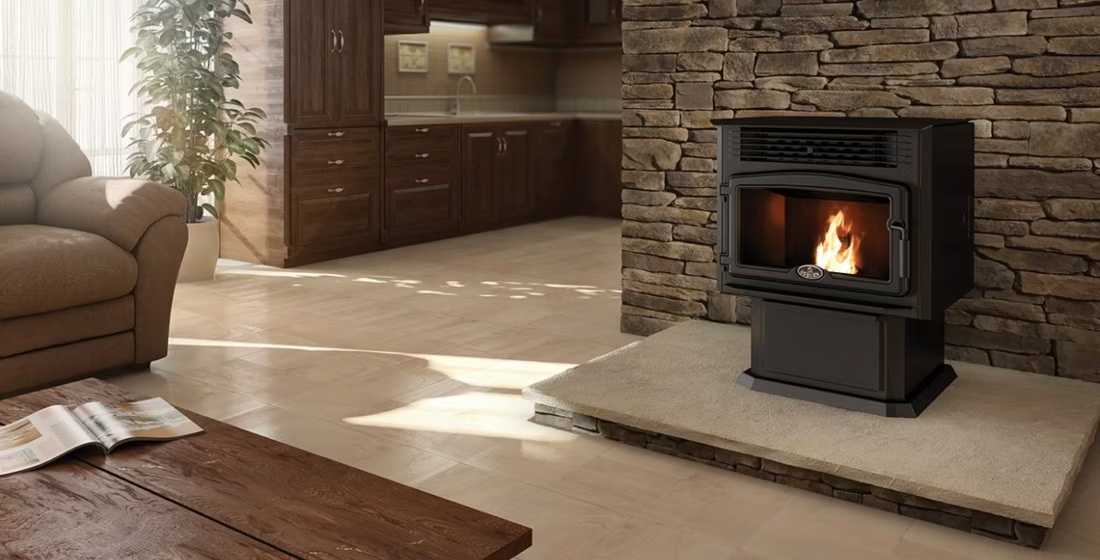
A growing number of Lincoln County homeowners are turning to pellet stoves for that reliability. Load the hopper, set the thermostat, and the stove maintains a steady burn overnight without the splitting, stacking, and ash cleanup that cordwood requires—a real consideration for retirees and second-home owners on area lakes who aren't up for wood duty every winter. Regional pellet producers including Indeck Energy Services, Lignetics, and Somerset Pellet Fuel supply the upper Midwest, keeping fuel reasonably accessible even this far north, and with no local air quality restrictions on the books, pellet appliances run without the curtailment concerns some western states impose.
Three steps. No salesperson until you're ready.
Tell us about your project
Your zip code, your situation, and the fuel you're leaning toward—or let the answers point you to one.
See what's actually available
The brands dealers within 100 miles genuinely carry—real options, never a catalog mirage.
Get your dealer & Project Guide
A trusted local dealer, plus the free Project Guide & Parts List that names every component of the job.
Frequently Asked Questions
How much does a pellet stove installation cost in Tomahawk?
A freestanding pellet stove installation in Tomahawk typically runs $3,000 to $6,000, including the hearth pad and standard through-wall pellet venting. A pellet insert installed into an existing masonry fireplace usually costs a bit more—$4,500 to $7,500—because of the liner and surround work involved. Homes on the outskirts of town or on area lakes with longer venting runs or non-standard chimney chases can push toward the higher end. Local dealers will confirm exact pricing after seeing your setup.
What size pellet stove do I need for a Lincoln County winter?
With such a long, demanding heating season, Tomahawk homes need more sustained output than a stove sized for a milder climate. A mid-size pellet stove (around 40,000–50,000 BTU) handles most single-family homes in town, but larger or older farmhouses, or homes used as primary heat rather than backup, often do better with a higher-output unit closer to 55,000 BTU. Because pellet stoves run on electric augers and blowers, sizing also depends on how consistently you plan to run the stove versus supplementing with a furnace on the coldest nights—a local dealer can walk through your square footage and insulation to land on the right unit.
Where can I find a certified pellet stove installer near Tomahawk?
Look for NFI (National Fireplace Institute) pellet-specialist certification—it's the standard credential for proper venting, clearance, and combustion-air setup on pellet appliances. Tomahawk is a small town, so many homeowners work with hearth dealers based in Rhinelander or Wausau who service Lincoln County on a route basis. Whoever you choose, confirm they'll pull the required Lincoln County building permit and handle the through-wall vent termination correctly—pellet stoves vent differently than wood stoves, and installers unfamiliar with the appliance sometimes get the vent pitch or termination clearance wrong.
What's the difference between a pellet stove and a pellet insert?
A pellet stove is a freestanding appliance that can go almost anywhere with a nearby exterior wall for venting, which makes it a good fit for garages, additions, or homes without an existing fireplace. A pellet insert slides into an existing masonry fireplace opening, using a liner run up the old chimney or a direct-vent kit through the wall behind it. For Tomahawk homes with an older wood-burning fireplace that rarely gets used, an insert is usually the more practical upgrade—it keeps the existing hearth and mantel while converting a heat-losing fireplace into an actual heat source.
Do I need a permit to install a pellet stove in Tomahawk?
Yes—Lincoln County requires a building permit for new pellet stove installations, and most hearth dealers include pulling that permit as part of the installation price. Unlike some western states, Lincoln County has no air quality non-attainment designation or wood-smoke curtailment periods, so there's no seasonal burn-ban paperwork to worry about here—once the stove passes inspection, you're free to run it as much as you want.
What's the best pellet stove for Tomahawk's winters?
For a climate with 2°F average winter lows and nine months of heating season, look at higher-output, higher-hopper-capacity models—Harman and Lopi both make units in the 50,000+ BTU range with hopper capacities of 60-80 pounds, which means fewer refills during long cold stretches. Auto-ignition and a thermostat with a battery backup for the control board are worth asking about too, since Northwoods winter storms occasionally take out utility power for a stretch—even though the stove itself needs household electricity to run the auger and blower, keeping the control system's memory intact makes restarting after an outage simpler.
How much pellet fuel will I need for a Tomahawk winter?
With a heating season that realistically runs November through April in Lincoln County, a home using a pellet stove as primary heat can burn 3 to 4 tons of pellets over the winter; as supplemental heat alongside a furnace, 1.5 to 2 tons is more typical. Regional producers like Lignetics and Somerset Pellet Fuel supply bagged pellets throughout Wisconsin, and buying by the ton (49-50 bags) ahead of the season is usually cheaper than picking up bags as you go. Expect to pay in the neighborhood of $250-$300 per ton, though prices shift year to year with wood pellet demand.
Where can I buy pellet fuel near Tomahawk?
Hardware stores and farm supply retailers throughout Lincoln and Oneida counties typically stock bagged pellets from regional producers such as Lignetics and Somerset Pellet Fuel, especially heading into fall. Some dealers who sell and install stoves also sell pellets directly or can point you to a reliable local supplier. Buying a season's supply early—before the first cold snap sends everyone to the store at once—is the standard local strategy, and stacking bags in a dry garage or shed keeps them from clumping over the winter.
Pellet stove vs. wood stove—which makes more sense in Tomahawk?
Tomahawk sits inside the Chequamegon-Nicolet National Forest cutting area, where personal-use permits run $10 to $20 per cord during the May-to-October season—cheap heat if you're willing to cut, split, and season oak, maple, birch, or aspen yourself. Wood stoves also keep working during a power outage, which matters in a rural area where storms can knock out electricity for days. Pellet stoves trade that off for convenience and consistency: no splitting, no seasoning wait, and a cleaner, more even burn—but they need household power to run the auger and blower, so a battery backup or small generator is worth having if you go pellet and outages concern you. Plenty of Lincoln County homes run both: a wood stove for backup and ambiance, a pellet stove for everyday, hands-off heat.
What's the difference between an insert and a zero-clearance fireplace?
An insert is a fireplace that slides into a pre-existing wood-burning fireplace—if you don't have one, there's nothing to insert it into. A zero-clearance fireplace is built into a framed wall, which makes it the answer for remodels and new construction. Simple test: existing masonry fireplace means insert; blank or framed wall means zero-clearance.
Why is a fireplace insert so efficient?
An insert does two things: it seals the chimney completely, so you stop losing air you already paid to heat, and it radiates warmth into the room through the firebox and glass. Most add a heat-exchange fan that pulls cool room air underneath, wraps it around the hot firebox, and pushes it back out warm. Your home is more efficient before you've even lit the first fire.
How much should I budget for a fireplace?
For an average home—covering the fireplace, the vent pipe, and basic installation—a budget between $3,900 and $5,500 gives you a lot of options across wood, gas, and pellet. By the time you add finish work, gas line, and electrical, the average complete installation lands between $5,000 and $12,000 all-in. In a remodel or new build, a good rule is to put about 2.5% of the total project cost toward the fireplace.
What is an in-home preview and do I need one?
It's a visit where a hearth professional measures your space, confirms the model you picked actually works in your home, and walks the specs—framing, gas line, venting, finish work—before anything is ordered. Some details you just can't know until you see the house. Never make a down payment without one; it's the single most-skipped step that burns buyers.
Nearby Dealers
Hearth shops serving Tomahawk and the surrounding area. Every listing shows whether it is a WhyFire partner, a dealer we have verified as authorized for the brands we recommend, or a local business carrying hearth products. No manufacturer pays for placement. How we verify dealers →
Dahlquist Heating & Cooling
Hearth Xpressions
Fireside Hearth & Home Minocqua Dnm
Pellet Brands Stocked Around Tomahawk
Manufacturers will point you to the nearest stocking dealer.
Find your pellet stove in Tomahawk.
Tell us a bit about your home and we'll match you with the right pellet stove or insert for a Northwoods winter—plus a free Project Guide & Parts List with the exact vent kit and a trusted local dealer to install it.
Find Your Fireplace →