
Instant Heat for Tomahawk's Coldest Nights.
Zoned, no-mess warmth for Lincoln County homes, cabins, and additions—sized right and installed by a local pro who knows the North Woods.
Every Project Starts From One of These Five Situations
Electric heat finds its place in Wisconsin's North Woods.
Tomahawk sits in Lincoln County at 1,438 feet, squarely in USDA climate zone 7—one of the coldest zones in the continental U.S. Winters here average lows around 2°F, and the area logs roughly 9,051 heating degree days a year, putting Tomahawk in company with Duluth, Minnesota and International Falls rather than the rest of Wisconsin. Wood remains the backbone of home heating in this stretch of the state—oak, maple, birch, and aspen from the surrounding Chequamegon-Nicolet National Forest keep stoves burning all winter—but electric fireplaces have carved out a genuine, standard role alongside it.
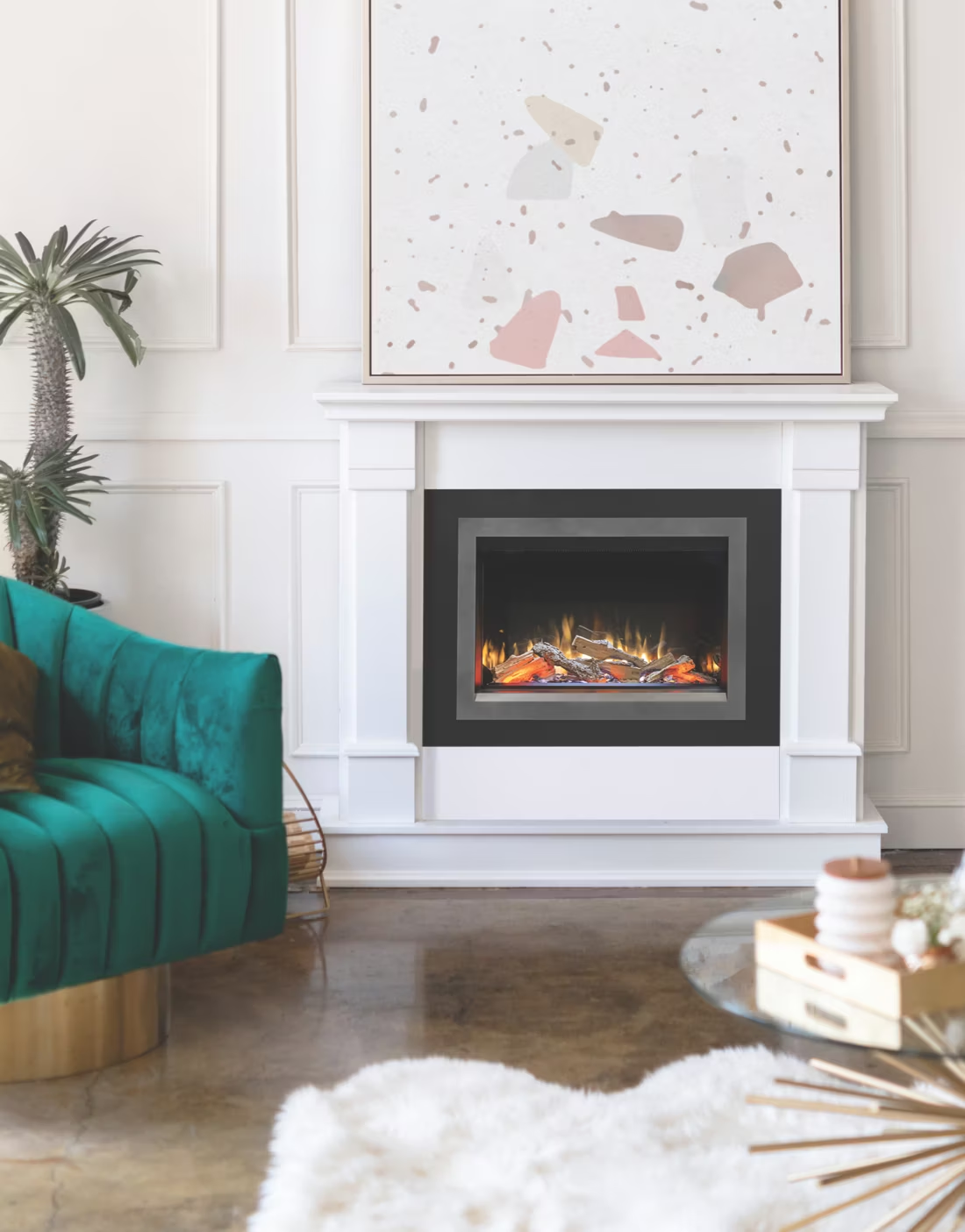
Electric units aren't trying to replace a furnace or wood stove as primary heat in a 9,000-plus HDD climate—resistance heat adds up fast at the residential rates charged by Northern States Power and Wisconsin Public Service Corp, the two utilities serving Tomahawk, both running around 15.8 to 16.2 cents per kWh. What electric does well here: zoned supplemental heat in a bonus room or bedroom addition the furnace barely reaches, a lake cabin that only needs warmth on weekends, or a rental property where running a chimney or gas line isn't practical. No venting, no combustion byproducts, no chimney sweep—an electric insert or wall unit goes into an existing fireplace opening or a stud wall in an afternoon.
Three steps. No salesperson until you're ready.
Tell us about your project
Your zip code, your situation, and the fuel you're leaning toward—or let the answers point you to one.
See what's actually available
The brands dealers within 100 miles genuinely carry—real options, never a catalog mirage.
Get your dealer & Project Guide
A trusted local dealer, plus the free Project Guide & Parts List that names every component of the job.
Frequently Asked Questions
How much does an electric fireplace installation cost in Tomahawk?
Plug-in electric inserts and freestanding stoves that use an existing standard outlet typically run $300 to $1,500 installed, since there's no new wiring involved. Built-in wall units and larger linear electric fireplaces that need a dedicated 20-amp circuit run by a licensed electrician land closer to $1,500 to $4,000 in Lincoln County, depending on the unit size, the wall construction, and how far the new circuit has to travel from the panel. A local dealer can size the unit to your room and give you a firm number after seeing the space.
Can an electric fireplace actually heat my home through a Tomahawk winter?
Not as your only heat source—not in a climate averaging 2°F winter lows and over 9,000 heating degree days. Most electric fireplaces top out around 5,000 to 5,200 BTU of supplemental heat, enough to comfortably warm a single room of 400 to 1,000 square feet, but nowhere near what's needed to carry a whole house through a Lincoln County January. Where they shine is zone heating: taking the edge off a home office, warming up a finished basement, or supplementing a furnace in a room with a cold exterior wall.
Do I need an electrician or a permit to install an electric fireplace in Tomahawk?
Small plug-in units that draw power from a standard household outlet generally don't require any permit—you're not altering the home's wiring. Built-in wall units, linear fireplaces, or anything requiring a new dedicated circuit does need a licensed electrician, and that electrical work typically requires a permit through the City of Tomahawk or Lincoln County depending on your address. Unlike wood or gas installs, there's no venting, chimney, or combustion-air inspection to worry about—the permit, when needed, is purely about the wiring.
What's the difference between an electric insert, a wall-mount unit, and a freestanding stove?
An electric insert is built to slide into an existing masonry fireplace opening, giving an old wood-burning fireplace a clean, code-free upgrade without touching the chimney. A wall-mount or built-in linear unit is framed into a wall like a flat-screen TV, popular in newer construction or remodels where there's no existing fireplace. A freestanding electric stove sits on the floor like a small wood stove, plugs into a standard outlet, and can be moved from room to room—a common choice for a cabin or a rental unit near one of Lincoln County's lakes.
Northern States Power or Wisconsin Public Service—does it matter for my electric fireplace's running cost?
Both utilities serve parts of Tomahawk and Lincoln County, and their residential rates are close—Northern States Power runs about 15.8 cents per kWh, Wisconsin Public Service Corp about 16.2 cents. A typical 1,500-watt electric fireplace running on high costs roughly 24 to 25 cents an hour to operate under either utility, or a couple dollars for an evening's use. That's cheap for occasional ambiance and zone heat, but it adds up quickly if you try to lean on one as all-day primary heat during a stretch of single-digit weather.
Electric vs. wood—which makes more sense for supplemental heat here?
Wood wins on raw heat output and cost per BTU, especially with Chequamegon-Nicolet National Forest cutting permits running $10 to $20 per cord during the May-through-October season—oak and maple in particular burn hot and long. But wood means chimney maintenance, ash cleanup, and tending a fire. Electric wins on convenience and safety: flip a switch, no combustion, no venting, and it can go in a room where running a flue simply isn't an option, like a finished basement or a manufactured home addition. Plenty of Lincoln County households run both—wood as primary or backup heat, electric for a room the wood stove doesn't reach.
Will my electric fireplace still work if the power goes out?
No—electric fireplaces need grid power to run the heating element and, on most models, the flame-effect light and blower fan. That's an important distinction from a wood stove, which keeps working through an outage. In the North Woods, where winter storms can knock out power for hours or longer, an electric fireplace isn't a reliable backup heat plan on its own. Homes that lean on electric for zone heat and want outage coverage typically pair it with a generator or keep a wood stove elsewhere in the house.
Electric vs. pellet stove—which should I choose?
Pellet stoves, running on regional brands like Lignetics, Indeck Energy Services, or Somerset Pellet Fuel, put out real primary-heat BTU output—enough to carry a well-insulated Tomahawk home through most of the winter—but they still need electricity to run the auger and combustion blower, so they're not outage-proof either. Electric fireplaces produce far less heat but need zero fuel storage, zero venting, and almost no maintenance. If you want a serious heat source, pellet is the stronger option; if you want low-maintenance ambiance or light supplemental warmth in a specific room, electric is simpler and cheaper to install.
Where do electric fireplaces make the most sense for Tomahawk homeowners?
The best fits are spaces where a real chimney or gas line isn't practical or worth the cost: a lake cabin used mainly on weekends, a finished basement, a bedroom or sunroom addition that runs cold, a rental property where low maintenance matters more than heat output, or simply a family room where you want fire ambiance without smoke or combustion. For anyone in Lincoln County looking at whole-home primary heat, wood or a furnace upgrade will do more work for the money—electric is the right tool for a specific room, not the whole house.
Can I put a TV above my fireplace?
Yes—with an asterisk. Fireplaces are hot and TVs don't like heat. Either put a mantel between them to deflect rising warmth, or choose a fireplace with heat-management technology that creates a cool zone on the wall above—the wall stays around 125 degrees, barely warm, while the room still gets full heat. If you like clean lines and don't want a mantel, heat management is the answer.
Do electric fireplaces actually produce heat?
Yes—most put out around 4,800–5,000 BTUs from a standard outlet, which comfortably warms a bedroom, office, or den as a comfort-zone heater. What they won't do is carry a whole house the way wood, gas, or pellet can. Think of electric as ambiance-first with honest supplemental heat: flames on with no heat in July, flames plus warmth in January.
Can a fireplace actually lower my heating bill?
Yes—by creating a comfort zone. A furnace heats every square foot of the house just to warm the one room you're in; a gas fireplace on low burns roughly a sixth of the gas a typical furnace does. Set the furnace around 55–60 degrees as a baseline, then heat the rooms your family actually uses. Families who heat this way commonly save $20–$60 a month.
Does a fireplace add value to my home?
On average, a fireplace adds back to the home about the same amount you spent installing it. Add the monthly savings from heating the rooms you actually use instead of the whole house—often hundreds of dollars a year—and the value case is strong before you even count what a fire does for how your family uses the room.
Nearby Dealers
Hearth shops serving Tomahawk and the surrounding area. Every listing shows whether it is a WhyFire partner, a dealer we have verified as authorized for the brands we recommend, or a local business carrying hearth products. No manufacturer pays for placement. How we verify dealers →
Dahlquist Heating & Cooling
Hearth Xpressions
Fireside Hearth & Home Minocqua Dnm
Electric Service in Tomahawk
An electric fireplace's heater draws about 1,500 watts—pennies per hour at local rates.
Northern States Power Co
Wisconsin Public Service Corp
Find your electric fireplace in Tomahawk.
Tell us about your space and we'll match you with a trusted local Lincoln County dealer and send over your free Project Guide & Parts List—the right electric unit, the circuit requirements, and everything else needed to get it installed correctly.
Find Your Fireplace →