
Steady Heat for Rusk County's Long, Hard Winters.
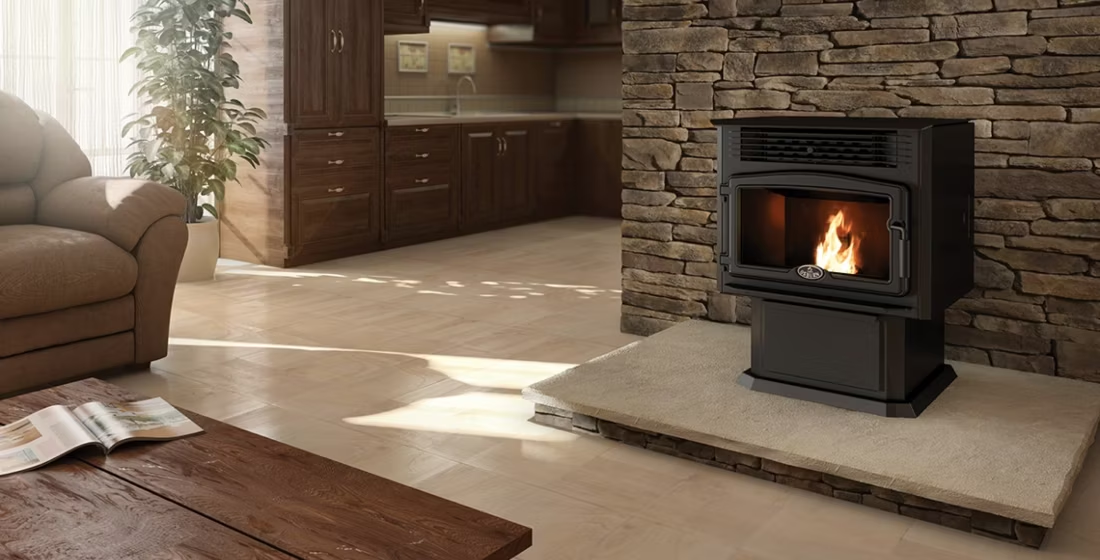
With 8,746 heating degree days and winter lows that average near 2°F, Rusk County asks a lot of a heating system. A pellet stove or insert delivers thermostat-controlled, hopper-fed heat without the splitting and stacking of cordwood—and we'll connect you with a trusted local dealer who can size and install it right.
Every Project Starts From One of These Five Situations
Convenient heat for one of Wisconsin's coldest counties.
Rusk County is sparsely populated—just under 3,920 people spread across timber country around Ladysmith—and it sits in climate zone 6A, one of the harsher pockets of Wisconsin. Heating degree days here run 8,746, on par with Duluth, Minnesota, and winter lows average around 2°F. The heating season stretches from early October well into April, and homes here—many older farmhouses and lake cabins—need a heat source that can run for months without demanding constant attention.
Pellet appliances have found a solid niche in Rusk County for exactly that reason. There's no air quality non-attainment status or burn restriction here, so pellet stoves run without the curtailment concerns you'd see near larger Wisconsin cities—but the appeal isn't regulatory, it's practical. A hopper holds enough fuel for a day or more of steady, thermostat-controlled heat, which matters when you're managing a woodlot's worth of oak, maple, birch, and aspen but don't want to split and stack a season's supply of cordwood. Regional suppliers like Indeck Energy Services, Lignetics, and Somerset Pellet Fuel keep bagged pellets moving through the area, and a local dealer can tell you which brands burn cleanest in your specific stove.
Three steps. No salesperson until you're ready.
Tell us about your project
Your zip code, your situation, and the fuel you're leaning toward—or let the answers point you to one.
See what's actually available
The brands dealers within 100 miles genuinely carry—real options, never a catalog mirage.
Get your dealer & Project Guide
A trusted local dealer, plus the free Project Guide & Parts List that names every component of the job.
Frequently Asked Questions
How much does a pellet stove installation cost in Rusk County?
Pellet stove installations tend to run less than wood stove installs because venting is simpler—most pellet units vent through an exterior wall with a small-diameter PL vent pipe rather than requiring a full masonry chimney or Class A pipe run through the roof. In a rural county like Rusk, a typical installed pellet stove or insert lands somewhere between $3,000 and $6,500, depending on the unit, hearth pad requirements, and how far the installer has to travel from Ladysmith or the surrounding townships. Get a firm number from a local dealer after they've seen your home—wall material, hopper placement, and exterior venting angles all affect the final quote.
What size pellet stove do I need for a Rusk County home?
With 8,746 heating degree days and winter lows regularly near 2°F, Rusk County sits in a genuinely demanding heating climate—similar to what homeowners in Duluth or International Falls deal with. A stove rated for 40,000 to 50,000 BTU output is common for a mid-size, moderately insulated home used as primary heat; smaller cabins or supplemental setups can run on 20,000 to 30,000 BTU units. Older farmhouses with less insulation, and lake cabins with lots of glass, typically need to size up. A local dealer can walk your home and size the stove to your square footage and construction rather than guessing off a chart.
How many tons of pellets will I need for a Rusk County winter?
For a home using a pellet stove as primary heat through a full Rusk County winter—October into April—expect to burn somewhere between 2 and 4 tons of pellets, depending on your home's size, insulation, and how cold the season runs. Homes using pellets as supplemental heat alongside a furnace typically burn under 2 tons. Given the length of the heating season here, most local homeowners buy pellets by the ton in fall before delivery trucks get backed up, rather than picking up bags as needed.
Where can I buy pellets locally in Rusk County?
Regional suppliers including Indeck Energy Services, Lignetics, and Somerset Pellet Fuel distribute bagged hardwood and softwood pellets throughout northern Wisconsin, and most hearth dealers serving Rusk County stock at least one of these brands or can order pallets for pickup or delivery. Expect pricing in the neighborhood of $200 to $280 per ton, with some variation based on pellet quality—premium low-ash pellets cost more—and how far a delivery truck has to travel into the county. Buying a full season's supply in late summer or early fall, before demand spikes, is the standard local strategy.
Do I need a permit to install a pellet stove in Rusk County?
Most pellet stove installations require a building permit through your local building department, even though the appliance itself is generally simpler to install than a wood stove. Because pellet stoves vent through an exterior wall rather than a full chimney, clearance and venting review is usually more straightforward, but a permit and inspection confirm the vent termination location, clearances to combustibles, and electrical hookup are correct. Most local dealers handle the permit application as part of the installation, so it's rarely something a homeowner has to manage alone.
Pellet stove or wood stove—which makes more sense in Rusk County?
Both fuels work well here, and the choice usually comes down to labor tolerance and power reliability. Rusk County sits inside the Chequamegon-Nicolet National Forest cutting permit area, where a cutting permit runs $10 to $20 per cord during the May-to-October season—an appealing option if you've got the time and equipment to cut your own oak, maple, birch, or aspen. Wood stoves also keep working during a power outage, which matters in a rural county where storm-related outages can stretch for hours. Pellet stoves trade that off for real convenience: no splitting, stacking, or hauling, consistent thermostat-controlled heat, and easier day-to-day operation—but the auger and blower need electricity, so a pellet stove without a battery backup goes cold in an outage. Many Rusk County homeowners with wood already on their property still choose pellet for the ease of use during the week and keep a wood stove or fireplace as backup.
Will my pellet stove keep working during a power outage?
Not on its own. Pellet stoves rely on electricity to run the auger that feeds fuel and the blower that distributes heat, so a standard installation stops working the moment the power goes out. In a rural county like Rusk, where winter storms can knock out power for hours at a stretch, that's worth planning around. A small battery backup or inverter sized to the stove's low power draw can keep it running through a typical outage, and some homeowners pair a pellet stove with a portable generator for exactly this reason. Ask your local dealer about backup power options when you're discussing which unit to install.
How much maintenance does a pellet stove need?
Pellet stoves need more frequent light maintenance than wood stoves, but far less heavy-duty work. The ash pan typically needs emptying every few days to a week depending on use, the hopper and auger benefit from a weekly check, and the glass needs periodic cleaning. Beyond that, an annual professional service—cleaning the burn pot, checking the exhaust fan and gaskets, and inspecting the vent termination—keeps the stove running efficiently through a full Rusk County heating season. There's no chimney sweep required the way there is with a wood-burning appliance, since pellet venting doesn't build creosote the same way.
What's the best pellet stove for a cold climate like Rusk County's?
Look for a stove with a large hopper capacity—40 to 80 pounds—so it can run overnight or through a workday without refilling during the coldest stretches, and a BTU output matched to your home's size and insulation rather than the smallest or cheapest model on the floor. Higher-efficiency units with variable-speed combustion blowers hold steadier output through Rusk County's long, cold season, which matters when winter lows average around 2°F and the heating season runs six months or more. A local dealer familiar with regional brands like those carried by area suppliers can match hopper size and BTU output to your specific home rather than a one-size-fits-all recommendation.
Why is a fireplace insert so efficient?
An insert does two things: it seals the chimney completely, so you stop losing air you already paid to heat, and it radiates warmth into the room through the firebox and glass. Most add a heat-exchange fan that pulls cool room air underneath, wraps it around the hot firebox, and pushes it back out warm. Your home is more efficient before you've even lit the first fire.
How often does a pellet stove need cleaning?
A clean pellet stove is a happy pellet stove. Plan on cleaning the burn pot about once a week when you're burning regularly—ash and clinkers gum up the air holes just like a pellet barbecue. Most pellet stove problems trace back to skipped cleaning that nobody explained up front. Some designs make it easy with a trapdoor burn pot: pull a lever and the gunk drops into the ash pan.
How much should I budget for a fireplace?
For an average home—covering the fireplace, the vent pipe, and basic installation—a budget between $3,900 and $5,500 gives you a lot of options across wood, gas, and pellet. By the time you add finish work, gas line, and electrical, the average complete installation lands between $5,000 and $12,000 all-in. In a remodel or new build, a good rule is to put about 2.5% of the total project cost toward the fireplace.
What is an in-home preview and do I need one?
It's a visit where a hearth professional measures your space, confirms the model you picked actually works in your home, and walks the specs—framing, gas line, venting, finish work—before anything is ordered. Some details you just can't know until you see the house. Never make a down payment without one; it's the single most-skipped step that burns buyers.
Stove and Fireplace Dealers in Rusk County
Listings include WhyFire partner dealers, dealers we have verified as authorized for the brands we recommend, and established local businesses that carry hearth products. Every listing shows which one it is. The ones marked Preferred run on WhyFire's software, so they can show you real pricing and book your appointment right here. No manufacturer pays for placement. How we verify dealers →
Earth Sense Energy Systems- Rice Lake
The Stove Works, Inc
Kindled Hearth Fireplace Store
Allram Lumber Company
Ccs Services LLC
Poolman
Pellet Brands Stocked Around Rusk County
Manufacturers will point you to the nearest stocking dealer.
Find your pellet stove in Rusk County.
Tell us about your home and we'll match you with a trusted local dealer serving Rusk County, plus a free Project Guide & Parts List—the exact parts, vent kit, and recommended installer for your pellet project.
Find Your Fireplace →