
Instant heat for Rusk County's coldest nights.
With 8,746 heating degree days and winter lows averaging just 2°F, Rusk County homes need heat that starts the moment you flip a switch. Find the right gas fireplace or insert and get matched with a trusted local dealer.
Every Project Starts From One of These Five Situations
Convenience for a place where winter never really leaves.
Rusk County sits in the Northwoods of Wisconsin, home to about 3,920 residents spread across small towns like Ladysmith, Bruce, and Weyerhaeuser and a lot of open timber country in between. At Climate Zone 6A with 8,746 heating degree days a year, the county runs colder and longer than most of the country—on par with Fargo, ND or International Falls, MN. Winter lows average 2°F, and stretches well below zero aren't unusual once the wind comes off the northern lakes. For generations, wood heat from local oak, maple, birch, and aspen has been the backbone of how people here get through winter, with Chequamegon-Nicolet National Forest cutting permits running $10 to $20 a cord from May through October.
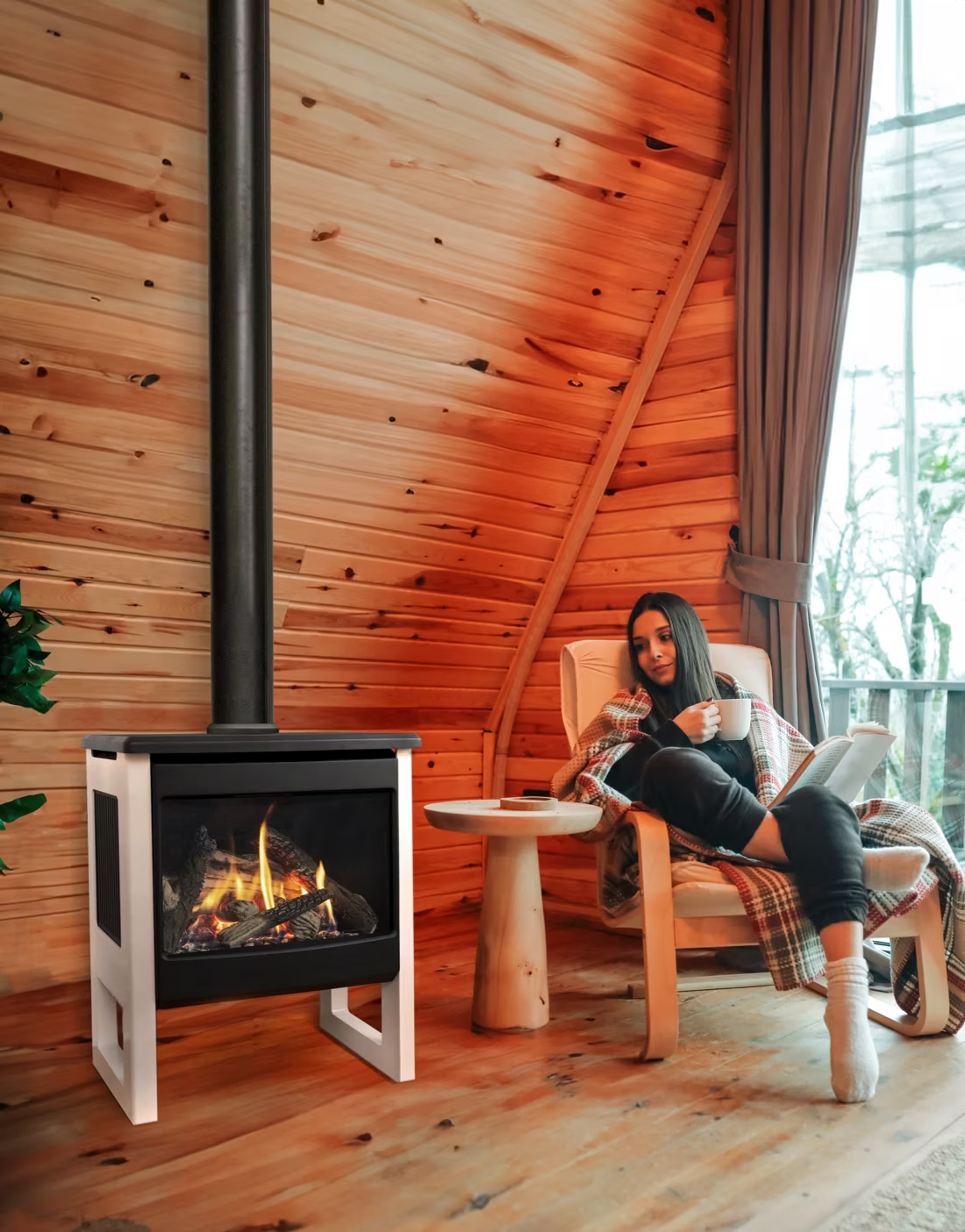
Gas fireplaces have carved out a real role alongside that wood-heat tradition—not as a replacement, but as the convenient option for main living spaces, additions, or homes where tending a stove every few hours isn't practical. Rusk County is rural enough that piped natural gas service is limited mostly to the Ladysmith area; outside town, propane delivered by local suppliers is the standard fuel for gas fireplaces and inserts. Either way, a properly installed direct-vent gas unit gives you heat on demand—no wood splitting, no ash, and in models with battery-free ignition, heat that keeps working even when an ice storm takes down the power lines, which happens most winters somewhere in the county.
Three steps. No salesperson until you're ready.
Tell us about your project
Your zip code, your situation, and the fuel you're leaning toward—or let the answers point you to one.
See what's actually available
The brands dealers within 100 miles genuinely carry—real options, never a catalog mirage.
Get your dealer & Project Guide
A trusted local dealer, plus the free Project Guide & Parts List that names every component of the job.
Frequently Asked Questions
How much does a gas fireplace installation cost in Rusk County?
Most gas fireplace and insert installations in Rusk County run roughly $4,000 to $10,000, with the spread driven mainly by whether you're on propane or piped gas and how much venting or gas line work is involved. A direct-vent insert going into an existing masonry fireplace with propane already on-site tends to land on the lower end. New installations that require a fresh gas line run, a propane tank set, or venting through an exterior wall in a home without an existing chimney push toward the higher end. Because so much of the county is off the natural gas mains, factor in the cost of tank placement or line extension from your propane supplier when budgeting—a local dealer will walk you through that as part of the quote.
Can I convert my existing wood fireplace to gas?
Yes, and it's a common project for Rusk County homes that have an older wood-burning masonry fireplace they no longer want to feed by hand every few hours. A gas insert typically slides into the existing firebox and vents through a stainless liner run up your current chimney, which keeps the project cost down since you're not adding new structural venting. In a county without piped gas outside the Ladysmith area, most conversions run on propane, so plan on either an existing tank or a new tank setup with your local propane supplier as part of the project. The original masonry stays intact, but the heat output and control improve substantially over an open fireplace.
Do I need natural gas, or does propane work for a gas fireplace in Rusk County?
Propane is the standard fuel for most of Rusk County. Piped natural gas service is limited mostly to in-town areas around Ladysmith, so homes in Bruce, Weyerhaeuser, Ingram, and the surrounding townships typically run on propane delivered and stored in a tank on the property. This isn't a downside—nearly every gas fireplace and insert on the market can be configured for propane, and your installer sets the correct orifice and regulator for the fuel you have. If you already heat your home or run a range on propane, adding a fireplace on the same system is straightforward.
Will my gas fireplace still work if the power goes out?
Most direct-vent gas fireplaces are built to run through a power outage, which matters in a county where winter ice storms regularly knock out lines for hours or longer. Units with standing pilot or IPI (intermittent pilot ignition) systems typically include a battery backup that keeps the fireplace lighting on demand even with no electricity. Valor fireplaces take it a step further—the pilot's thermocouple generates the small amount of electricity the unit needs, so there's no battery to remember or replace. For a Rusk County home where a gas fireplace might be your only heat source during a multi-day outage, that self-powered design is worth asking your local dealer about.
What's the difference between a gas fireplace, gas insert, and gas stove?
A gas fireplace is a built-in unit framed into a wall, typically used in new construction or a remodel where there's no existing masonry fireplace. A gas insert is sized to slide into an existing wood fireplace opening, using your current chimney as the vent path with a liner—the common choice for older Rusk County farmhouses with a masonry hearth already in place. A gas stove is freestanding, sitting on its own hearth pad much like a wood stove would, which works well in a room without any existing fireplace. Most homeowners here with an old wood fireplace go with an insert; those building new or adding a fireplace where none existed lean toward a built-in unit or freestanding stove.
Do I need a permit to install a gas fireplace in Rusk County?
Yes—new gas fireplace installations require a building permit, and any new or extended gas line needs to be run by a licensed gas-fitter or propane technician. Permitting authority in Rusk County runs through the county zoning and building office, though some projects in incorporated areas like Ladysmith may route through the local building inspector instead. Rusk County has no air quality non-attainment restrictions, so unlike some Western counties there are no burn curtailment periods to work around—the permit process here is mainly about venting clearances, gas line safety, and code compliance. Most local installers handle the paperwork as part of the job.
What's the difference between vented and vent-free gas fireplaces?
Vented (direct-vent) gas fireplaces draw combustion air from outside and exhaust it back outside through a sealed pipe, keeping combustion byproducts out of the living space entirely. Vent-free units burn without any exterior venting, releasing some water vapor and trace combustion gases into the room, which requires careful room-size matching and ventilation. Wisconsin permits vent-free units with restrictions, but for a Rusk County home dealing with 8,746 heating degree days and long stretches of tightly sealed winter living, direct-vent is the far more common and generally recommended choice—it won't add humidity or condensation to a home that's already buttoned up against the cold. Ask your local dealer about both, but expect them to steer most installs toward vented.
How often should my gas fireplace be serviced?
Plan on an annual inspection, ideally before the heavy heating season kicks in around late fall. A technician will check the burner, pilot assembly, gas connections, and venting, and clean the glass and interior components. This is a much smaller job than a wood-stove chimney sweep, but skipping it is how small issues—a weak pilot, a dirty burner, a loose gas fitting—turn into bigger problems mid-winter when a service call is hardest to schedule. Local hearth and propane service providers in the Ladysmith area typically handle this for $150 to $250 per visit.
Gas vs. wood—which makes more sense for a Rusk County home?
Wood remains deeply practical here—local oak, maple, birch, and aspen are abundant, Chequamegon-Nicolet National Forest cutting permits run just $10 to $20 a cord, and a wood stove keeps burning through the extended power outages that come with northern Wisconsin ice storms. Gas offers instant, no-hassle heat and none of the splitting, stacking, or ash cleanup wood requires, plus more even heat output for a main living area. Given how cold and long the season runs here, a lot of Rusk County homes end up with both: wood as the serious cold-weather workhorse in a den or basement, and a gas fireplace or insert for daily convenience in the main living space. Either way, a local dealer can help you weigh the tradeoffs against your specific home and how you actually use the space.
What's the difference between an insert and a zero-clearance fireplace?
An insert is a fireplace that slides into a pre-existing wood-burning fireplace—if you don't have one, there's nothing to insert it into. A zero-clearance fireplace is built into a framed wall, which makes it the answer for remodels and new construction. Simple test: existing masonry fireplace means insert; blank or framed wall means zero-clearance.
What does it take to replace an existing fireplace?
Fireplaces are like icebergs—bigger behind the wall than in front of it. Replacement means removing the surrounding tile or stone (the finish material laps onto the fireplace face), pulling the old unit, setting the new one in the same enclosure, and re-finishing the wall. A hearth professional can determine what's behind your wall without demolition during an in-home preview.
What is an in-home preview and do I need one?
It's a visit where a hearth professional measures your space, confirms the model you picked actually works in your home, and walks the specs—framing, gas line, venting, finish work—before anything is ordered. Some details you just can't know until you see the house. Never make a down payment without one; it's the single most-skipped step that burns buyers.
Can I install a fireplace myself?
If you're putting a fire in your house on purpose, it's best to work with an expert. Unless you're genuinely experienced in framing, gas line, vent pipe, and the national code on clearances to combustibles, have a professional do it—and ideally the same company that sells you the fireplace, so warranty, service, and liability all live under one roof.
Stove and Fireplace Dealers in Rusk County
Listings include WhyFire partner dealers, dealers we have verified as authorized for the brands we recommend, and established local businesses that carry hearth products. Every listing shows which one it is. The ones marked Preferred run on WhyFire's software, so they can show you real pricing and book your appointment right here. No manufacturer pays for placement. How we verify dealers →
Earth Sense Energy Systems- Rice Lake
The Stove Works, Inc
Kindled Hearth Fireplace Store
Allram Lumber Company
Ccs Services LLC
Poolman
Find your gas fireplace in Rusk County.
Tell us a bit about your home and we'll match you with the right gas fireplace, insert, or stove—plus a free Project Guide & Parts List with the exact parts, vent kit, and a trusted local dealer to install it.
Find Your Fireplace →