
Keep Your Family Warm and Safe—No Matter What
Wood heat built for Marathon County's long, cold winters. Find the right stove or insert for your home, and connect with a trusted local dealer near Rib Mountain.
Every Project Starts From One of These Five Situations
Winter in Rib Mountain doesn't ease up until April.
Rib Mountain sits at 1,634 feet in Marathon County, at the base of the granite monadnock the village is named for, just southwest of Wausau. Winters here are long and genuinely cold—an average of 8,174 heating degree days a year and winter lows that average around 7°F, putting Rib Mountain closer in severity to Duluth, Minnesota than to most of the Midwest. Snow typically holds on the ground from November through March, and the heating season here runs nearly half the year.
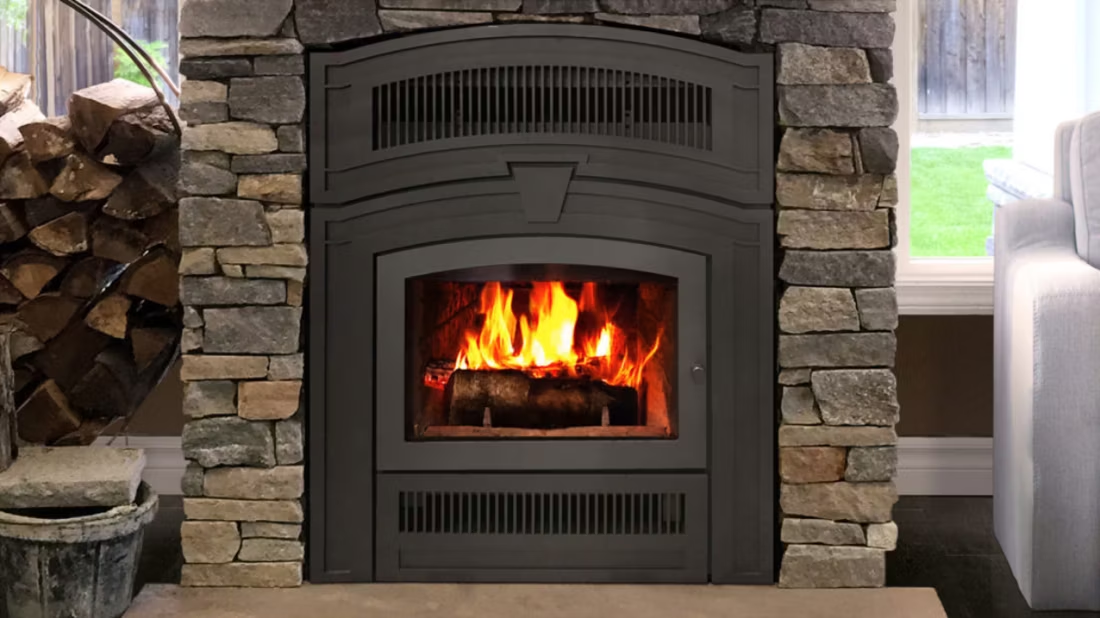
Central Wisconsin has a strong wood-heat tradition, helped by an abundance of local hardwood—oak, maple, birch, and aspen are all common firewood species cut in the county forests and private woodlots surrounding Rib Mountain. Unlike some western states, Wisconsin doesn't impose winter burn curtailments or inversion-driven air quality restrictions, so once a stove is installed and permitted, there's no seasonal on-off switch to worry about. For a lot of local homeowners, that combination—cheap or self-cut firewood, a genuinely cold climate, and no smoke restrictions—makes wood heat an easy call, whether as a primary heat source or a backup for when a winter storm takes down the power lines.
Three steps. No salesperson until you're ready.
Tell us about your project
Your zip code, your situation, and the fuel you're leaning toward—or let the answers point you to one.
See what's actually available
The brands dealers within 100 miles genuinely carry—real options, never a catalog mirage.
Get your dealer & Project Guide
A trusted local dealer, plus the free Project Guide & Parts List that names every component of the job.
Frequently Asked Questions
How much does a wood stove installation cost in Rib Mountain?
Most wood stove installations in the Rib Mountain area run $3,500 to $8,500, depending on the stove itself, whether you're venting through an existing masonry chimney or need new Class A pipe run through a wall or roof, and any hearth pad work required for clearance. Homes without an existing chimney—common in newer construction around Rib Mountain State Park—tend toward the higher end once full venting and hearth construction are added in. The Village of Rib Mountain Building Inspection Department requires a permit for any new wood-burning appliance, and most local hearth dealers include that paperwork as part of the installation.
What size wood stove do I need for a home in Rib Mountain?
With 8,174 heating degree days and average winter lows around 7°F, Rib Mountain sits solidly in the cold end of Wisconsin's Zone 6A—closer in severity to Duluth, Minnesota than to Milwaukee. That matters for sizing: a lot of homeowners here undersize because they're going off a chart built for a milder climate. For a well-insulated 1,800–2,400 sq ft home, a medium-to-large stove rated for 2,000+ sq ft is usually the safer call, especially if the stove will be your primary heat during a cold snap. Older homes near the base of Rib Mountain with less insulation often do better with a large stove and supplemental zone heating elsewhere. A local dealer can size this properly with an in-home visit—guessing on square footage alone is how you end up with a stove that can't keep up in January.
Where can I find a certified wood stove installer near Rib Mountain?
Look for NFI (National Fireplace Institute) or CSIA (Chimney Safety Institute of America) certification—both are recognized credentials for wood-burning appliance installation and chimney work. Most hearth shops serving the Wausau and Rib Mountain area employ certified installers and will pull the Village of Rib Mountain building permit as part of the job. Given how many total heating degree days this area sees each winter, a stove that's running nearly every day for five months needs correct clearances and proper Class A venting from day one—this isn't a project to hand to a general contractor unfamiliar with wood-burning code.
Should I get a wood stove or a wood insert?
If you already have a working masonry fireplace, an insert is usually the better move—it uses your existing chimney, typically with a stainless steel liner, and turns an open, heat-losing fireplace into an efficient closed-combustion heater. A freestanding stove makes more sense if you don't have an existing fireplace, want to place the stove in a different room, or want the option to move it later. In a lot of Rib Mountain homes built with an existing brick fireplace, inserts are the more common retrofit.
Do I need a permit to install a wood stove in Rib Mountain?
Yes. The Village of Rib Mountain requires a building permit for new wood-burning appliance installations, and the stove itself needs to meet current EPA 2020 NSPS emissions standards. Wisconsin doesn't have the winter air quality curtailment programs you see in some western states—there's no non-attainment designation here and no burn-ban system tied to inversions—so once your stove is installed and permitted, you're not dealing with seasonal restrictions on when you can burn.
What's the best wood stove for a Rib Mountain winter?
For a climate that logs over 8,000 heating degree days a year, a catalytic stove built for long, steady burns is worth the extra upfront cost. Blaze King's catalytic line is built for exactly this kind of cold—20+ hour burn times mean you're not getting up at 3 a.m. to reload during a stretch of single-digit nights. Non-catalytic stoves from Pacific Energy or Lopi are a good fit for supplemental heat or smaller spaces, and they're generally less expensive to buy and maintain. With oak and maple both common and dense as local firewood, either stove type will perform well—it mostly comes down to whether you want this to be primary or backup heat.
How often should I have my chimney swept in Rib Mountain?
Once a year, minimum, per CSIA guidelines—and given how much burning a typical Rib Mountain household does across a five-to-six-month heating season, that's not a step to skip. Late summer or early fall, before the first cold snap, is the usual window so you're not scheduling around an already-lit stove. Homes burning as a primary heat source, especially with softer woods like aspen mixed in, may want a mid-season check, since aspen burns fast and can leave more residue than dense hardwoods like oak.
Where can I get firewood in the Rib Mountain area?
Central Wisconsin has plenty of hardwood—oak, maple, birch, and aspen are all common species cut locally, with oak and maple providing the highest heat output per cord. Marathon County's forestry program manages a substantial amount of county forest land and is a resource for anyone interested in cutting their own, though most Rib Mountain homeowners buy split, seasoned firewood from local sellers by the cord. Seasoned oak or maple typically costs more than aspen or birch given the extra drying time and heat output. Whatever you buy, make sure it's been seasoned at least 6-12 months—unseasoned wood is the top cause of poor stove performance and chimney creosote buildup in this climate.
Wood vs. pellet stove—which makes more sense for Rib Mountain?
Wood stoves run without electricity, which matters here—Rib Mountain gets its share of winter storms that can knock out power from Northern States Power or Wisconsin Public Service Corp for hours or longer, and a wood stove keeps working when the grid doesn't. Pellet stoves, fed by regional brands like Indeck Energy Services, Lignetics, or Somerset Pellet Fuel, are more convenient day to day—load the hopper, set the thermostat, less ash—but the auger and blower need power to run. For a primary heat source or backup during outages, wood is the more resilient choice in this climate. For homes that want a low-maintenance secondary heat source and have reliable power, pellet is worth a look.
What's the difference between an insert and a zero-clearance fireplace?
An insert is a fireplace that slides into a pre-existing wood-burning fireplace—if you don't have one, there's nothing to insert it into. A zero-clearance fireplace is built into a framed wall, which makes it the answer for remodels and new construction. Simple test: existing masonry fireplace means insert; blank or framed wall means zero-clearance.
Why is a fireplace insert so efficient?
An insert does two things: it seals the chimney completely, so you stop losing air you already paid to heat, and it radiates warmth into the room through the firebox and glass. Most add a heat-exchange fan that pulls cool room air underneath, wraps it around the hot firebox, and pushes it back out warm. Your home is more efficient before you've even lit the first fire.
What is an in-home preview and do I need one?
It's a visit where a hearth professional measures your space, confirms the model you picked actually works in your home, and walks the specs—framing, gas line, venting, finish work—before anything is ordered. Some details you just can't know until you see the house. Never make a down payment without one; it's the single most-skipped step that burns buyers.
Can a fireplace actually lower my heating bill?
Yes—by creating a comfort zone. A furnace heats every square foot of the house just to warm the one room you're in; a gas fireplace on low burns roughly a sixth of the gas a typical furnace does. Set the furnace around 55–60 degrees as a baseline, then heat the rooms your family actually uses. Families who heat this way commonly save $20–$60 a month.
Nearby Dealers
Hearth shops serving Rib Mountain and the surrounding area. Every listing shows whether it is a WhyFire partner, a dealer we have verified as authorized for the brands we recommend, or a local business carrying hearth products. No manufacturer pays for placement. How we verify dealers →
Ferguson Enterprises
Find your wood fireplace in Rib Mountain.
Tell us a bit about your home and we'll match you with a trusted local dealer near Rib Mountain—plus a free Project Guide & Parts List with the exact parts, including your vent kit, for your wood heating project.
Find Your Fireplace →