
Add Instant, Room-by-Room Heat in Rib Mountain.
Direct, controllable heat for a village that logs over 8,000 heating degree days a year—no venting, no gas line, no chimney required. Find the right electric fireplace or insert and get matched with a trusted local dealer.
Every Project Starts From One of These Five Situations
Supplemental heat for a town built around cold winters.
Rib Mountain sits just west of Wausau at 1,634 feet, in the shadow of the granite outcrop that gives the village its name and its winter recreation draw at Granite Peak Ski Area. Winters here are long and genuinely cold—an average low of 7°F and 8,174 heating degree days put Rib Mountain in the same heating-demand territory as Duluth, Minnesota, not the milder parts of the Midwest. Every hearth decision in this village gets made with that climate reality in mind.
Electric fireplaces are a standard, well-established choice here—not because they replace the furnace, but because they solve a specific problem: adding real, controllable heat and ambiance to a bonus room, finished basement, or bedroom without extending ductwork or cutting in a gas line. Electric utilities Northern States Power Co and Wisconsin Public Service Corp both serve the Marathon County area at residential rates around $0.158 to $0.162 per kWh, and with no venting, chimney, or gas permit required, electric is consistently the simplest and fastest hearth project a Rib Mountain homeowner can complete.
Three steps. No salesperson until you're ready.
Tell us about your project
Your zip code, your situation, and the fuel you're leaning toward—or let the answers point you to one.
See what's actually available
The brands dealers within 100 miles genuinely carry—real options, never a catalog mirage.
Get your dealer & Project Guide
A trusted local dealer, plus the free Project Guide & Parts List that names every component of the job.
Frequently Asked Questions
How much does an electric fireplace installation cost in Rib Mountain?
Plug-in electric fireplaces—freestanding stoves, mantel packages, or wall-mount units—need no professional installation beyond a standard 120V outlet, and most run $300 to $1,500 installed. Built-in electric fireplaces or inserts that require a dedicated circuit run higher, typically $1,200 to $3,000, once an electrician sets the circuit and a carpenter frames or finishes the surround. Because there's no venting, chimney, or gas line involved, electric projects in Rib Mountain are consistently the least expensive hearth upgrade of the fuel types available here.
Can an electric fireplace actually heat a room in Rib Mountain's climate?
It can heat a single room, but it isn't built to be your primary heat source here. Rib Mountain logs roughly 8,174 heating degree days a year—more than a typical winter in Duluth, Minnesota—and average lows drop into the single digits. A standard 1,500-watt electric fireplace puts out around 5,000 BTUs, enough to comfortably warm a bedroom, bonus room, or finished basement space of a few hundred square feet, but it won't carry a whole house through a January cold snap. Most homeowners here run electric fireplaces as zone heat alongside a forced-air furnace or propane system, not as a stand-alone solution.
Do I need a permit to install an electric fireplace in Rib Mountain?
Most plug-in electric fireplaces need no permit at all—they run off a standard outlet like any other appliance. If you're installing a built-in unit that requires a new dedicated circuit or a subpanel addition, that electrical work typically needs a permit through the Village of Rib Mountain building department and should be pulled by a licensed electrician. That's a much lighter permitting lift than wood or gas installs, which is part of why electric is often the fastest hearth project to complete.
What types of electric fireplaces are available for my home?
There are four common formats: freestanding electric stoves that mimic a wood stove's footprint, wall-mount units that hang like a flat-screen TV, built-in inserts that slide into an existing masonry firebox, and mantel packages that pair an insert with surrounding cabinetry. For Rib Mountain homes with an existing wood-burning fireplace that's rarely used, an electric insert is a popular retrofit—it drops into the existing opening, needs no chimney work, and gives you flame effect and heat at the flip of a switch.
What should I look for in an electric fireplace for a Wisconsin winter?
Look for a unit with a true heater rating—most quality models put out 4,600 to 5,200 BTUs on a 1,500-watt element—rather than one sold purely for the flame effect. Models with a built-in thermostat let you set a target room temperature instead of running the heater at full output constantly, which matters when you're using it for daily supplemental heat through a long Rib Mountain winter. Brands like Dimplex, Napoleon, and Amantii are common choices from Wisconsin hearth dealers and hold up well under regular use.
Will my electric fireplace work if the power goes out?
No—and that's worth planning around in Rib Mountain, where winter storms can knock out power for hours or longer. An electric fireplace depends entirely on grid power from Northern States Power Co or Wisconsin Public Service Corp, whichever serves your address, and it will not function during an outage. If backup heat during power loss matters to you, many local homeowners pair an electric fireplace for everyday convenience with a wood stove burning local oak or maple for emergencies.
How much does it cost to run an electric fireplace in Rib Mountain?
At local residential rates of roughly $0.1583 to $0.1623 per kWh, a typical 1,500-watt electric fireplace costs about 24 cents an hour to run on high heat. Used for supplemental heat a few hours an evening—say four hours a night through the winter—that works out to roughly $1 a day, or $28 to $30 a month. That's cheaper to operate than most homeowners expect, though it's still more expensive per BTU than burning oak or maple if you already have a wood supply on hand.
Electric vs. pellet stove—which makes more sense for my Rib Mountain home?
Pellet stoves, using pellets from regional producers like Indeck Energy Services, Lignetics, or Somerset Pellet Fuel, put out real heat—typically 40,000 to 50,000 BTUs—and can serve as a legitimate primary or near-primary heat source through a Marathon County winter. They require a vent, a hopper to load, and periodic ash cleanup. Electric fireplaces need none of that upkeep and install almost anywhere, but at 8,174 heating degree days they're realistically a supplemental or ambiance choice. If you're trying to meaningfully cut a propane or furnace bill, pellet is the stronger option; if you want an easy, no-maintenance upgrade to a family room or basement, electric wins.
Can I put an electric insert into an old wood-burning fireplace?
Yes, and it's one of the more common electric projects in Rib Mountain's older housing stock, particularly homes with a masonry fireplace that's rarely used. An electric insert slides into the existing firebox opening, plugs into a nearby outlet or a new dedicated circuit for larger units, and needs no chimney liner or venting work. It's typically a same-day project for local dealers and gives you back a working, safe hearth without the wood-handling, ash, or annual chimney sweep a wood-burning setup requires.
Can I put a TV above my fireplace?
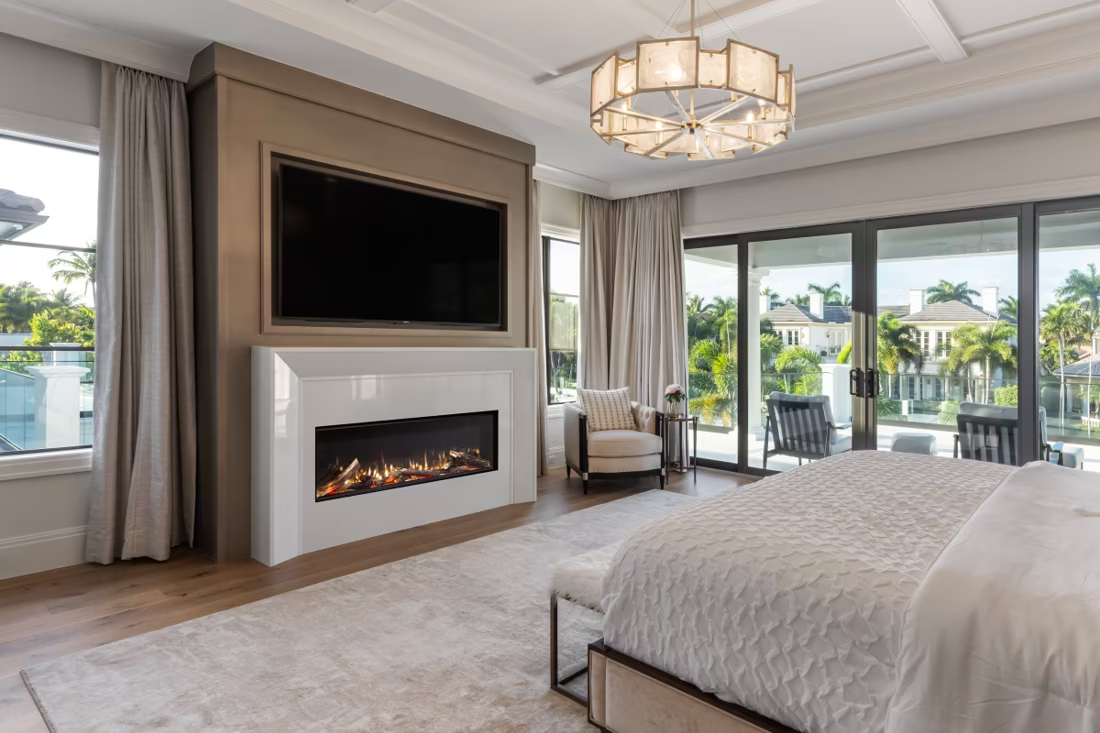
Yes—with an asterisk. Fireplaces are hot and TVs don't like heat. Either put a mantel between them to deflect rising warmth, or choose a fireplace with heat-management technology that creates a cool zone on the wall above—the wall stays around 125 degrees, barely warm, while the room still gets full heat. If you like clean lines and don't want a mantel, heat management is the answer.
Do electric fireplaces actually produce heat?
Yes—most put out around 4,800–5,000 BTUs from a standard outlet, which comfortably warms a bedroom, office, or den as a comfort-zone heater. What they won't do is carry a whole house the way wood, gas, or pellet can. Think of electric as ambiance-first with honest supplemental heat: flames on with no heat in July, flames plus warmth in January.
What is an in-home preview and do I need one?
It's a visit where a hearth professional measures your space, confirms the model you picked actually works in your home, and walks the specs—framing, gas line, venting, finish work—before anything is ordered. Some details you just can't know until you see the house. Never make a down payment without one; it's the single most-skipped step that burns buyers.
Can a fireplace actually lower my heating bill?
Yes—by creating a comfort zone. A furnace heats every square foot of the house just to warm the one room you're in; a gas fireplace on low burns roughly a sixth of the gas a typical furnace does. Set the furnace around 55–60 degrees as a baseline, then heat the rooms your family actually uses. Families who heat this way commonly save $20–$60 a month.
Nearby Dealers
Hearth shops serving Rib Mountain and the surrounding area. Every listing shows whether it is a WhyFire partner, a dealer we have verified as authorized for the brands we recommend, or a local business carrying hearth products. No manufacturer pays for placement. How we verify dealers →
Ferguson Enterprises
Electric Service in Rib Mountain
An electric fireplace's heater draws about 1,500 watts—pennies per hour at local rates.
Northern States Power Co
Wisconsin Public Service Corp
Find your electric fireplace in Rib Mountain.
Tell us about your space and we'll put together a free Project Guide & Parts List—the right electric fireplace or insert for your room, plus a recommended local Rib Mountain-area dealer who can install it.
Find Your Fireplace →