
Supplemental Heat and Ambiance for the County's Long, Cold Winters.
With 8,174 heating degree days and winter lows averaging 7°F, Marathon County homes from Wausau to Rib Mountain, Mosinee, and Marathon City need real primary heat—but electric fireplaces earn a solid place as zone heat and ambiance in living rooms, bedrooms, and finished basements. Find the right unit and connect with a trusted local dealer.
Every Project Starts From One of These Five Situations
Electric heat earns its place as backup, not primary.
Marathon County stretches across north-central Wisconsin's Wisconsin River valley, with Wausau as the county seat and Rib Mountain rising just south of it. Climate zone 6A and 8,174 heating degree days put this county in the same cold-climate tier as Duluth, Minnesota—winters run long, average lows sit around 7°F, and homes here have historically leaned on forced-air furnaces and wood stoves burning local oak, maple, birch, and aspen to get through it. That heating math matters: a whole-home electric resistance system would be brutally expensive to run through a Marathon County winter, which is why electric units here are almost always installed as a second heat source rather than the only one.
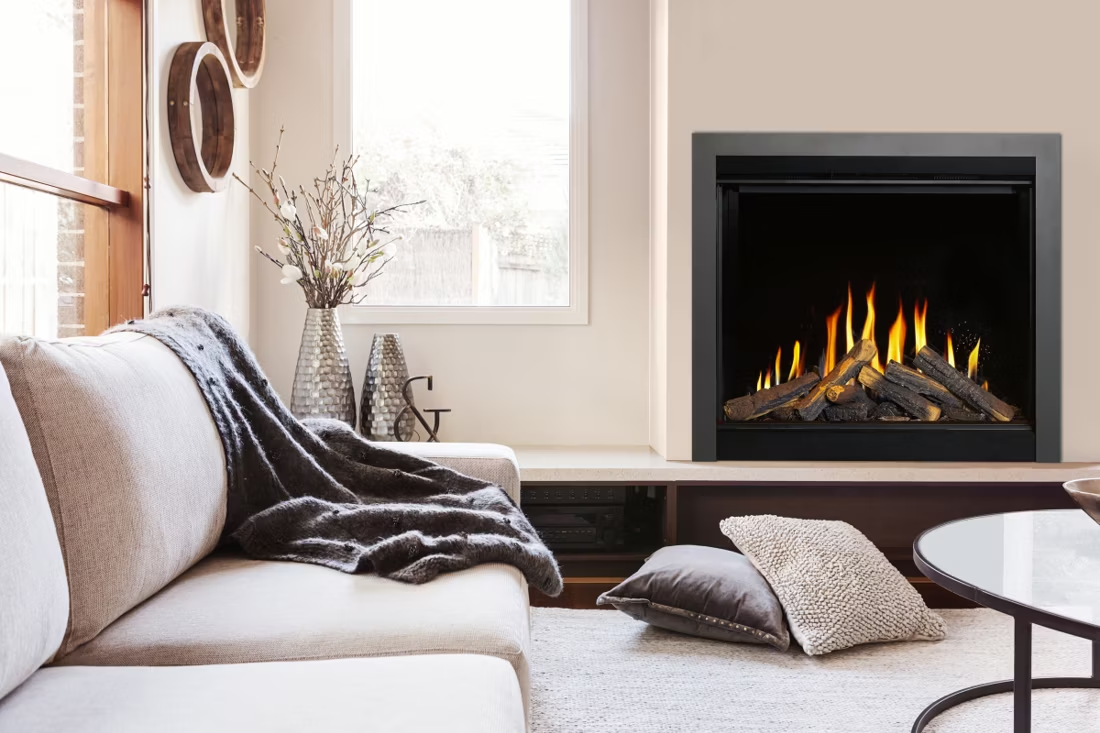
What electric does very well is supplement whatever's already heating the house. A linear electric fireplace in a Wausau living room, an electric insert dropped into an old masonry fireplace in a Marathon City farmhouse that nobody wants to feed wood into anymore, or a freestanding electric stove warming a finished basement in Weston or Schofield—these are common, practical installs. No chimney, no gas line, no venting through the roof, and service territory covered by Wisconsin Public Service means the electrical infrastructure is already there. The tradeoff is honest: it's convenient supplemental heat and real-looking flame, not a substitute for the furnace or wood stove doing the heavy lifting on a January night.
Three steps. No salesperson until you're ready.
Tell us about your project
Your zip code, your situation, and the fuel you're leaning toward—or let the answers point you to one.
See what's actually available
The brands dealers within 100 miles genuinely carry—real options, never a catalog mirage.
Get your dealer & Project Guide
A trusted local dealer, plus the free Project Guide & Parts List that names every component of the job.
Frequently Asked Questions
How much does an electric fireplace installation cost in Marathon County?
Plug-in electric fireplace inserts and freestanding stoves that use a standard 120V outlet typically run $300 to $1,500 installed, since there's no venting or gas line to run. Built-in linear electric fireplaces or larger units that need a dedicated 20-amp circuit run higher—usually $1,500 to $4,000 once you factor in the unit, a licensed electrician's circuit work (often $300-$600 in Marathon County), and any surround or mantel carpentry. Costs stay well below wood or gas installs specifically because there's no chimney, flue liner, or gas fitting involved.
Will an electric fireplace actually heat a room in a Marathon County winter?
Within limits. Most electric fireplaces are rated around 5,000-9,000 BTU on a standard 1,500-watt heating element (the NEC caps most 120V units there), which is enough to comfortably warm a single room—a bedroom, den, or finished basement space. It is not enough to offset a home's heat loss on a 7°F night across 2,000+ square feet, and it shouldn't be asked to. Given the county's 8,174 heating degree days, electric fireplaces here work best as zone heat for a specific room while the furnace or wood stove handles the rest of the house.
Can I put an electric insert into my existing wood-burning fireplace?
Yes, and it's a common project in older Marathon County farmhouses with a masonry fireplace nobody wants to keep feeding wood or sweeping a flue for. An electric insert slides into the existing firebox opening, plugs into a nearby outlet or a newly added circuit, and gives you a realistic flame with zone heat—all without touching the chimney. Some homeowners cap the flue afterward to stop the draft loss; others leave it as-is in case they want to burn wood again later. Either way, there's no chimney inspection or sweep required for the electric unit itself.
Do I need a permit to install an electric fireplace in Marathon County?
Usually not for the fireplace itself—since there's no venting, chimney, or gas line involved, electric units generally fall outside the building permit process that wood and gas installations require. If your installer needs to add a new dedicated circuit or run new wiring, that electrical work should be done by a licensed electrician and typically requires an electrical permit and inspection under Wisconsin's electrical code. Most reputable installers handle that paperwork as part of the job, so you're not left coordinating it yourself.
What's the difference between an electric fireplace, insert, and stove?
An electric fireplace is usually a built-in or wall-mounted unit designed for a framed wall or entertainment center—common in newer Wausau-area builds and remodels. An electric insert is sized to slide into an existing masonry or factory-built fireplace opening, replacing an old wood-burning setup. An electric stove is a freestanding cabinet-style unit that sits on the floor like a traditional wood stove but plugs in—a popular choice for finished basements and additions in Rib Mountain and Mosinee homes that don't have an existing fireplace to work with.
Will my electric fireplace work during a power outage?
No—and this is the honest tradeoff worth knowing before you buy. Electric fireplaces require power to run the flame effect and any heating element, so during a winter storm outage in Marathon County they go dark along with everything else. This is a real consideration here, since ice storms and heavy snow do knock out power in rural parts of the county. If backup heat during an outage matters to you, a wood stove or a gas unit with battery-backed ignition is the better primary choice, with electric reserved for everyday ambiance and convenience.
What's the best electric fireplace for Marathon County homes?
For living rooms in Wausau and the surrounding communities, linear electric fireplaces with realistic multi-color flame technology (brands like Dimplex, Napoleon, and Amantii are common in the region) give a modern look without the upkeep of a real fire. For finished basements or additions where you want actual supplemental warmth on top of ambiance, look for a unit maxed out at the standard 1,500-watt heating element and size it to the specific room rather than the whole floor plan. A local dealer can walk through wattage, room size, and circuit requirements before you buy.
How much does it cost to run an electric fireplace in Marathon County?
A 1,500-watt electric fireplace running on high draws about 1.5 kilowatt-hours per hour of use. At typical Wisconsin Public Service residential rates, that works out to roughly 20-25 cents per hour of heating mode, or just a few cents per hour if you're running the flame effect alone without heat. For occasional ambiance use in a living room, that's inexpensive. Running one as a primary heat source for hours a day through a full Marathon County winter adds up fast compared to a furnace or wood stove, which reinforces why electric works best as a supplement rather than a whole-home heat plan here.
Electric vs. wood—which is right for my Marathon County home?
Wood—burning local oak, maple, birch, or aspen—remains the go-to for homeowners who want real primary or backup heat that keeps working through a power outage, and it's the more economical choice for offsetting an 8,174-HDD winter. Electric offers no-mess convenience, instant on-off operation, and a realistic flame with none of the ash, chimney maintenance, or wood handling, but it needs power to run and costs more per BTU if leaned on heavily. Most Marathon County homeowners land on wood or gas for primary heat and add an electric unit in a secondary room for ambiance and easy zone heat—a combination a local dealer can help you plan around your specific layout.
Can I put a TV above my fireplace?
Yes—with an asterisk. Fireplaces are hot and TVs don't like heat. Either put a mantel between them to deflect rising warmth, or choose a fireplace with heat-management technology that creates a cool zone on the wall above—the wall stays around 125 degrees, barely warm, while the room still gets full heat. If you like clean lines and don't want a mantel, heat management is the answer.
How much does an electric fireplace cost to run?
With the heater on, a typical unit draws about 1,500 watts—at average electric rates that's roughly 20 cents an hour. Run the flame effect alone and it costs pennies; the flames are LED-driven and use about as much power as a light bulb. There's no pilot light, no fuel delivery, and essentially no maintenance.
Does a fireplace add value to my home?
On average, a fireplace adds back to the home about the same amount you spent installing it. Add the monthly savings from heating the rooms you actually use instead of the whole house—often hundreds of dollars a year—and the value case is strong before you even count what a fire does for how your family uses the room.
How much should I budget for a fireplace?
For an average home—covering the fireplace, the vent pipe, and basic installation—a budget between $3,900 and $5,500 gives you a lot of options across wood, gas, and pellet. By the time you add finish work, gas line, and electrical, the average complete installation lands between $5,000 and $12,000 all-in. In a remodel or new build, a good rule is to put about 2.5% of the total project cost toward the fireplace.
Stove and Fireplace Dealers in Marathon County
Listings include WhyFire partner dealers, dealers we have verified as authorized for the brands we recommend, and established local businesses that carry hearth products. Every listing shows which one it is. The ones marked Preferred run on WhyFire's software, so they can show you real pricing and book your appointment right here. No manufacturer pays for placement. How we verify dealers →
Ferguson Enterprises
House Of Heating Inc.
Find your electric fireplace in Marathon County.
Tell us about your home and where you want the warmth—a living room, a finished basement, an old masonry fireplace you're ready to retire—and we'll put together a free Project Guide & Parts List with the exact unit and any electrical work needed, plus a recommended local dealer to install it.
Find Your Fireplace →