
Pellet stoves are the exception in Neenah, not the rule.
Natural gas heats most Fox Valley homes, so pellet stoves fill a narrower niche here—workshops, cabins, and supplemental zone heat. We'll connect you with a local dealer who actually handles them.
Every Project Starts From One of These Five Situations
Natural gas dominates Fox Valley heating—pellet fits a narrow niche.
Neenah sits on Lake Winnebago in climate zone 6A, with a long, cold heating season and average winter lows near 10°F—a heating load closer to Duluth, Minnesota than to milder parts of the Midwest. But unlike a remote off-grid market, Neenah homes are served by reliable electric utilities (Wisconsin Electric Power Co. and Wisconsin Public Service Corp.) and broad natural gas coverage across Winnebago County. That combination means gas is the default choice for most fireplace and heating upgrades here, and pellet stoves see comparatively little demand—most Fox Valley hearth retailers stock gas products first and only handle pellet equipment on request.
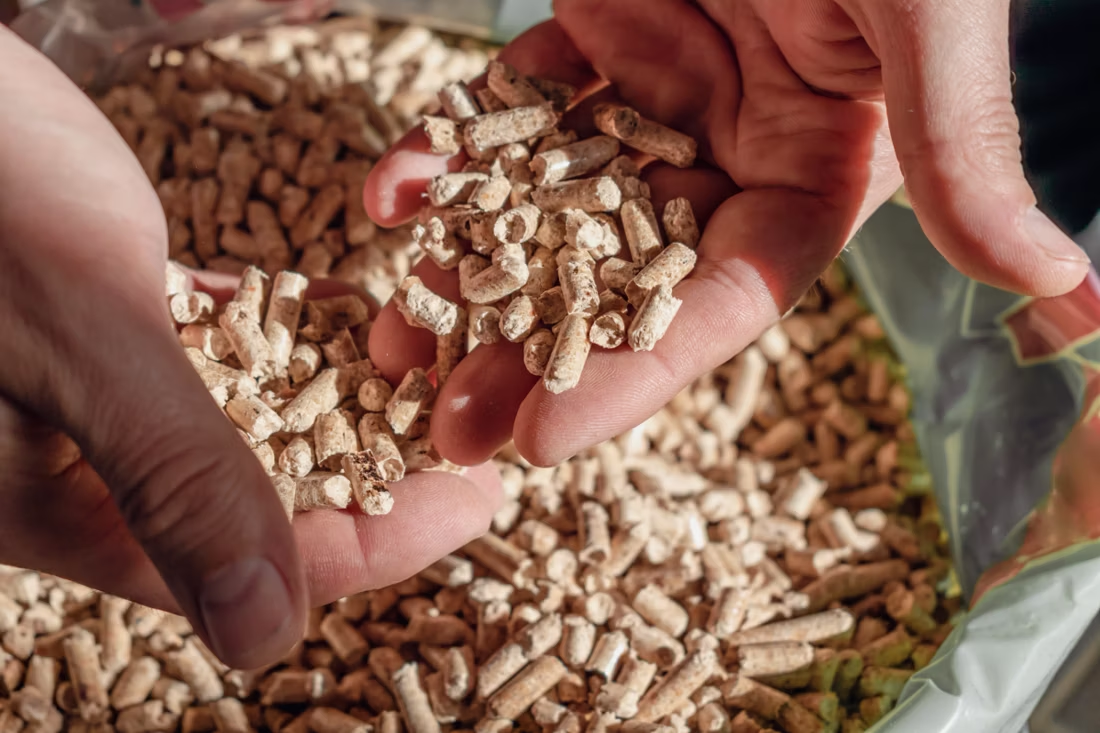
That doesn't mean pellet heat has no place in Neenah. Some homeowners still choose a pellet stove for a detached workshop or garage without gas service, a cabin on the edge of the grid, or supplemental zone heat in a sunroom or finished basement. Fuel supply isn't the constraint—regional producers like Indeck Energy Services, Lignetics, and Somerset Pellet Fuel mill pellets from Upper Midwest hardwood byproduct, including the oak, maple, birch, and aspen common to this area. The real constraint is installer availability, and the fact that pellet stoves need continuous electricity to run the auger and blower, so they won't provide backup heat during a winter power outage the way a wood stove would. If pellet still fits your situation, we can point you to the dealers in the region who genuinely carry and service them.
Three steps. No salesperson until you're ready.
Tell us about your project
Your zip code, your situation, and the fuel you're leaning toward—or let the answers point you to one.
See what's actually available
The brands dealers within 100 miles genuinely carry—real options, never a catalog mirage.
Get your dealer & Project Guide
A trusted local dealer, plus the free Project Guide & Parts List that names every component of the job.
Frequently Asked Questions
How much does a pellet stove installation cost in Neenah?
Because pellet stoves are a niche request in the Fox Valley, pricing varies more than it would for a mainstream gas insert. Nationally, a freestanding pellet stove with venting typically installs for $3,500 to $6,500, and a pellet insert into an existing masonry fireplace usually runs a bit higher once a liner and hopper access are factored in. With few Neenah-area dealers stocking pellet units regularly, it's worth getting two or three quotes rather than assuming a single number—we can point you toward the dealers in the region who actually carry them.
Why don't more homes in Neenah use pellet stoves?
Winnebago County is well served by natural gas, and gas fireplaces and inserts are the default choice for most Neenah homeowners upgrading a fireplace or adding supplemental heat. Pellet stoves also depend on electricity to run the auger and combustion blower, so they don't double as emergency backup heat the way a wood stove does—one more reason demand has stayed low here. Most hearth retailers in the Fox Valley focus their showroom space on gas products as a result, though a handful still service pellet equipment on request.
Where can I buy pellet fuel near Neenah?
Bagged pellet fuel is available through farm supply and hardware retailers around the Fox Valley, typically sourced from regional producers like Indeck Energy Services, Lignetics, and Somerset Pellet Fuel—all of which mill pellets from Wisconsin and Upper Midwest hardwood byproduct, including oak, maple, and birch. Expect pricing in the range you'd see across the Upper Midwest generally, roughly $250 to $300 per ton, though it's worth calling ahead since not every store keeps large stock of premium hardwood pellets year-round.
Is a pellet stove a good fit for Neenah's winters?
Neenah has a long, cold heating season and average winter lows near 10°F—a heating load closer to Duluth, Minnesota than to milder parts of the Midwest. A pellet stove can absolutely produce enough heat for that climate, and the automated hopper-and-auger feed means less daily tending than cordwood. The tradeoff is that pellet stoves need continuous electricity, so during a winter power outage—which does happen here with Wisconsin ice storms—the stove goes cold unless you have a battery backup or generator. That's the main reason most Neenah homeowners lean toward gas or a wood-burning option instead.
What size pellet stove do I need for my home?
Sizing depends on square footage, insulation, and whether you want the stove as primary or supplemental heat. Small units (rated for 500-1,000 sq ft) work well for a bonus room, sunroom, or workshop; larger units (1,500-2,200 sq ft) can handle a whole small home if it's reasonably well insulated. Given how few Neenah dealers carry pellet stoves, your best move is an in-home consultation with whichever local retailer we match you with—they'll size the unit to your actual space rather than a rule of thumb.
Do I need a permit to install a pellet stove in Neenah?
Yes—a new solid-fuel appliance installation typically requires a building permit through the City of Neenah's building inspection department (or the county equivalent if you're just outside city limits), covering hearth clearances and vent routing. Winnebago County has no wood-smoke air quality restrictions on the books, so there's no curtailment season to track the way there is in some western states—but proper venting and clearance-to-combustibles still need to pass inspection regardless of fuel type.
Pellet vs. gas—which makes more sense in Neenah?
For most Neenah homes, gas wins on convenience and availability: natural gas service already reaches most of the city, a gas insert lights instantly, and dealer support and parts are far easier to find locally. Pellet stoves make more sense in specific situations—a detached workshop without gas service, a cabin on the edge of the grid, or a homeowner who specifically wants the look of a real flame with less daily tending than cordwood. If your home already has gas service, it's worth seriously comparing both before committing to pellet given how limited local support is.
Pellet vs. wood stove—since neither is common here, which fits better?
Both wood and pellet stoves are minority choices in Neenah given how dominant natural gas is in the Fox Valley, but they solve different problems. A wood stove burns cordwood—oak, maple, birch, and aspen are the common regional species—and keeps working with zero electricity, which is genuinely useful for storm-outage backup heat. A pellet stove is more automated and burns cleaner, but the auger and blower need continuous power. If backup heat during an outage matters most to you, wood is the more reliable pick; if convenience and lower ash matter more and you have stable power, pellet is the better daily-use appliance.
Pellet vs. electric heater—what's the real difference for supplemental heat?
An electric fireplace or space heater plugs into a standard outlet, requires no venting or fuel storage, and is the simplest option for supplemental zone heat—but at Wisconsin residential rates of roughly 16 to 19 cents per kWh depending on whether you're served by Wisconsin Electric Power Co. or Wisconsin Public Service Corp., running one as a primary heat source gets expensive fast. A pellet stove costs more upfront and needs a hopper filled with fuel, but produces real, sustained heat output at a lower operating cost per BTU. For occasional ambiance or a small room, electric is the easier install. For a room you actually want to heat through a Wisconsin winter, pellet—or gas, where available—does more real work.
What's the difference between an insert and a zero-clearance fireplace?
An insert is a fireplace that slides into a pre-existing wood-burning fireplace—if you don't have one, there's nothing to insert it into. A zero-clearance fireplace is built into a framed wall, which makes it the answer for remodels and new construction. Simple test: existing masonry fireplace means insert; blank or framed wall means zero-clearance.
Why is my open fireplace making my house colder?
Open fireplaces suck—literally. As the fire burns, it consumes air your furnace already paid to heat and pulls it out through the chimney, so the house is actually colder after the fire goes out than before you lit it. An insert fixes this: it seals the chimney, puts fixed glass across the front, and turns that hole in your house into a real heat source.
How much should I budget for a fireplace?
For an average home—covering the fireplace, the vent pipe, and basic installation—a budget between $3,900 and $5,500 gives you a lot of options across wood, gas, and pellet. By the time you add finish work, gas line, and electrical, the average complete installation lands between $5,000 and $12,000 all-in. In a remodel or new build, a good rule is to put about 2.5% of the total project cost toward the fireplace.
Can a fireplace actually lower my heating bill?
Yes—by creating a comfort zone. A furnace heats every square foot of the house just to warm the one room you're in; a gas fireplace on low burns roughly a sixth of the gas a typical furnace does. Set the furnace around 55–60 degrees as a baseline, then heat the rooms your family actually uses. Families who heat this way commonly save $20–$60 a month.
Nearby Dealers
Hearth shops serving Neenah and the surrounding area.
Pellet Brands Stocked Around Neenah
Manufacturers will point you to the nearest stocking dealer.
Find your pellet stove option in Neenah.
Tell us about your project and we'll match you with one of the few local dealers who install and service pellet stoves, plus a free Project Guide & Parts List for your space.
Find Your Fireplace →