
Find the right fireplace for a Winnebago County winter.
Wood, gas, pellet, and electric fireplace resources for every city along Lake Winnebago and the Fox River—from Oshkosh and Neenah to Omro and Winneconne. Find the right unit for a winter heating load on par with Minneapolis and connect with a trusted local hearth retailer.
Every Project Starts From One of These Five Situations
Cold, lake-effect winters across Winnebago County, Wisconsin.
Winnebago County wraps around the northern end of Lake Winnebago, Wisconsin's largest inland lake, and includes Oshkosh, Neenah, Menasha, Omro, and Winneconne along the Fox and Wolf river corridors. Winters here are long and genuinely cold—Climate Zone 6A, an average winter low near 10°F, and a heating load comparable to Minneapolis, putting the county in the same range of winter heating demand. Lake-effect snow off Lake Winnebago adds to accumulation on the county's east and south shorelines, and the heating season regularly runs from October into April. Local woodlots and farm windbreaks are heavy with oak, maple, birch, and aspen—the four species that show up most often in split-and-stacked cords across the county, and the ones most wood stove owners here burn.
What you'll find on this hub: hearth retailers, service technicians, and fuel suppliers covering every community in the county—from Oshkosh and the Fox Cities suburbs of Neenah and Menasha, west to Omro, and south along the lake to Winneconne and Fox Crossing. Pick your fuel below to get into the specifics—local dealers, installation costs, recommended units, and the resources that fit your project. Whether you're heating a farmhouse outside Omro or a lake cottage near Butte des Morts, this is the starting point.
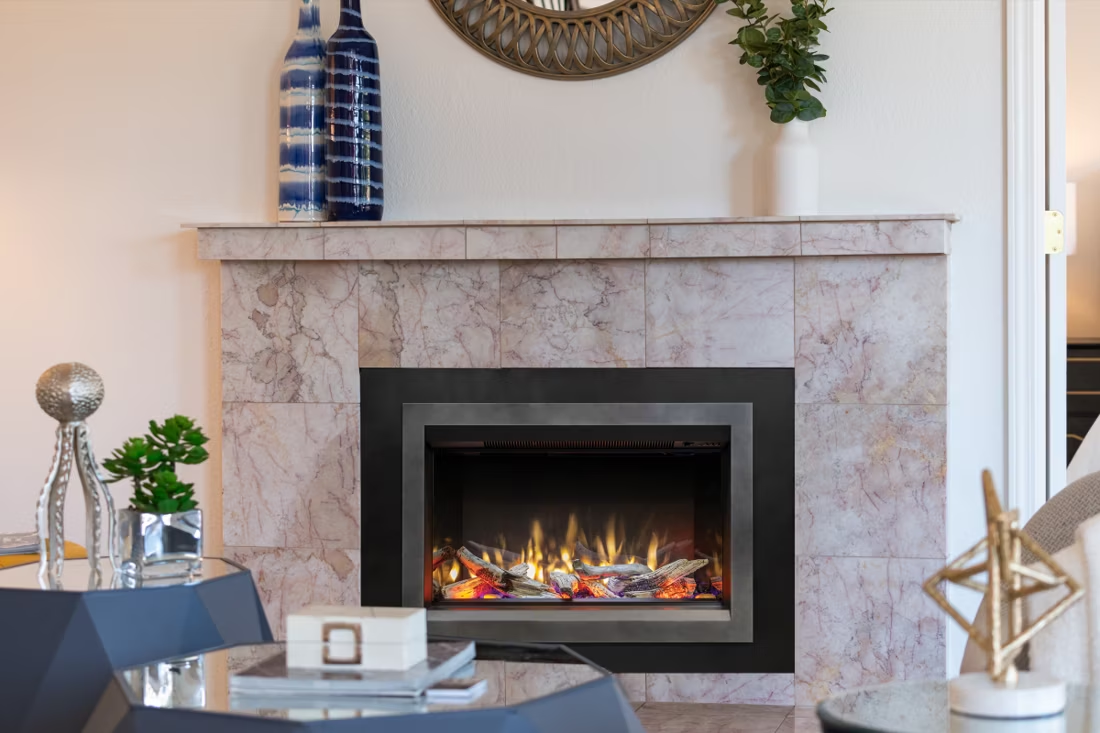
Four fuels. One honest answer for Winnebago County.
Three steps. No salesperson until you're ready.
Tell us about your project
Your zip code, your situation, and the fuel you're leaning toward—or let the answers point you to one.
See what's actually available
The brands dealers within 100 miles genuinely carry—real options, never a catalog mirage.
Get your dealer & Project Guide
A trusted local dealer, plus the free Project Guide & Parts List that names every component of the job.
Frequently Asked Questions
Which fireplace fuel makes the most sense in Winnebago County?
It depends on the home and the budget, but all four fuels are genuinely common here. Wood is well-established—oak, maple, birch, and aspen are the cordwood staples split from local woodlots and farm windbreaks, and a well-run catalytic or non-cat stove can carry a farmhouse through a 10°F night without trouble. Gas is the low-maintenance choice for homes on natural gas service from WPS (Wisconsin Public Service) in Oshkosh, Neenah, and Menasha—push-button heat with no wood to haul. Pellet sits in between: it burns cleaner and needs less daily attention than wood, and with Indeck Energy Services, Lignetics, and Somerset Pellet Fuel all producing pellets within driving distance of the Fox Valley, fuel supply is reliable and reasonably priced. Electric works well as supplemental heat—a lake cottage bedroom, a finished basement, a room addition—but with a heating load on par with Minneapolis, it's rarely anyone's sole heat source. Most Winnebago County households end up running two fuels: wood or pellet as the workhorse, gas or electric as backup or secondary-room heat.
Do I need a permit to install a fireplace or stove in Winnebago County?
In almost every case, yes. New wood stoves, wood inserts, gas fireplaces, gas inserts, gas stoves, and pellet appliances all require a building permit, and gas installations need a separate permit and licensed plumber or gas-fitter for the line work. Within Oshkosh, Neenah, and Menasha, permits are pulled through the city's own building inspection department; in Omro, Winneconne, and the unincorporated townships, they go through Winnebago County. Wood appliances sold and installed today need to meet current EPA emissions certification—this matters if you're buying a used stove secondhand rather than through a dealer. Electric fireplaces usually skip the permit unless you're hardwiring a built-in unit into a new circuit. Most local hearth retailers pull the permit as part of the installation quote, so it's rarely something the homeowner has to navigate solo.
Are there wood-burning restrictions in Winnebago County?
Not in the way you'd see in a western basin community with winter inversions—Winnebago County isn't a designated air-quality non-attainment area, and there's no routine burn-advisory program tied to wood stoves. That said, ordinary good-neighbor rules still apply: local nuisance ordinances in Oshkosh, Neenah, and Menasha can address chronic smoke complaints between close-set lots, and open burning of yard waste and debris (separate from indoor stoves) is regulated by the county and by the DNR. For an indoor EPA-certified wood stove or insert, burning oak, maple, birch, or aspen that's been seasoned to under 20% moisture is the main thing that keeps smoke—and complaints—to a minimum.
Will one hearth retailer carry wood, gas, pellet, and electric?
Many will, but not all. The larger hearth and stove shops serving the Oshkosh–Neenah–Menasha corridor typically stock at least three of the four fuel types, with wood, gas, and pellet as the core lineup and electric units carried as a smaller accessory category. Smaller shops and rural dealers around Omro or Winneconne sometimes specialize—a wood-and-pellet-only stove shop, for instance, or a fireplace showroom that leans heavily gas. If you're still comparing fuels, a multi-fuel dealer with working display units is worth the drive; if you already know you want wood or pellet specifically, a specialist shop may have deeper inventory and more installer experience with that one fuel.
How does installation and service work if I'm outside Oshkosh or Neenah?
Most hearth retailers and chimney service techs are based in the Oshkosh–Neenah–Menasha corridor and route out to the rest of the county on a regular schedule—Omro, Winneconne, Fox Crossing, Butte des Morts, and the townships along the Fox and Wolf rivers are all within a normal 20–30 minute service radius, so travel fees are uncommon here compared to more rural counties. The bigger factor is timing: pre-season appointments in September and October book up fast ahead of the first cold snap, while mid-winter emergency calls during a stretch of single-digit nights can mean a short wait. Scheduling your annual chimney sweep or gas inspection in late summer is the easiest way to avoid that wait.
What does installation typically cost across the different fuel types in Winnebago County?
Costs vary quite a bit by fuel and by how much venting or gas line work is involved. Wood stove or insert installation: roughly $4,000–$8,500 for a typical retrofit into an existing chimney or a new Class A chimney chase, more for full new construction. Gas fireplace, insert, or stove: roughly $4,000–$10,000 depending on how far the gas line has to run and whether direct-vent piping needs to go through an exterior wall. Pellet stove or insert: roughly $4,000–$7,000 for most installs, since pellet venting is simpler than wood chimney work. Electric fireplace: $200–$3,000 for the unit itself, plus $300–$1,000 in labor for anything beyond a plug-and-play wall unit. The county + fuel pages above break these down further with local dealer pricing.
Can a fireplace actually lower my heating bill?
Yes—by creating a comfort zone. A furnace heats every square foot of the house just to warm the one room you're in; a gas fireplace on low burns roughly a sixth of the gas a typical furnace does. Set the furnace around 55–60 degrees as a baseline, then heat the rooms your family actually uses. Families who heat this way commonly save $20–$60 a month.
Does a fireplace add value to my home?
On average, a fireplace adds back to the home about the same amount you spent installing it. Add the monthly savings from heating the rooms you actually use instead of the whole house—often hundreds of dollars a year—and the value case is strong before you even count what a fire does for how your family uses the room.
What is an in-home preview and do I need one?
It's a visit where a hearth professional measures your space, confirms the model you picked actually works in your home, and walks the specs—framing, gas line, venting, finish work—before anything is ordered. Some details you just can't know until you see the house. Never make a down payment without one; it's the single most-skipped step that burns buyers.
Should the dealer who sells my fireplace also install it?
Ideally, yes. A fireplace project involves vent pipe, gas line, electrical, and often tile or stone. Hire three or four separate trades and you own the liability and the game of telephone between them. One company selling and installing means one accountable party, start to finish—ask about factory training, on-time completion records, and what happens if an inspection fails.
Stove and Fireplace Dealers in Winnebago County
Listings include WhyFire partner dealers, dealers we have verified as authorized for the brands we recommend, and established local businesses that carry hearth products. Every listing shows which one it is. The ones marked Preferred run on WhyFire's software, so they can show you real pricing and book your appointment right here. No manufacturer pays for placement. How we verify dealers →
Fox Valley Stone & Brick Co., Inc.
Elite Fireplace LLC
Warm Sensations
Binner Pools, Spas & Fireplace
Find your fireplace in Winnebago County.
Pick your fuel below and we'll match you with a trusted local dealer plus a free Project Guide & Parts List—the exact parts, vent kit included, for your project and city.
Find Your Fireplace →