
Electric Heat That Fits Greenfield's Suburban Homes.
Zero-clearance electric fireplaces and inserts for Greenfield's ranch homes, condos, and townhomes—supplemental heat and real-flame ambiance without a chimney, sized right by a local dealer.
Every Project Starts From One of These Five Situations
Ambiance and supplemental warmth without a chimney.
Greenfield sits just southwest of downtown Milwaukee, across the 53221, 53220, and 53228 zip codes, in a climate zone 6A pocket with average winter lows around 12°F and a heating load in the same range as Minneapolis, MN. Most of Greenfield's housing stock is post-war ranch homes, split-levels, and a growing number of condos and townhomes, and a large share of those properties were never built with a masonry chimney at all.
That combination—dense suburban lots, HOA and code restrictions on new venting, and homes without an existing flue—is exactly where electric fireplaces earn their keep. There's no chimney to build, no gas line to run, and no ash to manage. Wisconsin Electric Power Co (We Energies) serves the area at a residential rate around $0.1923 per kWh, which is on the higher side for the Midwest, so most Greenfield homeowners use an electric unit for zone heating one room and ambiance rather than as a whole-home heat source. The right unit still cuts a noticeable amount off a furnace-heated family room or finished basement on the coldest nights.
Three steps. No salesperson until you're ready.
Tell us about your project
Your zip code, your situation, and the fuel you're leaning toward—or let the answers point you to one.
See what's actually available
The brands dealers within 100 miles genuinely carry—real options, never a catalog mirage.
Get your dealer & Project Guide
A trusted local dealer, plus the free Project Guide & Parts List that names every component of the job.
Frequently Asked Questions
How much does it cost to install an electric fireplace in Greenfield?
A plug-in wall-mounted or freestanding electric unit runs $250 to $1,500 installed, since it uses a standard 120V outlet and typically doesn't require an electrician or permit. A built-in electric fireplace set into custom millwork, a media wall, or an existing mantel opening runs $1,500 to $4,500 once you add carpentry, a dedicated 120V or 240V circuit, and finish work. Larger linear or multi-sided electric fireplaces with a licensed electrician running new wiring sit at the top of that range. A local dealer can quote the exact number once they see the wall, framing, and electrical panel capacity.
Will an electric fireplace actually heat my Greenfield home on a 12°F night?
Not the whole house—that's an honest answer worth giving upfront. Most electric fireplaces run a 1,500-watt heater rated around 4,600 to 5,100 BTU, enough to noticeably warm a single room of 300 to 400 square feet, not a whole home facing a long, demanding heating season like Greenfield's. In Greenfield, the practical use case is zone heating: running the electric unit in the family room or finished basement while your furnace holds the rest of the house at a lower setpoint. For primary heat on the coldest days, you'll still lean on your gas furnace.
Do I need a permit to install an electric fireplace in Greenfield?
A plug-in electric fireplace or insert that uses an existing outlet doesn't require a permit. If you're adding a built-in unit that needs a new dedicated circuit, the electrical work has to be done by a licensed electrician and typically requires a permit and inspection through the City of Greenfield Building Inspection Department. Most hearth dealers who sell built-in electric fireplaces either employ a licensed electrician or coordinate with one directly, so the permit step gets handled as part of the install rather than left to you.
Electric vs. gas fireplace—which makes more sense in Greenfield?
We Energies (Wisconsin Electric Power Co) supplies both electric and natural gas across most of Greenfield, so either fuel is realistic here. Gas fireplaces put out real, sustained heat—often 20,000 to 30,000 BTU—and can serve as genuine supplemental or even primary heat for a room during a Milwaukee-area cold snap. Electric fireplaces cost far less to install, need no venting or gas line, and work in any room including condos and rentals, but they're closer to ambiance-plus-light-heat than a serious heat source. If you want real warmth for a drafty family room, look at gas. If you want flame effect, flexibility, and a simple install in a condo or basement, electric is the easier path.
What's the best type of electric fireplace for a Greenfield condo or townhome?
For condos and townhomes—common in the 53228 area—a wall-mounted or recessed electric fireplace is usually the best fit, since it doesn't require any structural work or venting and can often be installed by a handyman-level electrician in an afternoon. Freestanding electric stoves work well for renters or anyone who might move, since they simply plug in and unplug. Built-in units are better suited to owned single-family homes where you're doing a media wall or mantel remodel and want a more permanent, finished look.
How much does it cost to run an electric fireplace at We Energies rates?
At Greenfield's residential rate of about $0.1923 per kWh, a typical 1,500-watt electric fireplace costs roughly $0.29 an hour to run on the heater setting. Used for five hours a night through a Wisconsin winter, that's about $1.44 a day, or roughly $40 to $45 a month. Running the flame effect alone without the heater draws only 30 to 50 watts, which costs pennies a day—a detail worth knowing if you want ambiance without adding to the heating bill.
What's the difference between an electric insert, a wall-mount, and a built-in electric fireplace?
An electric insert is sized to slide into an existing masonry or factory-built fireplace opening, which is useful for the smaller number of older Greenfield homes that do have an existing firebox you want to convert away from wood or gas. A wall-mount unit hangs on any wall like a large flat-screen TV and needs only a standard outlet. A built-in electric fireplace is framed into new construction or a remodel, usually behind a mantel or media wall, and is the most finished-looking option but requires the most carpentry and electrical work.
Will my electric fireplace still work if the power goes out?
No—unlike a wood stove, an electric fireplace stops working the moment the power drops, since both the flame effect and the heater run entirely on electricity. For a Milwaukee-area winter where ice storms can knock out power for hours, an electric fireplace should be treated as a comfort and ambiance feature, not an emergency heat plan. If backup heat during outages matters to you, a battery-powered generator sized for your furnace, or a separate propane or wood-burning appliance, is the more realistic solution—worth a conversation with a local dealer if that's a real concern for your household.
Why don't more Greenfield homes use wood-burning fireplaces or stoves?
Greenfield's housing stock is mostly post-war ranch homes, condos, and townhomes on smaller suburban lots, and a large share were built without a masonry chimney at all. There's also no nearby public land cutting-permit program the way there would be in a rural county, so self-sourced firewood isn't the easy option it is farther north in Wisconsin. Between the lack of existing chimneys, HOA and code restrictions common in denser subdivisions, and no local wood-permit infrastructure, wood-burning appliances are genuinely uncommon here. Electric fireplaces fill that gap well: no chimney, no permit hassle, and no wood storage needed, which is a big part of why they're a standard choice in Greenfield rather than a niche one.
Can I put a TV above my fireplace?
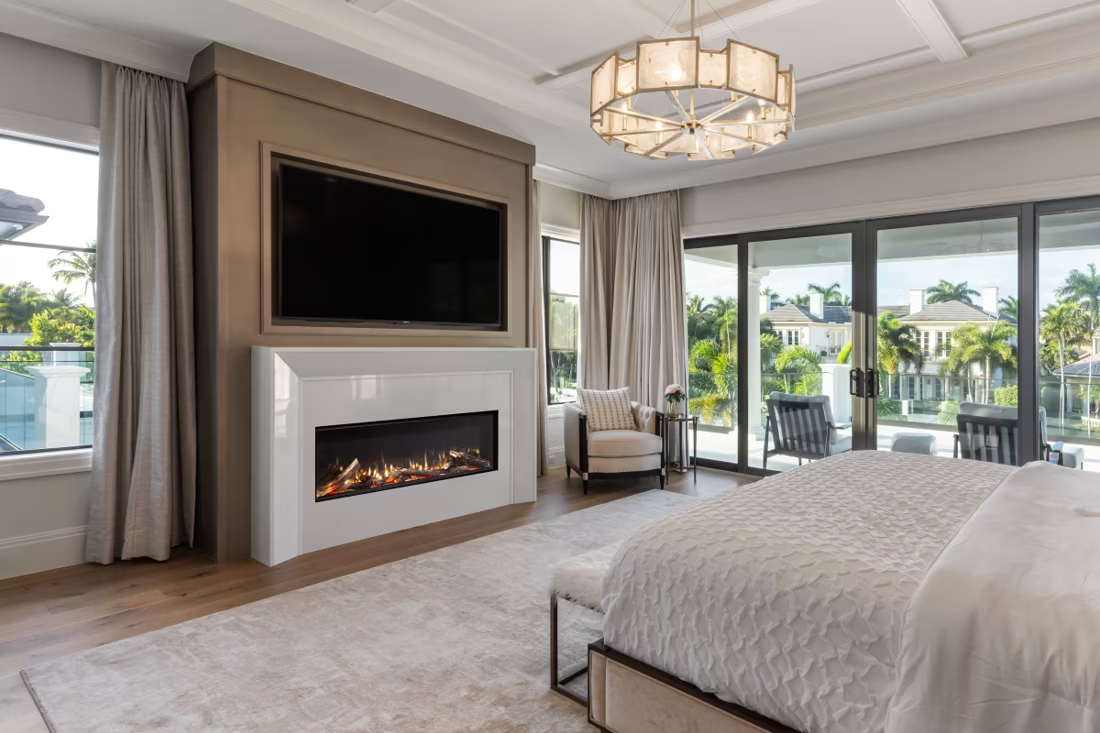
Yes—with an asterisk. Fireplaces are hot and TVs don't like heat. Either put a mantel between them to deflect rising warmth, or choose a fireplace with heat-management technology that creates a cool zone on the wall above—the wall stays around 125 degrees, barely warm, while the room still gets full heat. If you like clean lines and don't want a mantel, heat management is the answer.
Does an electric fireplace need a vent or chimney?
No—that's its superpower. An electric fireplace needs a wall and an outlet, period. No vent pipe, no gas line, no clearances to design around, which is why it works in bedrooms, offices, apartments, and walls where venting a gas or wood unit would be impractical or impossible. Installation is typically the simplest and least expensive of any fireplace type.
What is an in-home preview and do I need one?
It's a visit where a hearth professional measures your space, confirms the model you picked actually works in your home, and walks the specs—framing, gas line, venting, finish work—before anything is ordered. Some details you just can't know until you see the house. Never make a down payment without one; it's the single most-skipped step that burns buyers.
Does a fireplace add value to my home?
On average, a fireplace adds back to the home about the same amount you spent installing it. Add the monthly savings from heating the rooms you actually use instead of the whole house—often hundreds of dollars a year—and the value case is strong before you even count what a fire does for how your family uses the room.
Nearby Dealers
Hearth shops serving Greenfield and the surrounding area.
Electric Service in Greenfield
An electric fireplace's heater draws about 1,500 watts—pennies per hour at local rates.
Wisconsin Electric Power Co
Find your electric fireplace in Greenfield.
Tell us a bit about your home and we'll put together a free Project Guide & Parts List—the right electric fireplace or insert for your space, the exact parts you'll need, and a trusted local Greenfield dealer to install it.
Find Your Fireplace →