
Instant heat for Marquette County's long, cold winters.
Marquette County sees a long, demanding heating season each year, with winter lows that average 8°F—cold enough that a fireplace lighting instantly, at the flip of a switch, actually matters. Find the right gas fireplace, insert, or stove for your home in Montello, Westfield, Oxford, or anywhere else in the county, and connect with a trusted local dealer.
Every Project Starts From One of These Five Situations
Reliable heat when the cold settles in for months.
Marquette County sits in the heart of central Wisconsin, a rural county of roughly 4,800 residents spread across small towns like Montello (the county seat), Westfield, Oxford, Endeavor, Neshkoro, and Packwaukee. It's climate zone 6A country—winters running from November into April, average lows near 8°F, and a heating season about as long and demanding as Madison's coldest stretches, putting Marquette County's winters closer to that than to anything resembling a mild Midwest season. Wood has long been the backbone of heat here, with oak, maple, birch, and aspen common in local woodlots. But for a growing share of homeowners, gas fireplaces and inserts have become the practical choice for the room where the family actually gathers—instant heat without stacking, splitting, or feeding a fire through a long winter.
Because Marquette County is largely unincorporated and rural, natural gas mains reach only limited pockets within a few of the county's small towns—most homes here run on propane, delivered and stored in a tank on the property. That's not a drawback for a gas fireplace: propane-fired units perform identically to natural gas ones, and most manufacturers build every model to run on either fuel with the right orifice kit. What propane does mean is planning for a tank, if you don't already have one, as part of the installation—something a local dealer walks you through alongside venting and gas line work.
Three steps. No salesperson until you're ready.
Tell us about your project
Your zip code, your situation, and the fuel you're leaning toward—or let the answers point you to one.
See what's actually available
The brands dealers within 100 miles genuinely carry—real options, never a catalog mirage.
Get your dealer & Project Guide
A trusted local dealer, plus the free Project Guide & Parts List that names every component of the job.
Frequently Asked Questions
How much does a gas fireplace installation cost in Marquette County?
Costs vary more here than in a lot of counties, mainly because of the propane-vs-existing-gas-line question. If your home already has a propane tank and a gas line run to the area where you want the fireplace, a direct-vent gas insert into an existing masonry fireplace is usually the most affordable route. If you need a new propane tank installed, a longer gas line run, or new framing and venting for a built-in unit in a room with no existing fireplace, expect the project to cost more. A local dealer will walk your home and give you a firm number—venting path, gas line distance, and unit selection all factor into the final price.
Can I convert my existing wood fireplace to gas in Marquette County?
Yes, and it's a common project for homeowners with older masonry fireplaces in county homes. A gas insert slides into the existing firebox, uses a stainless liner run up your existing chimney for venting, and hooks into either an existing propane line or a new one run from your tank. The upgrade keeps the look of your original fireplace while trading split oak and maple for a switch-flip flame, and it removes the ash and creosote maintenance that comes with burning wood all winter.
Do I need natural gas, or does propane work for a gas fireplace?
Propane is the standard fuel for most of Marquette County. Natural gas mains are limited to small pockets within a few of the county's incorporated areas, and most rural properties—and even many in-town homes—run on propane delivered by a local supplier and stored in an above-ground or buried tank. This isn't a limitation for a gas fireplace: nearly every unit on the market is built to run on either fuel, and your dealer will configure the correct orifice and regulator for propane during installation. If you don't already have a tank, that's a separate conversation with a propane supplier your dealer can help coordinate.
Will my gas fireplace still work if the power goes out?
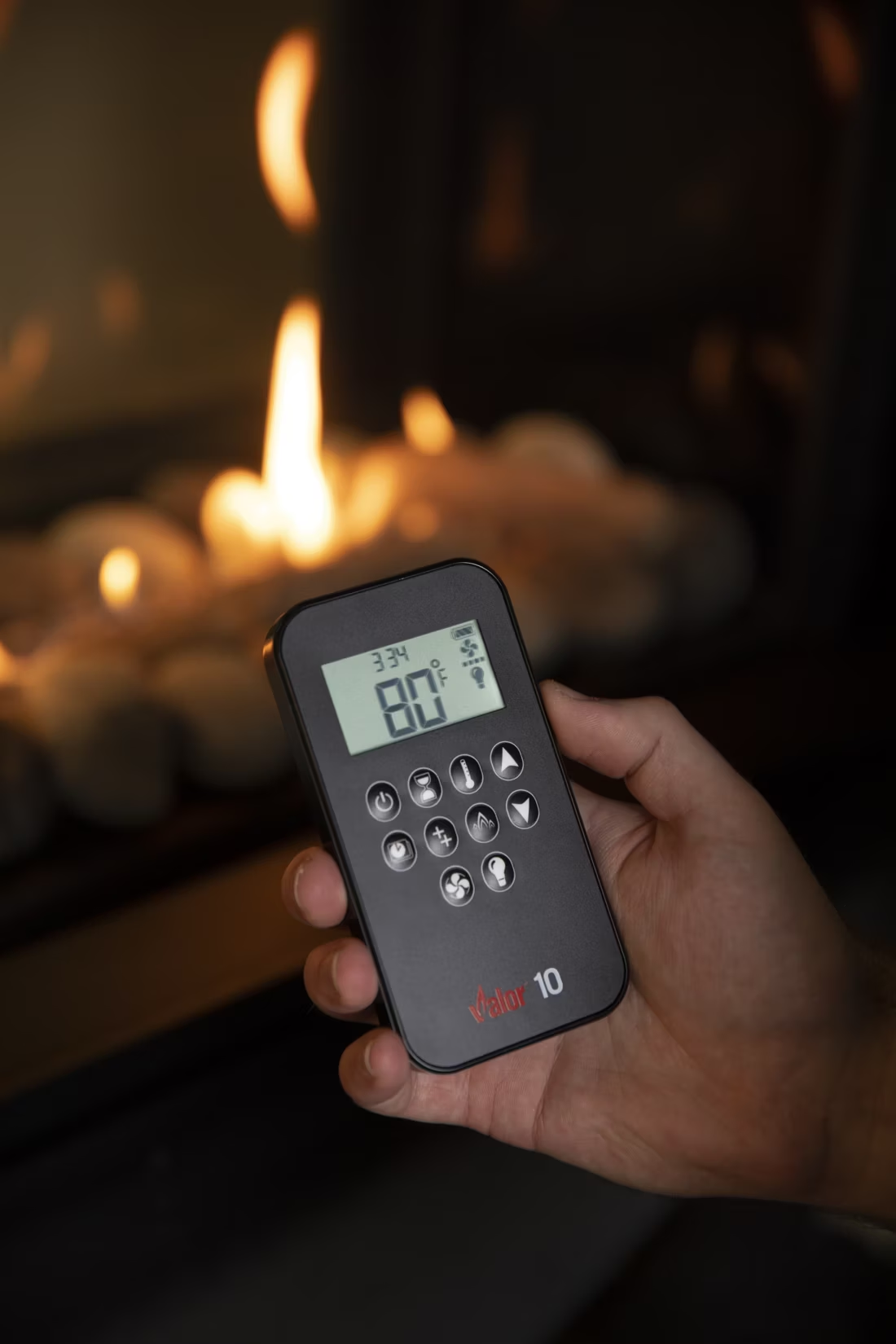
Most will, which matters in a county where winter storms can knock out power for hours or longer. Units with IPI (intermittent pilot ignition) run on a small battery backup—usually AA batteries inside the unit—that kicks in automatically and lets the fireplace light on demand with no power needed. Valor fireplaces take a different approach: their pilot assembly generates its own electricity through the thermocouple, so there's no battery to check or replace at all. For a Marquette County home where an outage during an 8°F night is a real possibility, ask your dealer about the ignition system before you buy.
What's the difference between a gas fireplace, a gas insert, and a gas stove?
A gas fireplace is a fully built-in unit, framed into a wall—the right call for new construction or a remodel where you're starting from scratch. A gas insert is built to slide into an existing masonry firebox, using your current chimney with a liner for venting—the common choice for older Marquette County farmhouses with a fireplace that's more decorative than functional at this point. A gas stove is a freestanding unit on its own hearth pad, similar in footprint to a wood stove but burning gas instead—a good option for a room with no existing fireplace and no interest in framing one in.
Do I need a permit to install a gas fireplace in Marquette County?
Yes. A new gas fireplace, insert, or stove installation requires a building permit through Marquette County's building permit office in Montello, along with a gas line permit for any new propane line work. The gas line portion specifically needs a licensed gas-fitter, which is one reason working with an established hearth dealer pays off—they coordinate the gas work, venting, and inspection sign-off together instead of leaving you to manage separate trades.
Should I get a vented or vent-free gas fireplace?
Vented, direct-vent units draw combustion air from outside and exhaust it back outside through sealed pipe—they're the safest option and the one most dealers install by default. Vent-free ("ventless") units burn directly into the room without external venting; they're legal in Wisconsin but come with strict room-sizing rules and an oxygen depletion sensor requirement, and they release some water vapor and combustion byproducts into your living space. For a Marquette County home in a climate zone this cold—where a fireplace often runs for hours at a stretch through a long winter evening—a vented direct-vent unit is almost always the better fit, both for indoor air quality and for real heat output.
How often does a gas fireplace need to be serviced?
Plan on an annual inspection, ideally before heating season starts each fall. A technician checks the burner, pilot assembly, gas connections, and venting, and cleans the glass and interior—a straightforward visit that typically runs $150 to $250. It's a smaller commitment than sweeping a wood chimney, but skipping it is the most common reason a fireplace stops lighting reliably right when a Marquette County cold snap hits.
Gas vs. wood—which is right for my Marquette County home?
Wood is deeply rooted here—oak, maple, birch, and aspen are all common in local woodlots, and a wood stove keeps burning with no electricity, which matters during a winter power outage. Gas trades that self-sufficiency for convenience: instant on-off operation, no splitting or stacking, and consistent heat without tending a fire through the evening. For daily use in the room where a family actually spends time, gas usually wins on convenience. Many county homes run both—gas in the main living area, wood elsewhere as backup heat or for the ritual of a real fire on a Saturday in January.
Is my gas fireplace wasting gas?
If it was installed more than 15 years ago, probably. Older gas fireplaces keep a standing pilot light burning all the time, and that little flame can cost a couple hundred dollars a year. Newer models use pilot-on-demand ignition—the pilot lights only when you use the fireplace and goes out when you turn it off.
What's the difference between an insert and a zero-clearance fireplace?
An insert is a fireplace that slides into a pre-existing wood-burning fireplace—if you don't have one, there's nothing to insert it into. A zero-clearance fireplace is built into a framed wall, which makes it the answer for remodels and new construction. Simple test: existing masonry fireplace means insert; blank or framed wall means zero-clearance.
Can I install a fireplace myself?
If you're putting a fire in your house on purpose, it's best to work with an expert. Unless you're genuinely experienced in framing, gas line, vent pipe, and the national code on clearances to combustibles, have a professional do it—and ideally the same company that sells you the fireplace, so warranty, service, and liability all live under one roof.
How much should I budget for a fireplace?
For an average home—covering the fireplace, the vent pipe, and basic installation—a budget between $3,900 and $5,500 gives you a lot of options across wood, gas, and pellet. By the time you add finish work, gas line, and electrical, the average complete installation lands between $5,000 and $12,000 all-in. In a remodel or new build, a good rule is to put about 2.5% of the total project cost toward the fireplace.
Stove and Fireplace Dealers in Marquette County
Listings include WhyFire partner dealers, dealers we have verified as authorized for the brands we recommend, and established local businesses that carry hearth products. Every listing shows which one it is. The ones marked Preferred run on WhyFire's software, so they can show you real pricing and book your appointment right here. No manufacturer pays for placement. How we verify dealers →
Bolder Services LLC
Shields Fireside Hearth & Home Of Baraboo
Dischler Heating – Cooling & Fireplaces, Inc.
Find your gas fireplace in Marquette County.
Tell us about your home and we'll match you with the right gas fireplace, insert, or stove, plus a free Project Guide & Parts List—the exact parts, including the vent kit, and a recommended local dealer who installs in Marquette County.
Find Your Fireplace →