
Built for Marquette County's Coldest Nights.
Wood, gas, pellet, and electric fireplace resources for every township in Marquette County—from Montello to Packwaukee—built for a heating season that averages 8°F lows and a long, demanding winter.
Every Project Starts From One of These Five Situations
Rural, wooded, and built for wood heat in central Wisconsin.
Marquette County sits in Wisconsin's Central Sands region, a landscape of glacial lakes, marshland around Buffalo Lake and Puckaway Lake, and hardwood forests full of oak, maple, birch, and aspen. Winters here run long—average lows near 8°F and a long, hard heating season put the county in the same cold-weather tier as Duluth, Minnesota. With a population under 5,000 spread thin across the county's townships, a lot of homes here sit on private woodlots, and cutting and seasoning your own firewood is still a normal part of getting ready for winter rather than a novelty.
What you'll find on this hub: hearth retailers, service technicians, and fuel suppliers covering every community in the county—Montello, Westfield, Endeavor, Packwaukee, Oxford, Neshkoro, and the unincorporated stretches between them. Pick your fuel below to see local dealers, real installation costs, and the units that actually make sense for a Marquette County winter, whether you're heating a lake cottage on Buffalo Lake or a farmhouse outside Neshkoro.
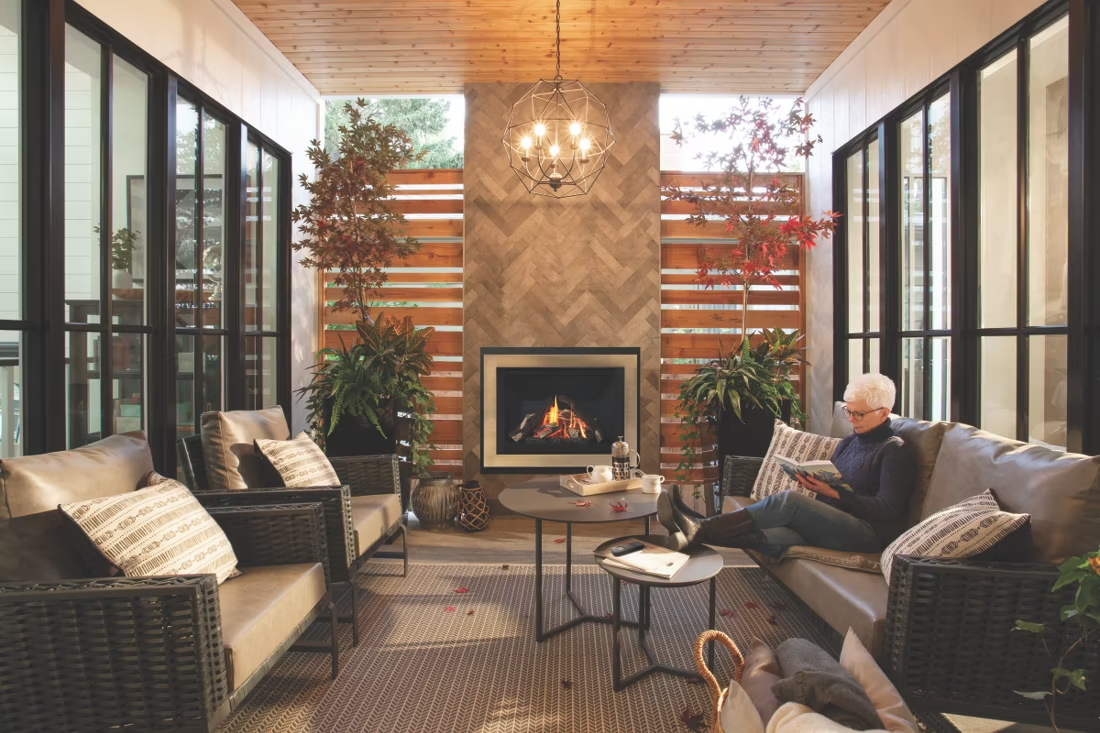
Four fuels. One honest answer for Marquette County.
Three steps. No salesperson until you're ready.
Tell us about your project
Your zip code, your situation, and the fuel you're leaning toward—or let the answers point you to one.
See what's actually available
The brands dealers within 100 miles genuinely carry—real options, never a catalog mirage.
Get your dealer & Project Guide
A trusted local dealer, plus the free Project Guide & Parts List that names every component of the job.
Frequently Asked Questions
Which fuel works best in Marquette County?
In a county where average winter lows sit around 8°F and the heating season runs long and hard—a cold season on par with Duluth, Minnesota—wood remains the backbone fuel for a lot of rural homes. Private woodlots thick with oak, maple, birch, and aspen keep firewood costs low for households willing to cut and season their own supply, and a well-run catalytic or non-catalytic wood stove can carry a farmhouse through a January cold snap without relying on the grid. Gas is the convenience option for homes on propane delivery, since natural gas mains are limited outside the incorporated villages, giving instant heat without hauling wood. Pellet stoves are a strong middle path—regional suppliers like Indeck Energy Services, Lignetics, and Somerset Pellet Fuel keep pellet costs steady, and a pellet stove burns cleaner and more automated than cordwood while still using hardwood-derived fuel. Electric fireplaces work well as supplemental heat in bedrooms or additions but won't carry a home through a Marquette County winter on their own. Plenty of households here run wood or pellet as primary heat with propane or electric as backup.
Do I need a permit to install a fireplace in Marquette County?
In most cases, yes. Whether you're in an incorporated village like Montello, Westfield, or Endeavor, or out in one of the county's unincorporated townships, a building permit is typically required for new wood stoves, wood inserts, gas fireplaces, gas inserts, gas stoves, and pellet stoves. Villages generally issue their own permits through the village clerk's office; unincorporated townships fall under Marquette County's zoning and building authority. Any wood-burning appliance installed today has to meet the EPA's 2020 NSPS emissions standards regardless of jurisdiction. Gas installations also require a licensed propane or gas-fitter for the fuel line connection and a separate permit for that portion of the work. Electric fireplaces are usually permit-exempt unless the install involves new wiring or a built-in unit tied into the home's electrical panel. Most local hearth retailers handle the permitting as part of the installation quote.
Are there wood-burning restrictions in Marquette County?
No—Marquette County has no air quality nonattainment designation and no seasonal burn curtailment days, unlike counties in smoke-prone basins out West. That said, any new wood stove sold and installed still has to meet the EPA's federal 2020 NSPS certification, and a handful of townships have nuisance-smoke ordinances that apply mainly to outdoor burning rather than certified indoor wood stoves. In practice, this means wood heat in Marquette County faces fewer regulatory hurdles than in many parts of the country—homeowners choosing wood aren't dealing with voluntary burn bans or advisory days the way they might elsewhere.
Can one local retailer handle all four fuel types?
Given the county's small population, most retailers serving Marquette County are based in nearby regional hubs—towns like Portage, Wisconsin Dells, or Wautoma—and carry multiple fuel types to support a customer base spread across several counties. It's common to find a single dealer stocking wood stoves, gas inserts, and pellet stoves side by side, since specializing in only one fuel type wouldn't support a viable business in an area this size. Electric fireplace selection tends to be more limited in-store, though most dealers can special-order units or point you to a supplier. If you want to compare fuels in person, look for a dealer with working display units for at least two of the four types.
How does service work in rural Marquette County?
With a population under 5,000 spread across the county's townships, most technicians covering Marquette County also serve Green Lake, Adams, and Waushara counties, driving in from regional hubs rather than being based locally. Expect to book chimney sweeps, gas inspections, and pellet stove service a few weeks ahead of the September-October rush, when everyone tries to get serviced before the first hard freeze. Properties on gravel roads or with long driveways sometimes see a modest trip charge added to the service call. Keeping a spare igniter or auger belt on hand for a pellet stove, or scheduling your chimney sweep early, saves you from being stuck waiting on a technician once temperatures drop toward that 8°F average low.
What's the typical cost range for fireplace installation across all fuel types in Marquette County?
Ranges vary by fuel and by how much existing infrastructure a home already has. Wood stove or insert installation: roughly $4,000-$8,500 for a typical install, more for new construction with full chimney work. Gas fireplace, insert, or stove: roughly $4,000-$10,000 depending on whether propane line work is needed. Pellet stove or insert: roughly $3,500-$7,000 for a typical install. Electric fireplace: $200-$2,500 for the unit, plus $300-$1,000 in labor for anything beyond a plug-and-play setup. Rural properties may see a modest travel fee added on top, since most installers are covering a wide multi-county service area rather than working out of a shop in town.
Wood, gas, pellet, or electric—how do I choose?
Match the fuel to your life, not the other way around. Wood: lowest fuel cost and total power-outage independence, but you're hauling and stacking. Gas: press a button, set a thermostat, no maintenance to speak of. Pellet: wood economics with automatic feeding, in exchange for weekly cleaning and a need for electricity. Electric: plugs in anywhere with honest supplemental heat. Nobody regrets the fuel that fits how they actually live.
Can a fireplace actually lower my heating bill?
Yes—by creating a comfort zone. A furnace heats every square foot of the house just to warm the one room you're in; a gas fireplace on low burns roughly a sixth of the gas a typical furnace does. Set the furnace around 55–60 degrees as a baseline, then heat the rooms your family actually uses. Families who heat this way commonly save $20–$60 a month.
What is an in-home preview and do I need one?
It's a visit where a hearth professional measures your space, confirms the model you picked actually works in your home, and walks the specs—framing, gas line, venting, finish work—before anything is ordered. Some details you just can't know until you see the house. Never make a down payment without one; it's the single most-skipped step that burns buyers.
I know I want a fireplace—where do I actually start?
Do two things today: snap a photo of the wall or fireplace you want to transform, and take a tape measure to the space—width, height, depth. Those two artifacts answer most of a hearth professional's first questions. Then settle fuel (wood, gas, pellet, or electric) and set a realistic budget: $3,900–$5,500 covers fireplace, vent, and basic install for most homes.
Stove and Fireplace Dealers in Marquette County
Listings include WhyFire partner dealers, dealers we have verified as authorized for the brands we recommend, and established local businesses that carry hearth products. Every listing shows which one it is. The ones marked Preferred run on WhyFire's software, so they can show you real pricing and book your appointment right here. No manufacturer pays for placement. How we verify dealers →
Bolder Services LLC
Shields Fireside Hearth & Home Of Baraboo
Dischler Heating – Cooling & Fireplaces, Inc.
Find your fireplace fit in Marquette County.
Tell us your fuel and your town, and we'll match you with a trusted local dealer and send over a free Project Guide & Parts List—the exact parts, vent kit, and recommended installer for your home.
Find Your Fireplace →