
Instant heat for Marquette County's coldest nights.
Clean, no-hassle warmth for Marquette County homes—from Montello to Westfield to the lake cabins around Buffalo Lake and Lake Puckaway. Find the right unit and connect with a trusted local dealer.
Every Project Starts From One of These Five Situations
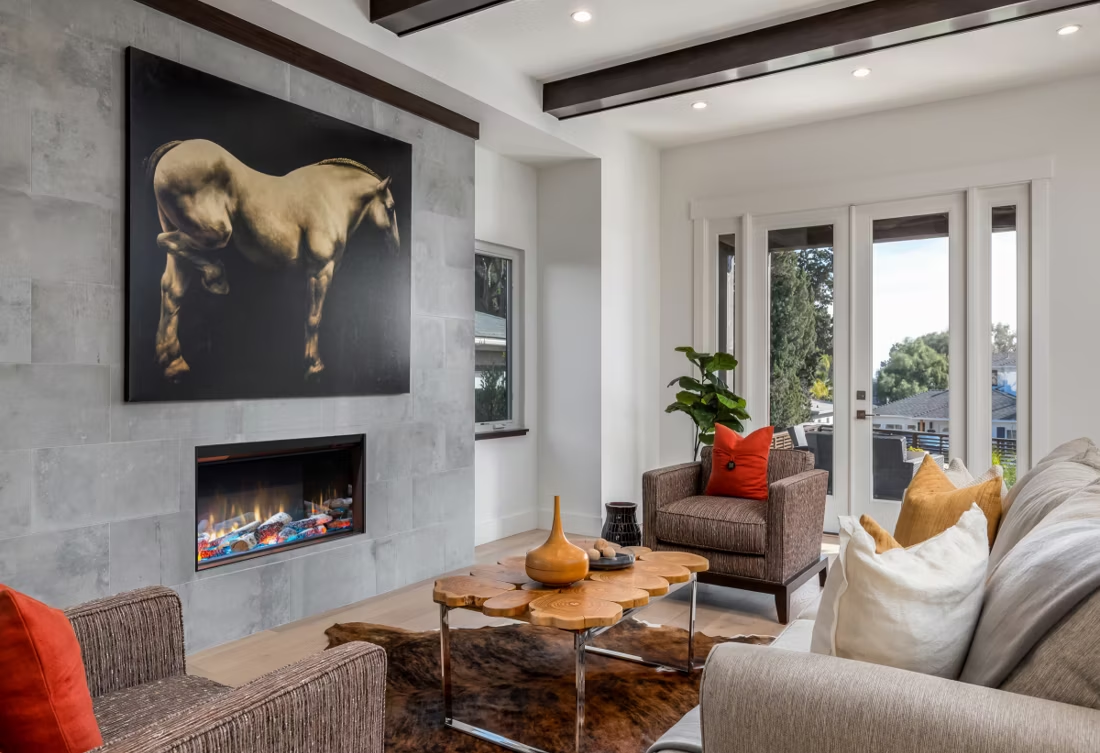
Simple heat and ambiance without the chimney.
Marquette County sits in Wisconsin's Central Sand Plains, a rural stretch of glacial lake-bed terrain dotted with small towns like Montello, Westfield, Oxford, Endeavor, and Neshkoro. With just under 4,800 residents spread across the county, winters here run long and cold—the average winter low sits around 8°F, and the county faces a heating season about as demanding as Duluth, Minnesota. That kind of sustained cold is why most homes here lean on a furnace or wood stove for primary heat, and turn to electric fireplaces for the supplemental warmth and ambiance a central HVAC system doesn't provide on its own.
Electric fireplaces are a standard fit in Marquette County—not because they replace the furnace, but because they solve a different problem. A zero-clearance electric insert or a wall-mounted unit adds real, adjustable heat to a bonus room, a finished basement, or a cabin along one of the county's lakes without cutting a chimney or running a gas line. There's no venting, no combustion byproducts, and no permit needed for a plug-in unit—though a hardwired built-in typically needs an electrical permit through the Marquette County Planning & Zoning Department. Power here comes through a mix of Alliant Energy service and rural cooperative territory served by providers like Adams-Columbia Electric Cooperative, and either can run an electric fireplace without issue—just know the unit's heat output is only as reliable as the grid it's plugged into.
Three steps. No salesperson until you're ready.
Tell us about your project
Your zip code, your situation, and the fuel you're leaning toward—or let the answers point you to one.
See what's actually available
The brands dealers within 100 miles genuinely carry—real options, never a catalog mirage.
Get your dealer & Project Guide
A trusted local dealer, plus the free Project Guide & Parts List that names every component of the job.
Frequently Asked Questions
How much does an electric fireplace installation cost in Marquette County?
Plug-in electric inserts and freestanding units typically run $150 to $600 installed—often it's just a matter of setting the unit in place and plugging it into an existing outlet. Built-in wall units and mantel packages that need a dedicated circuit usually run $1,000 to $2,500, including an electrician's time to run new wiring if a bonus room or finished basement doesn't already have the capacity. Because there's no chimney, no gas line, and no venting to account for, electric installs in Marquette County are consistently the least expensive hearth option and often finished in a single afternoon.
What's the best electric fireplace for a cold Wisconsin winter?
Look for a unit with a real heater rated around 4,600–5,000 BTU (roughly 1,500 watts) if you want it to meaningfully warm a room rather than just glow. Models from Dimplex and Napoleon are common local choices because their heaters cycle on a thermostat instead of running full blast constantly. That said, no electric fireplace is sized to replace a furnace when your average winter low is 8°F—it's built to take the edge off a specific room, like a converted porch or a bedroom over an unheated garage, while your primary heat source handles the rest of the house.
Will an electric fireplace work if the power goes out?
No—and this is worth being honest about. Electric fireplaces run entirely on grid power, so an outage means no flame effect and no heat, full stop. That matters in Marquette County because ice storms and high winds occasionally knock out service in the more rural stretches served by Adams-Columbia Electric Cooperative, sometimes for hours at a time. If backup heat during outages is a real concern, a wood stove or a battery-backed gas unit is a better primary choice—think of an electric fireplace as a convenience and ambiance feature, not a storm-preparedness tool.
Do I need a permit for an electric fireplace in Marquette County?
A plug-in electric insert or freestanding unit that uses an existing standard outlet doesn't require a permit. A hardwired built-in unit that needs a new dedicated circuit run to a wall or mantel does require an electrical permit through the Marquette County Planning & Zoning Department, since it's treated as an electrical improvement rather than a hearth appliance. Most local electricians and hearth dealers handle that paperwork as part of the installation, so it's rarely something homeowners have to manage themselves.
What's the difference between an electric fireplace, insert, and stove?
An electric fireplace is typically a built-in unit installed into a wall or mantel surround, designed to look like a traditional fireplace. An electric insert is sized to slide into an existing masonry firebox—a good option if you have an old wood fireplace in a Marquette County farmhouse that you want cleaner heat from without chimney maintenance. An electric stove is a freestanding cabinet-style unit that mimics a wood stove's look and can go almost anywhere there's an outlet. All three produce the same type of resistance or infrared heat—the difference is purely about form factor and where it fits in your space.
Electric vs. wood—which makes more sense for my Marquette County home?
Wood remains the primary or backup heat source for a lot of homes in the county, and it's easy to see why—oak, maple, birch, and aspen are all common locally, self-cut firewood is affordable, and a wood stove keeps working through a power outage. Electric fireplaces can't compete on raw heat output or storm resilience, but they win on convenience: no ash, no chimney sweep, no wood to stack, and instant on-off with a remote. In practice, a lot of Marquette County homeowners run both—wood for primary or backup heat in the main living space, electric in a bedroom, den, or finished basement where the ritual of a real fire isn't worth the mess.
What size electric fireplace do I need for my room?
Most electric fireplace heaters are rated to comfortably heat 400 to 1,000 square feet, which covers the vast majority of individual rooms in Marquette County homes—a bedroom, a den, a finished basement rec room. Bigger, open-concept spaces or rooms with a lot of window area, common in older farmhouses around Montello and Westfield, will feel the heat less evenly since electric units heat by convection and infrared rather than pushing warm air around like a furnace. For those larger or draftier rooms, treat the electric fireplace as ambiance-plus-supplemental heat rather than the room's sole heat source.
How much does it cost to run an electric fireplace?
A typical unit draws around 1,500 watts on the heater setting, which costs roughly 15 to 25 cents an hour to run depending on whether your service comes through Alliant Energy or a rural cooperative rate like Adams-Columbia Electric Cooperative's. Running the flame effect alone, with the heater off, costs a fraction of that—often just a few cents an hour—which is why a lot of homeowners here run the ambiance mode on cold but not brutal days and save the heater setting for when they actually want to warm the room.
Electric vs. pellet—which fits better in my home?
Pellet stoves burn compressed wood pellets—regional brands like Indeck Energy Services, Lignetics, and Somerset Pellet Fuel are all available in this part of Wisconsin—and they put out real, sustained heat that can handle a Marquette County winter as a primary or serious supplemental source. They do require a vent, a hopper to refill, and periodic ash cleanup. Electric fireplaces skip all of that: no venting, no fuel to buy or store, no maintenance beyond dusting—but the heat output and cost-per-BTU don't come close to pellet for whole-room heating on the coldest days. If you want serious sustained heat, pellet is the better tool; if you want low-maintenance ambiance with a heat boost on the side, electric is simpler.
Can I put a TV above my fireplace?
Yes—with an asterisk. Fireplaces are hot and TVs don't like heat. Either put a mantel between them to deflect rising warmth, or choose a fireplace with heat-management technology that creates a cool zone on the wall above—the wall stays around 125 degrees, barely warm, while the room still gets full heat. If you like clean lines and don't want a mantel, heat management is the answer.
Do electric fireplaces actually produce heat?
Yes—most put out around 4,800–5,000 BTUs from a standard outlet, which comfortably warms a bedroom, office, or den as a comfort-zone heater. What they won't do is carry a whole house the way wood, gas, or pellet can. Think of electric as ambiance-first with honest supplemental heat: flames on with no heat in July, flames plus warmth in January.
What is an in-home preview and do I need one?
It's a visit where a hearth professional measures your space, confirms the model you picked actually works in your home, and walks the specs—framing, gas line, venting, finish work—before anything is ordered. Some details you just can't know until you see the house. Never make a down payment without one; it's the single most-skipped step that burns buyers.
Can a fireplace actually lower my heating bill?
Yes—by creating a comfort zone. A furnace heats every square foot of the house just to warm the one room you're in; a gas fireplace on low burns roughly a sixth of the gas a typical furnace does. Set the furnace around 55–60 degrees as a baseline, then heat the rooms your family actually uses. Families who heat this way commonly save $20–$60 a month.
Stove and Fireplace Dealers in Marquette County
Listings include WhyFire partner dealers, dealers we have verified as authorized for the brands we recommend, and established local businesses that carry hearth products. Every listing shows which one it is. The ones marked Preferred run on WhyFire's software, so they can show you real pricing and book your appointment right here. No manufacturer pays for placement. How we verify dealers →
Bolder Services LLC
Shields Fireside Hearth & Home Of Baraboo
Dischler Heating – Cooling & Fireplaces, Inc.
Find your electric fireplace in Marquette County.
Tell us a bit about your home and we'll match you with the right electric fireplace, insert, or stove—and connect you with a trusted local dealer who can hand you a free Project Guide & Parts List built for your space.
Find Your Fireplace →