
Gas heat that keeps up with Iron County's subzero nights.
From Hurley to Mercer to the cabins along the Turtle-Flambeau Flowage and Lake Superior shoreline, Iron County sees some of the coldest, longest winters in the Midwest. Find the right propane or gas fireplace for your home or cabin, and connect with a trusted local dealer.
Every Project Starts From One of These Five Situations
Propane-powered comfort in Wisconsin's harshest climate zone.
Iron County sits in climate zone 7—the same brutal-winter classification as International Falls, Minnesota—with roughly 9,205 heating degree days a year and average winter lows hovering around 3°F, though nights well below zero are routine from Hurley to Mercer to the Saxon Harbor area along Lake Superior. With a year-round population of just over 3,000 spread across a heavily forested county bordering Michigan's Upper Peninsula, a large share of the building stock is seasonal cabins and hunting camps rather than full-time residences—heating decisions here often have to account for a structure that sits empty and unheated for weeks between visits.
Natural gas mains don't reach most of Iron County's small towns and unincorporated townships, so propane is the standard fuel for gas fireplaces here, delivered and stored in an on-site tank by regional suppliers serving the Hurley-to-Mercer corridor. That makes a propane fireplace or insert a practical complement to the county's deep wood-heating tradition—oak, maple, birch, and aspen from the Ottawa and Chequamegon-Nicolet National Forests remain the common firewood species—with many homeowners running wood as primary heat and adding a propane fireplace for the zone heating and instant, no-tending warmth that matters most in a cabin you want warm minutes after arrival.
Three steps. No salesperson until you're ready.
Tell us about your project
Your zip code, your situation, and the fuel you're leaning toward—or let the answers point you to one.
See what's actually available
The brands dealers within 100 miles genuinely carry—real options, never a catalog mirage.
Get your dealer & Project Guide
A trusted local dealer, plus the free Project Guide & Parts List that names every component of the job.
Frequently Asked Questions
How much does a gas fireplace installation cost in Iron County?
In a rural, propane-dependent county like Iron, a typical gas fireplace installation runs roughly $3,800 to $10,000. The low end covers a direct-vent propane insert dropped into an existing masonry fireplace where a propane tank and line already serve the home—common in older Hurley and Montreal houses built around wood heat. The high end covers new construction or cabin projects that need a fresh propane tank set, a buried or above-ground line run, framing, and venting—more typical for camps around Mercer or the Turtle-Flambeau Flowage being upgraded from wood-only heat. Because propane delivery trucks have to reach some fairly remote roads in this county, expect a modest travel or delivery line item on top of the base install quote.
Can I convert my existing wood fireplace to gas in Iron County?
Yes, and it's a common upgrade for the older wood-heated homes scattered across Hurley, Pence, and Gile. A propane insert goes into your existing masonry fireplace with a stainless liner run up the current chimney, so you keep the look of the original hearth but gain instant, thermostat-controlled heat. Because natural gas mains don't extend into most of Iron County, the conversion almost always means adding or tapping into a propane tank rather than a piped gas main—factor that into your budget if the home doesn't already have propane service for a furnace or water heater.
Is natural gas available in Iron County, or is it all propane?
It's almost entirely propane. Iron County's small population—just over 3,000 spread across a heavily forested area bordering Michigan's Upper Peninsula—has never supported the kind of natural gas main infrastructure you'd find in a larger Wisconsin city. Homes and cabins from Hurley to Saxon to the Lake Superior shoreline rely on propane tanks filled by regional bulk delivery services. Any gas fireplace installed here will almost certainly run on propane rather than piped natural gas.
Will my gas fireplace work during a power outage?
Most direct-vent propane fireplaces with intermittent pilot ignition (IPI) include a battery backup that keeps the unit firing even when the grid is down—a real consideration in a zone-7 county where ice storms and heavy lake-effect snow off Lake Superior can knock out power for days. Valor's lineup goes a step further: their fireplaces generate their own electricity from the pilot's thermocouple, so there's no battery to remember to replace. For seasonal cabins around Mercer or the Flowage that sit unattended for stretches, that kind of self-powered backup heat also doubles as insurance against frozen pipes during a winter outage.
What's the difference between a gas fireplace, gas insert, and gas stove?
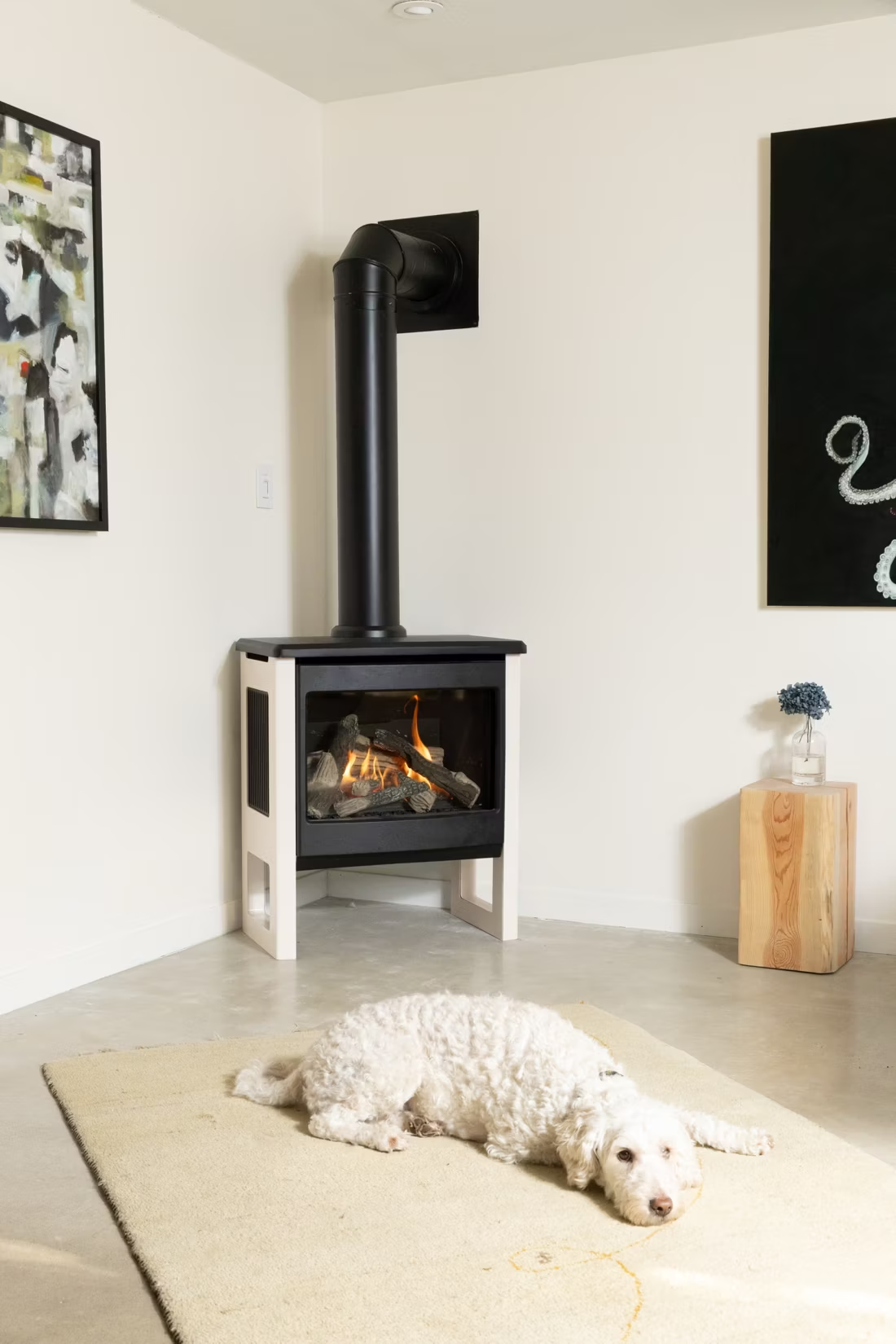
A gas fireplace is a built-in unit framed into a wall—the right call for new cabin construction or a remodel with no existing hearth. A gas insert slides into an existing masonry fireplace opening and uses the chimney as its vent path, which fits a lot of Iron County's older wood-heated farmhouses and hunting camps. A gas stove is a freestanding cabinet-style unit that sits on a hearth pad, which works well in a smaller cabin or bunkhouse without a full fireplace opening. A local dealer can walk through which option fits your specific structure.
Do I need a permit to install a gas fireplace in Iron County?
Yes—expect to pull a building permit through Iron County's permitting office, plus sign-off on the propane line work from a licensed gas-fitter or the propane supplier itself. Tank placement, including setback from the structure and property lines, is also regulated, which matters on the smaller lots common around Hurley and Montreal. Most established local hearth dealers coordinate the permit, the propane hookup, and the final inspection as part of the install, so you're not left juggling separate contractors.
Should I choose a vented or vent-free gas fireplace in Iron County?
Vented (direct-vent) units draw combustion air from outside and exhaust it back outside through sealed venting—the safer, code-clean choice almost everyone in this climate should default to. Vent-free units burn directly into the room and release some moisture and combustion byproducts indoors; in a county averaging over 9,000 heating degree days a year, that extra humidity can contribute to condensation and window frost in a tightly sealed cabin. Wisconsin allows vent-free units within specific room-sizing and ventilation rules, but for a primary heat source or a cabin you want reliably warm through an Iron County winter, direct-vent is the better long-term bet.
How often should a propane fireplace be serviced?
Plan on an annual inspection, ideally in late summer or early fall before the heating season sets in around Iron County. A technician checks the burner, pilot assembly, venting, and propane line connections, and cleans the glass. For cabins that sit closed up for weeks between visits, it's also worth having the unit checked at the start of each season before you rely on it, since pilot assemblies and battery backups can develop issues while sitting idle.
Gas vs. wood—which makes more sense in Iron County?
Wood has deep roots here—oak, maple, birch, and aspen are all common local species, and Forest Service cutting permits through the Ottawa and Chequamegon-Nicolet National Forests run just $10 to $20 per cord during the May-through-October season, making self-cut firewood genuinely cheap. Wood also doesn't depend on a propane delivery truck reaching your road. Gas, on the other hand, offers instant, thermostat-controlled heat with no daily tending—valuable for a cabin visited sporadically or for anyone who'd rather not split and stack wood through a Northwoods winter that runs long. Many Iron County households end up with both: wood as the primary heat source for cost and reliability, and a propane fireplace or insert for convenience and quick warmth on arrival.
Why is a fireplace insert so efficient?
An insert does two things: it seals the chimney completely, so you stop losing air you already paid to heat, and it radiates warmth into the room through the firebox and glass. Most add a heat-exchange fan that pulls cool room air underneath, wraps it around the hot firebox, and pushes it back out warm. Your home is more efficient before you've even lit the first fire.
Is my gas fireplace wasting gas?
If it was installed more than 15 years ago, probably. Older gas fireplaces keep a standing pilot light burning all the time, and that little flame can cost a couple hundred dollars a year. Newer models use pilot-on-demand ignition—the pilot lights only when you use the fireplace and goes out when you turn it off.
Can a fireplace actually lower my heating bill?
Yes—by creating a comfort zone. A furnace heats every square foot of the house just to warm the one room you're in; a gas fireplace on low burns roughly a sixth of the gas a typical furnace does. Set the furnace around 55–60 degrees as a baseline, then heat the rooms your family actually uses. Families who heat this way commonly save $20–$60 a month.
What is an in-home preview and do I need one?
It's a visit where a hearth professional measures your space, confirms the model you picked actually works in your home, and walks the specs—framing, gas line, venting, finish work—before anything is ordered. Some details you just can't know until you see the house. Never make a down payment without one; it's the single most-skipped step that burns buyers.
Stove and Fireplace Dealers in Iron County
Listings include WhyFire partner dealers, dealers we have verified as authorized for the brands we recommend, and established local businesses that carry hearth products. Every listing shows which one it is. The ones marked Preferred run on WhyFire's software, so they can show you real pricing and book your appointment right here. No manufacturer pays for placement. How we verify dealers →
Stove & Fireplace Works
Earth Sense Energy Systems - Sayner
Fireside Hearth & Home Minocqua Dnm
Hearth Xpressions
Trappers Fireplace Gallery
Find your gas fireplace in Iron County.
Tell us about your home or cabin and we'll match you with the right propane or gas fireplace, insert, or stove—plus a free Project Guide & Parts List with your recommended local dealer.
Find Your Fireplace →