
Electric heat for Iron County's north woods and lake cabins.
No chimney, no gas line, no wood to split—just heat where you need it, from Hurley to the Turtle-Flambeau Flowage. Find the right unit for a zone 7 winter and connect with a trusted local installer.
Every Project Starts From One of These Five Situations
The easiest heat source for Iron County's cabins and additions.
Iron County sits in climate zone 7—the coldest classification used in the continental U.S.—with an average winter low near 3°F and a heating season about as demanding as Duluth on the other side of Lake Superior. That kind of cold means wood, propane, and fuel oil do the heavy lifting in most Iron County homes. Electric fireplaces aren't trying to replace that. They fill a different role: fast, no-venting warmth for a lake room addition, a finished basement, a garage, or a small cabin where running a chimney or a new gas line isn't worth the cost or the wait.
With a population of just over 3,000 spread across towns like Hurley, Mercer, Montreal, and Saxon, a lot of Iron County's building stock is seasonal—camps and cabins around the Turtle-Flambeau Flowage and near Saxon Harbor on Lake Superior that sit empty for stretches of the year. Many of these properties are served by rural electric cooperatives rather than a piped gas main, which makes an electric fireplace the simplest upgrade available: plug it in or run a dedicated circuit, and you have heat and ambiance with zero emissions and no wood to haul in from the Ottawa or Chequamegon-Nicolet National Forest permit areas.
Three steps. No salesperson until you're ready.
Tell us about your project
Your zip code, your situation, and the fuel you're leaning toward—or let the answers point you to one.
See what's actually available
The brands dealers within 100 miles genuinely carry—real options, never a catalog mirage.
Get your dealer & Project Guide
A trusted local dealer, plus the free Project Guide & Parts List that names every component of the job.
Frequently Asked Questions
How much does it cost to install an electric fireplace in Iron County?
Plug-in electric fireplace inserts and stoves are the least expensive hearth product on the market—many units cost less than a load of split oak and simply plug into a standard 120V outlet with no installation labor at all. Built-in electric fireplaces that require a dedicated 240V circuit, in-wall wiring, or custom framing cost more, but still far less than a masonry chimney rebuild or a new propane line run out to a cabin near the Flowage. A local electrician or hearth dealer can quote the exact cost once they know whether you're adding a circuit or just plugging in.
Can an electric fireplace actually heat a home in a zone 7 climate like Iron County?
Not as a whole-house solution. Electric resistance heat gets expensive fast when outdoor temperatures sit near 3°F for weeks at a time, and Iron County's long, demanding heating season puts real strain on any single-source electric setup. Most homeowners here use electric fireplaces as zone heat—warming a specific room, an addition, or a cabin bedroom—while wood, propane, or a furnace handles the bulk of the load. If you're heating a small, well-insulated seasonal cabin, an electric unit can carry more of the burden, but it's worth being honest about that limitation before you buy.
Do I need a permit for an electric fireplace in Iron County?
Usually not for a plug-in unit—there's no venting or gas work involved, so most jurisdictions treat it like any other appliance. If you're installing a built-in electric fireplace that requires a new dedicated circuit, an electrician will typically pull an electrical permit through the Iron County building office as part of the job. There's no cutting permit or air-quality consideration to worry about the way there is with wood, which is one of the reasons electric units are popular for additions and rentals where paperwork is a hassle.
What's the difference between an electric fireplace, insert, and stove?
An electric fireplace is typically a built-in unit set into a wall or a custom mantel surround, made for new construction or a remodel. An electric insert is sized to slide into an existing masonry or wood-stove firebox, which makes it a common choice for Iron County homes with an old fireplace they'd rather not use for wood anymore. An electric stove is a freestanding cabinet-style unit that mimics a wood stove's footprint but needs no chimney or clearance to combustibles beyond what's on the label. For most cabin and seasonal-home projects around Iron County, the insert or freestanding stove is the easiest retrofit.
Will my electric fireplace work during a power outage?
No—and this matters more in Iron County than in most places. Rural electric cooperatives serving the county can see extended outages during heavy lake-effect snow or ice events, and an electric fireplace goes dark right along with everything else. This is the main reason so many Iron County households keep a wood stove or fireplace as backup heat, often burning oak, maple, birch, or aspen cut under a Forest Service permit through the Ottawa or Chequamegon-Nicolet National Forest for $10–$20 a cord. Treat electric as your convenient daily-use option, not your storm plan.
Is an electric fireplace a good fit for a lake cabin or seasonal property in Iron County?
Often, yes. For camps around the Turtle-Flambeau Flowage or along Lake Superior near Saxon Harbor that sit closed up for parts of the year, an electric fireplace gives you instant ambiance and warmth the moment you arrive, with none of the maintenance a wood stove needs between visits and no risk of a chimney or flue problem developing while the place is empty. It's also easy to shut off completely when you leave, which matters for insurance and peace of mind on an unattended property.
What size electric fireplace do I need for my space?
Electric fireplaces are rated in square footage the same way space heaters are, and most models in the 1,400–1,500 watt range are built to take the edge off a single room of 400–1,000 square feet—not to overcome Iron County's design-day cold on their own. For a lake room addition or a cabin bedroom, that's usually plenty. For a larger open living area, you may want two zones or a supplemental heat source rather than oversizing a single unit, since electric heat output doesn't scale the way a wood stove's firebox does. A local dealer can size the unit against your room's actual insulation and window area.
Electric vs. wood—which is right for my Iron County home?
Wood remains the backbone of home heating for a lot of Iron County households, and for good reason: it works without power, it's inexpensive to source locally with oak, maple, birch, and aspen cut under a national forest permit, and it can genuinely heat a whole house through a zone 7 winter. Electric fireplaces don't compete with that—they compete with propane space heaters and baseboard units for targeted, no-mess, no-venting heat in a specific room. Most Iron County homes that add an electric fireplace already have wood or propane doing the primary heating job elsewhere in the house.
Where can I find a trusted local dealer to install an electric fireplace in Iron County?
I'm not a manufacturer or a store—Find My Fireplace matches you with a trusted local dealer who actually installs and stands behind electric fireplaces in Iron County's towns and lake communities, rather than pointing you toward a big-box unit nobody local will service. Tell us about your space—a cabin near the Flowage, an addition in Hurley, a rec room in Mercer—and we'll connect you with a nearby installer and send over a free Project Guide & Parts List so you know exactly what the job requires before anyone shows up.
Can I put a TV above my fireplace?
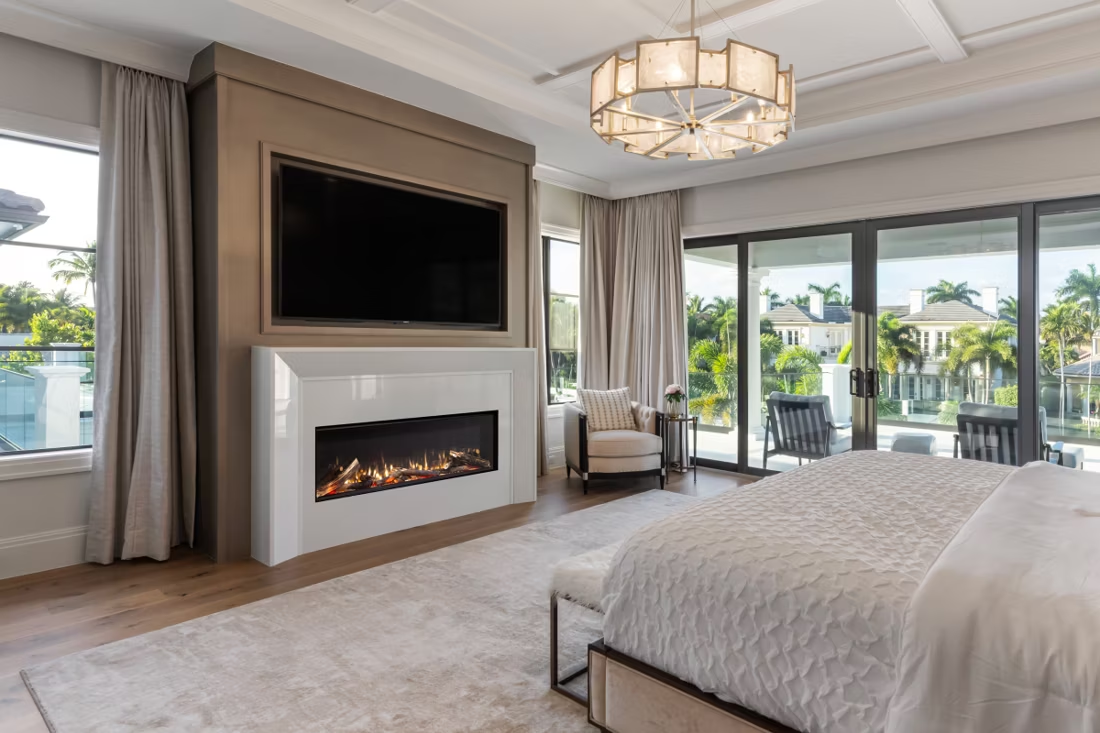
Yes—with an asterisk. Fireplaces are hot and TVs don't like heat. Either put a mantel between them to deflect rising warmth, or choose a fireplace with heat-management technology that creates a cool zone on the wall above—the wall stays around 125 degrees, barely warm, while the room still gets full heat. If you like clean lines and don't want a mantel, heat management is the answer.
Does an electric fireplace need a vent or chimney?
No—that's its superpower. An electric fireplace needs a wall and an outlet, period. No vent pipe, no gas line, no clearances to design around, which is why it works in bedrooms, offices, apartments, and walls where venting a gas or wood unit would be impractical or impossible. Installation is typically the simplest and least expensive of any fireplace type.
What is an in-home preview and do I need one?
It's a visit where a hearth professional measures your space, confirms the model you picked actually works in your home, and walks the specs—framing, gas line, venting, finish work—before anything is ordered. Some details you just can't know until you see the house. Never make a down payment without one; it's the single most-skipped step that burns buyers.
Can I install a fireplace myself?
If you're putting a fire in your house on purpose, it's best to work with an expert. Unless you're genuinely experienced in framing, gas line, vent pipe, and the national code on clearances to combustibles, have a professional do it—and ideally the same company that sells you the fireplace, so warranty, service, and liability all live under one roof.
Stove and Fireplace Dealers in Iron County
Listings include WhyFire partner dealers, dealers we have verified as authorized for the brands we recommend, and established local businesses that carry hearth products. Every listing shows which one it is. The ones marked Preferred run on WhyFire's software, so they can show you real pricing and book your appointment right here. No manufacturer pays for placement. How we verify dealers →
Stove & Fireplace Works
Earth Sense Energy Systems - Sayner
Fireside Hearth & Home Minocqua Dnm
Hearth Xpressions
Trappers Fireplace Gallery
Find your electric fireplace in Iron County, WI.
Tell us about your cabin, addition, or main living space, and we'll match you with a trusted local dealer and send you a free Project Guide & Parts List for your Iron County electric fireplace project.
Find Your Fireplace →