
Built for the coldest county in Wisconsin.
Wood, gas, pellet, and electric fireplace resources for every town in Iron County—from Hurley to Mercer to the Turtle-Flambeau Flowage backcountry. Find the right unit and connect with a trusted local hearth retailer.
Every Project Starts From One of These Five Situations
9,205 heating degree days on the Wisconsin-Michigan border.
Iron County sits in USDA/DOE Climate Zone 7—the same brutal-winter band as Duluth and International Falls—with an average winter low of 3°F and over 9,200 heating degree days a year. That puts it among the coldest counties in the Midwest outside Alaska. With only about 3,000 residents spread across nearly 900 square miles of forest, lakes, and the southern edge of Lake Superior's snowbelt, most homes here are heavily dependent on supplemental or primary heat beyond the furnace, and the heating season regularly runs from September through May. Oak, maple, birch, and aspen are the dominant local firewood species, split from private woodlots or cut under permit from the Ottawa National Forest and the Chequamegon-Nicolet National Forest, both of which border the county.
This hub covers hearth retailers, service technicians, and fuel suppliers across Iron County—Hurley, Montreal, Saxon, and the unincorporated lake communities around Mercer and the Turtle-Flambeau Flowage. Pick your fuel below for local dealers, real installed-cost ranges, and unit recommendations suited to this climate. Whether you're heating a Hurley bungalow or a hunting cabin off the grid near Solberg Lake, this is the starting point.
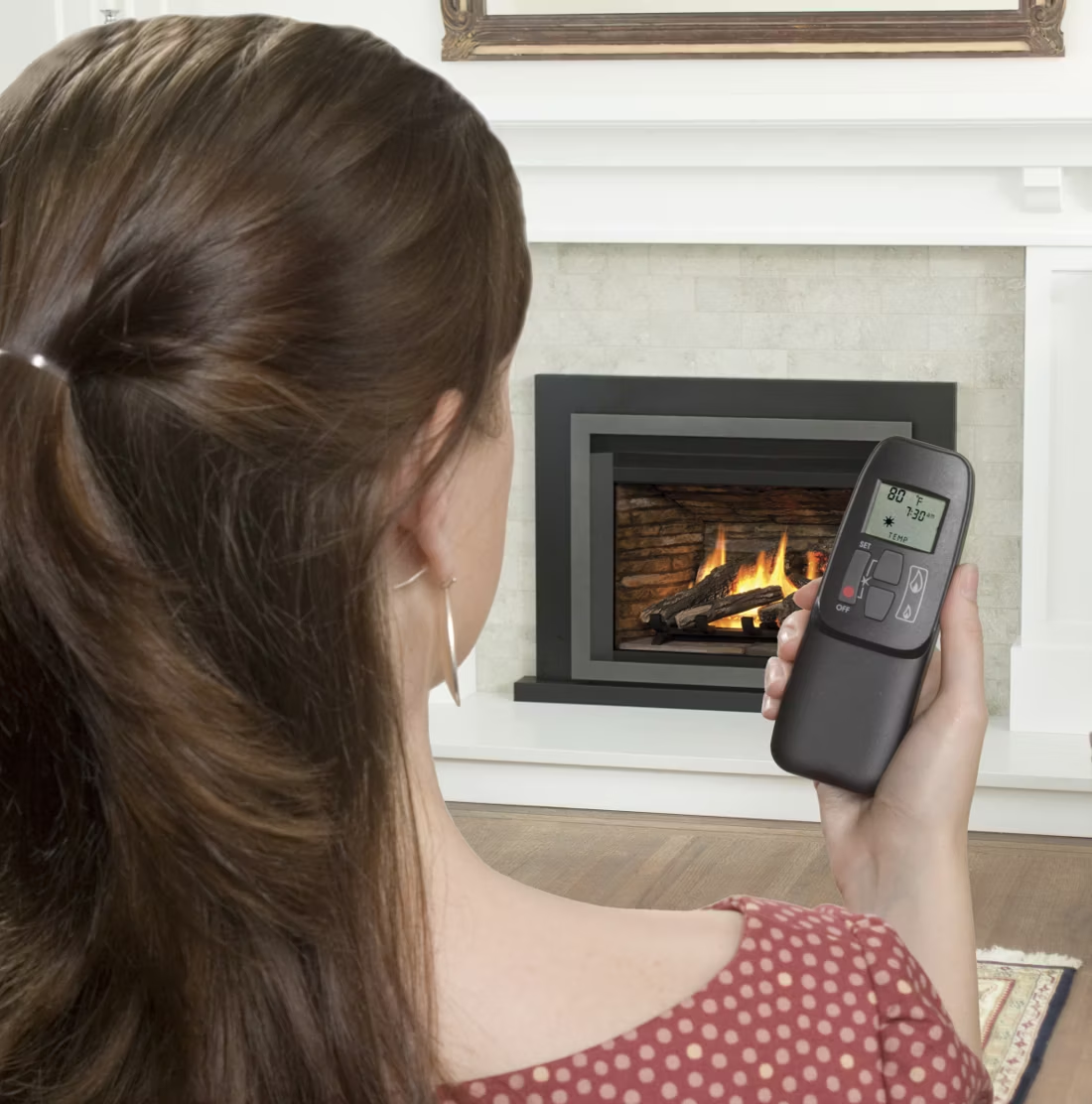
Four fuels. One honest answer for Iron County.
Three steps. No salesperson until you're ready.
Tell us about your project
Your zip code, your situation, and the fuel you're leaning toward—or let the answers point you to one.
See what's actually available
The brands dealers within 100 miles genuinely carry—real options, never a catalog mirage.
Get your dealer & Project Guide
A trusted local dealer, plus the free Project Guide & Parts List that names every component of the job.
Frequently Asked Questions
Which fireplace fuel makes the most sense for a home in Iron County?
Given 9,205 heating degree days and average winter lows around 3°F, most Iron County homeowners choose a fuel for sustained heat output, not ambiance. Wood remains extremely common—split oak, maple, birch, and aspen are locally abundant, and a well-run catalytic or non-cat wood stove can carry a home through an overnight stretch of single-digit or sub-zero temperatures the way it does in Duluth or International Falls. Propane (piped natural gas is limited this far north) is the convenience choice—automatic ignition and no wood-hauling, popular as a primary or backup heat source when homeowners are away for stretches at deer camp or during the work week. Pellet stoves are a strong middle option—regional supply from Indeck Energy Services, Lignetics, and Somerset Pellet Fuel keeps fuel available locally, and pellet stoves run cleaner and more hands-off than cordwood. Electric fireplaces are supplemental only here—helpful for a bedroom or den, but not adequate as primary heat given how long and cold the season runs.
Do I need a permit to install a wood stove or gas fireplace in Iron County?
Yes, in nearly all cases. Iron County requires building permits for new wood stoves, wood inserts, gas fireplaces, gas inserts, and pellet stoves, and any gas connection work requires a licensed propane installer or gas-fitter in addition to the building permit. If you're cutting your own firewood on national forest land, you'll also need a separate cutting permit from the Ottawa National Forest or Chequamegon-Nicolet National Forest ranger district, which is a different process from the building permit for the stove itself. Electric fireplace installs typically skip the building permit unless they involve a built-in unit requiring new wiring or a dedicated circuit. Most local hearth retailers in Hurley and the surrounding area handle the permit paperwork as part of a full installation.
Are there air quality restrictions on wood burning in Iron County?
No—Iron County has no designated air quality non-attainment areas or winter burn curtailment programs, unlike more urbanized counties in western states with inversion-prone basins. That said, new wood stove installations still need to meet current EPA emissions standards to be sold and installed, and a well-seasoned, properly sized stove burning oak or maple will always perform cleaner and hold heat longer overnight than an oversized, unseasoned-wood setup. Given how many burn hours a stove logs in a county with 9,205 heating degree days, choosing efficient, correctly sized equipment matters for both heat output and chimney longevity, even without a regulatory mandate pushing it.
How much does it cost to install a wood stove or fireplace insert in Iron County?
Costs run comparable to other rural, cold-climate counties in northern Wisconsin and the Upper Peninsula, sometimes slightly higher due to travel distances for retailers and installers. Expect roughly $4,500–$9,500 for a typical wood stove or insert installation with new stainless chimney liner or Class A pipe, and up to $14,000–$16,000 for full masonry chimney construction in new-build or major renovation projects. Propane fireplaces or inserts run $4,500–$11,000 depending on whether an existing propane tank and line are already in place. Pellet stoves typically land in the $4,500–$7,500 range installed. Electric fireplaces are the cheapest entry point—$200–$3,000 for the unit itself, plus $400–$1,200 in labor for anything beyond a plug-and-play wall unit. Rural travel fees from Hurley- or Ashland-based installers can add to any of these ranges.
What's the best wood to burn in an Iron County stove, and where do I get it?
Oak and maple are the preferred species locally for BTU output and long, even burns—both are common in the hardwood stands throughout the county and hold up well for overnight burns in sub-zero conditions. Birch burns hot and fast, useful for quick heat or kindling but not ideal alone for an all-night burn. Aspen is the lowest-BTU of the four and usually best mixed with a denser species rather than burned on its own. Many residents cut their own firewood under permit through the Ottawa National Forest or Chequamegon-Nicolet National Forest ranger districts, both of which border the county, while others buy split, seasoned cordwood from local suppliers—either way, wood should be seasoned at least 6–12 months before burning to avoid the creosote buildup that heavy winter use accelerates.
How does fireplace service and repair work in a county with only about 3,000 people?
Service technicians covering Iron County are generally based in Hurley or drive in from Ashland, Wisconsin, or Ironwood, Michigan, since the county's small population doesn't support a dedicated technician on every corner. Expect to schedule chimney sweeping, gas appliance inspection, or pellet stove cleaning in the late summer or early fall (August–September)—appointments get harder to book once cold weather sets in and demand for emergency repairs rises. A modest rural travel fee, often $50–$100, is common for service calls outside Hurley proper. Given how many hours a wood stove or furnace runs annually here, an annual pre-season inspection is worth the scheduling effort—it's far cheaper than an emergency mid-January chimney fire call.
Can a fireplace actually lower my heating bill?
Yes—by creating a comfort zone. A furnace heats every square foot of the house just to warm the one room you're in; a gas fireplace on low burns roughly a sixth of the gas a typical furnace does. Set the furnace around 55–60 degrees as a baseline, then heat the rooms your family actually uses. Families who heat this way commonly save $20–$60 a month.
Wood, gas, pellet, or electric—how do I choose?
Match the fuel to your life, not the other way around. Wood: lowest fuel cost and total power-outage independence, but you're hauling and stacking. Gas: press a button, set a thermostat, no maintenance to speak of. Pellet: wood economics with automatic feeding, in exchange for weekly cleaning and a need for electricity. Electric: plugs in anywhere with honest supplemental heat. Nobody regrets the fuel that fits how they actually live.
Can I install a fireplace myself?
If you're putting a fire in your house on purpose, it's best to work with an expert. Unless you're genuinely experienced in framing, gas line, vent pipe, and the national code on clearances to combustibles, have a professional do it—and ideally the same company that sells you the fireplace, so warranty, service, and liability all live under one roof.
How much should I budget for a fireplace?
For an average home—covering the fireplace, the vent pipe, and basic installation—a budget between $3,900 and $5,500 gives you a lot of options across wood, gas, and pellet. By the time you add finish work, gas line, and electrical, the average complete installation lands between $5,000 and $12,000 all-in. In a remodel or new build, a good rule is to put about 2.5% of the total project cost toward the fireplace.
Stove and Fireplace Dealers in Iron County
Listings include WhyFire partner dealers, dealers we have verified as authorized for the brands we recommend, and established local businesses that carry hearth products. Every listing shows which one it is. The ones marked Preferred run on WhyFire's software, so they can show you real pricing and book your appointment right here. No manufacturer pays for placement. How we verify dealers →
Stove & Fireplace Works
Earth Sense Energy Systems - Sayner
Fireside Hearth & Home Minocqua Dnm
Hearth Xpressions
Trappers Fireplace Gallery
Find your fireplace in Iron County.
Pick your fuel below to see real installed-cost ranges, get matched with a trusted local dealer, and receive a free Project Guide & Parts List for your project.
Find Your Fireplace →