
Pellet Stoves Are Rare in Greenfield—Here's Where They Still Make Sense.
Greenfield is a fully gas-piped Milwaukee County suburb, which makes pellet heat uncommon—but not irrelevant for the right home. See where it fits, what it costs, and who to call.
Every Project Starts From One of These Five Situations
In a Gas-Piped Suburb, Pellet Stoves Are a Niche Pick.
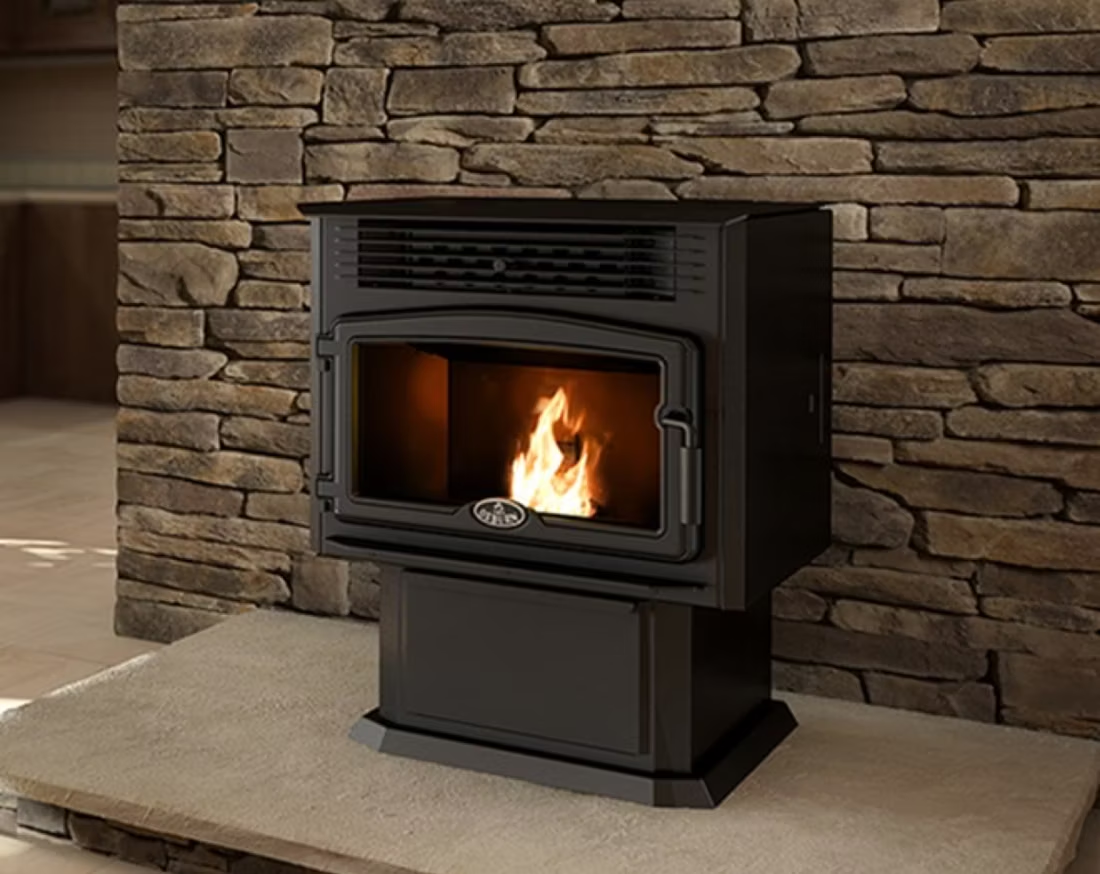
Greenfield sits at 815 feet in Milwaukee County, with a climate cold enough to justify serious heating equipment—a long, cold winter heating season and an average winter low of 12°F put it in the same general cold-climate tier as Duluth, MN. In a rural or exurban part of Wisconsin, that kind of climate would make a strong case for a pellet stove. But Greenfield is a dense, mostly built-out post-war suburb where natural gas service reaches nearly every block, and that changes the calculus. When a gas line already runs to the house, a direct-vent gas insert or furnace tends to win on install simplicity, upfront cost, and day-to-day convenience.
That doesn't mean pellet heat has no home in Greenfield. Homeowners in older houses with additions that were never plumbed for gas, owners looking for supplemental zone heat to offset Wisconsin Electric Power Co (We Energies) rates around $0.1923/kWh, and anyone who wants real flame without the wood storage and chimney maintenance a cordwood stove requires sometimes land on pellet as the right fit. Regional pellet suppliers including Indeck Energy Services, Lignetics, and Somerset Pellet Fuel serve the greater Milwaukee market, so fuel supply isn't the obstacle—it's mostly a question of whether pellet makes more sense than the gas line already at the curb.
Three steps. No salesperson until you're ready.
Tell us about your project
Your zip code, your situation, and the fuel you're leaning toward—or let the answers point you to one.
See what's actually available
The brands dealers within 100 miles genuinely carry—real options, never a catalog mirage.
Get your dealer & Project Guide
A trusted local dealer, plus the free Project Guide & Parts List that names every component of the job.
Frequently Asked Questions
How much does a pellet stove installation cost in Greenfield?
Because pellet installs are uncommon in Greenfield compared to gas conversions, there isn't a large local sample to draw from, but typical installed costs for a freestanding pellet stove nationally run roughly $3,500 to $6,500, including venting and a basic hearth pad. Pellet inserts that fit into an existing masonry fireplace tend to land in a similar range. The bigger cost driver locally is usually venting—homes without an existing chimney need a new through-wall vent kit, which a local installer will price during an in-home visit. Given how few pellet jobs local dealers run compared to gas, get a written quote before assuming a number.
Why aren't pellet stoves more common in Greenfield if winters are this cold?
The climate isn't the limiting factor—Greenfield's long, cold winter heating season and 12°F average winter low would support pellet heat just fine. The limiting factor is infrastructure and housing stock. Greenfield is a densely built Milwaukee County suburb with near-universal natural gas access, and most homes here are post-war ranches and colonials already plumbed for a gas furnace. When a gas line is sitting right there, a direct-vent gas fireplace or furnace upgrade is usually cheaper to install and simpler to permit than a solid-fuel appliance, so pellet stoves end up as a specialty choice rather than the default.
Where can I buy wood pellets near Greenfield?
Regional pellet fuel brands including Indeck Energy Services, Lignetics, and Somerset Pellet Fuel are distributed through hardware stores and farm supply retailers across the greater Milwaukee area, and most carry hardwood softwood blend pellets suited to residential stoves. Because pellet stoves are a smaller category here than in more rural parts of Wisconsin, it's worth calling ahead in late fall to confirm stock—pellet supply tends to sell through faster once cold weather sets in and demand spikes statewide.
Pellet stove vs. gas fireplace—which makes more sense in Greenfield?
For most Greenfield homes, gas wins on convenience: natural gas service is standard throughout the city, install costs are generally lower when a gas line is already present, and a direct-vent gas fireplace requires no fuel deliveries or hopper refilling. Pellet stoves make more sense in the specific case of a home without easy gas access, or for a homeowner who wants supplemental zone heat that's cheaper to run than baseboard electric at We Energies' roughly $0.1923/kWh residential rate. If your home already has a gas furnace and you're just adding a hearth feature, gas is almost always the simpler and more cost-effective path.
Will a pellet stove work during a power outage?
Not without a backup power source. Pellet stoves rely on an electric auger to feed fuel and a blower to distribute heat, so a standard unit shuts down the moment the power goes out—worth knowing in a Wisconsin winter where outages during ice storms aren't rare. Some manufacturers offer battery backup packs or DC-compatible models that can run on a small generator or battery bank, but that's an add-on to plan for, not a standard feature. If outage-proof heat is the priority, a wood stove or a gas fireplace with a battery-backed ignition system is the more reliable choice.
Do I need a permit to install a pellet stove in Greenfield?
Yes—new pellet stove installations typically require a building permit through the City of Greenfield's building inspection division, covering the appliance clearances and the through-wall or through-roof venting. Because pellet installs are less frequent here than gas conversions, it's worth confirming permit specifics directly with the city before scheduling work, and choosing an installer who has pulled a pellet permit in Greenfield before rather than one who's only worked with gas units.
What size pellet stove do I need for a Greenfield home?
With a long, cold winter heating season and winter lows averaging 12°F, Greenfield sits solidly in cold-climate heating territory, similar to Duluth, MN in terms of seasonal heat demand. For supplemental zone heat in a single room or open living area, a small to mid-size pellet stove (40,000–60,000 BTU) is usually sufficient. Homes trying to offset a larger share of their gas or electric heating bill with pellet as a secondary source should size up, but a local dealer should confirm based on your square footage, insulation, and how open your floor plan is—oversizing a pellet stove wastes fuel and forces the auger to cycle inefficiently.
Why is wood heat also uncommon in Greenfield if the region has plenty of hardwood?
Wisconsin's forests supply plenty of oak, maple, birch, and aspen, and cordwood heating is genuinely common in the rural parts of the state. But Greenfield is a compact, built-out Milwaukee suburb—small lots, attached garages, and tight setbacks make wood storage and chimney clearances impractical for most properties, and the same near-universal gas access that sidelines pellet stoves does the same to wood. Both solid-fuel options end up as specialty installs here rather than the norm, while a few miles outside the metro area they're much more standard.
Is a pellet stove actually worth it for my Greenfield home?
It depends on what you're solving for. If your home already has a gas furnace and gas service to the house, a pellet stove is rarely the most cost-effective hearth upgrade—a direct-vent gas insert will usually install cheaper and run with less maintenance. But if you're in an older addition without a gas line, want a genuine flame with more visual presence than gas typically offers, or want a heat source that's cheaper to run than electric resistance heat at We Energies' current rates, pellet can pencil out. The honest answer is: get quotes on both before deciding, since your specific home's gas access is the deciding factor more than climate.
What's the difference between an insert and a zero-clearance fireplace?
An insert is a fireplace that slides into a pre-existing wood-burning fireplace—if you don't have one, there's nothing to insert it into. A zero-clearance fireplace is built into a framed wall, which makes it the answer for remodels and new construction. Simple test: existing masonry fireplace means insert; blank or framed wall means zero-clearance.
How often does a pellet stove need cleaning?
A clean pellet stove is a happy pellet stove. Plan on cleaning the burn pot about once a week when you're burning regularly—ash and clinkers gum up the air holes just like a pellet barbecue. Most pellet stove problems trace back to skipped cleaning that nobody explained up front. Some designs make it easy with a trapdoor burn pot: pull a lever and the gunk drops into the ash pan.
Can a fireplace actually lower my heating bill?
Yes—by creating a comfort zone. A furnace heats every square foot of the house just to warm the one room you're in; a gas fireplace on low burns roughly a sixth of the gas a typical furnace does. Set the furnace around 55–60 degrees as a baseline, then heat the rooms your family actually uses. Families who heat this way commonly save $20–$60 a month.
What is an in-home preview and do I need one?
It's a visit where a hearth professional measures your space, confirms the model you picked actually works in your home, and walks the specs—framing, gas line, venting, finish work—before anything is ordered. Some details you just can't know until you see the house. Never make a down payment without one; it's the single most-skipped step that burns buyers.
Nearby Dealers
Hearth shops serving Greenfield and the surrounding area.
Pellet Brands Stocked Around Greenfield
Manufacturers will point you to the nearest stocking dealer.
Find Your Pellet Stove Option in Greenfield.
Tell us about your home and we'll put together a free Project Guide & Parts List—including the right vent kit—and match you with a trusted local dealer who can tell you honestly whether pellet or gas makes more sense for your Greenfield address.
Find Your Fireplace →