
Keep Your Family Warm and Safe—No Matter What
Real hardwood heat for the hills around Grafton and the rest of Taylor County—oak, hickory, maple, and cherry burning in stoves built for a 5A winter. Find the right stove or insert, and connect with a trusted local dealer.
Every Project Starts From One of These Five Situations
Hardwood heat runs deep in Taylor County's hills.
Taylor County sits in the rolling Appalachian Plateau of north-central West Virginia, with Grafton as its county seat and a population just over 5,000 spread across small towns and farmland. Climate zone 5A means real winters—average lows around 21°F and roughly 5,493 heating degree days a year, a season that stretches from November into early spring. Unlike the western river basins that deal with winter inversions, Taylor County has no listed air quality concerns, so there's no curtailment schedule or smoke-advisory system limiting when you can burn.
The county borders the Monongahela National Forest, where cutting permits run $20 per cord during the May-through-October season—an affordable way to supplement or fully stock a woodpile with the oak, hickory, maple, and cherry that dominate local hardwood stands. Those species burn hot and long, which matters here: rural Taylor County sees its share of winter ice storms and power outages, and a wood stove keeps a home warm and cooking-capable when the grid doesn't. For farmhouses and older homes around Grafton, Flemington, and Thornton, wood has always been the backbone of winter heat, and it still is.
Firewood Cutting Permits Near Taylor County
Three steps. No salesperson until you're ready.
Tell us about your project
Your zip code, your situation, and the fuel you're leaning toward—or let the answers point you to one.
See what's actually available
The brands dealers within 100 miles genuinely carry—real options, never a catalog mirage.
Get your dealer & Project Guide
A trusted local dealer, plus the free Project Guide & Parts List that names every component of the job.
Frequently Asked Questions
How much does a wood stove installation cost in Taylor County?
Most freestanding wood stove installations in Taylor County run in the $3,500 to $7,500 range, depending on the stove, whether new Class A chimney pipe is needed, and hearth pad requirements. Converting an existing masonry fireplace with a wood insert typically falls between $4,000 and $8,500. Because Taylor County is small and rural, many certified installers are based out of nearby Fairmont or Clarksburg, so a modest travel charge is common for jobs around Grafton, Flemington, or Thornton. Ask any installer for a firm, itemized quote before committing—venting and hearth work are where costs vary most.
What size wood stove do I need for my home?
Sizing depends on square footage, insulation, and ceiling height, but Taylor County's older farmhouses and drafty two-story homes often need a bit more capacity than a tight, newly-built home of the same size. As a rough guide: small stoves (up to 1,000 sq ft) suit a single room or cabin, medium stoves (1,000–2,000 sq ft) cover most main living areas, and large stoves (2,000+ sq ft) can carry a whole well-insulated home through a 21°F night. Because local hardwoods like oak and hickory burn hot and dense, a correctly sized stove will hold heat longer here than the same stove burning softer wood elsewhere—which is one more reason to size with a local dealer rather than guess from a box-store chart.
Where can I find certified wood stove installers near Taylor County?
Look for installers with NFI (National Fireplace Institute) or CSIA (Chimney Safety Institute of America) certification—both indicate real training in wood-burning appliance venting and clearances. Given Taylor County's small population, most certified hearth dealers cover the county from a base in Fairmont, Bridgeport, or Clarksburg, roughly 20 to 40 minutes away. It's worth confirming certification directly rather than assuming—general contractors in rural areas sometimes take on wood stove installs without the specific chimney and clearance training, and improper venting is the leading cause of chimney fires.
Should I get a wood stove or a wood insert?
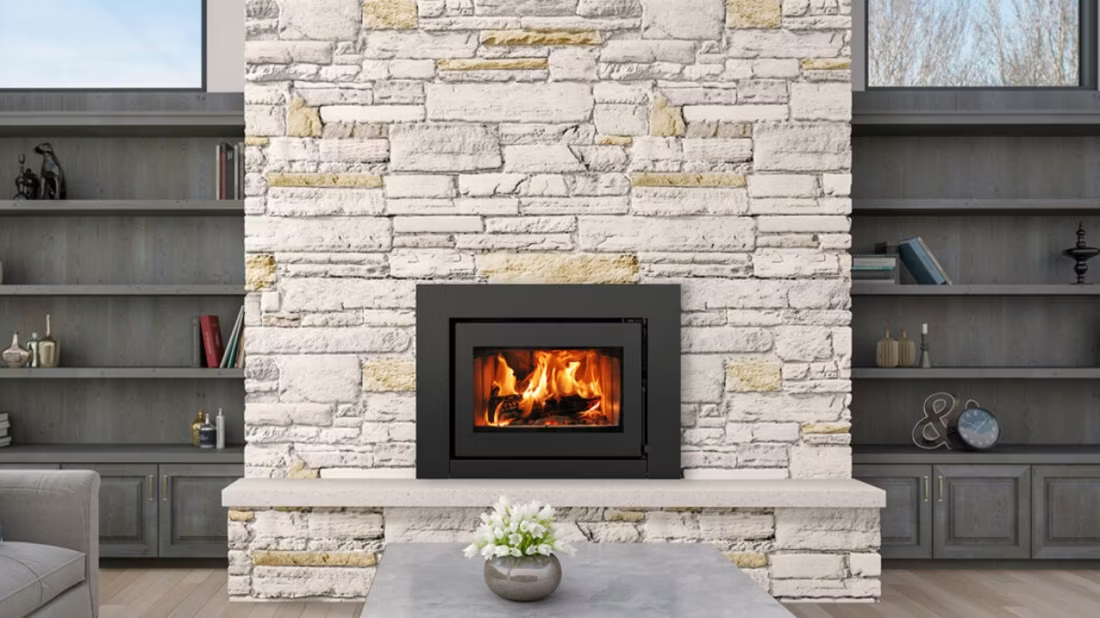
A freestanding wood stove sits on a hearth pad and vents through new or existing chimney pipe—it works in nearly any room with proper clearances. A wood insert slides into an existing masonry fireplace, turning a drafty open hearth into a sealed, high-efficiency heater. Many of Taylor County's older homes around Grafton still have their original brick fireplaces, which makes an insert a natural fit—you keep the existing masonry and chimney and gain real heating capacity instead of losing most of the warmth up the flue. Newer construction without an existing fireplace is generally better suited to a freestanding stove.
Do I need a permit to install or fuel a wood stove in Taylor County?
A building permit is required for new wood stove installations through Taylor County's building permit office, and most local installers handle that paperwork as part of the job. If you plan to cut your own firewood, permits for the Monongahela National Forest run $20 per cord and are valid during the May-through-October cutting season—a common and affordable route for stocking a winter's worth of oak or hickory. Because Taylor County has no listed air quality non-attainment issues, there's no seasonal burn curtailment to plan around, unlike some western states.
What's the best wood stove for Taylor County's climate and wood supply?
With oak, hickory, maple, and cherry as the dominant local species, Taylor County homeowners are working with dense, high-BTU hardwood—stoves designed to handle a hot, hard-hitting fuel supply perform well here. Catalytic stoves from Blaze King or Woodstock Soapstone hold heat efficiently overnight, which matters on the county's colder nights near freezing and below. Non-catalytic models from Vermont Castings or Pacific Energy are a strong, lower-maintenance option for homes using wood as supplemental rather than primary heat. At 5A and roughly 5,493 heating degree days, this is a comparable heating demand to Madison, Wisconsin—cold, but not the extreme sizing territory of the northern Plains.
How often should my chimney be inspected in Taylor County?
CSIA guidelines call for an annual inspection for any wood-burning appliance, and that holds regardless of how rural the home is. Because certified chimney sweeps are limited within Taylor County itself, many homeowners around Grafton and Flemington schedule sweeps with providers who also serve Fairmont or Morgantown—it's worth booking early in late summer before the fall rush. Homes burning wood as primary heat through a full Taylor County winter should treat this as non-negotiable; skipped inspections are the leading cause of preventable chimney fires.
Where can I get firewood in Taylor County?
Between local farms, loggers, and the Monongahela National Forest bordering the county, firewood is generally easy to come by. Forest Service cutting permits run $20 per cord and are valid May through October, and oak, hickory, maple, and cherry are all common on the landscape—all excellent, dense firewood species that split and burn well after a season of seasoning. Many rural Taylor County residents cut and stack their own supply rather than buy delivered cords, though local sellers are available for those who prefer it.
Wood stove or pellet stove—which makes more sense in Taylor County?
Wood stoves run without electricity, which matters in a county where winter ice storms can knock out power for days at a time—a real consideration given how rural much of Taylor County is. They also pair naturally with the abundant local hardwood and inexpensive Forest Service cutting permits. Pellet stoves, fed by regional brands like Energex, Hamer Pellet Fuel, or Greene Team Pellet Fuel, are more convenient day-to-day—load the hopper, set the thermostat, less ash—but the auger and blower require electricity, so they go dark in an outage unless paired with a battery backup. For most Taylor County homes prioritizing reliable backup heat, wood remains the stronger choice; for homes in town with steady power and a preference for convenience, pellet is a reasonable alternative.
What's the difference between an insert and a zero-clearance fireplace?
An insert is a fireplace that slides into a pre-existing wood-burning fireplace—if you don't have one, there's nothing to insert it into. A zero-clearance fireplace is built into a framed wall, which makes it the answer for remodels and new construction. Simple test: existing masonry fireplace means insert; blank or framed wall means zero-clearance.
Why is my open fireplace making my house colder?
Open fireplaces suck—literally. As the fire burns, it consumes air your furnace already paid to heat and pulls it out through the chimney, so the house is actually colder after the fire goes out than before you lit it. An insert fixes this: it seals the chimney, puts fixed glass across the front, and turns that hole in your house into a real heat source.
Can I install a fireplace myself?
If you're putting a fire in your house on purpose, it's best to work with an expert. Unless you're genuinely experienced in framing, gas line, vent pipe, and the national code on clearances to combustibles, have a professional do it—and ideally the same company that sells you the fireplace, so warranty, service, and liability all live under one roof.
How much should I budget for a fireplace?
For an average home—covering the fireplace, the vent pipe, and basic installation—a budget between $3,900 and $5,500 gives you a lot of options across wood, gas, and pellet. By the time you add finish work, gas line, and electrical, the average complete installation lands between $5,000 and $12,000 all-in. In a remodel or new build, a good rule is to put about 2.5% of the total project cost toward the fireplace.
Stove and Fireplace Dealers in Taylor County
Listings include WhyFire partner dealers, dealers we have verified as authorized for the brands we recommend, and established local businesses that carry hearth products. Every listing shows which one it is. The ones marked Preferred run on WhyFire's software, so they can show you real pricing and book your appointment right here. No manufacturer pays for placement. How we verify dealers →
Spike’s Chimney Sweep LLC
Mike's Kitchen, Bath, Fireplace
Streets Hardware Store
Cam-Rock
Find your wood stove in Taylor County.
Tell us a bit about your home and we'll match you with the right wood stove or insert for Taylor County's climate and wood supply, plus a free Project Guide & Parts List—the exact parts, vent kit included, and a trusted local dealer to install it.
Find Your Fireplace →