
Warmth on demand for Taylor County homes.
No chimney, no gas line, no permit hassle—just plug-in or hardwired heat for homes along the Tygart Valley, from Grafton to Flemington and Thornton. Find the right unit and connect with a trusted local dealer.
Every Project Starts From One of These Five Situations
Simple heat that fits any room.
Taylor County sits in the hills of north-central West Virginia along the Tygart Valley River, home to just over 5,000 people spread between Grafton and the smaller communities of Flemington, Thornton, and the surrounding hollows. The climate here is Zone 5A, with about 5,493 heating degree days a year and winter lows that average around 21°F—cold enough for a real heating season, but nowhere near the brutal stretches you'd see in Duluth, MN or Bismarck, ND. It's the kind of cold where a room needs supplemental warmth more often than a whole-house heating overhaul.
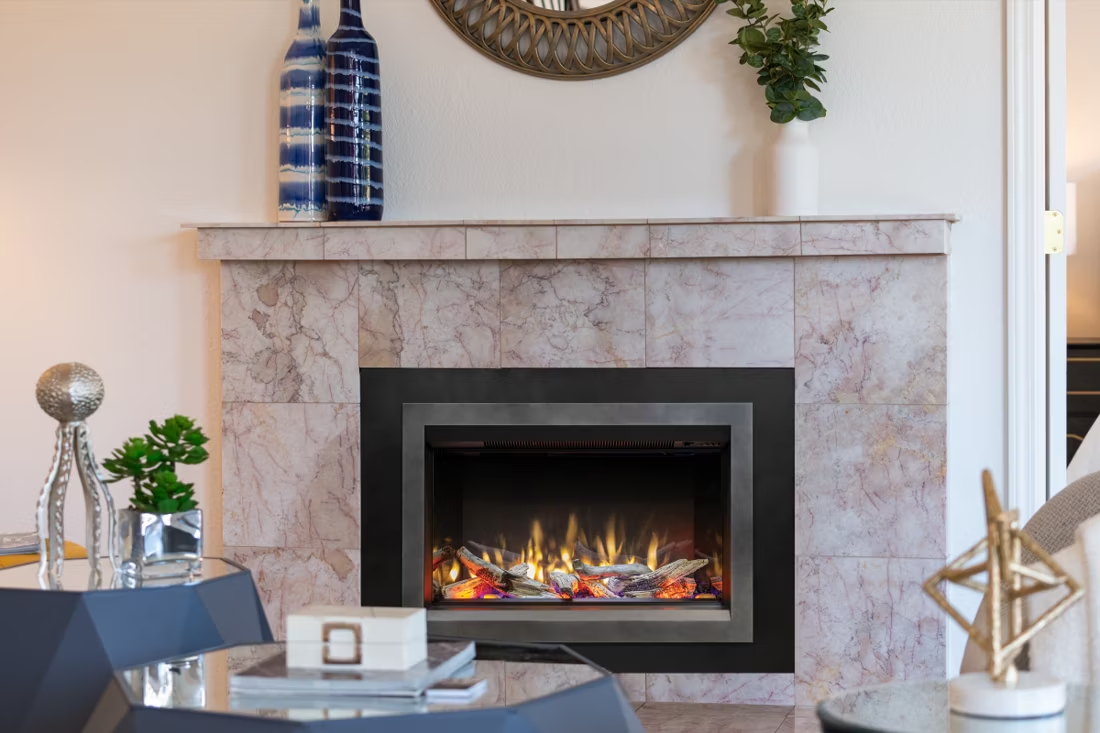
Many older homes in and around Grafton were built with masonry fireplaces designed for wood—oak, hickory, maple, and cherry are the common species cut locally, including on permits through the Monongahela National Forest. Not every one of those fireplaces still makes sense to burn wood in, and that's exactly where electric units fit: a log insert or built-in linear unit drops into an existing opening with no venting, no chimney work, and in most cases no building permit at all, since there's no combustion and no gas line involved. For finished basements, bedrooms, rental units, or anyone in Taylor County who wants real flame-effect ambiance and zone heat without touching the flue, electric is the low-friction option—with the tradeoff that it depends on Mon Power staying on, which matters during the ice storms that occasionally knock out lines across this stretch of Appalachian terrain.
Three steps. No salesperson until you're ready.
Tell us about your project
Your zip code, your situation, and the fuel you're leaning toward—or let the answers point you to one.
See what's actually available
The brands dealers within 100 miles genuinely carry—real options, never a catalog mirage.
Get your dealer & Project Guide
A trusted local dealer, plus the free Project Guide & Parts List that names every component of the job.
Frequently Asked Questions
How much does an electric fireplace installation cost in Taylor County?
Plug-in electric fireplaces and freestanding stoves are the cheapest option, often $300 to $800 installed, since they just need a standard outlet and no permit. Built-in electric fireplaces or linear wall units that require a dedicated 120V or 240V circuit run higher, typically $800 to $2,500, once an electrician cuts in a new circuit and a carpenter frames the surround. Electric inserts sized to slide into an existing masonry fireplace opening in an older Grafton-area home usually land in the same range, depending on trim kit and surround finish. There's no chimney, liner, or venting cost to worry about, which is the main reason electric installs run well below wood or gas projects in Taylor County.
Do I need a permit to install an electric fireplace in Taylor County?
In most cases, no. A plug-in electric fireplace or insert that runs off an existing outlet doesn't involve gas lines or venting, so it typically falls outside building permit requirements entirely. If you're having a built-in unit hardwired on a dedicated circuit, the electrical work itself may need to be pulled by a licensed electrician and inspected, depending on the scope—your installer or electrician can tell you if that applies to your specific project. Either way, it's a far simpler permitting picture than a wood stove or gas insert, which is one of the reasons electric units are popular for basement remodels and rental properties around Grafton and Flemington.
Will my electric fireplace still work during a power outage?
No—this is the honest tradeoff with electric heat. Every electric fireplace, insert, or stove needs power to run the fan, heating element, and flame effect, so during an outage it goes dark along with everything else on the circuit. In Taylor County, where ice storms and downed lines through the Tygart Valley occasionally take out Mon Power service for a stretch, that matters. If backup heat during outages is a priority, pair an electric fireplace for daily convenience with a wood stove or a battery-equipped gas unit elsewhere in the home, rather than relying on electric alone.
Electric vs. wood—which is right for my Taylor County home?
Wood offers real backup heat during power outages, lower ongoing fuel cost if you're cutting your own—Monongahela National Forest permits run about $20 per cord during the May-to-October season—and works well with the oak, hickory, maple, and cherry that's common firewood in this part of West Virginia. Electric offers zero maintenance, no chimney sweeping, no ash, and instant on-off convenience, but it's dependent on the grid staying up. For a primary heat source in a rural Taylor County home, wood still has the edge on true self-sufficiency. For a bedroom, den, or a masonry fireplace you'd rather not deal with venting and creosote in, electric is the simpler answer.
Electric vs. gas—which should I choose?
Gas fireplaces put out real, sustained heat and many models keep working during outages with a battery-backup ignition system, but they require either a natural gas line or a propane tank plus proper venting—a bigger project with permitting involved. Electric units skip all of that: no gas line, no venting, no combustion byproducts, and a much lower install cost, but the heat output is lower and it's fully dependent on electricity. In rural stretches of Taylor County where propane is often the practical fuel choice for whole-home heat, electric fireplaces tend to get used for supplemental zone heating and ambiance rather than as the main heat source.
What size electric fireplace do I need?
Electric fireplaces are rated in watts or BTU-equivalent heat output rather than the square-footage charts used for wood stoves. A standard 1,500-watt unit (roughly 5,000 BTU) is enough to noticeably warm a single room of 300 to 400 square feet in a Taylor County home, which covers most bedrooms, dens, and basement rec rooms. Larger linear units with higher wattage or dual heaters can stretch to bigger open-concept living rooms, but keep in mind the heating function is genuinely supplemental—it's not sized to replace your furnace on a 21°F January night, just to take the edge off in the room you're actually using.
What brands of electric fireplace are worth looking at?
Dimplex, Napoleon, and Touchstone are widely available and well-regarded for realistic flame effects, quiet fan operation, and reliable heating elements—all things worth comparing in person rather than from a spec sheet. Insert-style units built to fit standard masonry fireplace openings are worth asking about specifically if you're retrofitting an older Grafton-area home, since opening dimensions vary more than you'd expect on houses from different eras. A local dealer can match unit dimensions to your existing opening and walk through flame-effect quality and heat output side by side.
Can I put an electric insert into my existing masonry fireplace?
Yes—this is one of the most common projects for older homes in Taylor County that were built with a wood-burning masonry fireplace that's since gone unused, cracked, or fallen out of code for burning. An electric insert with a log or crystal flame-effect display slides into the existing opening, needs no chimney work or venting, and can be plugged in or wired to a nearby outlet depending on the model. It preserves the look of the original hearth while giving you ambiance and supplemental heat without the maintenance of an open masonry fireplace.
How much maintenance does an electric fireplace need?
Very little—that's the main appeal. There's no chimney to sweep, no creosote, no ash to remove, and no annual inspection required the way there is for wood or gas units. Occasional dusting of the heating element, wiping the glass front, and replacing LED bulbs on older models covers most of it. That said, if your unit is hardwired, it's still worth having an electrician confirm the circuit and connections periodically, especially in older Taylor County homes where household wiring may predate the fireplace itself.
Do electric fireplaces actually produce heat?
Yes—most put out around 4,800–5,000 BTUs from a standard outlet, which comfortably warms a bedroom, office, or den as a comfort-zone heater. What they won't do is carry a whole house the way wood, gas, or pellet can. Think of electric as ambiance-first with honest supplemental heat: flames on with no heat in July, flames plus warmth in January.
Does an electric fireplace need a vent or chimney?
No—that's its superpower. An electric fireplace needs a wall and an outlet, period. No vent pipe, no gas line, no clearances to design around, which is why it works in bedrooms, offices, apartments, and walls where venting a gas or wood unit would be impractical or impossible. Installation is typically the simplest and least expensive of any fireplace type.
How much should I budget for a fireplace?
For an average home—covering the fireplace, the vent pipe, and basic installation—a budget between $3,900 and $5,500 gives you a lot of options across wood, gas, and pellet. By the time you add finish work, gas line, and electrical, the average complete installation lands between $5,000 and $12,000 all-in. In a remodel or new build, a good rule is to put about 2.5% of the total project cost toward the fireplace.
What is an in-home preview and do I need one?
It's a visit where a hearth professional measures your space, confirms the model you picked actually works in your home, and walks the specs—framing, gas line, venting, finish work—before anything is ordered. Some details you just can't know until you see the house. Never make a down payment without one; it's the single most-skipped step that burns buyers.
Stove and Fireplace Dealers in Taylor County
Listings include WhyFire partner dealers, dealers we have verified as authorized for the brands we recommend, and established local businesses that carry hearth products. Every listing shows which one it is. The ones marked Preferred run on WhyFire's software, so they can show you real pricing and book your appointment right here. No manufacturer pays for placement. How we verify dealers →
Spike’s Chimney Sweep LLC
Mike's Kitchen, Bath, Fireplace
Streets Hardware Store
Cam-Rock
Find your electric fireplace in Taylor County.
Tell us a bit about your home and we'll put together a free Project Guide & Parts List for your electric fireplace or insert—matched with a trusted local dealer who can install it right.
Find Your Fireplace →