
Automated, hands-off heat for Ritchie County winters.
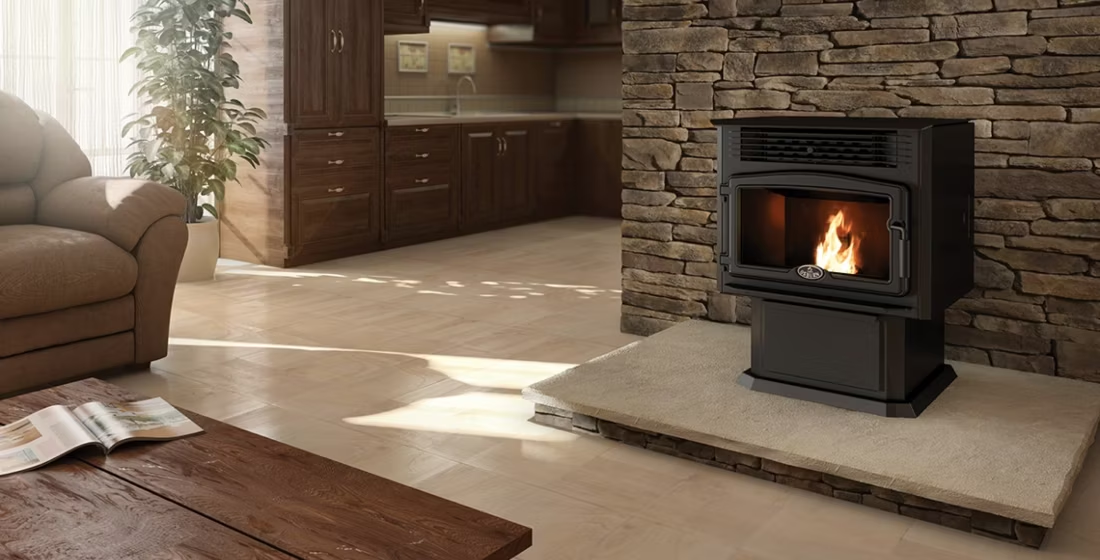
No splitting, no stacking, no hauling—just a hopper, a thermostat, and steady warmth through the cold months around Harrisville and the rest of Ritchie County. Find the right pellet stove or insert and connect with a trusted local dealer.
Every Project Starts From One of These Five Situations
Convenience-driven heat for hardwood country.
Ritchie County sits in the rolling Appalachian hill country of north-central West Virginia, home to about 3,700 residents spread across Harrisville and the surrounding rural townships. The climate here is zone 4A with winter lows averaging 21°F—a real, sustained heating season from November through March, though notably milder than the deep continental cold of places like Buffalo, NY, which has a noticeably heavier winter heating load. It's cold enough that a secondary or primary heat source matters, but not so extreme that fuel choice is dictated by survival math the way it is farther north.
Ritchie County has a long tradition of self-cut firewood—oak, hickory, maple, and cherry are all common locally, and permits through the Monongahela National Forest run about $20 per cord during the May-to-October cutting season. Pellet stoves have carved out a real niche alongside that tradition: they deliver the same radiant, wood-fired warmth without the splitting, stacking, and hauling, which matters for older homeowners, part-time residents, and anyone supplementing electric or propane heat with something more affordable to run. There are no air quality restrictions or burn bans in Ritchie County, so the appeal of pellet heat here is purely about convenience and cost control, not emissions compliance. Regional hardwood pellet brands—Energex, Hamer Pellet Fuel, and Greene Team Pellet Fuel—are widely stocked by hearth dealers serving this part of West Virginia.
Three steps. No salesperson until you're ready.
Tell us about your project
Your zip code, your situation, and the fuel you're leaning toward—or let the answers point you to one.
See what's actually available
The brands dealers within 100 miles genuinely carry—real options, never a catalog mirage.
Get your dealer & Project Guide
A trusted local dealer, plus the free Project Guide & Parts List that names every component of the job.
Frequently Asked Questions
How much does a pellet stove installation cost in Ritchie County?
Most pellet stove and insert installations run in the $3,000 to $6,000 range, depending on the unit, whether you're installing into an existing masonry fireplace or a new location, and how much venting work is required. Pellet venting is simpler than wood-burning chimney work—most units vent horizontally through an exterior wall with PL vent pipe rather than requiring a full Class A chimney, which keeps costs down compared to a comparable wood stove install. A local dealer serving Ritchie County can give you a firm number after seeing your home and current setup.
Pellet stove or wood stove—which makes more sense for my Ritchie County home?
If you or a family member already cuts firewood—oak, hickory, maple, and cherry are all common locally, and Monongahela National Forest permits run about $20 per cord from May through October—a wood stove keeps that self-sufficient setup going and works without electricity. A pellet stove is the better fit if you'd rather skip the cutting, splitting, and stacking altogether and just load a hopper every day or two. Pellet stoves also burn more evenly and need less frequent tending than a wood stove, which matters for households where nobody wants to babysit a fire through the evening. The tradeoff is that pellet stoves need electricity to run the auger and blower, so they won't help during a power outage the way a wood stove will.
Where can I buy pellets in Ritchie County, and how much should I budget?
Regional hardwood pellet brands including Energex, Hamer Pellet Fuel, and Greene Team Pellet Fuel are commonly stocked by hearth dealers and farm supply stores across this part of West Virginia. Prices vary by dealer and season, but it's smart to order early—buying your season's supply in late summer or early fall, before demand picks up, usually means better pricing and guaranteed stock. A typical Ritchie County home burns somewhere between 1.5 and 3 tons of pellets over a full winter depending on how much of your heat load the stove is carrying, so plan storage space accordingly—a dry garage or shed keeps bagged pellets from absorbing moisture.
Will my pellet stove still work if the power goes out?
No—pellet stoves rely on an electric auger to feed fuel and a blower to distribute heat, so they shut down when the power does. In a rural county like Ritchie, where outages can stretch longer than in town, that's worth planning around. Some homeowners pair a pellet stove with a small battery backup or generator specifically to keep it running during storms; others keep a wood stove or fireplace as backup heat for exactly this reason. Ask your local dealer about battery backup options if outage resilience matters to you.
What size pellet stove do I need for my home?
Sizing depends on square footage, insulation, and whether the stove is your primary or supplemental heat source. As a rough guide for Ritchie County's climate: smaller units (up to around 1,000 sq ft) suit a single room, cabin, or supplemental setup, while larger units can handle 1,500 to 2,000+ sq ft of well-insulated living space as a primary heat source. Older farmhouses and homes with less insulation typically need to size up compared to newer, tighter construction. A local dealer will size your specific home during an in-home consultation—it's worth getting right, since an undersized stove won't keep up on the coldest nights near the 21°F average winter low.
Do I need a permit to install a pellet stove in Ritchie County?
Most new pellet stove and insert installations require a building permit, since they involve wall penetration for venting and sometimes electrical work for the unit's controls. Check with your county building permit office before installation to confirm current requirements—most local dealers handle this paperwork as part of the install so you're not coordinating it yourself. Unlike wood cutting, there's no forest permit involved with pellet fuel since you're buying bagged pellets rather than harvesting your own wood.
How much maintenance does a pellet stove need?
Pellet stoves need more routine attention than a gas unit but less than a wood stove. Plan on emptying the ash pan every few days during regular use, cleaning the burn pot and glass weekly, and having the unit professionally serviced—including a check of the auger, gaskets, and exhaust fan—once a year, ideally before the heating season starts in the fall. Because pellet fuel burns cleaner and more consistently than cordwood, there's no chimney creosote buildup to worry about, but the mechanical components (auger motor, blower) do wear over time and benefit from annual inspection.
What's the best pellet stove for Ritchie County's climate?
With winter lows averaging 21°F and a real, sustained heating season, Ritchie County sits in a moderate cold-climate zone—not as extreme as the upper Midwest, but cold enough for real sustained heating demand. Mid-size pellet stoves in the 40,000 to 60,000 BTU range work well for most homes here as either primary or serious supplemental heat, especially when paired with regional hardwood pellets from brands like Energex or Greene Team, which tend to burn hotter and produce less ash than softwood blends. Talk to a local dealer about your home's square footage and insulation for a specific model recommendation.
Pellet vs. propane or electric heat—which makes more sense here?
For a lot of Ritchie County homes without natural gas service, the real comparison is often pellet versus propane or baseboard electric rather than pellet versus gas. Pellet fuel is generally cheaper per BTU than propane and delivers a more even, radiant heat than electric resistance heating, plus the ambiance of a real flame. The tradeoff is that pellet stoves need a fuel supply chain—buying and storing tons of pellets each season—while propane and electric systems just need a delivery contract or a utility bill. Many homeowners in the county use a pellet stove to heat the main living area and keep propane or electric as backup for the rest of the house.
Why is a fireplace insert so efficient?
An insert does two things: it seals the chimney completely, so you stop losing air you already paid to heat, and it radiates warmth into the room through the firebox and glass. Most add a heat-exchange fan that pulls cool room air underneath, wraps it around the hot firebox, and pushes it back out warm. Your home is more efficient before you've even lit the first fire.
What's the difference between an insert and a zero-clearance fireplace?
An insert is a fireplace that slides into a pre-existing wood-burning fireplace—if you don't have one, there's nothing to insert it into. A zero-clearance fireplace is built into a framed wall, which makes it the answer for remodels and new construction. Simple test: existing masonry fireplace means insert; blank or framed wall means zero-clearance.
Does a fireplace add value to my home?
On average, a fireplace adds back to the home about the same amount you spent installing it. Add the monthly savings from heating the rooms you actually use instead of the whole house—often hundreds of dollars a year—and the value case is strong before you even count what a fire does for how your family uses the room.
Can a fireplace actually lower my heating bill?
Yes—by creating a comfort zone. A furnace heats every square foot of the house just to warm the one room you're in; a gas fireplace on low burns roughly a sixth of the gas a typical furnace does. Set the furnace around 55–60 degrees as a baseline, then heat the rooms your family actually uses. Families who heat this way commonly save $20–$60 a month.
Stove and Fireplace Dealers in Ritchie County
Listings include WhyFire partner dealers, dealers we have verified as authorized for the brands we recommend, and established local businesses that carry hearth products. Every listing shows which one it is. The ones marked Preferred run on WhyFire's software, so they can show you real pricing and book your appointment right here. No manufacturer pays for placement. How we verify dealers →
The Fore Timber Company Inc.
Bob's Fireplace
Hardman's Hardware
Pellet Brands Stocked Around Ritchie County
Manufacturers will point you to the nearest stocking dealer.
Find your pellet stove in Ritchie County.
Tell us a bit about your home and we'll match you with the right pellet stove or insert, plus a free Project Guide & Parts List—your exact parts, including the vent kit, and a recommended local dealer.
Find Your Fireplace →