
Zone heat and real ambiance—no chimney needed in Ritchie County.
No chimney, no gas line, and outside town limits usually no permit hassle—just plug-in warmth and ambiance for a bonus room, manufactured home, or rental anywhere from Harrisville to Cairo. Find the right unit and connect with a trusted local dealer.
Every Project Starts From One of These Five Situations
The easiest heat upgrade for rural Ritchie County housing stock.
Ritchie County sits in the rolling hills of north-central West Virginia, home to about 3,695 people spread across the county seat of Harrisville and small communities like Pennsboro, Cairo, Ellenboro, and Smithville. Winters here aren't Appalachian-extreme—the climate zone 4A designation and a winter heating load put Ritchie County closer to a moderate cold climate than the brutal stretch you'd find in Duluth MN or International Falls MN—but average winter lows around 21°F, plus older, drafty housing stock scattered across the county, mean supplemental heat matters in specific rooms for a good four to five months a year.
A lot of Ritchie County homes already burn oak, hickory, maple, or cherry as a primary or supplemental heat source—wood cut under $20-per-cord permits through the Monongahela National Forest is a real option for rural households here. Electric fireplaces fill a different niche: a bonus room, a finished basement, a manufactured home, a rental property, or any space where running a flue or a gas line isn't practical or worth the cost. Mon Power serves electric accounts across most of the county, and because electric units plug into a standard outlet or a dedicated circuit, there's no chimney, no venting, and—outside the town limits of Harrisville or Pennsboro—usually no building permit involved either.
Three steps. No salesperson until you're ready.
Tell us about your project
Your zip code, your situation, and the fuel you're leaning toward—or let the answers point you to one.
See what's actually available
The brands dealers within 100 miles genuinely carry—real options, never a catalog mirage.
Get your dealer & Project Guide
A trusted local dealer, plus the free Project Guide & Parts List that names every component of the job.
Frequently Asked Questions
How much does an electric fireplace installation cost in Ritchie County?
A wall-mounted or insert-style electric fireplace runs $300 to $900 installed in most Ritchie County homes, since there's no chimney or gas line to deal with—most of that cost is the unit itself plus an hour or two of an electrician's time if a dedicated 20-amp circuit is needed. Built-in electric fireplaces with a custom mantel or surrounding cabinetry run higher, typically $1,500 to $3,000, depending on the carpentry involved. Compare that to wood or gas installs in the same county, which regularly run $4,000 or more once chimney or venting work is factored in—electric is the budget entry point for adding real heat and ambiance to a room.
Do I need a permit to install an electric fireplace in Ritchie County?
Ritchie County doesn't maintain a countywide building code, so an electric fireplace installed outside the town limits of Harrisville, Pennsboro, or Cairo typically doesn't require a permit at all. Inside those towns, check with the local clerk's office before work begins, since municipal code can differ from the county. Either way, if the unit needs a dedicated circuit—which most units over 1,500 watts do—have a licensed electrician run that wiring to code. No gas fitter, no chimney sweep, no combustion inspection required.
What's the best electric fireplace for an older farmhouse or manufactured home here?
For older farmhouses and single-wide or double-wide manufactured homes common throughout rural Ritchie County, a 1,500-watt electric insert or freestanding unit works best as zone heat for the room you actually spend time in—a living room, bedroom, or converted den—rather than as whole-home heat. Look for a unit with a built-in thermostat and a real heating element, not just the flame-effect light, and expect it to comfortably heat 300 to 500 square feet depending on ceiling height and how drafty the space is. Many households here already use a wood stove or furnace for the bulk of their heat and add an electric unit in a room the primary system doesn't reach well.
Can I install an electric fireplace in a manufactured or mobile home?
Yes, but check the label first. Electric fireplaces installed in manufactured or mobile homes need to be listed for use in that type of housing per the manufacturer's specifications—not every unit sold online carries that listing. Given how common manufactured housing is throughout Ritchie County, this is one of the first things a reputable local dealer checks before recommending a specific model, since an improperly listed unit can create problems with your homeowner's insurance down the road.
What's the difference between an electric fireplace, an electric insert, and a mantel package?
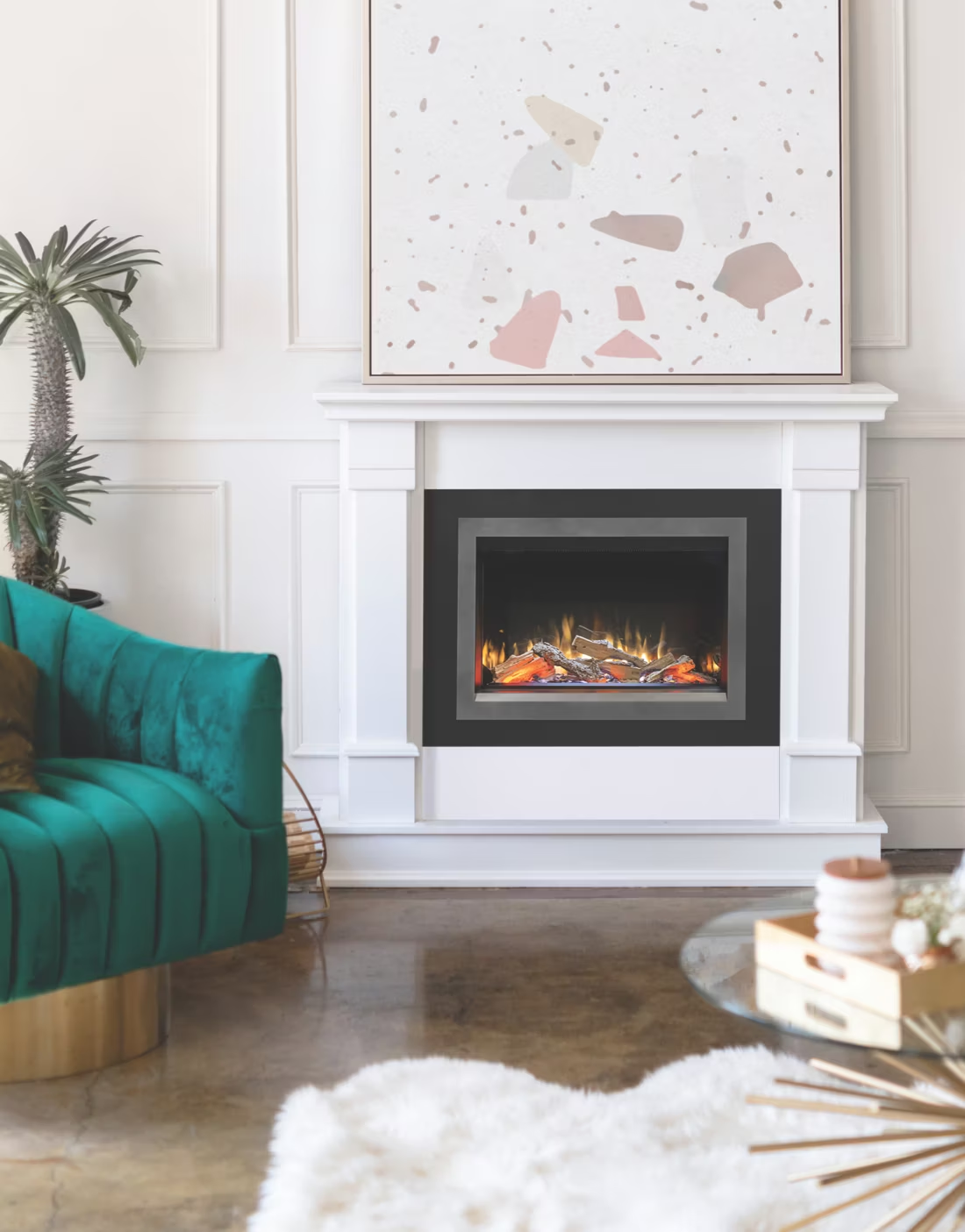
An electric fireplace is a standalone or wall-mounted unit that includes its own frame and finish—plug it in and it's done. An electric insert is a slimmer unit designed to slide into an existing masonry fireplace opening, converting an old wood-burning fireplace you no longer use into a source of supplemental heat without touching the chimney. A mantel package pairs an electric insert or built-in unit with surrounding cabinetry or a mantel shelf, giving you a finished, furniture-grade look in a room with no existing fireplace. For Ritchie County homes with an old, unused masonry fireplace, an insert is usually the simplest upgrade.
Does an electric fireplace actually heat a room, or is it just for looks?
Most electric fireplaces sold today include a 1,500-watt heating element—the maximum allowed on a standard household circuit—which is enough to noticeably warm a 300 to 500 square foot room, roughly equivalent to a good space heater with a nicer cabinet around it. It won't replace a furnace or wood stove as primary heat during a Ritchie County cold spell when temperatures dip toward that 21°F winter average, but as supplemental zone heat for a specific room it holds its own, and you can run the flame effect without the heat turned on at all for pure ambiance during the shoulder seasons.
Electric vs. wood—which is right for my home?
Wood—burned as oak, hickory, maple, or cherry, all species common locally—delivers far more heat output and keeps working during a power outage, which matters in rural Ritchie County where outages can run longer than in town. A Forest Service cutting permit through the Monongahela National Forest runs about $20 per cord for those willing to cut their own. Electric fireplaces can't compete on raw heat or outage resilience, but they win on convenience: no ash, no chimney fire risk, no wood splitting, and instant on-off operation. Many households here run both—wood or a wood stove for primary heat, electric for a room the wood heat doesn't reach.
Electric vs. pellet—which is right for my home?
Pellet stoves burning bagged pellets from regional brands like Energex, Hamer Pellet Fuel, or Greene Team Pellet Fuel put out considerably more heat than an electric unit and can serve as a home's primary heat source, but they need a vent, a hopper to refill, and electricity to run the auger and blower—so they still go dark in a power outage. Electric fireplaces need no venting at all and no fuel to store, but they're a supplemental heat source, not a primary one, and they draw continuously on your Mon Power bill while running. If you want set-it-and-forget-it heat for one room with zero maintenance, electric wins; if you want to heat more of the house on a renewable fuel, pellet is the better fit.
How much does it cost to run an electric fireplace in Ritchie County?
Running a 1,500-watt electric fireplace for eight hours a day costs roughly $15 to $25 a month at typical Mon Power residential electric rates, depending on how much of that time the heating element is on versus just the flame effect. That's cheap compared to a full furnace cycle, but it adds up if you're using it as your only heat source in a room all winter. Most Ritchie County homeowners run their unit on a timer or thermostat setting to manage that cost, heating the room only while it's occupied.
Can I put a TV above my fireplace?
Yes—with an asterisk. Fireplaces are hot and TVs don't like heat. Either put a mantel between them to deflect rising warmth, or choose a fireplace with heat-management technology that creates a cool zone on the wall above—the wall stays around 125 degrees, barely warm, while the room still gets full heat. If you like clean lines and don't want a mantel, heat management is the answer.
Does an electric fireplace need a vent or chimney?
No—that's its superpower. An electric fireplace needs a wall and an outlet, period. No vent pipe, no gas line, no clearances to design around, which is why it works in bedrooms, offices, apartments, and walls where venting a gas or wood unit would be impractical or impossible. Installation is typically the simplest and least expensive of any fireplace type.
What is an in-home preview and do I need one?
It's a visit where a hearth professional measures your space, confirms the model you picked actually works in your home, and walks the specs—framing, gas line, venting, finish work—before anything is ordered. Some details you just can't know until you see the house. Never make a down payment without one; it's the single most-skipped step that burns buyers.
How much should I budget for a fireplace?
For an average home—covering the fireplace, the vent pipe, and basic installation—a budget between $3,900 and $5,500 gives you a lot of options across wood, gas, and pellet. By the time you add finish work, gas line, and electrical, the average complete installation lands between $5,000 and $12,000 all-in. In a remodel or new build, a good rule is to put about 2.5% of the total project cost toward the fireplace.
Stove and Fireplace Dealers in Ritchie County
Listings include WhyFire partner dealers, dealers we have verified as authorized for the brands we recommend, and established local businesses that carry hearth products. Every listing shows which one it is. The ones marked Preferred run on WhyFire's software, so they can show you real pricing and book your appointment right here. No manufacturer pays for placement. How we verify dealers →
The Fore Timber Company Inc.
Bob's Fireplace
Hardman's Hardware
Find your electric fireplace in Ritchie County.
Tell us a bit about your home and we'll match you with the right electric fireplace or insert—plus a free Project Guide & Parts List with the exact parts and a trusted local Ritchie County dealer recommendation.
Find Your Fireplace →