
Instant gas heat for Randolph County's mountain winters.
From Elkins down in the valley to cabins up along Cheat Mountain and the Allegheny Front, Randolph County homes are turning to gas for warmth that doesn't require splitting a cord. Find the right unit and get matched with a trusted local dealer.
Every Project Starts From One of These Five Situations
Clean, on-demand heat for a mountain county.
Randolph County sits in the Allegheny Mountains, with roughly 10,500 residents spread across nearly 1,050 square miles of the Monongahela National Forest and the valleys around Elkins, Beverly, and Harman. Elevation runs from about 1,900 feet in Elkins to well over 4,000 feet along ridgelines like Cheat Mountain, and with winters comparable to a smaller version of Bozeman, Montana's mountain winters and average winter lows near 20°F, the season here is long—closer in feel to that than to the Piedmont a few hours east. Wood heat has deep roots in a county surrounded by oak, hickory, maple, and cherry timber, but gas has steadily become the go-to for primary living areas, second homes, and hunting cabins where nobody wants to be splitting wood before dawn.
Natural gas service through Mountaineer Gas Company reaches Elkins and the immediately surrounding developed areas, but most of unincorporated Randolph County—Harman, Whitmer, Bowden, Coalton, Norton—runs on propane from regional suppliers. That split matters when you're planning a project: a direct-vent gas insert in an Elkins home with existing gas service is a straightforward job, while a cabin near Canaan Valley or Snowshoe ski country just over the county line usually means a propane tank and a different cost conversation. Randolph County has no listed air quality concerns or wood-burning curtailment periods, so the choice between gas and wood here comes down to convenience and lifestyle rather than regulation—gas gives you heat at the flip of a switch, including during the ice storms that occasionally take out power on the ridges.
Three steps. No salesperson until you're ready.
Tell us about your project
Your zip code, your situation, and the fuel you're leaning toward—or let the answers point you to one.
See what's actually available
The brands dealers within 100 miles genuinely carry—real options, never a catalog mirage.
Get your dealer & Project Guide
A trusted local dealer, plus the free Project Guide & Parts List that names every component of the job.
Frequently Asked Questions
How much does a gas fireplace installation cost in Randolph County?
Most gas fireplace and insert installations in Randolph County run roughly $3,500 to $9,500, depending on the unit, whether you're on Mountaineer Gas service in Elkins or need a propane tank set for a rural property, and how much venting or gas line work is involved. A direct-vent insert going into an existing masonry fireplace with gas already run to the house sits toward the lower end. New construction, cabins without existing gas infrastructure, or homes above 2,500 feet that need altitude-adjusted orifices tend to land higher. A local dealer will give you a firm number after seeing the home.
Can I convert my existing wood fireplace to gas?
Yes, and it's a common project in Randolph County's older homes around Elkins and Beverly. A gas insert typically slides into your existing masonry fireplace and uses a stainless liner run up the same chimney, so you keep the look of the original hearth while gaining instant, controllable heat. Homes already on Mountaineer Gas service usually see costs on the lower end of the local range; homes that need a new propane line or tank run higher. Either way, the conversion eliminates ash cleanup and firewood handling while keeping the mantle and surround you already have.
Do I need natural gas, or should I use propane?
It depends on where you are in the county. Mountaineer Gas Company serves Elkins and the closely surrounding area, so if you already have natural gas for your furnace or water heater, adding a fireplace is generally simple. Outside that footprint—which covers most of Randolph County's rural land and cabin properties near Harman, Whitmer, and the forest edge—propane is the standard fuel, either from an existing tank or a new one set by a local supplier. Nearly every gas fireplace model on the market can be configured for either fuel; your installer sets the correct orifice and regulator for whichever you have.
Will my gas fireplace still work if the power goes out?
Most modern gas fireplaces will, which matters in a mountain county where ice storms and downed lines on rural feeders can knock out power for a day or more. Units with intermittent pilot ignition (IPI) run on a small battery backup that kicks in automatically when the power drops, so the fireplace lights on demand just like normal. Valor takes a different approach—their fireplaces generate their own electricity from the pilot's thermocouple, so there's no battery to remember at all. Ask your local dealer which ignition system a given model uses before you decide.
What's the difference between a gas fireplace, gas insert, and gas stove?
A gas fireplace is a fully built-in unit framed into a wall, typically used in new construction or a remodel. A gas insert is built to drop into an existing masonry fireplace opening, turning a drafty old hearth into a sealed, efficient heat source that vents through the existing chimney. A gas stove is freestanding, sitting on the floor like a wood stove but burning gas, and works well in cabins or additions without an existing fireplace. For most Randolph County homes with an older masonry fireplace in Elkins or Beverly, an insert is the natural fit; new cabins and additions usually lean toward a built-in fireplace or freestanding stove.
Do I need a permit to install a gas fireplace in Randolph County?
Generally yes. Randolph County, like many rural West Virginia counties, doesn't run its own building code office, so permits for gas line work and venting in unincorporated areas are typically handled through the West Virginia State Fire Marshal's Office, which enforces the state building code outside city limits. Inside Elkins, permits go through the city. Either way, the gas line connection itself requires a licensed gas-fitter, which is one of the reasons working with an established local hearth dealer is worth it—they coordinate the gas work, venting, and inspection instead of leaving you to manage separate trades.
What's the difference between vented and vent-free gas fireplaces, and does elevation matter?
Vented (direct-vent) gas fireplaces draw combustion air from outside and exhaust it back outside through sealed venting, which keeps combustion byproducts out of the living space. Vent-free units burn without external venting and are legal in West Virginia within room-sizing limits, but they release some water vapor and combustion gases indoors. Elevation adds a wrinkle in Randolph County specifically: homes above roughly 2,000 feet—common along the Allegheny Front and Cheat Mountain—often need altitude-derated orifices or a high-altitude kit for correct gas combustion, regardless of vented or vent-free choice. A local dealer familiar with the county's elevation range will spec this correctly; it's not something to guess at.
How often should my gas fireplace be serviced?
Plan on an annual inspection, ideally before the heating season starts in the fall. A technician checks the burner, pilot assembly, venting, and gas connections, and cleans the glass and interior—much less involved than a wood chimney sweep, but just as important for safety and for keeping the unit running efficiently through a Randolph County winter. Most local service providers charge in the $150 to $250 range for a standard annual visit.
Gas vs. wood—which makes more sense for a Randolph County home?
Wood is genuinely practical here—oak, hickory, maple, and cherry are all common locally, Forest Service cutting permits through the Monongahela National Forest run about $20 per cord during the May-to-October season, and a wood stove keeps working when the power doesn't. Gas trades that self-sufficiency for convenience: no splitting, stacking, or ash cleanup, and heat on demand at the flip of a switch or a remote. For primary living rooms in town or in a cabin used mainly on weekends, gas usually wins on ease of use. For a homestead where self-cut firewood is already part of the routine, wood often stays the better fit—and plenty of local homes end up with both.
Can I put a TV above my fireplace?
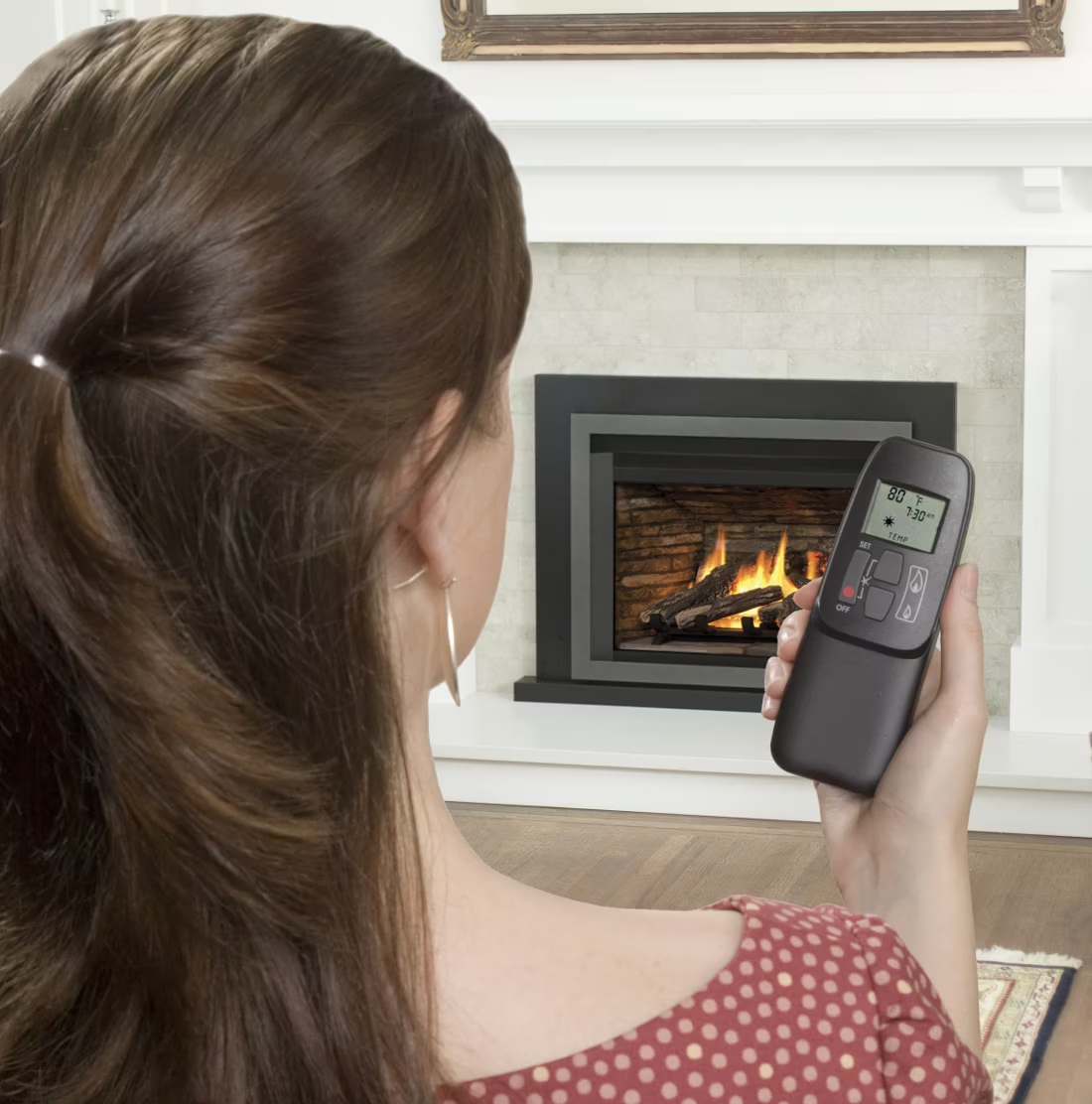
Yes—with an asterisk. Fireplaces are hot and TVs don't like heat. Either put a mantel between them to deflect rising warmth, or choose a fireplace with heat-management technology that creates a cool zone on the wall above—the wall stays around 125 degrees, barely warm, while the room still gets full heat. If you like clean lines and don't want a mantel, heat management is the answer.
What's the difference between an insert and a zero-clearance fireplace?
An insert is a fireplace that slides into a pre-existing wood-burning fireplace—if you don't have one, there's nothing to insert it into. A zero-clearance fireplace is built into a framed wall, which makes it the answer for remodels and new construction. Simple test: existing masonry fireplace means insert; blank or framed wall means zero-clearance.
Can I install a fireplace myself?
If you're putting a fire in your house on purpose, it's best to work with an expert. Unless you're genuinely experienced in framing, gas line, vent pipe, and the national code on clearances to combustibles, have a professional do it—and ideally the same company that sells you the fireplace, so warranty, service, and liability all live under one roof.
Does a fireplace add value to my home?
On average, a fireplace adds back to the home about the same amount you spent installing it. Add the monthly savings from heating the rooms you actually use instead of the whole house—often hundreds of dollars a year—and the value case is strong before you even count what a fire does for how your family uses the room.
Stove and Fireplace Dealers in Randolph County
Listings include WhyFire partner dealers, dealers we have verified as authorized for the brands we recommend, and established local businesses that carry hearth products. Every listing shows which one it is. The ones marked Preferred run on WhyFire's software, so they can show you real pricing and book your appointment right here. No manufacturer pays for placement. How we verify dealers →
Mike's Kitchen, Bath, Fireplace
Spike’s Chimney Sweep LLC
Shirers Tin Shop
Manor Building Supply Inc.
Streets Hardware Store
Cam-Rock
Hardman's Hardware - Moorefield
Tristate Fireplace LLC
Warners Hearth & Patio
Find the right gas fireplace for your Randolph County home.
Tell us about your home and we'll match you with a trusted local dealer and a free Project Guide & Parts List—a plan for your gas project in Randolph County with the exact parts, including the vent kit, spelled out.
Find Your Fireplace →