
Highland heating for every home in Randolph County.
Wood, gas, pellet, and electric fireplace resources for every town and rural hollow in Randolph County—from Elkins to Harman. Find the right unit and connect with a trusted local hearth retailer.
Every Project Starts From One of These Five Situations
Mountain winters across Randolph County, West Virginia.
Randolph County sits in the Allegheny Highlands of eastern West Virginia, with elevations climbing from around 1,900 feet in Elkins up past 4,800 feet near Spruce Knob-area ridgelines. With roughly 5,442 heating degree days and average winter lows near 20°F, the heating season here runs long—not quite Fargo ND territory, but comparable in feel to a mid-Michigan or Adirondack winter, with cold settling into the valleys and lingering snowpack at elevation. Hardwood is the backbone fuel: oak, hickory, maple, and cherry are all cut locally, and much of the county borders the Monongahela National Forest, where residents pull permits for personal firewood harvesting.
What you'll find on this hub: hearth retailers, service technicians, and fuel suppliers covering every community in the county—from Elkins and Beverly down through Montrose, and out to the more remote reaches near Harman and Whitmer. Pick your fuel below to see local dealers, typical installation costs, and recommended units for your specific project. Whether you're heating a farmhouse outside Beverly or a cabin near the national forest boundary, this is the starting point.
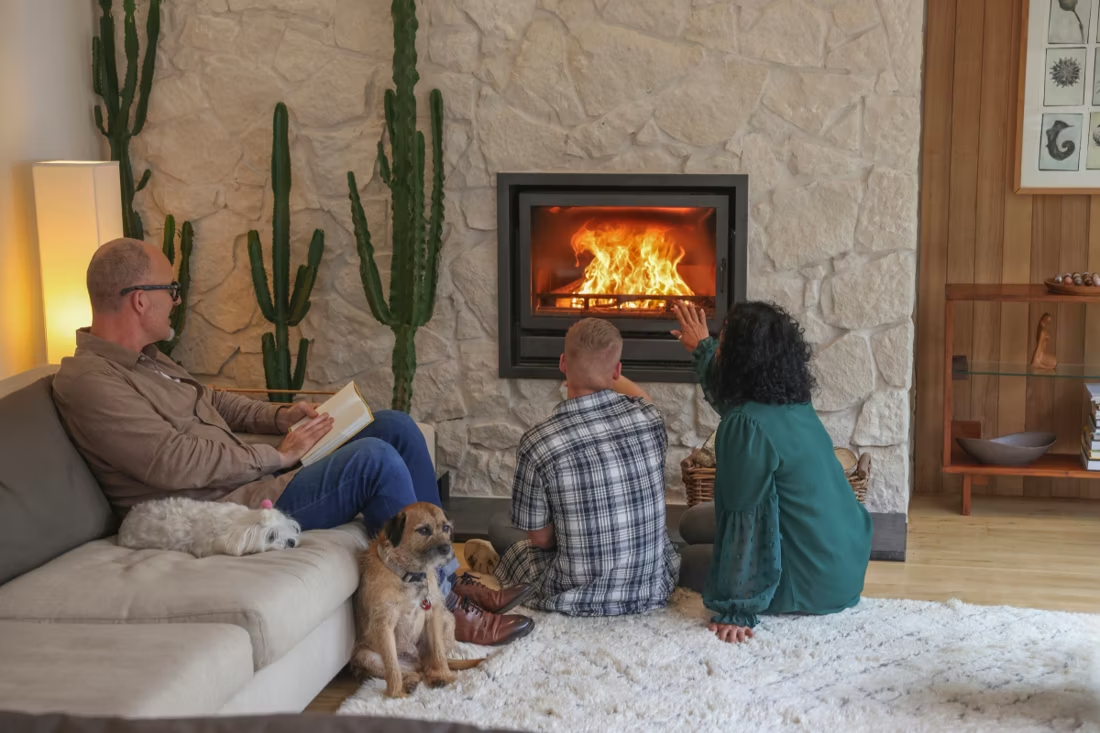
Four fuels. One honest answer for Randolph County.
Three steps. No salesperson until you're ready.
Tell us about your project
Your zip code, your situation, and the fuel you're leaning toward—or let the answers point you to one.
See what's actually available
The brands dealers within 100 miles genuinely carry—real options, never a catalog mirage.
Get your dealer & Project Guide
A trusted local dealer, plus the free Project Guide & Parts List that names every component of the job.
Frequently Asked Questions
Which fuel works best in Randolph County?
It depends on the home and the household. Wood is the traditional backbone here—oak, hickory, maple, and cherry are all cut locally, and many Randolph County residents pull personal-use firewood permits through the Monongahela National Forest, which keeps fuel costs down for anyone willing to cut and split. Gas is the convenience option, especially in Elkins where propane delivery is well established even without widespread natural gas infrastructure—no wood handling, consistent heat, easy to run on a thermostat. Pellet is a strong middle ground: automated feed, less labor than cordwood, and regional brands like Energex and Hamer Pellet Fuel are readily available in this part of the state. Electric works well as supplemental heat in bedrooms, sunrooms, or smaller outbuildings, but given the winter lows here, it's rarely the sole heat source in an older farmhouse or a home up in the hollows. Many households in the county end up running two fuels—wood or pellet as primary, gas or electric for backup and convenience rooms.
Do I need a permit to install a fireplace in Randolph County?
In most cases, yes. Wood stoves, wood inserts, gas fireplaces, gas inserts, gas stoves, and pellet stoves typically require a building permit, and gas installations also need a separate gas line permit completed by a licensed installer. Randolph County building permits are handled at the county level for unincorporated areas; within Elkins city limits, check with the city building office first since jurisdiction can differ from the county process. Electric fireplaces generally don't require a permit unless you're doing a built-in installation with new wiring or a dedicated circuit. Most local hearth retailers in the Elkins area handle the permitting paperwork as part of a full installation, so homeowners usually aren't navigating it alone.
Are there air quality restrictions on wood burning in Randolph County?
No—Randolph County doesn't have the winter inversion or non-attainment issues that trigger burning restrictions in some Western basins. The Allegheny Highlands terrain and consistent air movement mean there's no local air quality advisory program tied to wood smoke here. That said, any new wood stove or insert installation still needs to meet EPA emissions standards for the appliance itself, and it's worth having a chimney sweep check draft and clearance on any wood-burning setup annually, especially with the volume of hardwood commonly burned in this area—oak and hickory in particular can build dense creosote if a flue runs cool or undersized.
Can one local hearth retailer handle all four fuel types?
Coverage varies by dealer, and in a county with Randolph's population, most retailers focus on two or three fuel types rather than carrying all four with full showroom displays. Dealers near Elkins commonly carry wood and gas as their core lines, with pellet stoves as a secondary offering given strong regional pellet supply from brands like Energex and Greene Team Pellet Fuel. Electric fireplaces are often available but with a smaller in-store selection since demand skews toward wood and gas for primary heat in this climate. If you're trying to compare fuels side by side, ask a retailer directly which lines they stock as floor displays versus special-order—that distinction matters more here than in a larger metro market.
How does service work in rural areas of Randolph County?
Most technicians serving Randolph County are based around Elkins and travel out to Beverly, Montrose, Harman, and the more remote communities near the national forest boundary. Expect a modest travel charge for calls beyond a 20-25 mile radius, and know that mountain roads can affect scheduling in winter—pre-season service appointments in September or October are far easier to lock in than a mid-January emergency call after a hard freeze. For households in the more isolated hollows, it's worth scheduling chimney sweeping and pellet stove cleaning well ahead of the heating season and keeping a backup fuel source on hand in case a winter storm delays a service visit.
What's the typical cost range for fireplace installation across all fuel types in Randolph County?
Costs vary by fuel type. Wood stove or insert installation: roughly $4,000–$8,500 for a typical install, higher for new masonry chimney work in an older farmhouse. Gas fireplace, insert, or stove: roughly $4,000–$10,000 depending on whether propane line work is needed and how much venting is involved. Pellet stove or insert: roughly $4,000–$7,000 for a standard install. Electric fireplace: $200–$3,000 for the unit itself, plus $400–$1,200 in labor for anything beyond a simple plug-and-play setup. See the county + fuel pages above for cost breakdowns tied to specific local retailer pricing.
What is an in-home preview and do I need one?
It's a visit where a hearth professional measures your space, confirms the model you picked actually works in your home, and walks the specs—framing, gas line, venting, finish work—before anything is ordered. Some details you just can't know until you see the house. Never make a down payment without one; it's the single most-skipped step that burns buyers.
What are the biggest mistakes people make buying a fireplace?
Five come up constantly: budgeting for the unit but not the full job (vent, gas line, electrical, finish work); drowning in options instead of starting from style and fuel; buying without an in-home preview; handing installation to a handyman instead of a pro; and giving up out of sheer indecision. Every one is avoidable with a clear plan—step one, step two, step three.
I know I want a fireplace—where do I actually start?
Do two things today: snap a photo of the wall or fireplace you want to transform, and take a tape measure to the space—width, height, depth. Those two artifacts answer most of a hearth professional's first questions. Then settle fuel (wood, gas, pellet, or electric) and set a realistic budget: $3,900–$5,500 covers fireplace, vent, and basic install for most homes.
Should the dealer who sells my fireplace also install it?
Ideally, yes. A fireplace project involves vent pipe, gas line, electrical, and often tile or stone. Hire three or four separate trades and you own the liability and the game of telephone between them. One company selling and installing means one accountable party, start to finish—ask about factory training, on-time completion records, and what happens if an inspection fails.
Stove and Fireplace Dealers in Randolph County
Listings include WhyFire partner dealers, dealers we have verified as authorized for the brands we recommend, and established local businesses that carry hearth products. Every listing shows which one it is. The ones marked Preferred run on WhyFire's software, so they can show you real pricing and book your appointment right here. No manufacturer pays for placement. How we verify dealers →
Mike's Kitchen, Bath, Fireplace
Spike’s Chimney Sweep LLC
Shirers Tin Shop
Manor Building Supply Inc.
Streets Hardware Store
Cam-Rock
Hardman's Hardware - Moorefield
Tristate Fireplace LLC
Warners Hearth & Patio
Find your fireplace in Randolph County.
Pick your fuel below and we'll match you with a trusted local dealer, plus a free Project Guide & Parts List built for your specific home and project.
Find Your Fireplace →