
Warm up your Randolph County room without a chimney.
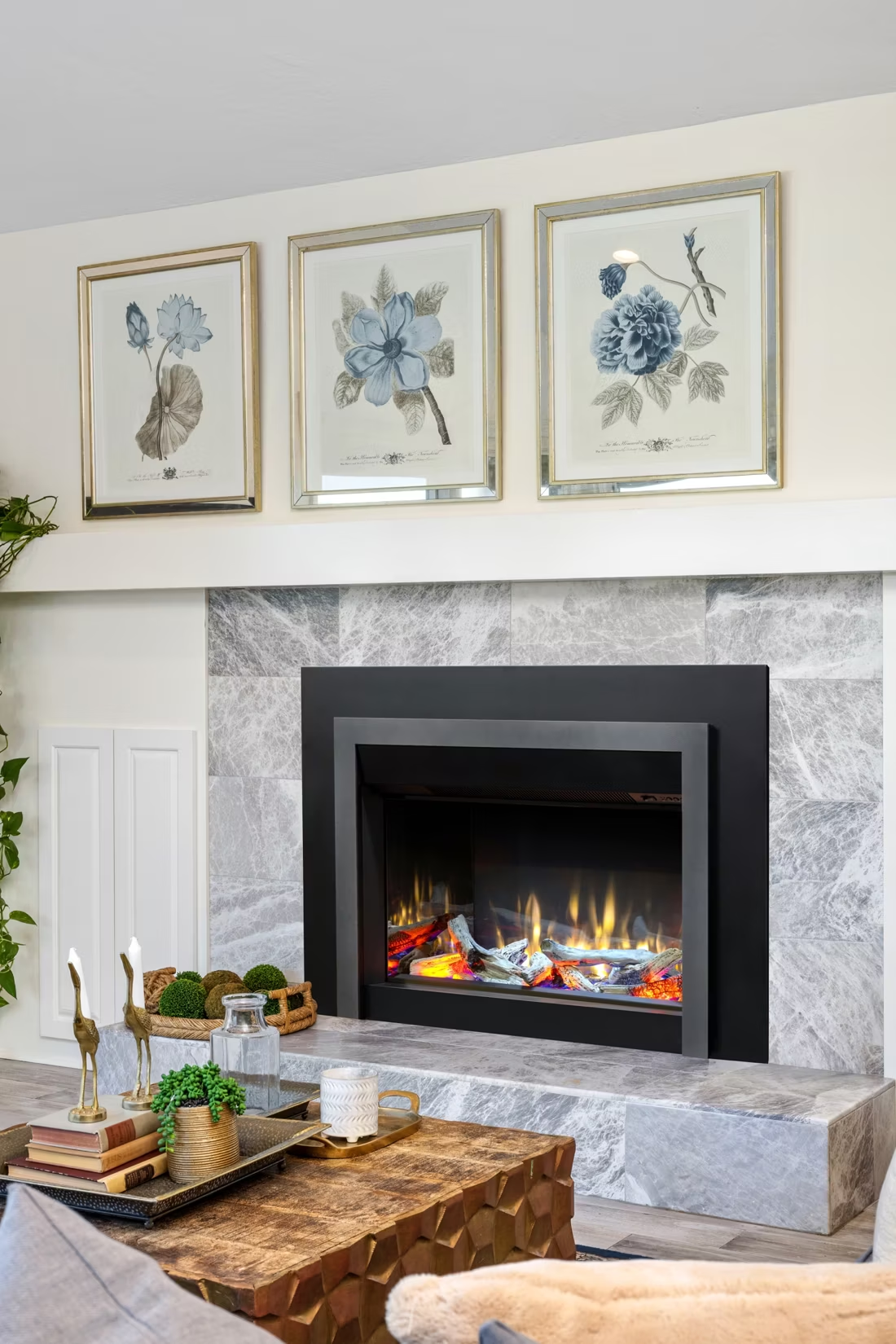
From Elkins to the hunting cabins tucked along the Monongahela National Forest boundary, electric fireplaces add real zone heat and a real flame look with no gas line, no venting, and no masonry work. Get matched with a local dealer who can size and install one correctly.
Every Project Starts From One of These Five Situations
Zero venting, and it plugs in where wood and gas can't reach.
Randolph County sits deep in the Allegheny Highlands, with Elkins at about 1,900 feet and the county's ridgelines pushing well past 4,000 feet along Cheat Mountain and Shavers Fork. Winters here run cold and long—an average low around 20°F and a long heating season stretching well past six months—and most full-time homes lean on wood or propane as their primary heat, with oak, hickory, maple, and cherry cut locally, much of it off Monongahela National Forest land under a $20-per-cord permit from May through October. Electric fireplaces fill a different role: supplemental heat and ambiance in a bedroom, sunroom, finished basement, or add-on that doesn't have a chimney or gas line running to it.
That's especially true in Randolph County's rental and vacation properties—hunting and fishing cabins, ski-season rentals near Cheat Mountain, and older homes in Beverly's historic district where the original masonry firebox is too fragile or expensive to bring back into full service. An electric insert or built-in unit gives a property owner a working fireplace look and real supplemental heat without touching the chimney, running a gas line, or worrying about a renter operating an open flame. It's also the simplest fireplace option to add to a room that never had one—no combustion, no venting, no structural changes.
Three steps. No salesperson until you're ready.
Tell us about your project
Your zip code, your situation, and the fuel you're leaning toward—or let the answers point you to one.
See what's actually available
The brands dealers within 100 miles genuinely carry—real options, never a catalog mirage.
Get your dealer & Project Guide
A trusted local dealer, plus the free Project Guide & Parts List that names every component of the job.
Frequently Asked Questions
How much does an electric fireplace installation cost in Randolph County?
A basic freestanding or wall-mounted electric fireplace that plugs into a standard 120-volt outlet typically runs $300 to $1,200 installed, since there's often no new wiring involved beyond mounting hardware. A built-in electric fireplace with a custom mantel surround, recessed wall installation, or a dedicated 240-volt circuit for a larger unit runs higher—often $1,500 to $3,500—because it involves carpentry and licensed electrical work. Compare that to the wood stoves and propane inserts common elsewhere in the county, which require chimney or venting work and run considerably more. A local dealer can give you a firm number once they know whether you're doing a simple plug-in unit or a full built-in.
Do I need a permit to install an electric fireplace in Randolph County?
In most cases, no—a plug-in electric fireplace that uses an existing outlet doesn't trigger a building or mechanical permit because there's no venting or gas line involved. If you're adding a dedicated 240-volt circuit for a larger built-in unit, that electrical work should be done by a licensed electrician, and depending on the scope, it may require an electrical permit. Randolph County's rural areas have less building code enforcement overhead than a wood or gas installation would face, which is part of why electric units are a popular fallback for additions and rentals where owners want to avoid the permitting process entirely.
Electric vs. wood—which makes more sense for my Randolph County home?
Wood is still the backbone of home heating in much of Randolph County, and for good reason: oak, hickory, and cherry are abundant locally, Forest Service cutting permits through Monongahela National Forest run just $20 per cord, and a wood stove keeps working when the power goes out—a real consideration on ridgeline properties near Cheat Mountain where winter storms can knock out lines for days. Electric fireplaces need grid power to run, so they're not a backup-heat solution during an outage. Where electric wins is convenience and reach: a bedroom, converted attic space, or rental unit that doesn't have a chimney and doesn't need full-home heat is a natural fit for an electric insert instead of running new venting.
Electric vs. gas—why would I choose electric if propane is available?
Randolph County doesn't have widespread natural gas utility service, so gas fireplaces here typically mean propane, which requires a tank, a regulator, and a gas line run to the unit—real cost and coordination even for a small insert. An electric fireplace skips all of that; it needs an outlet or a dedicated circuit, nothing more. The tradeoff is heat output and ambiance—propane units put out more real BTUs and a more convincing flame, while electric units are best treated as supplemental heat and visual warmth rather than a whole-room heat source in a county with lows regularly hitting 20°F.
What's the best electric fireplace for a cabin or rental near the Monongahela National Forest?
For seasonal cabins and hunting or fishing rentals scattered through the forest boundary, durability and simplicity matter more than fine finish work. Built-in units from Dimplex and Napoleon hold up well to intermittent use and infrequent maintenance, and most offer a heater function that can be switched off independently from the flame effect—useful for a rental where you want ambiance year-round but don't want guests running the heater in July. A local dealer can also advise on models rated for slightly cooler, less climate-controlled spaces, which matters for camps and cabins that sit unheated for stretches during the off-season.
Can I put an electric insert into an old fireplace in a historic Beverly or Elkins home?
Yes, and it's one of the more common projects for older homes in Randolph County's historic districts. Many of the original masonry fireboxes in Beverly and older Elkins homes are structurally sound enough to look at but not necessarily safe or efficient to burn wood in without expensive relining or rebuild work. An electric insert slides into that existing opening, gives you the fireplace look without touching the masonry, and doesn't require a chimney liner, venting, or gas line. It's a straightforward way to bring a non-functional fireplace back to life in a home where preserving the original mantel and surround matters.
Will an electric fireplace actually heat a room in a Randolph County winter?
A typical electric fireplace puts out about 5,000 to 9,000 BTUs (roughly 1,500 watts), which is enough to noticeably warm a single room—a bedroom, den, or small addition—but it's not sized to carry a whole house through a Randolph County winter with a long heating season stretching well past six months and lows around 20°F. Think of it as zone heat: it can let you turn down the thermostat in the rest of the house while keeping one room comfortable, or add supplemental warmth to a space your wood stove or furnace doesn't reach well. For whole-home heat in this climate, wood, propane, or a heat pump system is still doing the heavy lifting.
Who installs electric fireplaces in Randolph County, and how long does it take?
Plug-in units are often installed by the hearth dealer that sells them, sometimes in under a day, since there's no venting or gas work involved. Built-in units that need a new 240-volt circuit require a licensed electrician for the wiring, plus carpentry work if you're framing in a mantel or recessed wall unit—that combination typically takes one to two days depending on the scope. Because there's no chimney sweep or gas-line inspection required afterward, electric installs are generally the fastest and least disruptive fireplace project available in the county.
Are there rebates through Mon Power for installing an electric fireplace?
Not typically. Mon Power, the primary electric utility serving Randolph County, focuses efficiency incentives on things like heat pumps, insulation, and smart thermostats—electric fireplaces are resistance heaters, and utilities generally don't rebate them since they don't reduce overall energy use the way a heat pump upgrade does. If lowering your heating bill is the primary goal, a wood stove using locally cut firewood or a heat pump system will do more for your winter costs than an electric fireplace, which is best thought of as a supplemental comfort feature rather than an efficiency upgrade.
Can I put a TV above my fireplace?
Yes—with an asterisk. Fireplaces are hot and TVs don't like heat. Either put a mantel between them to deflect rising warmth, or choose a fireplace with heat-management technology that creates a cool zone on the wall above—the wall stays around 125 degrees, barely warm, while the room still gets full heat. If you like clean lines and don't want a mantel, heat management is the answer.
What fireplace styles should I know before shopping?
Four cover most of the market: screen-front traditional (mesh front, open feel, fits craftsman homes), traditional door set (the classic look you grew up with), modern linear (wide, low, the statement piece for entertaining), and clean face contemporary (no trim—your tile or stone runs right to the fire's edge). Walk in knowing those four terms and you're ahead of most buyers.
How much should I budget for a fireplace?
For an average home—covering the fireplace, the vent pipe, and basic installation—a budget between $3,900 and $5,500 gives you a lot of options across wood, gas, and pellet. By the time you add finish work, gas line, and electrical, the average complete installation lands between $5,000 and $12,000 all-in. In a remodel or new build, a good rule is to put about 2.5% of the total project cost toward the fireplace.
Can a fireplace actually lower my heating bill?
Yes—by creating a comfort zone. A furnace heats every square foot of the house just to warm the one room you're in; a gas fireplace on low burns roughly a sixth of the gas a typical furnace does. Set the furnace around 55–60 degrees as a baseline, then heat the rooms your family actually uses. Families who heat this way commonly save $20–$60 a month.
Stove and Fireplace Dealers in Randolph County
Listings include WhyFire partner dealers, dealers we have verified as authorized for the brands we recommend, and established local businesses that carry hearth products. Every listing shows which one it is. The ones marked Preferred run on WhyFire's software, so they can show you real pricing and book your appointment right here. No manufacturer pays for placement. How we verify dealers →
Mike's Kitchen, Bath, Fireplace
Spike’s Chimney Sweep LLC
Shirers Tin Shop
Manor Building Supply Inc.
Streets Hardware Store
Cam-Rock
Hardman's Hardware - Moorefield
Tristate Fireplace LLC
Warners Hearth & Patio
Find your electric fireplace in Randolph County.
Tell us about your room and how you plan to use it, and we'll match you with a trusted local dealer and send over a free Project Guide & Parts List—the right unit, the wiring it needs, and who can install it near you.
Find Your Fireplace →