
Keep Your Family Warm and Safe—No Matter What
Reliable radiant heat for the Ohio River Valley's cold snaps—from Wheeling to Triadelphia and the rural ridges in between. Get matched with a trusted local dealer who knows the terrain.
Every Project Starts From One of These Five Situations
A hardwood region built for wood heat.
Ohio County sits in West Virginia's northern panhandle, wedged between the Ohio River and the hill country that rolls east toward the Appalachian plateau. Climate zone 5A and winters on par with places like Madison, WI put the cold here well above the mild end—not the brutal cold of the northern plains, but consistent, sustained cold from November through March that rewards a stove capable of steady, long-burning heat rather than one built for occasional use.
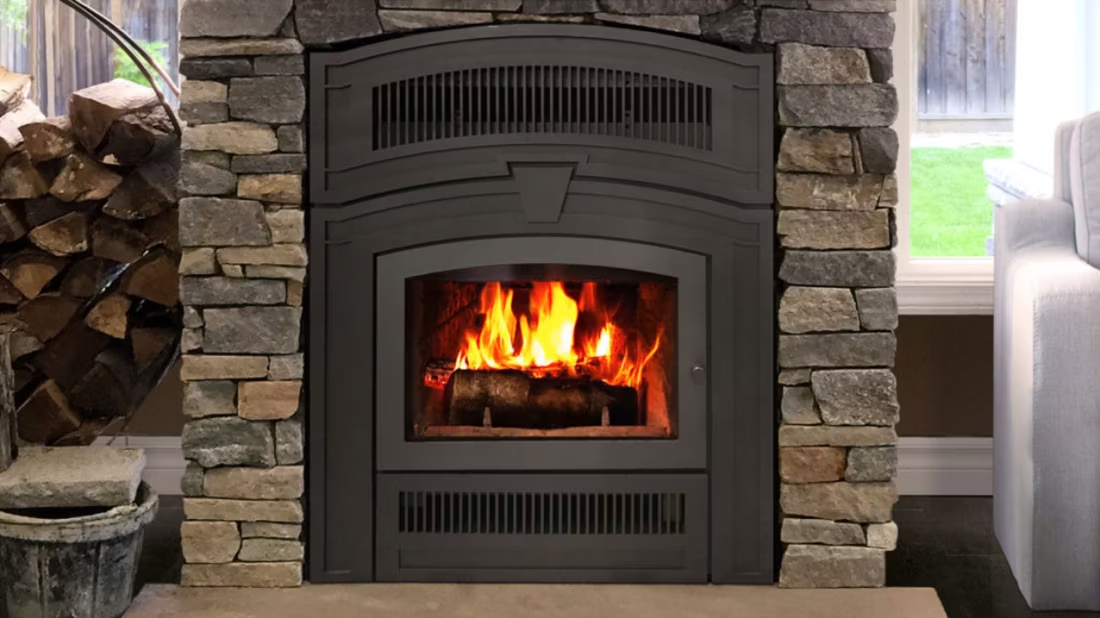
The county's hardwood forests—thick with oak, hickory, maple, and cherry—have supplied firewood to Wheeling-area households for generations, and that supply chain is still intact today. Oak and hickory in particular burn dense and long, which matters on the ridges outside Wheeling where winter power outages from ice-loaded lines are an annual possibility. A properly sized wood stove or insert isn't a novelty here—it's a practical backup heat source for homes on the hillsides as much as it is a centerpiece for houses in town.
Three steps. No salesperson until you're ready.
Tell us about your project
Your zip code, your situation, and the fuel you're leaning toward—or let the answers point you to one.
See what's actually available
The brands dealers within 100 miles genuinely carry—real options, never a catalog mirage.
Get your dealer & Project Guide
A trusted local dealer, plus the free Project Guide & Parts List that names every component of the job.
Frequently Asked Questions
How much does a wood stove installation cost in Ohio County?
Wood stove and insert installations in Ohio County typically run in line with regional Appalachian pricing—expect somewhere in the $3,500 to $9,000 range depending on the unit, whether an existing masonry chimney can be reused with a liner, and whether new Class A chimney pipe needs to be run through a roof or wall. Older Wheeling homes with existing masonry fireplaces often land on the lower end since the chimney structure is already in place; homes without one, including newer construction out toward Triadelphia and Valley Grove, run higher once full venting is factored in. A local installer will give you a firm number after seeing your chimney or venting situation in person.
What size wood stove do I need for my home?
Sizing depends on square footage, insulation, ceiling height, and whether the stove is your primary heat or a supplemental source. As a general guide for Ohio County's zone 5A winters: small stoves suit a single room or cabin-style space, medium stoves handle most main living areas in a typical Wheeling-area home, and large stoves are appropriate for bigger, less-insulated houses or whole-home heating goals. Older brick homes near downtown Wheeling often have higher ceilings and more thermal mass than newer construction, which changes the math slightly. An oversized stove smolders and builds creosote; an undersized one can't keep up on the coldest nights of the year. A local dealer can size your space correctly during an in-home visit.
Where can I find certified wood stove installers near Wheeling?
Look for installers with NFI (National Fireplace Institute) certification or CSIA (Chimney Safety Institute of America) credentials—both signal real training in venting, clearances, and code compliance for wood-burning appliances. A trusted local dealer in the Ohio County area will typically handle both the sale and the install, which keeps warranty coverage and code sign-off under one roof. That matters more in a hilly, older-housing-stock county like this one, where chimney conditions and roof lines vary house to house. Avoid general handyman installs for wood-burning units—improper clearances and venting are the leading cause of chimney fires, and it's not a place to cut corners.
What's the difference between a wood stove and a wood insert?
A wood stove is a freestanding unit on a hearth pad that vents through a chimney and can go almost anywhere with proper clearances. A wood insert is built to slide into an existing masonry fireplace, turning a drafty open hearth into a sealed, high-efficiency heater. Wheeling has no shortage of older homes with existing brick fireplaces, which makes an insert the more common and often more cost-effective choice—you're using a chimney that's already there rather than building new venting. Newer homes without an existing fireplace, more common out in Triadelphia and Valley Grove, are typically better suited to a freestanding stove.
Do I need a permit to install a wood stove in Ohio County?
Most new wood stove and insert installations require a building permit, and the unit itself needs to meet current EPA emissions standards. Permitting requirements can vary depending on whether you're inside Wheeling city limits or in unincorporated Ohio County, so it's worth confirming with the relevant building department before work starts. In practice, most local installers handle the permit paperwork as part of the job, so it's rarely something a homeowner has to manage solo. Ohio County has no listed air quality non-attainment issues, so there are no seasonal burn curtailment periods to plan around here the way there are in some western states.
What's the best wood stove for Ohio County's climate?
With a winter heating season about as demanding as Madison, WI's and winter lows averaging in the low 20s, Ohio County doesn't demand the extreme cold-climate stoves you'd see in places like Duluth or Bozeman, but a mid-to-large stove with a solid overnight burn time is still worth prioritizing given how consistently cold the season runs. Catalytic stoves from brands like Blaze King hold a fire well past 12 hours on a load of dense local hardwood—oak and hickory both burn long and hot—which is useful on the ridges outside Wheeling where a hard freeze can knock out power overnight. Non-catalytic models from Pacific Energy or Lopi are a solid, lower-maintenance option for homes using wood as supplemental rather than primary heat. A local dealer can match a model to your square footage and how you plan to use it.
How often should my chimney be inspected and cleaned?
The CSIA recommends an annual inspection for any wood-burning appliance, and that holds true for Ohio County homes whether you're burning as a primary heat source or just on cold weekends. Late summer or early fall, before the season's first fire, is the ideal window. Homes burning heavily through the winter—several cords of oak or hickory a season—may need a mid-season cleaning if creosote builds up faster than expected. Older masonry chimneys common in Wheeling's historic housing stock deserve particular attention, since decades-old flues can have deterioration that isn't visible from the ground.
Where can I get firewood in Ohio County?
Local firewood suppliers throughout the Wheeling area sell seasoned oak, hickory, maple, and cherry by the cord, typically delivered and stacked for an additional fee. Oak and hickory are the preferred species for overnight burns because of their density and heat output; maple and cherry burn a bit faster but season quicker and are easier to split. Many rural Ohio County households also source their own firewood from private woodlots, since the county sits in hardwood-dense terrain where standing dead trees and blowdown are common after winter storms. Buying well-seasoned wood (moisture content under 20%) rather than green wood makes a real difference in both heat output and creosote buildup.
Wood stove vs. pellet stove—which is right for me?
Wood stoves burn cordwood, work without electricity—a real advantage in Ohio County's hillier terrain where ice storms can take down power lines for a day or more—and pair naturally with the abundant local hardwood supply. Pellet stoves burn compressed wood pellets from regional brands like Energex, Hamer Pellet Fuel, or Greene Team Pellet Fuel, and are easier to load and run cleaner, but require electricity for the auger and blower, meaning they go dark in an outage unless paired with a battery backup. For rural properties around Ohio County where storm-related outages are a real planning consideration, wood generally has the edge as a backup heat source. For in-town homes prioritizing convenience with reliable grid power, pellet is a strong alternative. A local dealer can walk through both options based on your address and power reliability.
Why is a fireplace insert so efficient?
An insert does two things: it seals the chimney completely, so you stop losing air you already paid to heat, and it radiates warmth into the room through the firebox and glass. Most add a heat-exchange fan that pulls cool room air underneath, wraps it around the hot firebox, and pushes it back out warm. Your home is more efficient before you've even lit the first fire.
Why is my open fireplace making my house colder?
Open fireplaces suck—literally. As the fire burns, it consumes air your furnace already paid to heat and pulls it out through the chimney, so the house is actually colder after the fire goes out than before you lit it. An insert fixes this: it seals the chimney, puts fixed glass across the front, and turns that hole in your house into a real heat source.
Can I install a fireplace myself?
If you're putting a fire in your house on purpose, it's best to work with an expert. Unless you're genuinely experienced in framing, gas line, vent pipe, and the national code on clearances to combustibles, have a professional do it—and ideally the same company that sells you the fireplace, so warranty, service, and liability all live under one roof.
How much should I budget for a fireplace?
For an average home—covering the fireplace, the vent pipe, and basic installation—a budget between $3,900 and $5,500 gives you a lot of options across wood, gas, and pellet. By the time you add finish work, gas line, and electrical, the average complete installation lands between $5,000 and $12,000 all-in. In a remodel or new build, a good rule is to put about 2.5% of the total project cost toward the fireplace.
Stove and Fireplace Dealers in Ohio County
Listings include WhyFire partner dealers, dealers we have verified as authorized for the brands we recommend, and established local businesses that carry hearth products. Every listing shows which one it is. The ones marked Preferred run on WhyFire's software, so they can show you real pricing and book your appointment right here. No manufacturer pays for placement. How we verify dealers →
Buckeye Valley Chimney Service
Samson Glass And Mirror
Scenery Hill Hardware
Tri-State Stoves
The Stove Place
Builders Wholesale
Bottled Gas Service
Fireplace & Patioplace
Get matched with a wood stove dealer in Ohio County.
Tell us about your home and we'll match you with a trusted local dealer and send over a free Project Guide & Parts List—the exact parts, including the vent kit, for your Ohio County wood heating project.
Find Your Fireplace →